6 Space Saving Vertical Garden Designs for a Greener Home
Do you dream of a lush 6 Space Saving Vertical Garden Designs but feel limited by your space? Maybe you live in an apartment with a tiny balcony, or perhaps your backyard is on the smaller side. Don’t worry, you can still create a beautiful green oasis! Vertical gardening is your secret weapon.
6 Space Saving Vertical Garden Designs let you grow plants upwards, not just outwards. This means you can pack a lot more green into a small footprint. It’s a fantastic way to add beauty, grow your own food, or simply enjoy the calming presence of plants, no matter how little space you have.
Why Go Vertical?
The benefits of vertical gardens go beyond just saving space. They can dramatically improve the look and feel of your home. Imagine your plain walls covered in lush greenery, or your balcony overflowing with colorful flowers and fresh herbs. It’s not just about aesthetics, though.
Vertical gardens can also help improve air quality. Plants naturally filter the air around them, making your living space healthier. Plus, if you’re growing edibles, you’ll have fresh ingredients right at your fingertips. Think about stepping out to snip some fresh basil for your pasta or grabbing ripe strawberries for a snack. It’s incredibly convenient and rewarding.
Top 6 Space Saving Vertical Garden Designs
There are so many creative ways to design a vertical garden. The best design for you will depend on your space, your budget, and the types of plants you want to grow. Let’s explore some popular and effective options.
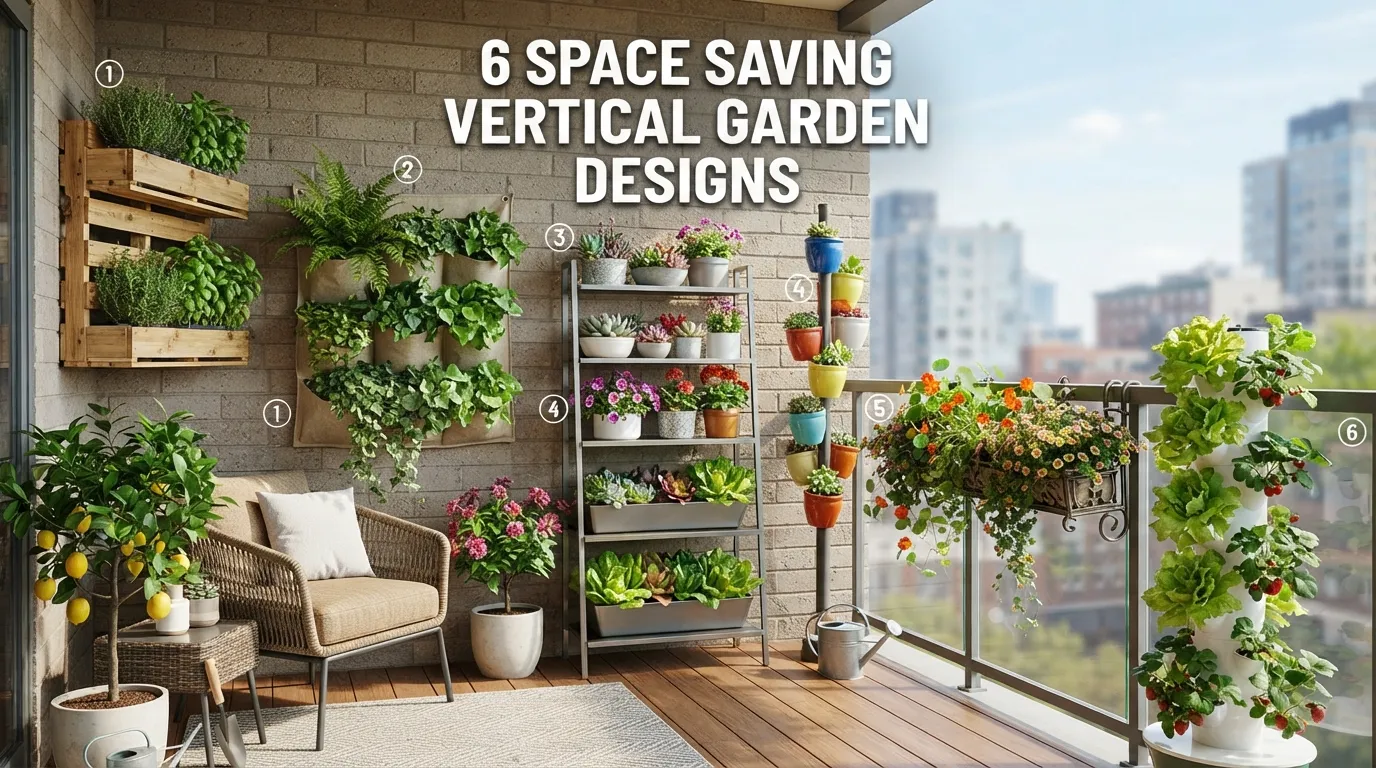
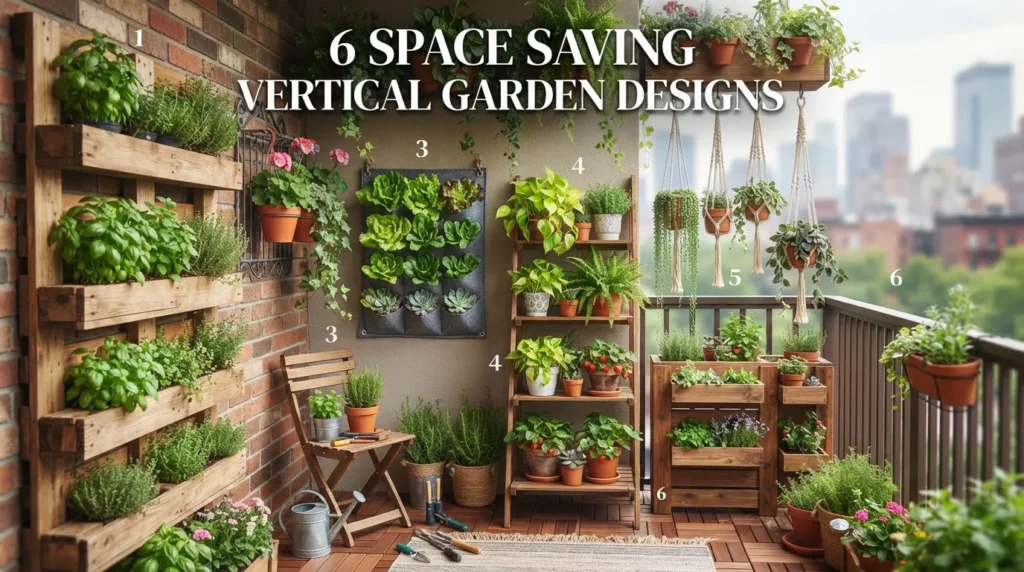
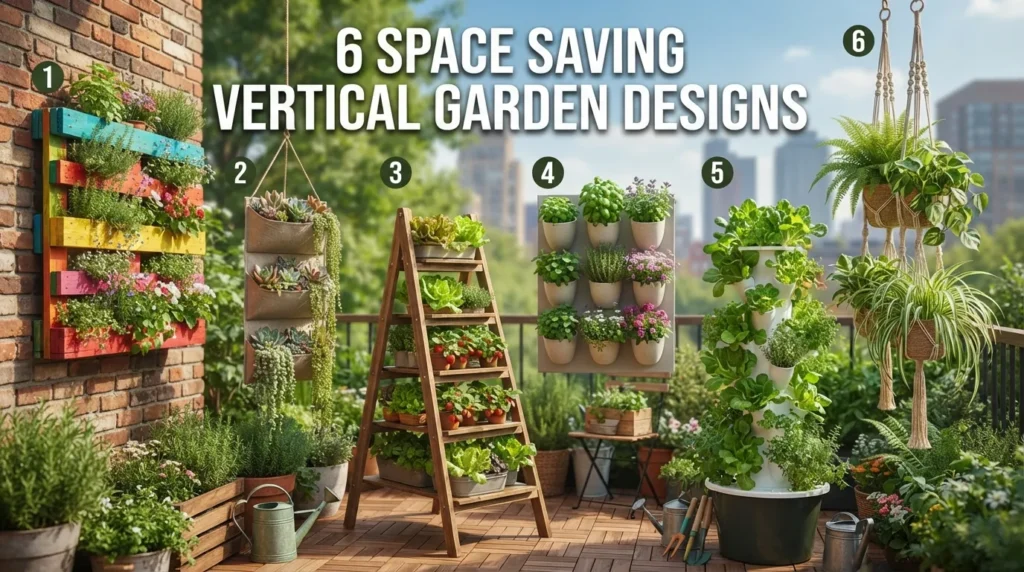
1. Pocket Planters and Wall-Mounted Fabric Gardens
These are some of the easiest and most accessible vertical garden systems. They are typically made of durable fabric with multiple pockets sewn in. You simply fill the pockets with soil and plant your chosen greenery.
Pocket planters are great for smaller spaces like balconies or even indoor walls. They are lightweight and easy to install. You can hang them on fences, walls, or railings. They are perfect for herbs, small flowers, and leafy greens. Many low maintenance outdoor plants that thrive on neglect do well in these systems too.
2. Pallet Gardens
Repurposing wooden pallets is a popular and eco-friendly way to create a vertical garden. You can find pallets for free or very cheap. With a little effort, you can transform them into rustic and charming garden structures.
To make a pallet garden, you’ll need to clean and prepare the pallet. Then, you’ll staple landscape fabric to the back and bottom of the openings to create pockets for soil. Once filled and planted, you can lean the pallet against a wall or secure it firmly. This design works well for a variety of plants, including succulents, herbs, and strawberries. also look for cottage gardening plants.
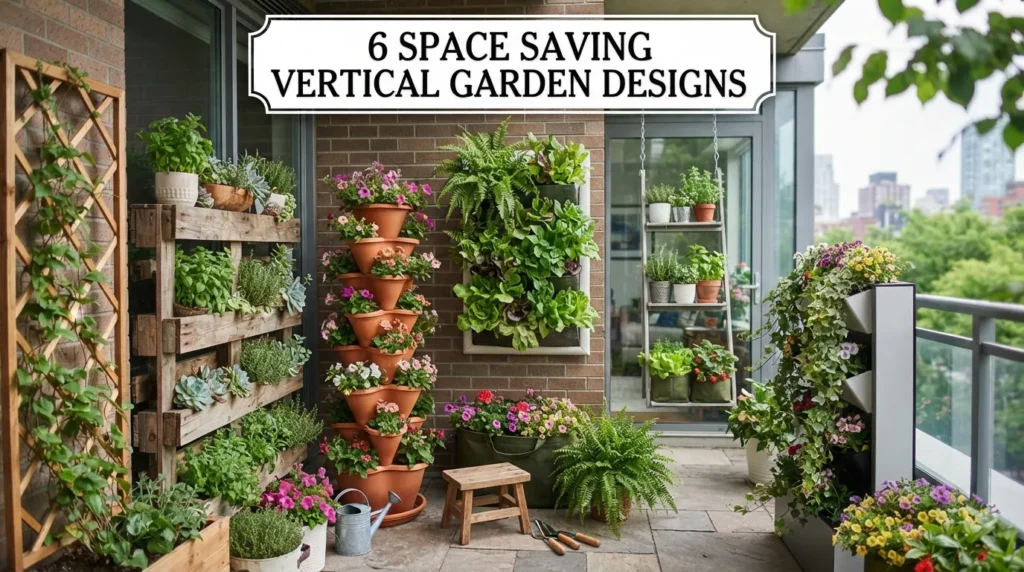
3. Tiered Planters and Stacking Pots
Tiered planters are designed with multiple levels or shelves, allowing you to stack plants vertically. They come in various materials like wood, metal, or plastic. Stacking pots are similar, but they are individual pots designed to fit securely on top of each other.
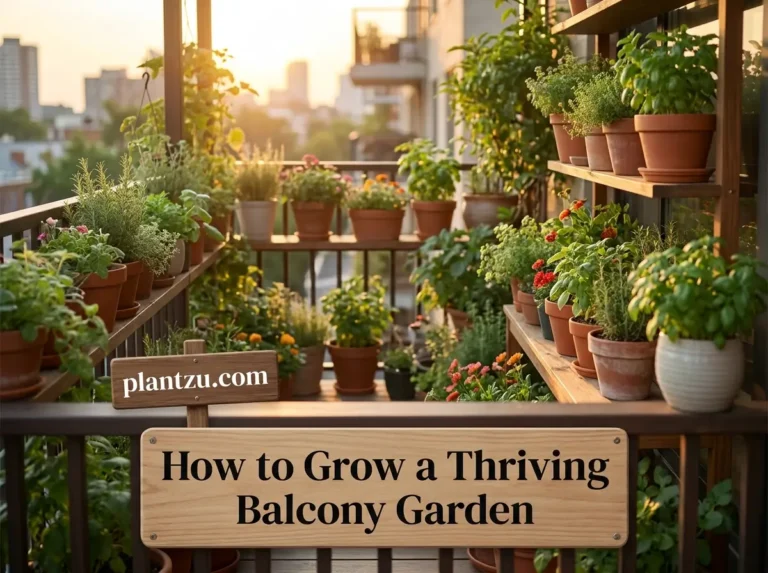
These systems are excellent for creating a dense display of plants in a small area. They are stable and can hold a good amount of soil. Tiered planters are great for flowers, herbs, and even some compact vegetables like peppers or dwarf tomatoes.
4. Trellises and Climbing Supports
Trellises are classic vertical gardening structures. They provide support for climbing plants to grow upwards. You can use trellises made of wood, metal, or even sturdy netting.
Simply place the trellis against a wall or fence, or use it as a standalone feature in your garden. Then, plant climbing plants like clematis, jasmine, beans, peas, or cucumbers at the base. As they grow, gently guide them onto the trellis. This adds height and a beautiful natural screen to your space.
5. Gutter Gardens
Old rain gutters can be given a new life as vertical garden troughs. You can mount them horizontally on a wall or fence, one above the other, creating multiple planting levels.
Make sure to drill drainage holes in the bottom of each gutter section. You can then fill them with soil and plant shallow-rooted plants like lettuce, spinach, strawberries, or herbs. Gutter gardens are a very cost-effective way to maximize planting space, especially for edibles.
6. Living Walls and Modular Systems
For a more elaborate and modern look, consider a living wall. These are often custom-built systems or pre-made modular panels designed to create a continuous wall of greenery.
Living walls involve a frame, a growing medium, and a system for irrigation. They can be quite an investment, but the visual impact is stunning. These are ideal for covering large walls and creating a dramatic green feature indoors or outdoors. They can host a wide variety of plants, from ferns and mosses to succulents and flowering plants.
Choosing the Right Plants for Your Vertical Garden
Not all plants are suited for vertical gardens. You need to consider the size of the container, the amount of sunlight your garden receives, and the plant’s growth habit. Here are some general tips:
- For sunny spots: Herbs like rosemary, thyme, and basil thrive in sun. Succulents are also a great choice.
- For shady spots: Ferns, hostas, and many leafy greens like lettuce and spinach do well in lower light.
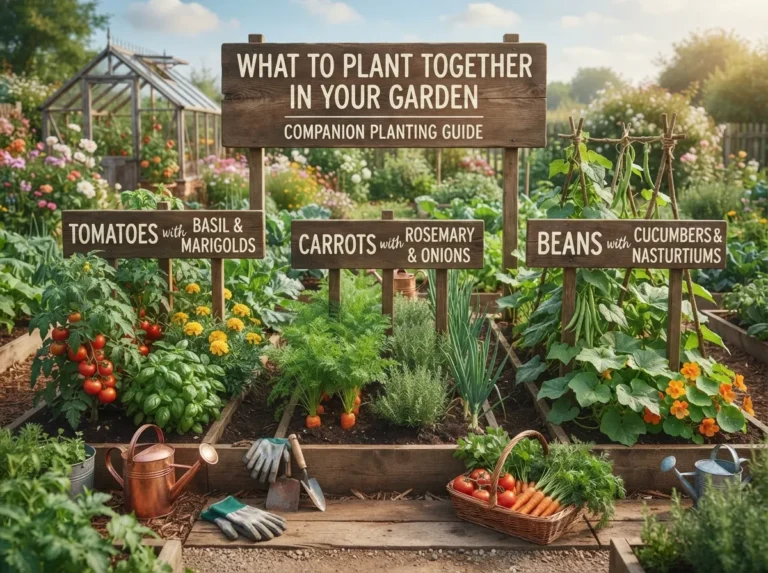
- Climbers: Beans, peas, cucumbers, tomatoes (bush varieties), and flowering vines like morning glories are perfect for trellises.
- Trailing plants: Strawberries, petunias, and some types of ivy look lovely spilling over the edges of containers.
- Compact plants: Small flowers, dwarf varieties of vegetables, and most herbs are ideal.
Remember to choose plants with similar watering and sunlight needs if they are sharing the same system. Good drainage is also crucial to prevent root rot.
Care and Maintenance Tips
Vertical gardens, while space-saving, do require regular care. Watering is key. Because they are exposed, they can dry out more quickly than traditional gardens.
Check the soil moisture daily, especially during warm weather. You might need to water more often than you think. Fertilizing is also important, as the nutrients in the soil can get depleted over time. Use a diluted liquid fertilizer every few weeks during the growing season.
Keep an eye out for pests and diseases. Because plants are close together, problems can spread quickly. Address any issues promptly. Pruning regularly will help maintain the shape of your garden and encourage fuller growth.
FAQs About 6 Space Saving Vertical Garden Designs
What is the easiest vertical garden to set up?
Pocket planters and wall-mounted fabric gardens are generally the easiest to set up. You just need to hang them and fill them with soil and plants. They require minimal tools and expertise.
Can I grow vegetables in a vertical garden?
Yes, you absolutely can! Leafy greens like lettuce and spinach, herbs, strawberries, peas, beans, and even some smaller varieties of tomatoes and peppers grow well in vertical gardens. Look for compact or dwarf varieties.
How often should I water a vertical garden?
This depends on the weather, the type of plants, and the system you’re using. However, vertical gardens tend to dry out faster than in-ground gardens. You should check the soil moisture daily and water as needed, which might be every day during hot spells.
What are the best plants for a sunny vertical garden?
For sunny locations, consider herbs like basil, rosemary, and thyme, as well as succulents, petunias, and strawberries. Many flowering annuals also do well with ample sunlight.
Do vertical gardens need special soil?
While you can use a good quality potting mix, it’s often beneficial to use a lightweight, well-draining mix. Adding perlite or vermiculite can help improve aeration and drainage, which is vital for plants in containers.