Apartment Gardening Ideas
Apartment Gardening Ideas
You don’t need a yard to be a gardener — these apartment gardening ideas prove that a windowsill, balcony, or even a blank wall is plenty. Urban growing has exploded because it works: fresh herbs, salad greens, and even tomatoes thrive in containers with the right setup. The secret is matching plants to your light and using vertical space cleverly. Whether you have a sunny balcony or a single dim window, there’s a garden here with your name on it.
The Apartment Gardener’s Mindset
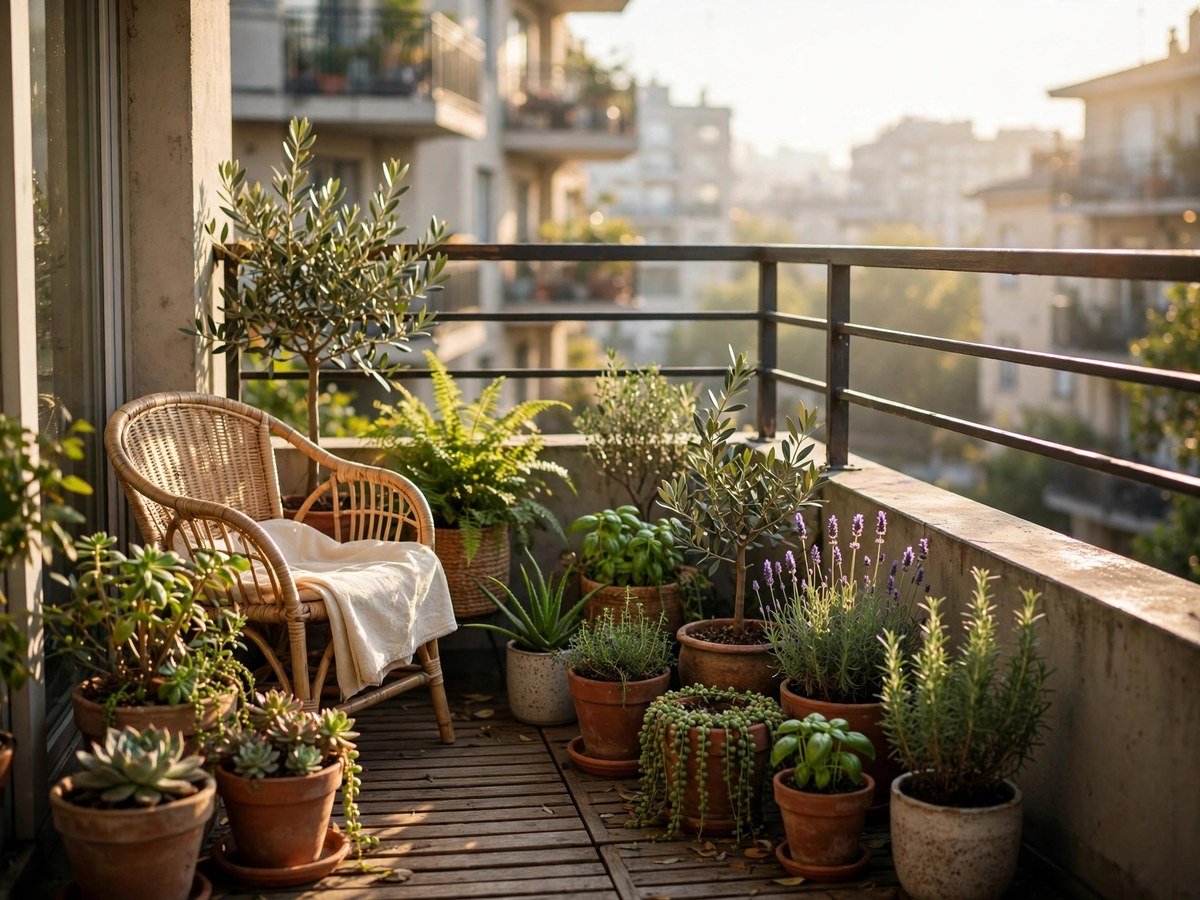
Small-space gardening is about thinking in three dimensions. When floor space is measured in square feet, walls, railings, windowsills, and ceilings become prime real estate. Containers are your soil — choose ones with drainage holes and quality potting mix, never garden soil, which compacts in pots. Start small: five thriving pots beat twenty struggling ones. And lean into what apartments do well — controlled conditions, zero weeds, and harvests just steps from your kitchen.
6 Apartment Gardening Ideas
1. Balcony Containers
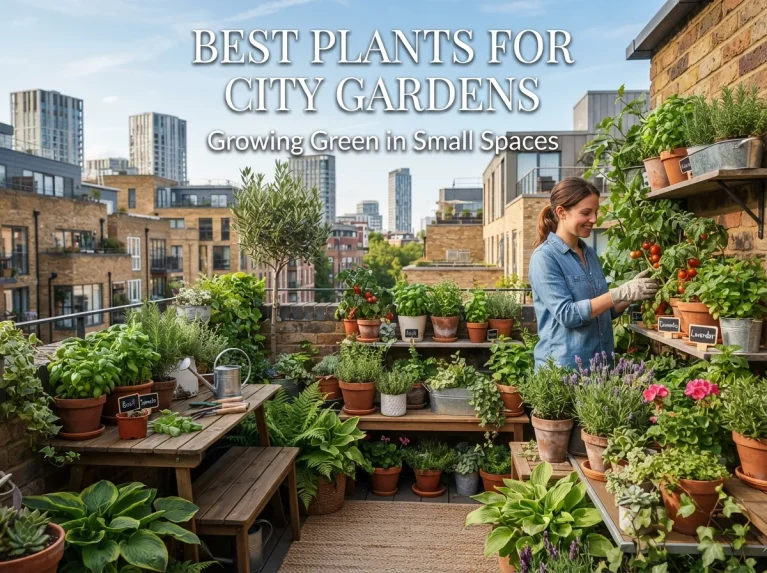
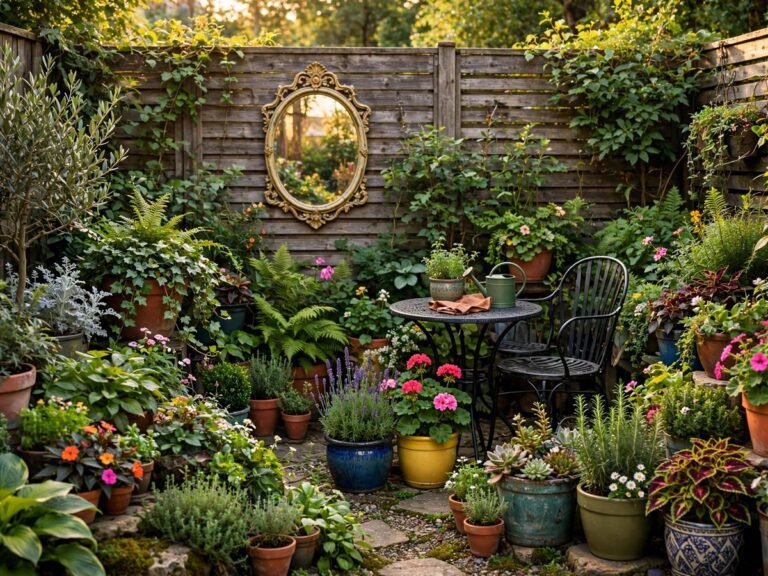
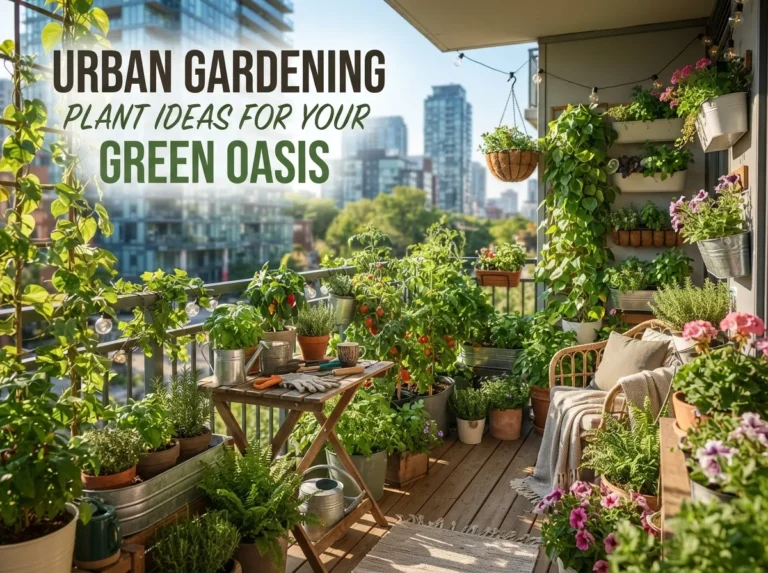
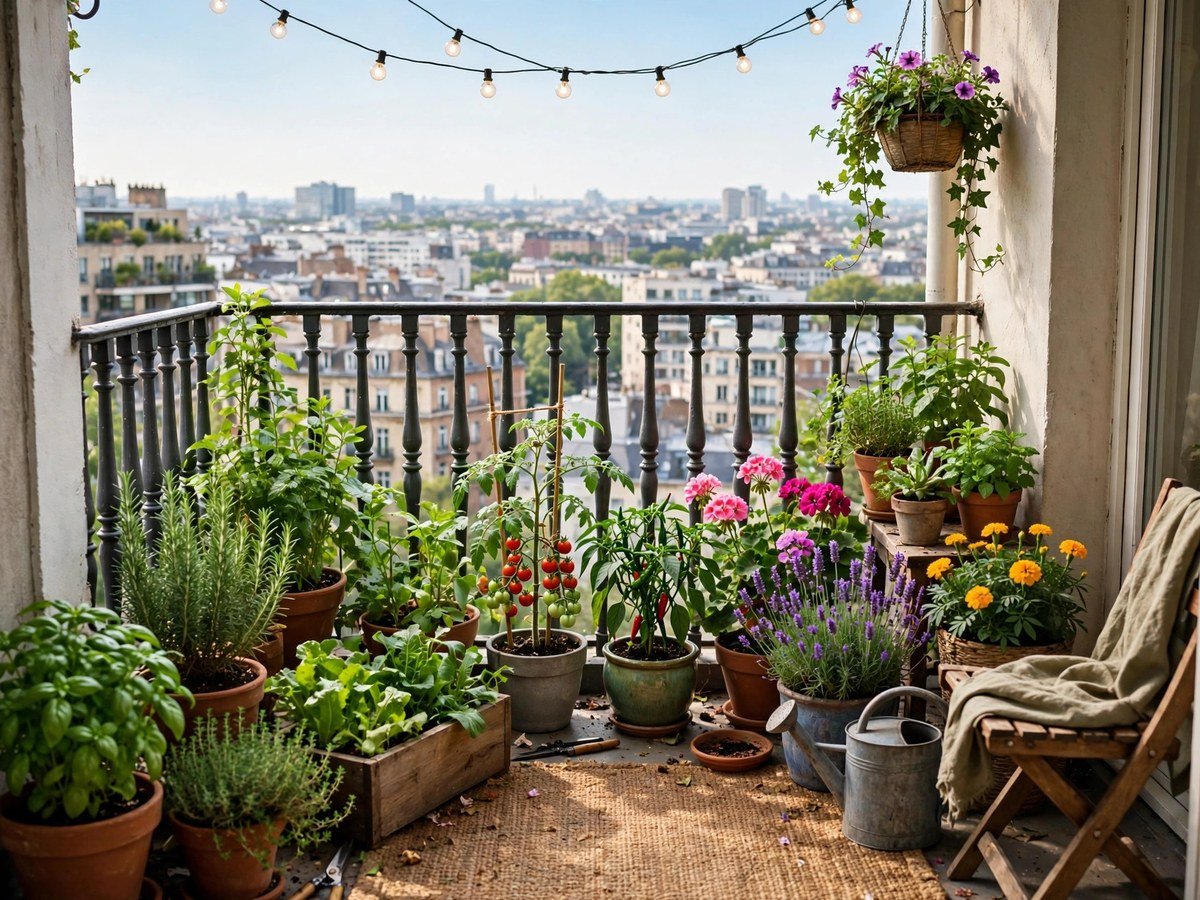
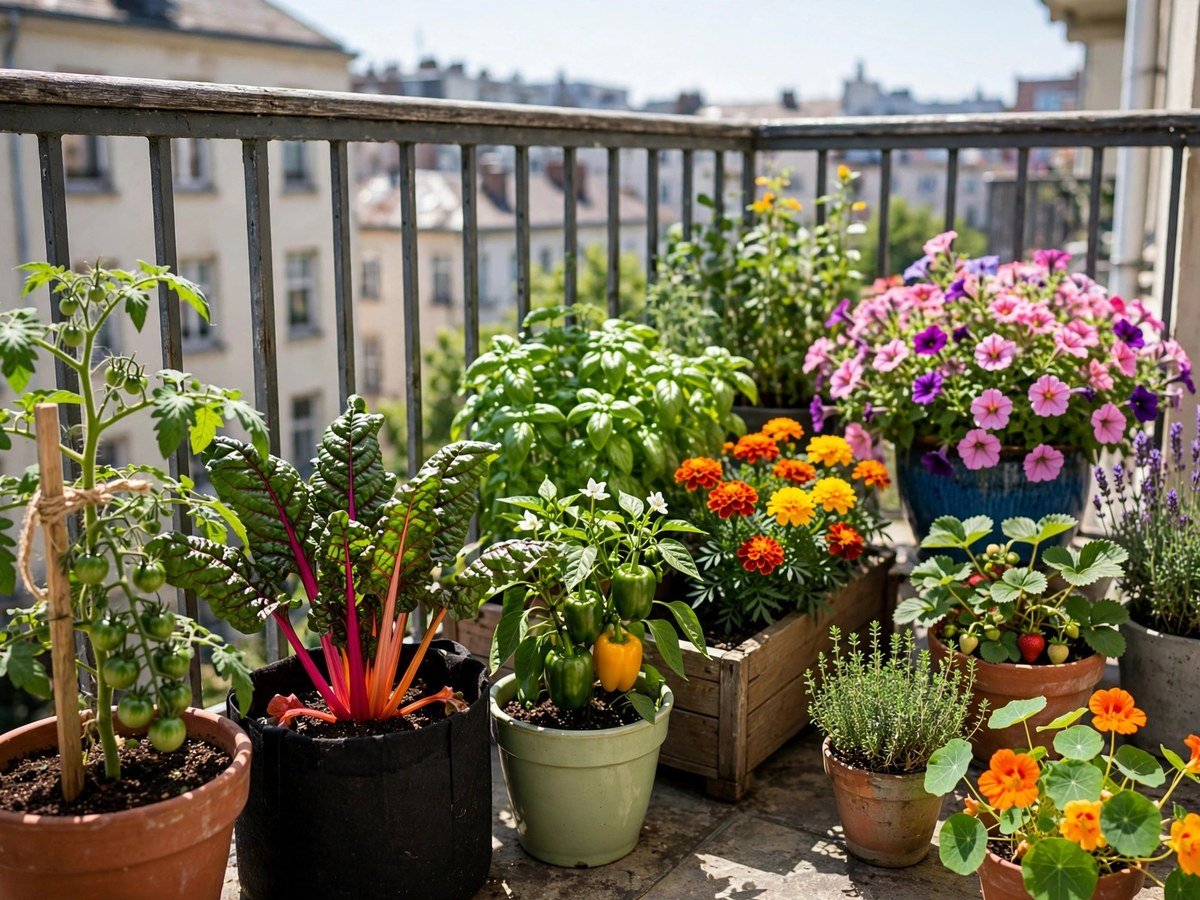
A balcony is a garden waiting to happen. Large containers — five gallons or more — hold moisture better and give roots room, which means happier plants and less watering. Rail-mounted planter boxes free up floor space, while wheeled pots let you chase the sun through the day. Grow what you love to eat: tomatoes, peppers, salad greens, and strawberries all thrive in pots, and fragrant herbs pull double duty as cooking ingredients and natural pest deterrents. Just check your building’s rules on weight limits and watering runoff before you go big.
2. Windowsill Herbs
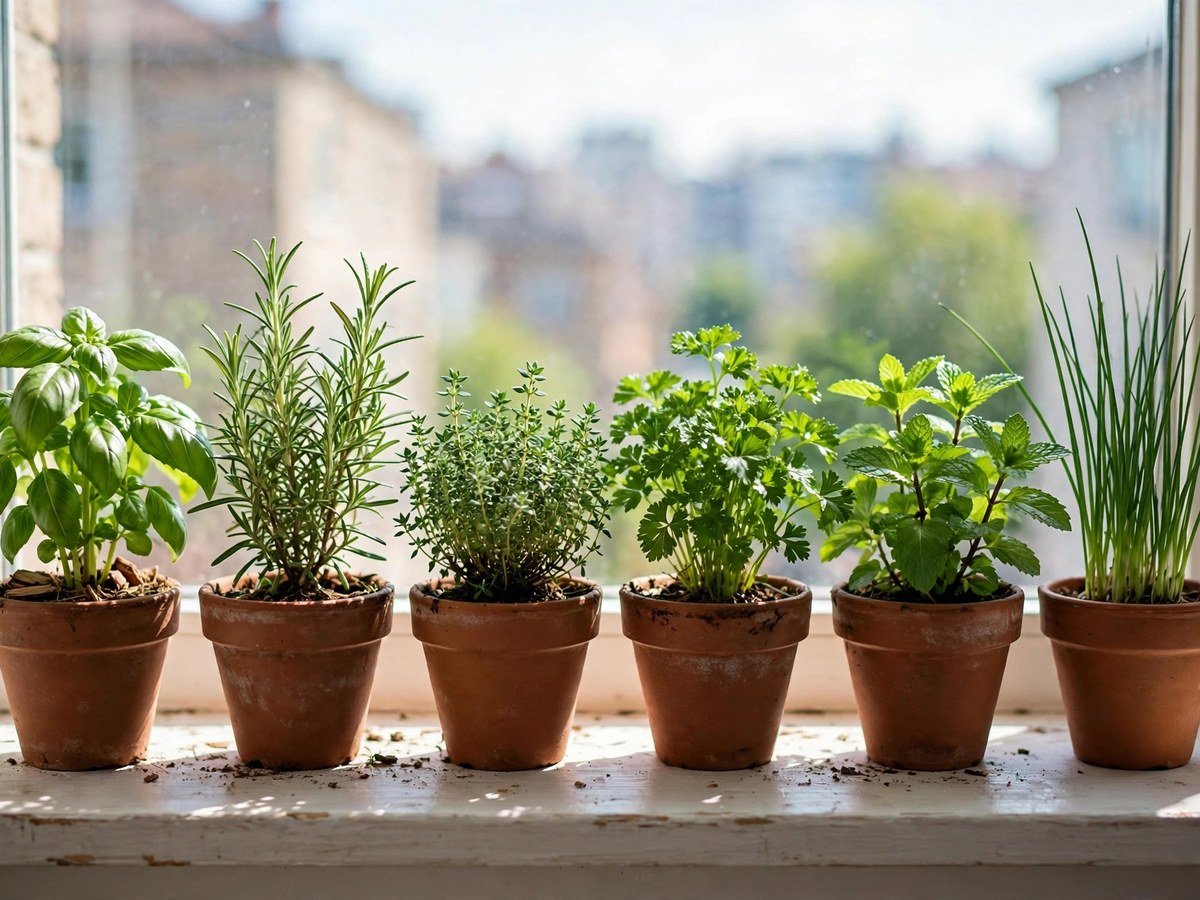
The windowsill herb garden is the gateway to apartment gardening. Basil, chives, mint, parsley, and thyme all thrive in four to six hours of sunlight on a bright sill, putting fresh flavor steps from the stove. Use small pots with drainage, water when the top inch of soil dries out, and harvest regularly — cutting encourages bushier growth. Rotate pots weekly so stems grow straight instead of leaning toward the glass. No sunny window? A single inexpensive grow bulb turns any sill into prime herb real estate.
3. Hanging Planters
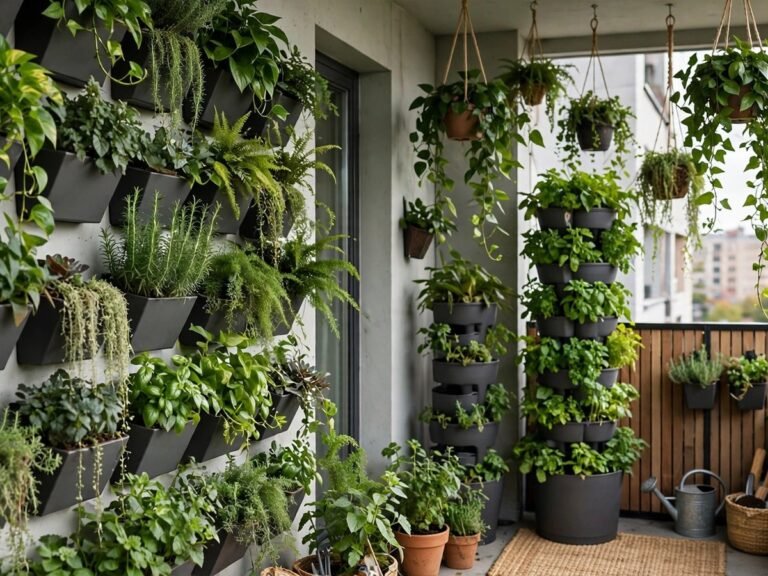
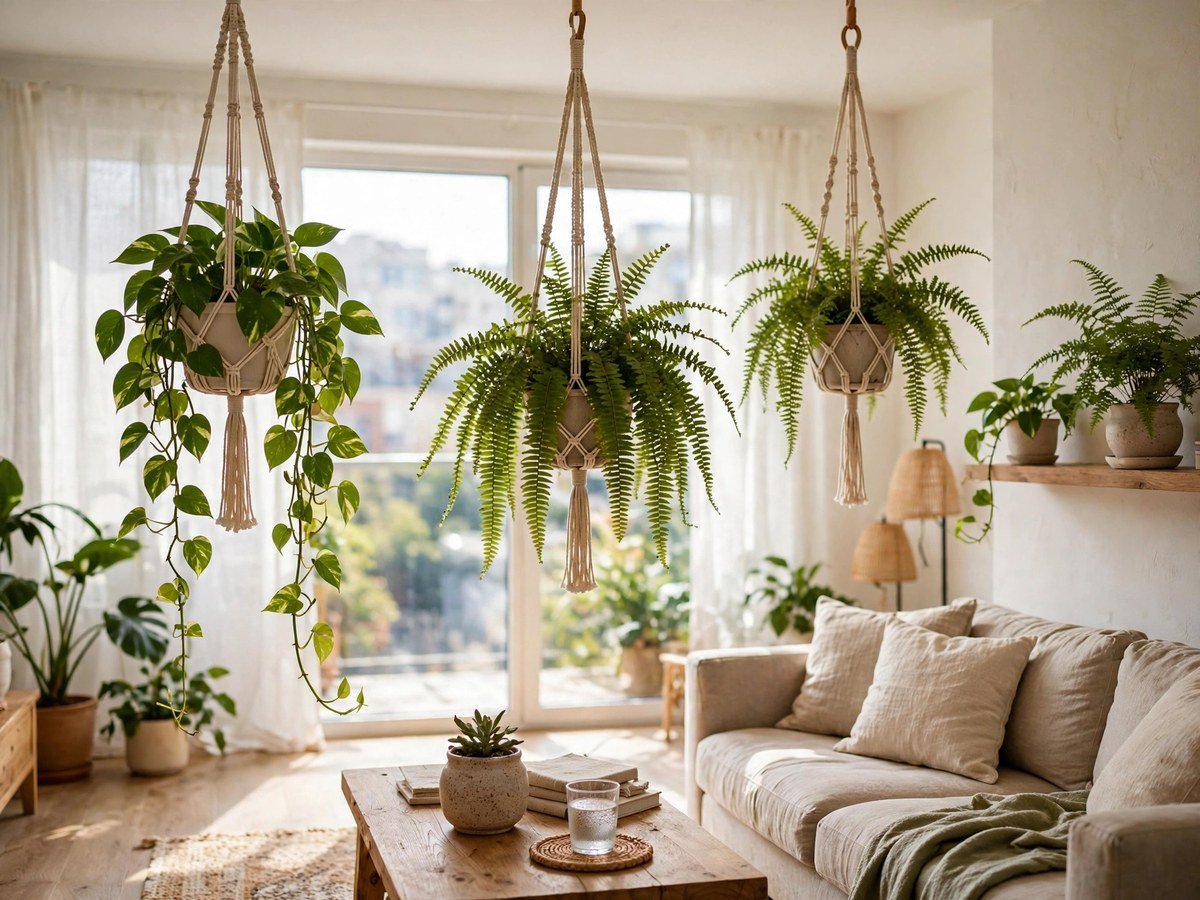
Look up — your ceiling is unused garden space. Hanging planters suit trailing plants like pothos, string of pearls, and Boston ferns, plus strawberries and cherry tomatoes in sturdy baskets outdoors. They keep plants away from pets and toddlers, improve air circulation, and add living decor at eye level. Water carefully with a long-spout can to avoid drips, and check soil moisture more often since hanging pots dry out faster. Use strong ceiling hooks anchored into joists, and choose lightweight pots to keep everything safe overhead.
4. Microgreens Indoors
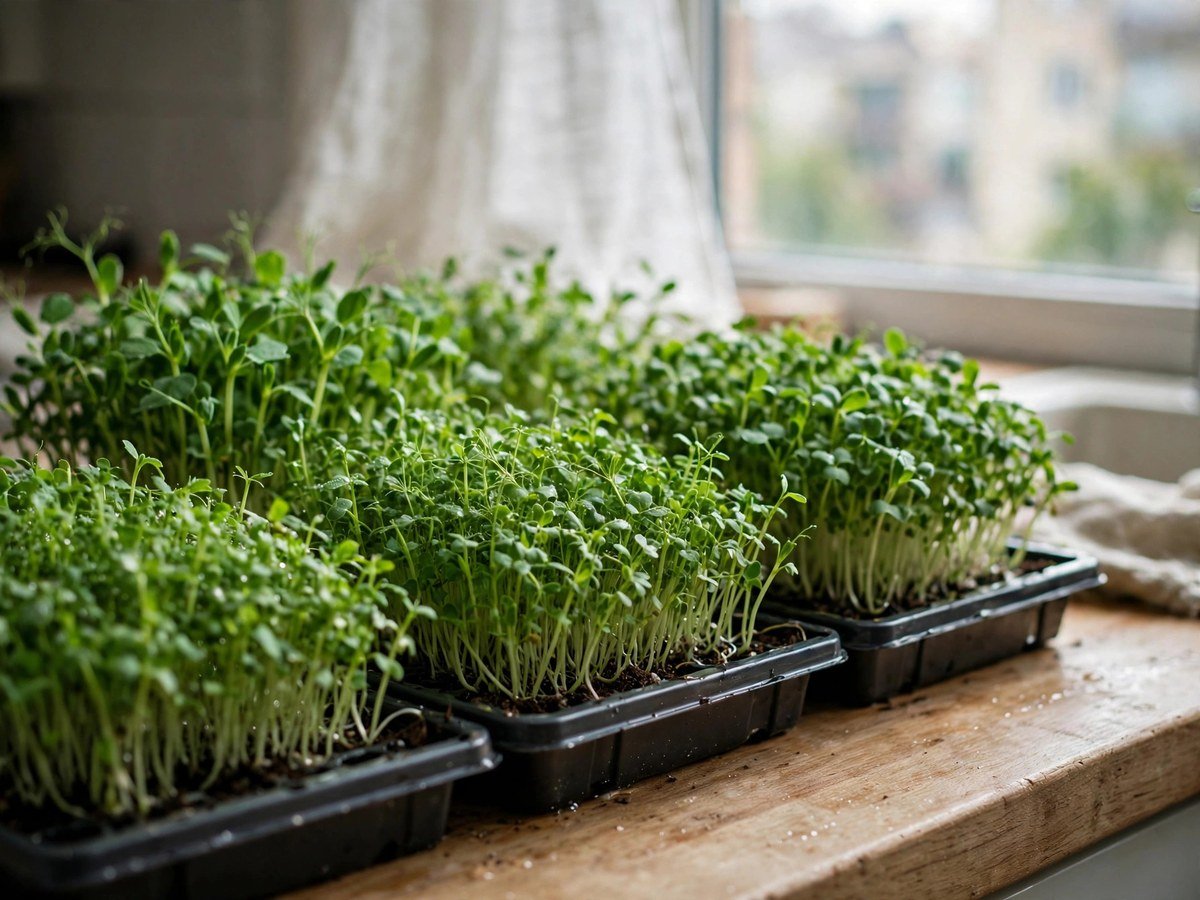
Microgreens are the ultimate apartment crop: harvest-ready in seven to fourteen days, needing no grow lights beyond a bright window, and incredibly nutrient-dense. All you need is a shallow tray, potting mix, and seeds like radish, broccoli, or sunflower. Sow thickly, mist daily, and snip with scissors when the first true leaves appear. Stagger a new tray every week and you’ll never run out. A single sunny countertop can produce a continuous salad supply for pennies.
5. Dwarf Tomatoes
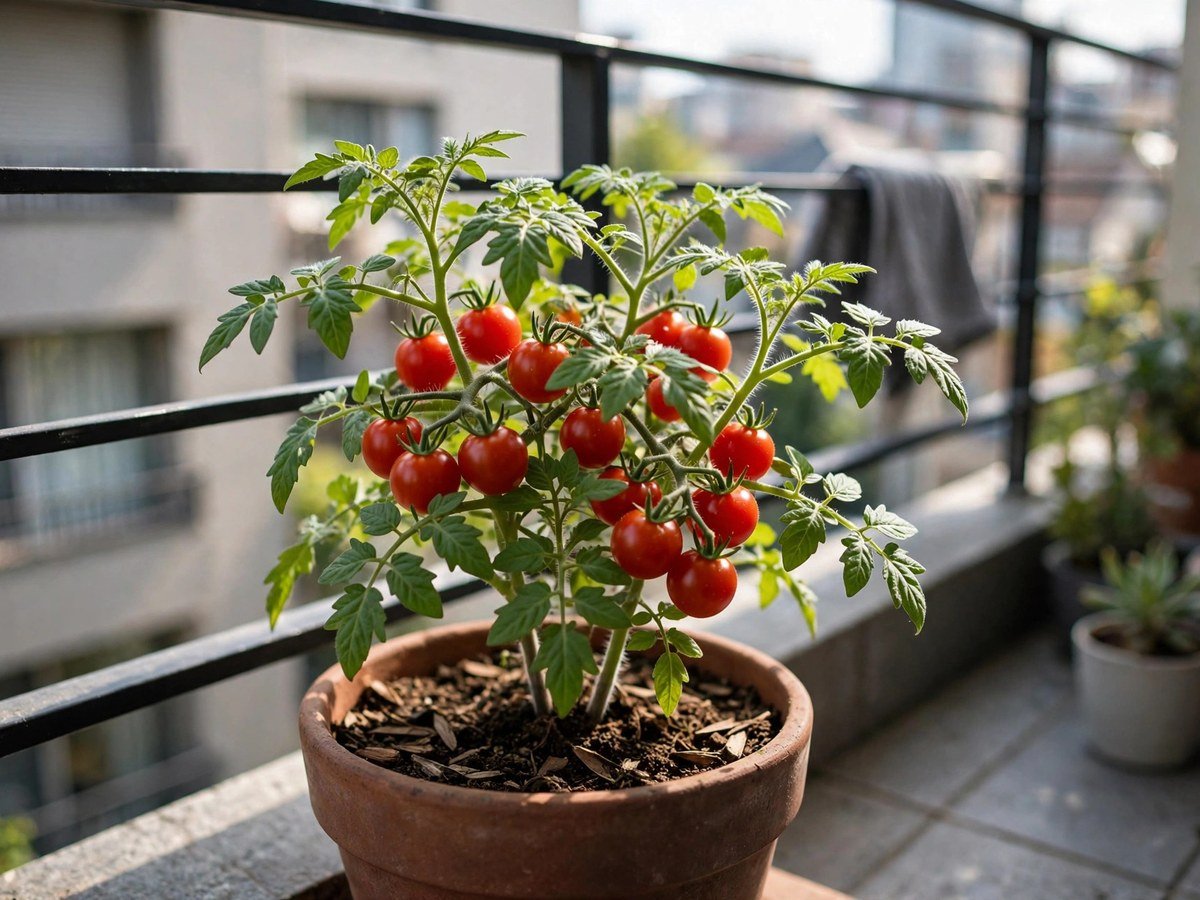
Craving homegrown tomatoes without a yard? Dwarf and patio varieties like Tiny Tim or Micro Tom were bred for containers, topping out at twelve to twenty-four inches while producing full-flavored fruit. Give them your sunniest spot — six or more hours — a three to five gallon pot, and consistent watering. A small stake or cage keeps them tidy, and you’ll harvest cherry tomatoes all summer from a single pot.
6. Vertical Pocket Planters
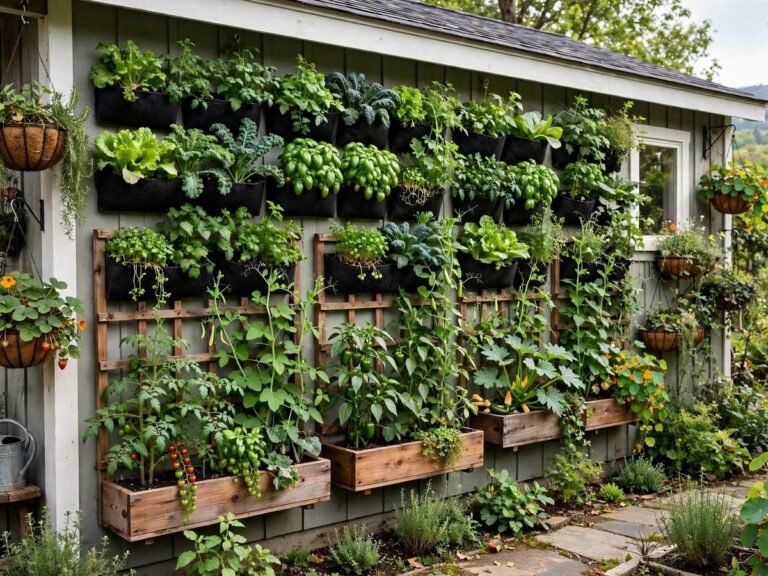
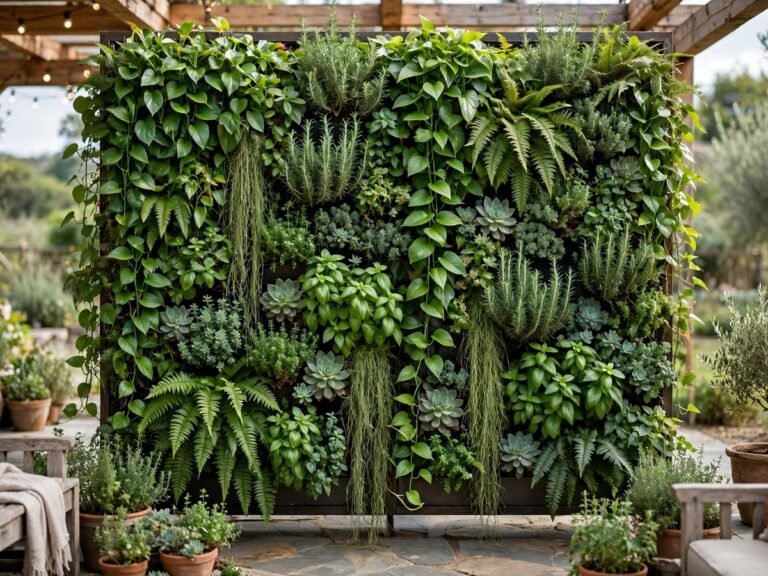
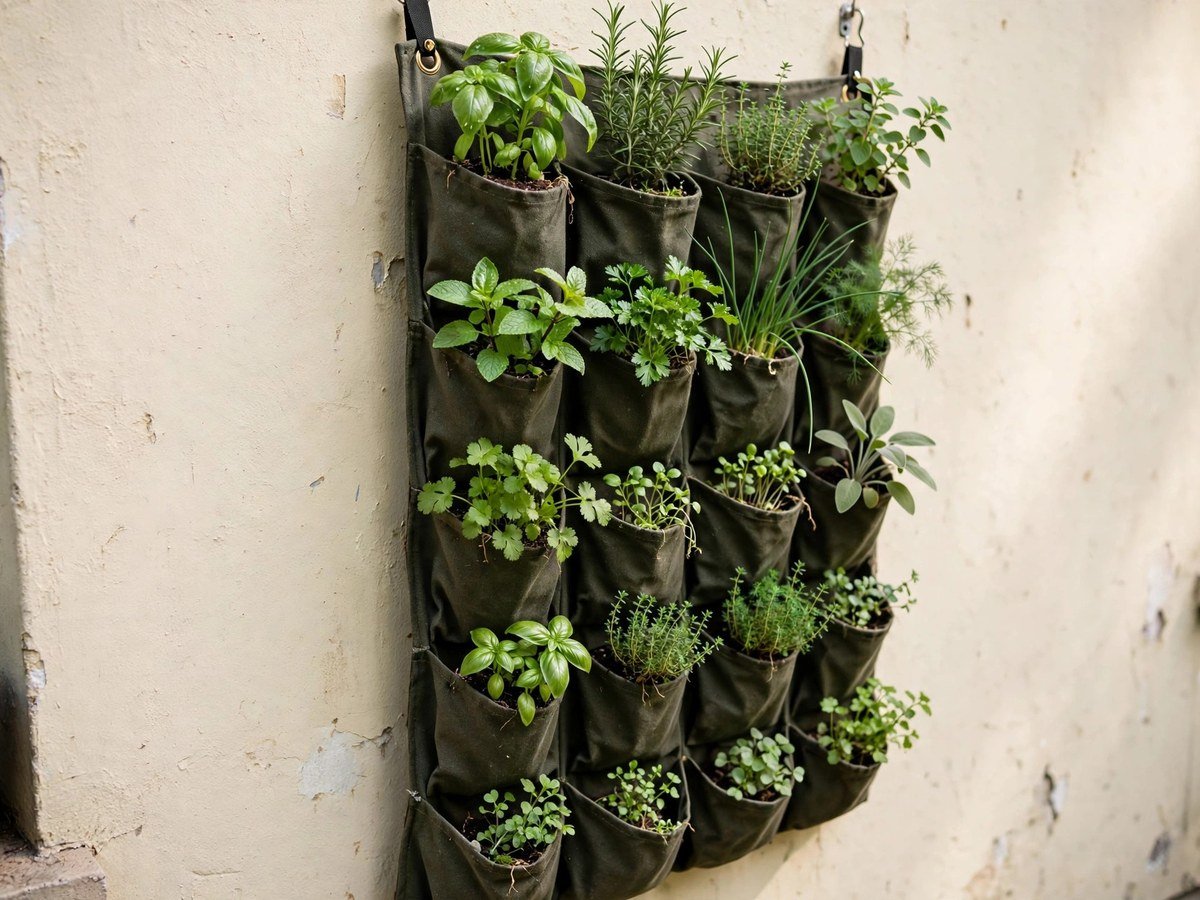
Fabric pocket planters turn any blank wall — indoors or on a balcony — into a living tapestry. Hang one by a bright window or on a sheltered wall and fill the pockets with herbs, lettuce, strawberries, or trailing ornamentals. They use zero floor space and water efficiently from top to bottom. Choose a planter with good drainage, use lightweight potting mix, and rotate it occasionally so every pocket gets its share of light. In hot weather, check the top pockets daily since they dry out first.
Small-Space Success Tips
Watering is the make-or-break skill in containers — pots dry out fast, so check daily in summer and consider self-watering planters for busy weeks. Feed regularly: nutrients wash out of pots quickly, so a half-strength liquid fertilizer every two weeks keeps plants productive. Maximize light with reflective surfaces or by moving pots with the seasons, and don’t forget drainage saucers to protect floors and sills. And know your limits: start with five or six pots, master them, then expand. A thriving mini-garden beats an overwhelming one every time.
Frequently Asked Questions
What vegetables grow best in apartments?
Herbs, salad greens, microgreens, dwarf tomatoes, peppers, and radishes all thrive in containers with enough light.
How much sun does a balcony garden need?
Most edibles want six or more hours; leafy greens and herbs manage fine with three to four.
Can I garden with no balcony at all?
Absolutely — windowsills, grow lights, and vertical planters let you grow entirely indoors.
What size pots should I use?
Bigger is better: three to five gallons for tomatoes and peppers, one to two gallons for herbs and greens.
How do I stop containers drying out?
Mulch the soil surface, use self-watering pots, and check moisture daily during hot weather.
The Bottom Line
Apartment gardening isn’t a compromise — it’s a different, often easier way to grow. Start with a few containers or a windowsill of herbs, learn what your light allows, and build from there. Before long, you’ll be harvesting dinner from a space you once thought too small to grow a single thing. Your future self will thank you.