Winter Indoor Gardening with Grow Lights
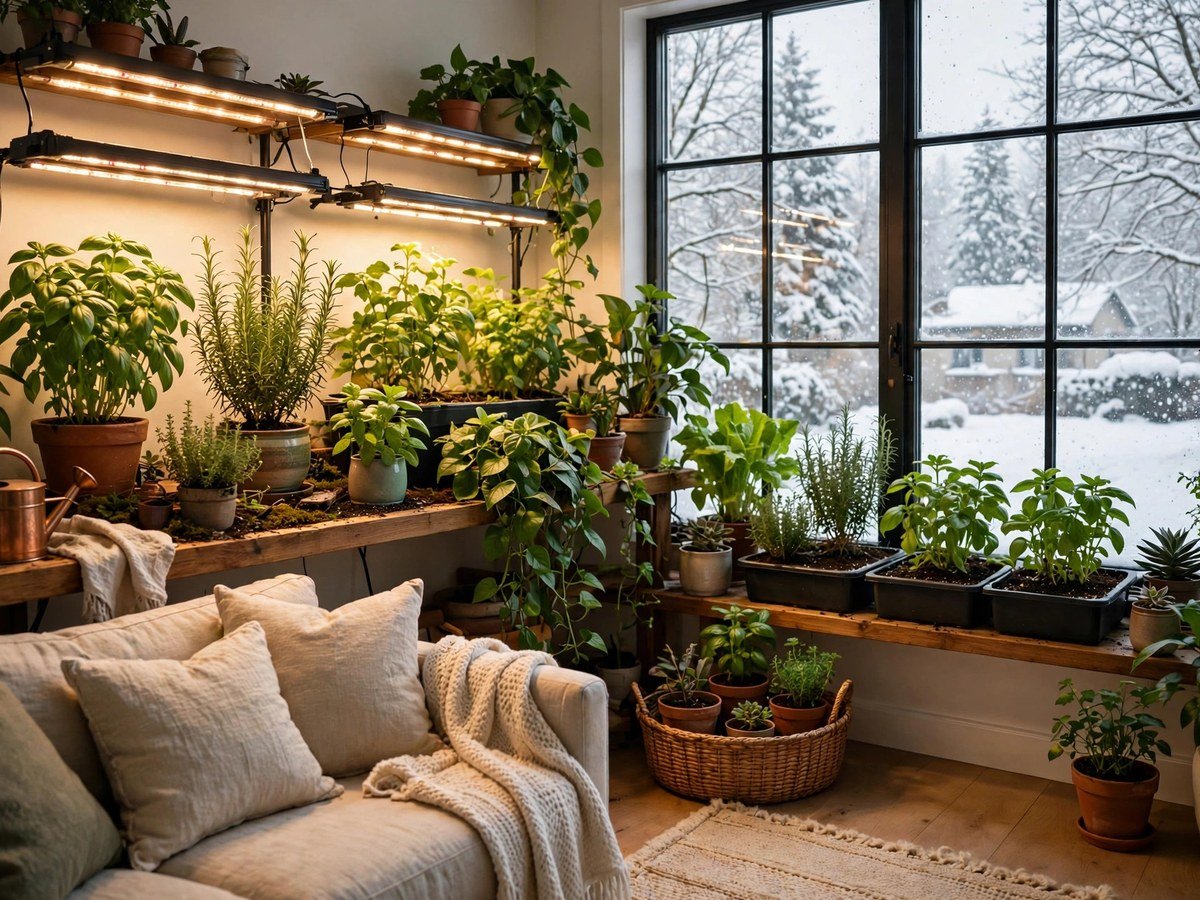
Winter Indoor Gardening with Grow Lights is the secret to keeping your green thumb happy when snow covers the ground outside. With the right grow lights, winter indoor gardening lets you harvest fresh herbs, raise seedlings, and keep beloved plants thriving until spring. Short days and weak sunlight no longer mean a dormant season — a simple LED setup on a shelf or windowsill can mimic summer sunshine. Whether you are a first-timer or a seasoned grower, this guide walks you through six practical ways to make the most of gardening under lights all winter long.
Why Grow Lights Change Everything in Winter
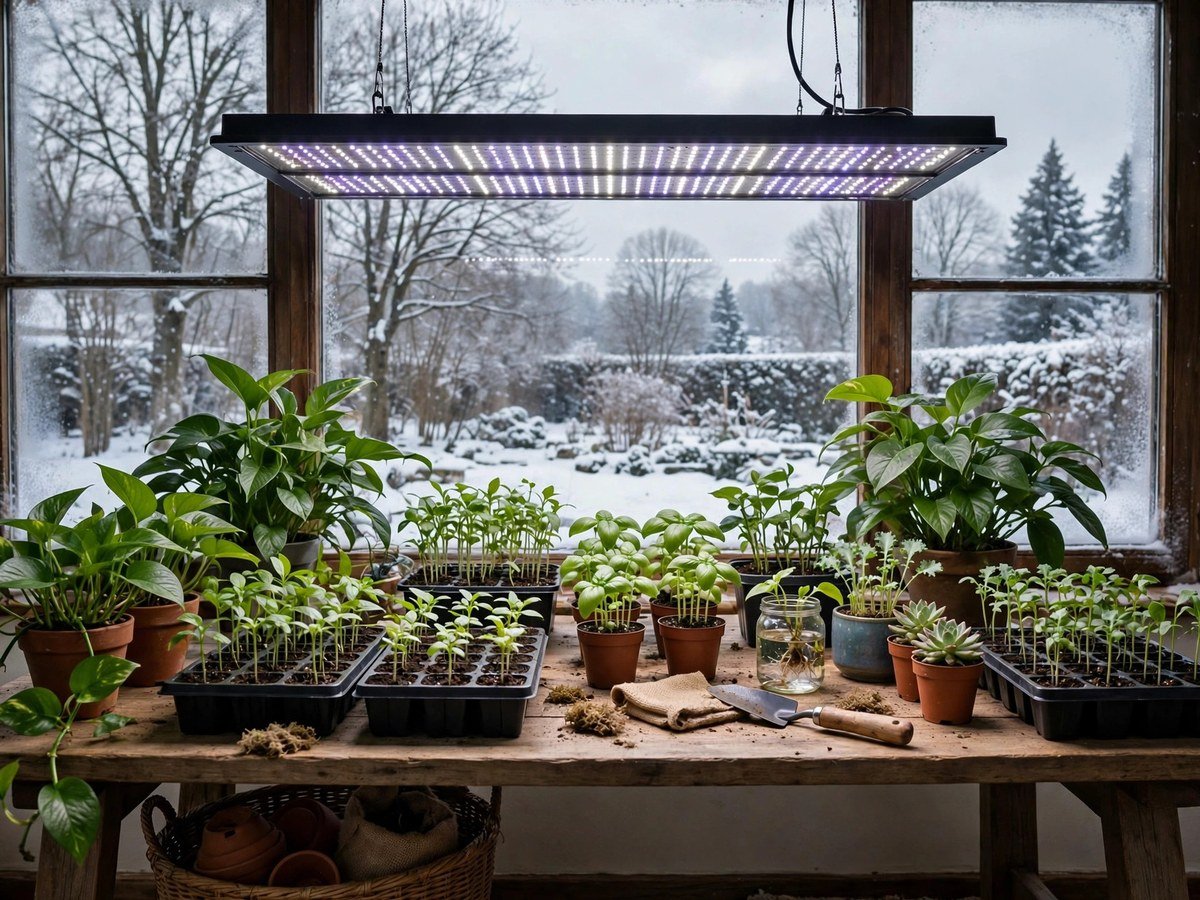
Most houseplants and edible crops need far more light than a winter windowsill provides. Even a bright south-facing window delivers only a fraction of summer sun, and short December days make it worse — plants stretch, pale, and stall. Grow lights solve this by delivering consistent, full-spectrum light for 12 to 16 hours a day, regardless of weather. Modern LEDs run cool and sip electricity, so you can light a whole shelf for pennies a day. The result is stocky, deep-green growth instead of leggy disappointment, and the ability to grow food crops that would never survive a northern winter otherwise.
6 Winter Indoor Gardening with Grow Lights
1. Herbs on Windowsills
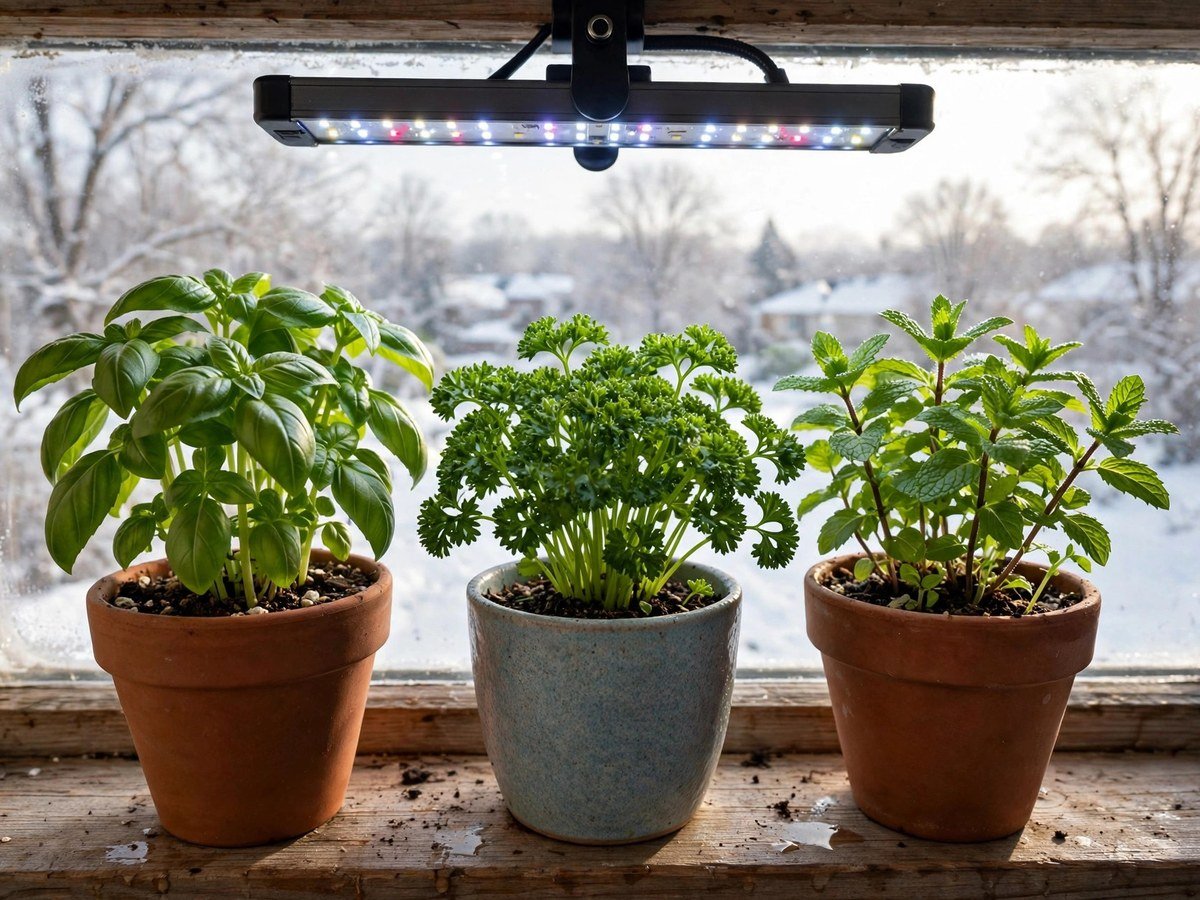
Basil, parsley, chives, and mint are the easiest entry point into winter growing. Place pots on your brightest windowsill and add a small clip-on or bar LED light a few inches above them for 12 to 14 hours daily. Herbs are forgiving: snip outer leaves regularly and they keep producing for months. Keep soil lightly moist, feed monthly with diluted liquid fertilizer, and rotate pots weekly so every side gets light. Nothing beats snipping fresh basil for pasta in the middle of January.
2. Microgreens Trays
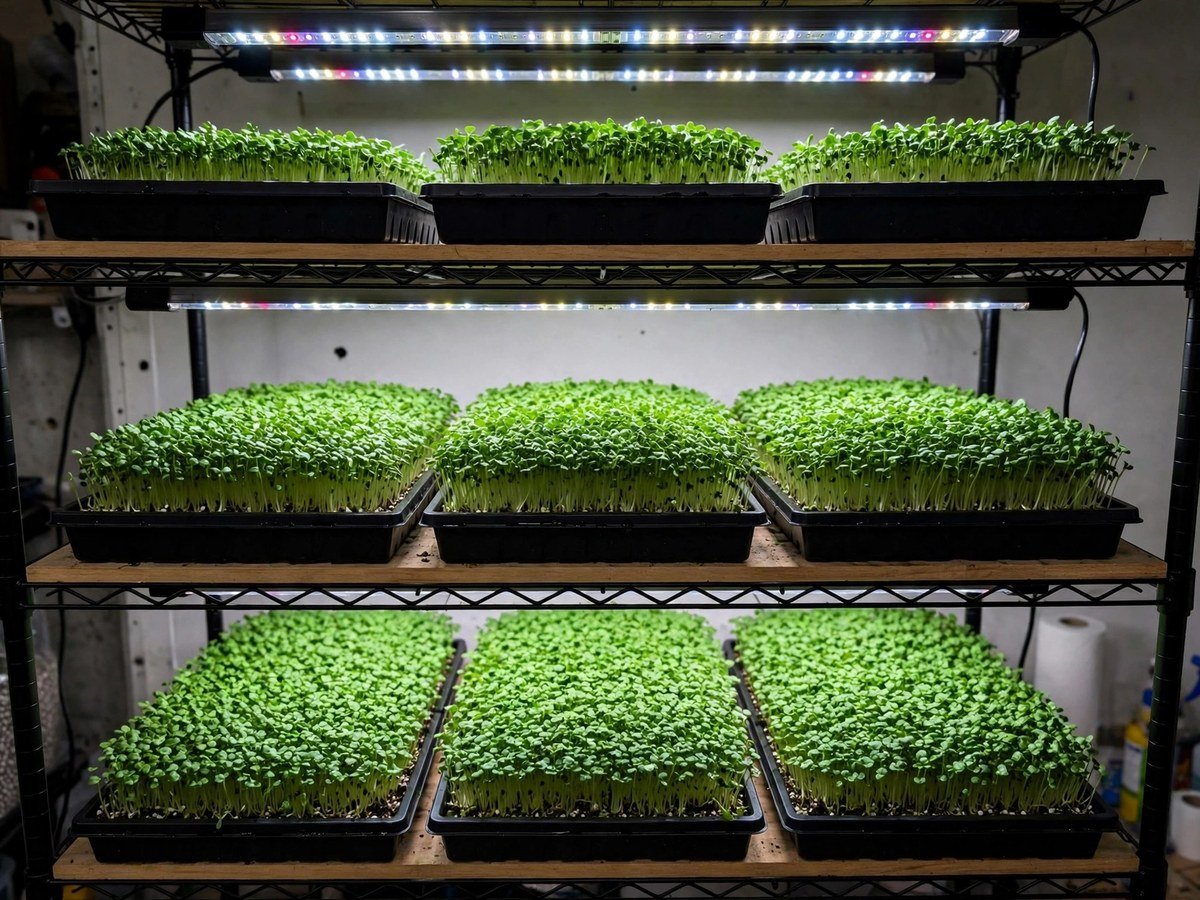
If you want the fastest payoff in winter indoor gardening, sow microgreens. These tiny seedlings of radish, broccoli, sunflower, and pea are ready to harvest in 7 to 14 days. Fill shallow trays with an inch of potting mix, scatter seeds densely, mist daily, and keep lights just two to three inches above the canopy. No fancy equipment is needed — a basic shop light works beautifully. Snip with scissors, resow weekly, and you will have a constant supply of nutrient-packed greens.
3. Overwintering Peppers
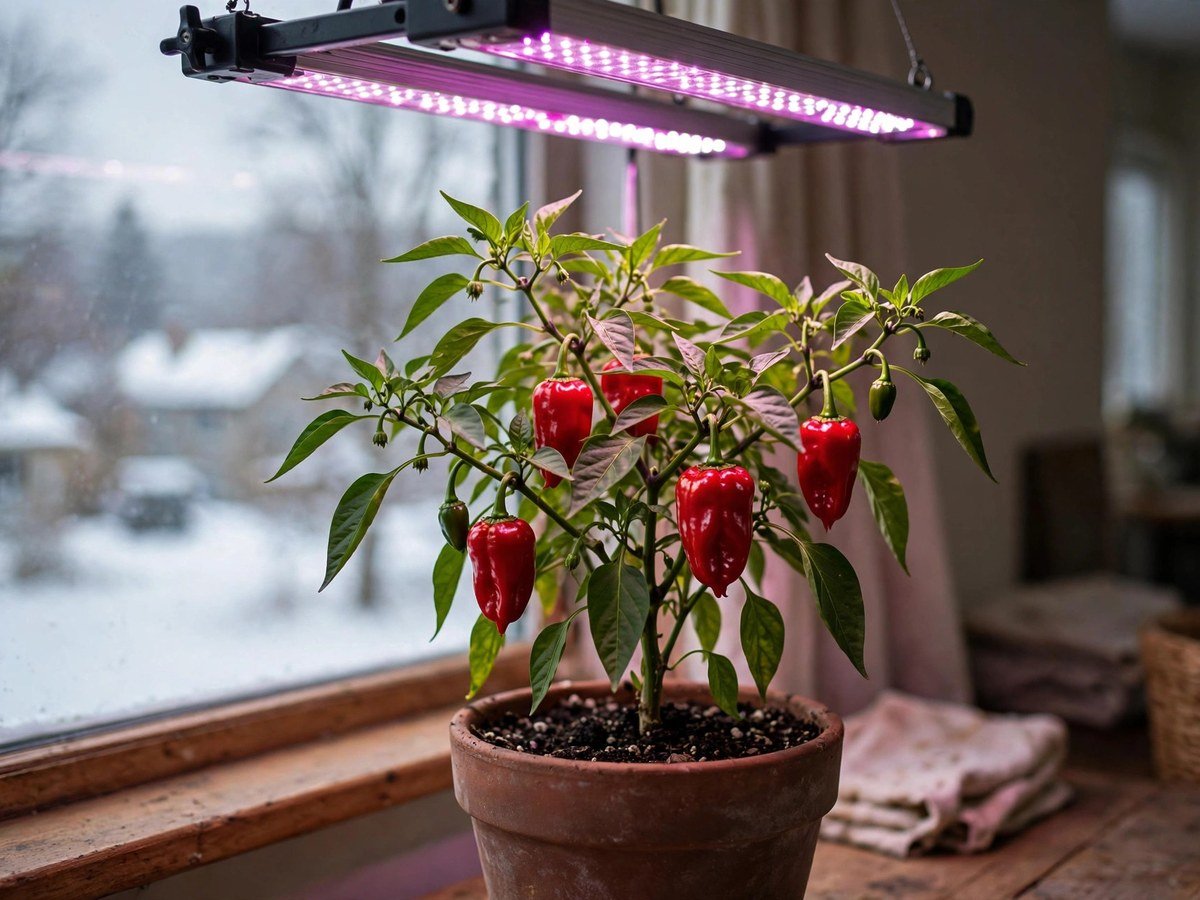
Pepper plants are perennials in warm climates, so why toss them in fall? Dig up your favorites before the first frost, prune them back by half, and pot them in fresh mix. Place them under grow lights for 12 hours a day in a cool room. They will drop leaves at first — that is completely normal — then push out fresh growth. Come spring you will have mature plants that fruit weeks earlier than anything started from seed.
4. Mini Grow Tent
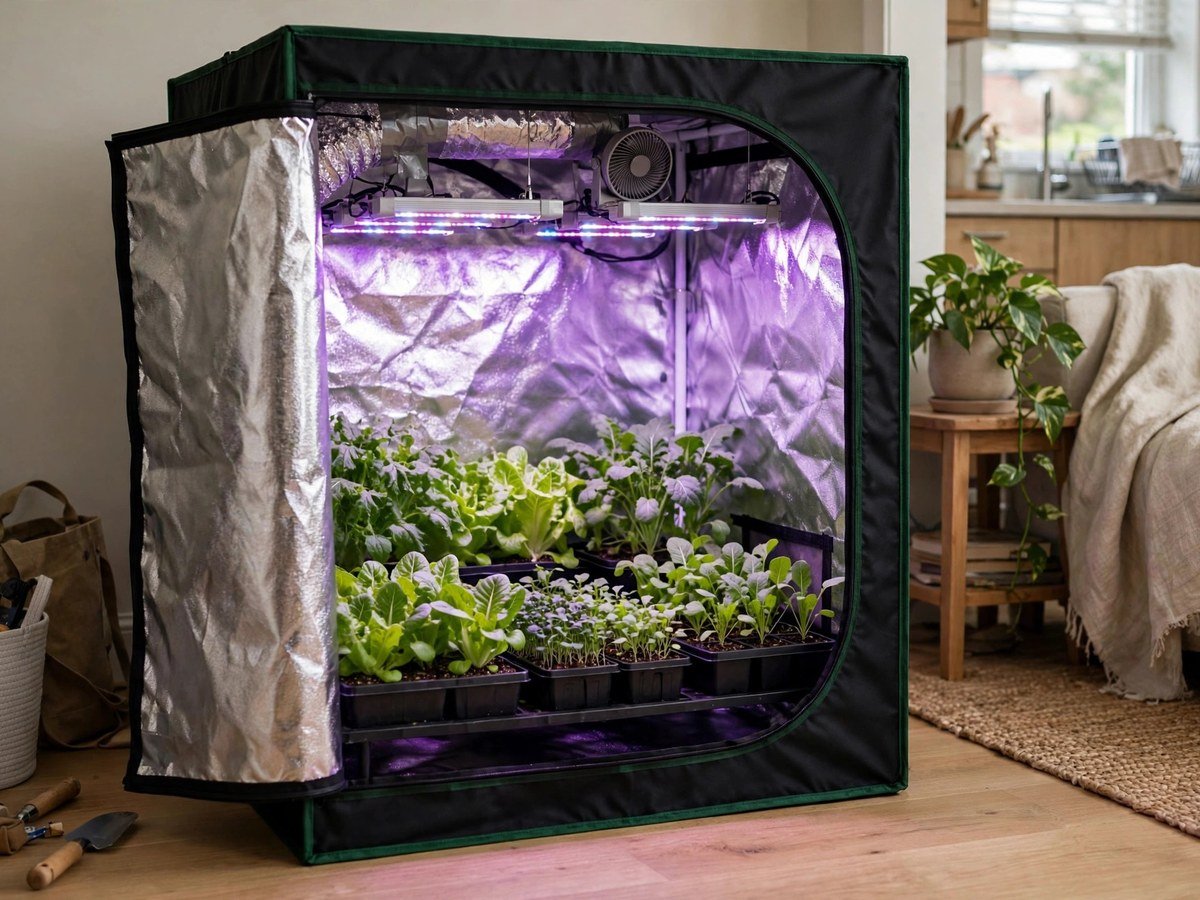
A mini grow tent turns any corner into a serious winter garden. These reflective fabric tents, usually two by two feet, bounce light back onto plants and hold in warmth and humidity. Hang a full-spectrum LED panel inside, add a small fan for airflow, and you can grow lettuce, herbs, or even dwarf tomatoes through the coldest months. Tents also contain light spill, which the rest of your household will appreciate.
5. Timer Schedules
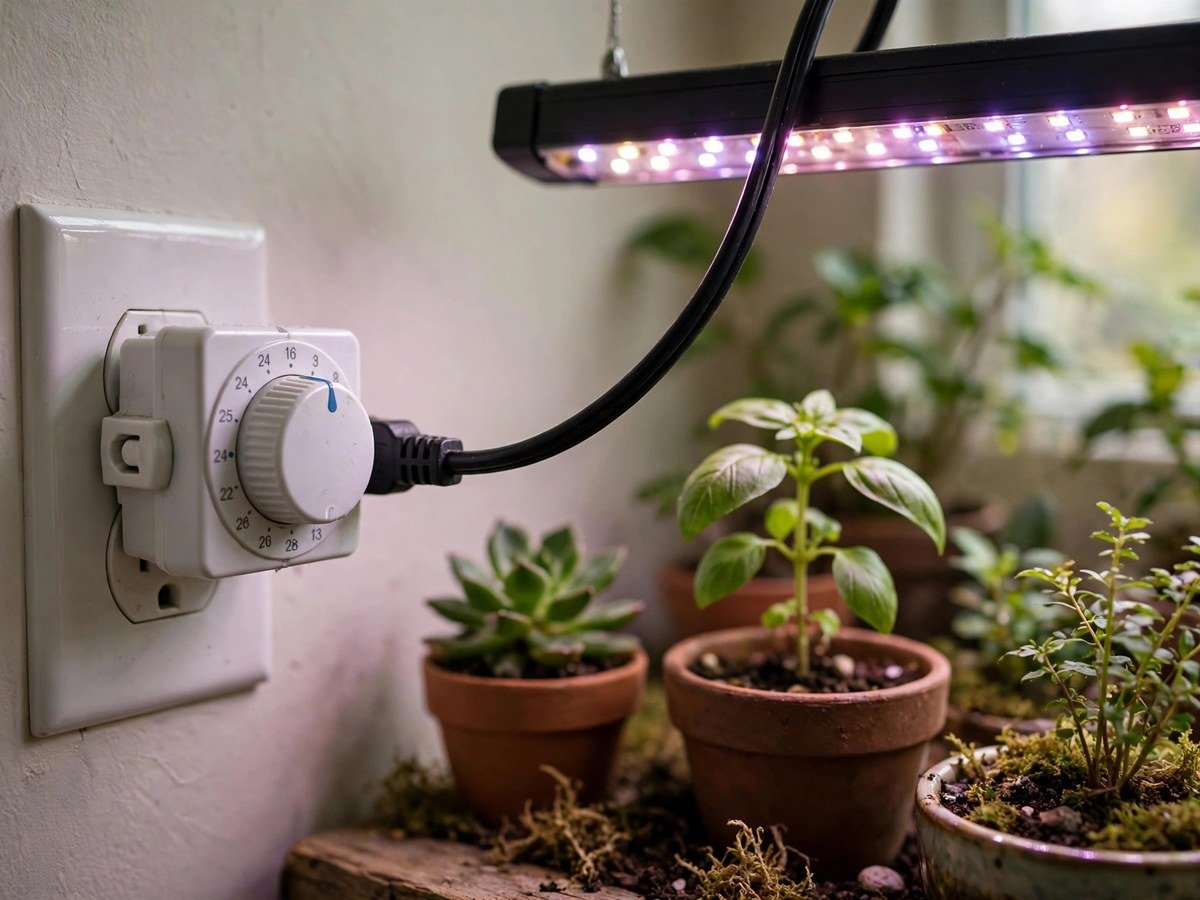
Plants need darkness too, and a simple plug-in timer automates the perfect rhythm. Most leafy greens and herbs thrive on 14 to 16 hours of light, while fruiting plants like peppers prefer 12 to 14. Set your timer once and forget it — consistency matters more than perfection. Avoid 24-hour light, which stresses plants and wastes electricity. A seven-dollar timer is the cheapest upgrade in all of winter indoor gardening.
6. Humidity Trays
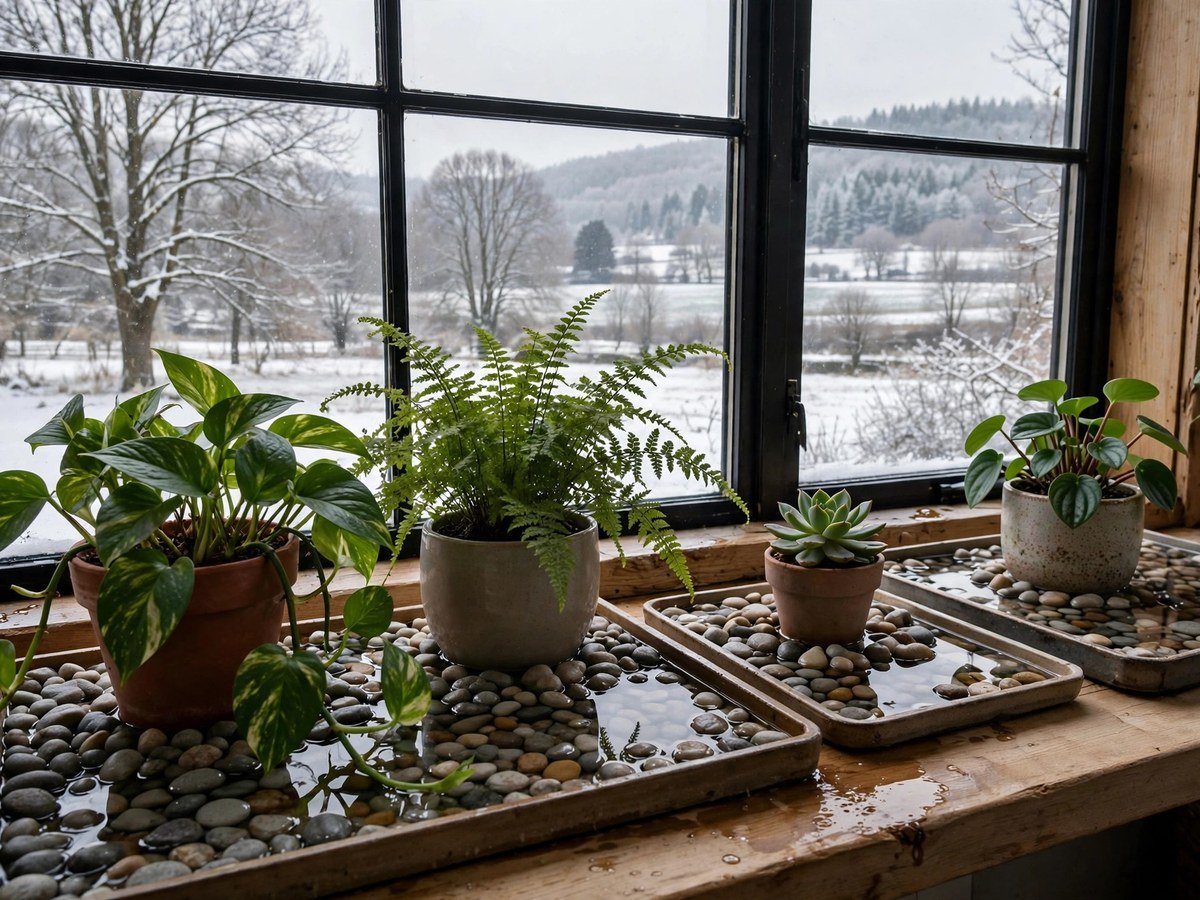
Winter heating sucks moisture from the air, leaving leaf edges brown and crispy. Humidity trays are the easy fix: fill a shallow tray with pebbles and water, then set pots on top so they sit above the waterline. As water evaporates, it bathes nearby foliage in gentle humidity. Group plants together for an extra boost and refill the tray weekly. Your tropical houseplants will thank you with glossy, unblemished leaves.
Practical Tips for Thriving Winter Gardens
Start with clean equipment — wipe light panels monthly, since dust can cut output noticeably. Keep lights close: most LEDs belong 6 to 12 inches above foliage, raised as plants grow. Water less than you think; cool rooms and slower growth mean soggy soil and root rot are the top winter killers. Feed lightly, about half the summer rate, and watch for pests like spider mites that love dry indoor air — a weekly leaf inspection catches them early. Finally, rotate and prune regularly so every plant gets its fair share of light.
Frequently Asked Questions
How many hours of grow light do indoor plants need in winter?
Most houseplants and herbs do well with 12 to 16 hours of artificial light daily. Use a timer for consistency, and always give plants a dark rest period of at least 8 hours.
Can I use regular LED bulbs as grow lights?
Standard LEDs work for low-light houseplants, but fruiting plants and seedlings do far better under full-spectrum grow lights designed with the right red and blue wavelengths.
How close should grow lights be to plants?
For most LED panels, 6 to 12 inches above the foliage is ideal. Too far and plants stretch; too close and leaves can bleach or burn.
Do grow lights use a lot of electricity?
Modern LEDs are efficient. A typical 40-watt panel running 14 hours a day costs only a few dollars per month in most regions.
Why are my indoor winter plants leggy?
Legginess almost always means too little light. Move the light closer, extend the timer by an hour or two, and prune back stretched stems to encourage bushier regrowth.
The Bottom Line
Winter does not have to be a gardening pause. With a modest grow light setup, you can harvest herbs, crunch microgreens, and keep your favorite plants vigorous until spring returns. Start small — a single shelf of herbs — and expand as you catch the indoor growing bug. By the time the snow melts, you will wonder why you ever waited for spring.