Balcony Vegetable Garden Ideas
Balcony Vegetable Garden Ideas
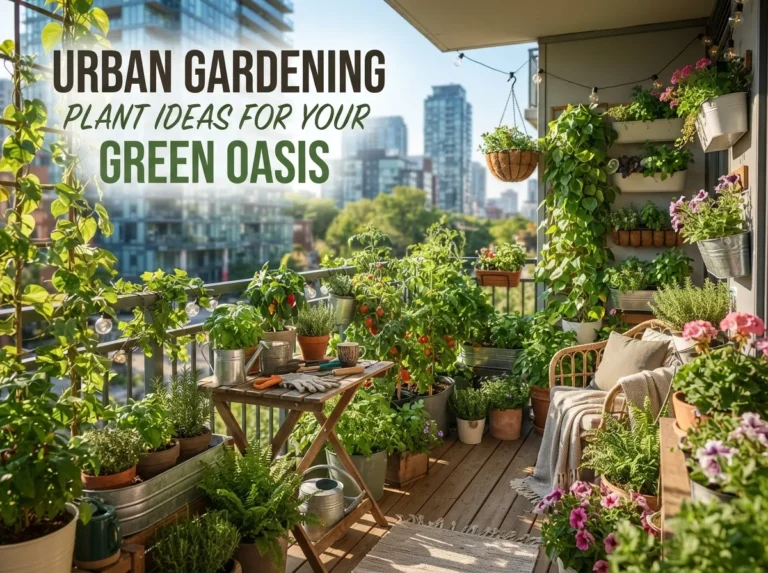
A balcony vegetable garden might be the most satisfying garden of all. Even the tiniest balcony vegetable garden can produce armfuls of tomatoes, endless salads, and fresh herbs steps from your kitchen. Balconies have secret advantages: fewer soil pests, great sun exposure above the tree line, and everything within easy reach for watering. The trick is choosing compact varieties, using every inch — railings, walls, and floor — and feeding containers generously. These six ideas will turn even a shoebox balcony into a produce aisle you grew yourself.
Why Balconies Grow Surprisingly Well
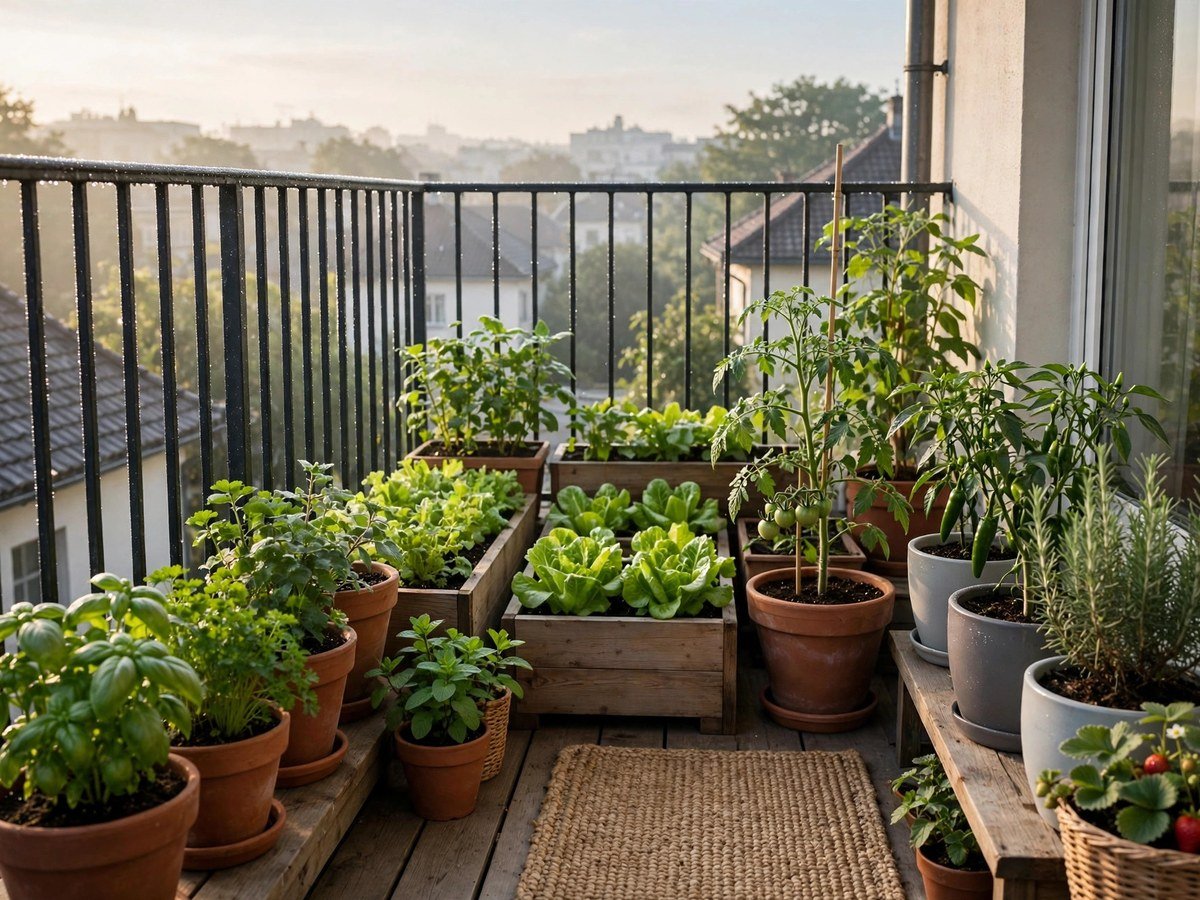
Balconies cheat in the gardener’s favor. Raised above the ground, they dodge most soil-borne diseases, slugs, and hungry rabbits entirely. Upper floors often catch more unobstructed sun than shaded backyards, and reflected warmth from walls ripens tomatoes faster. Watering is a pleasure, not a chore, when the can is ten steps away and every plant is visible at a glance. The only real limits are weight and wind — respect both, and a balcony can out-produce a ground plot twice its size.
6 Balcony Vegetable Garden Ideas
1. Railing Planters
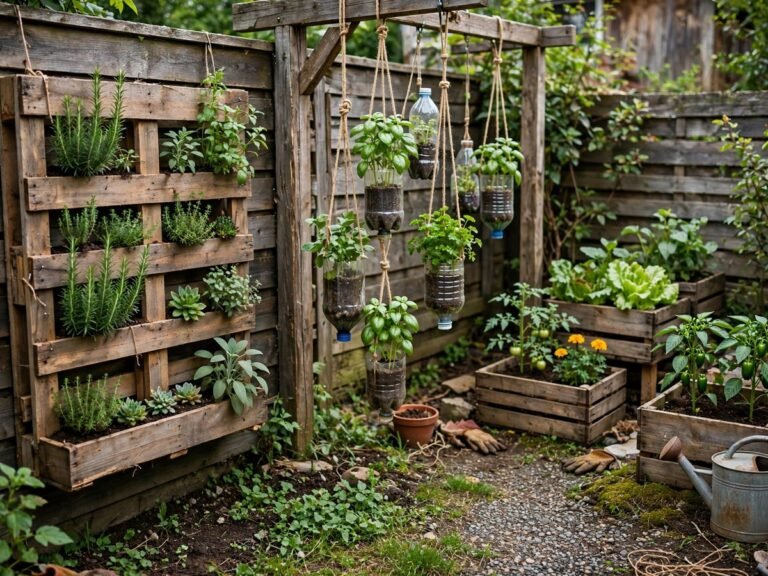
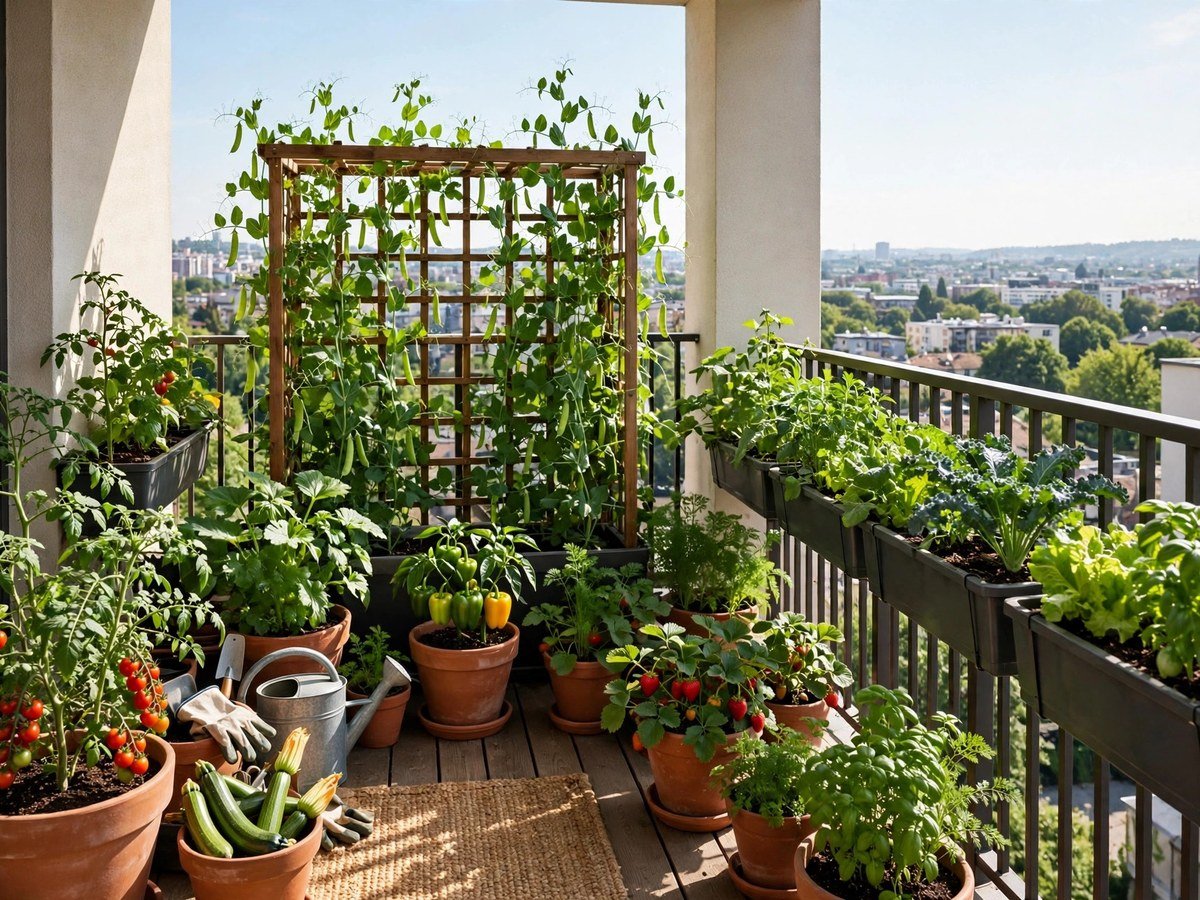
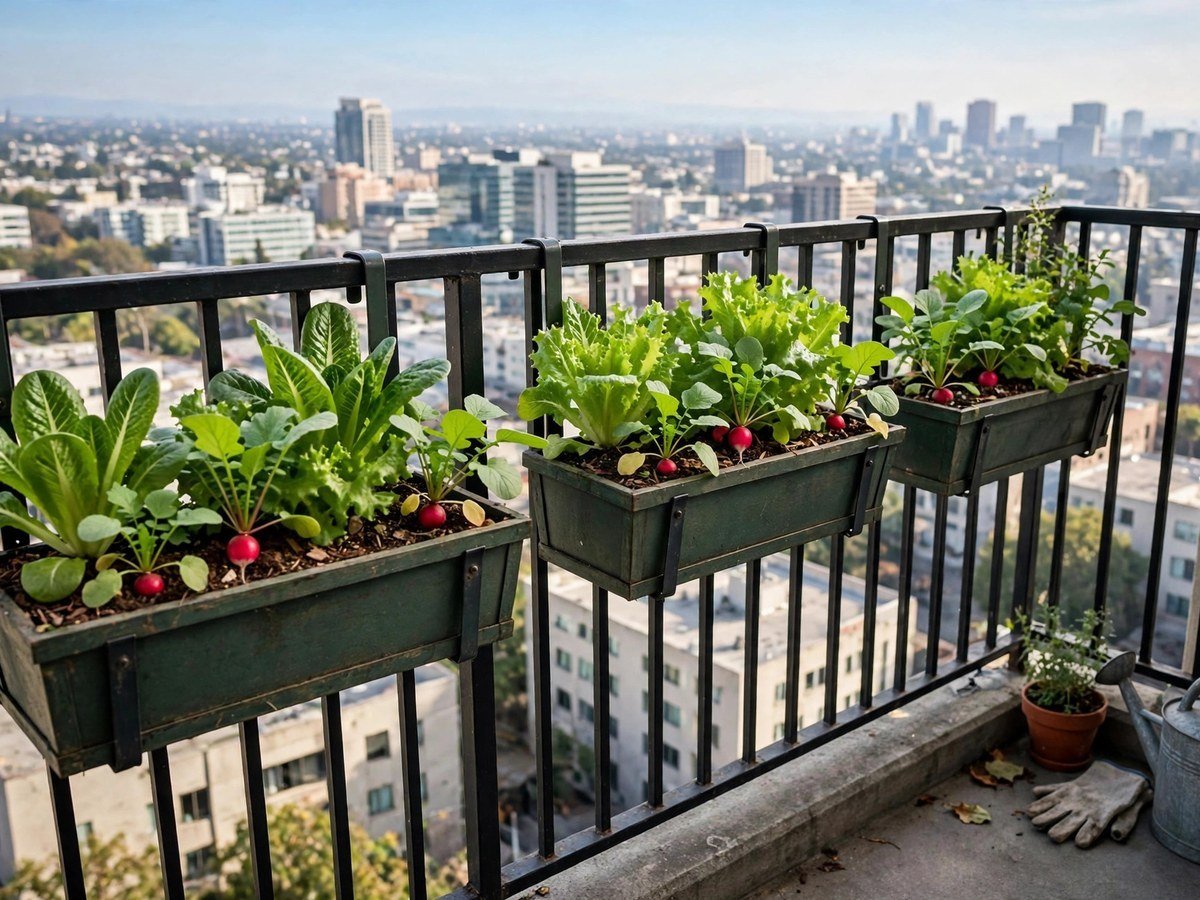
Railing planters are the balcony gardener’s best friend. Saddle-style boxes hook over the railing without a single screw — perfect for renters — and instantly add a whole row of growing space that touches zero floor. Fill them with shallow-rooted winners: lettuce, radishes, green onions, spinach, and trailing herbs. They catch superb sun and drain freely, so check moisture daily in heat. Line the sunniest railing and your balcony gains a floating salad bar.
2. Compact Tomatoes
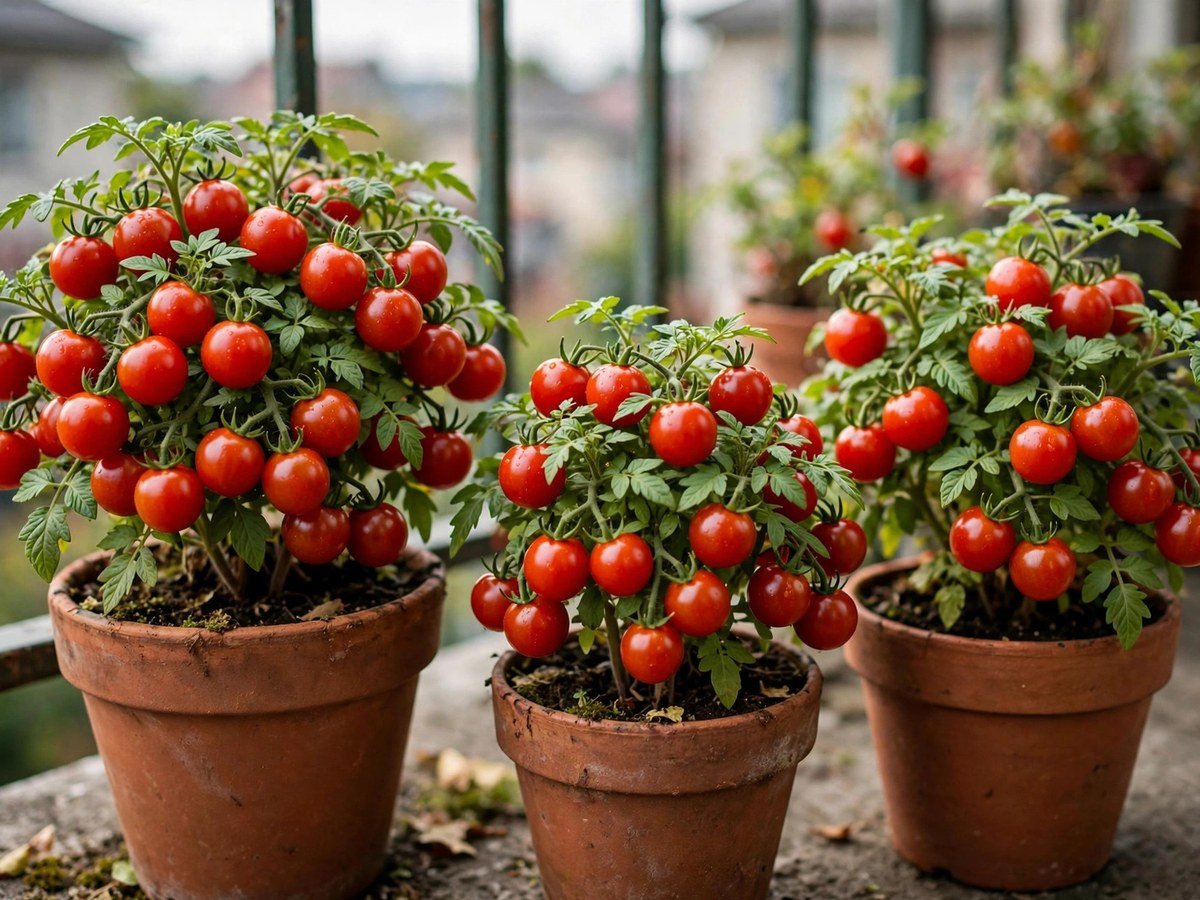
Compact tomatoes were practically invented for balconies. Determinate and dwarf varieties grow just one to two feet tall yet pump out handfuls of sweet cherry tomatoes all summer. Give each plant a five-gallon pot, a small stake, and the sunniest corner you have. Feed every two weeks once flowers appear, and pick ripe fruit promptly — the more you harvest, the more the plant produces.
3. Salad Bowls
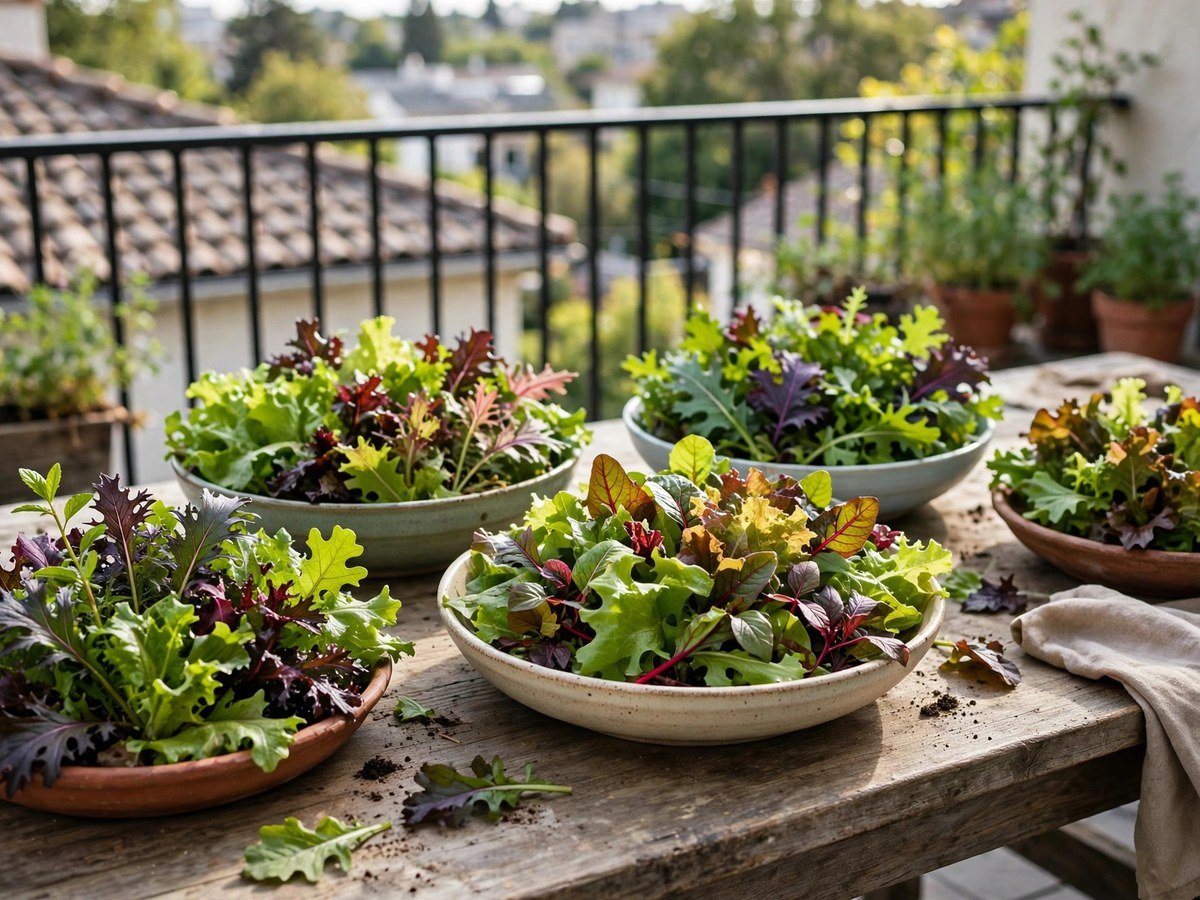
Salad bowls are the fastest reward in balcony gardening. Sow cut-and-come-again lettuce, arugula, and spinach thickly in wide, shallow containers, and you will be snipping your first harvest in as little as three weeks. Harvest the outer leaves and the centers keep regrowing for months. In hot climates, tuck bowls where they get morning sun and afternoon shade to delay bolting. Two bowls sown two weeks apart mean endless salads.
4. Chili Peppers
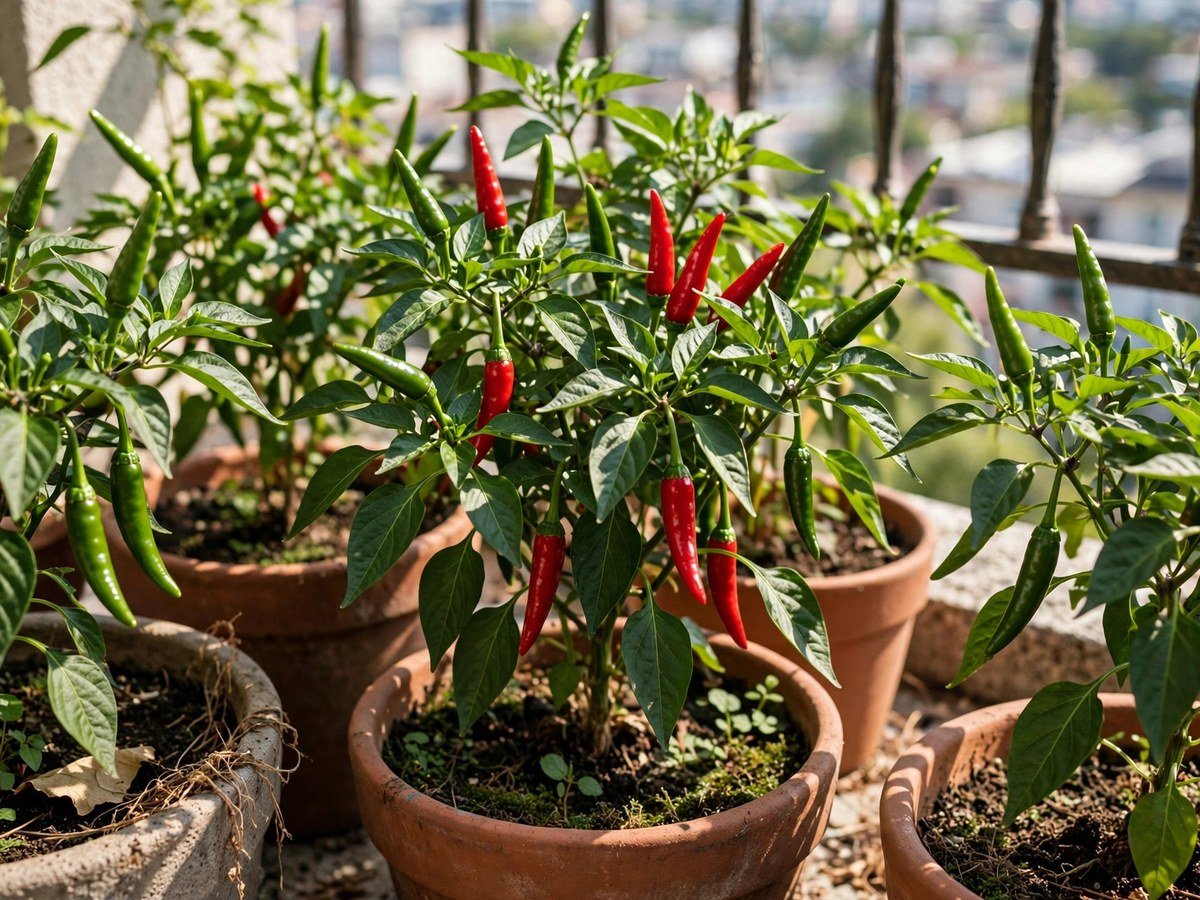
Chili peppers love the heat that balconies collect. These compact plants thrive in pots as small as three gallons, asking only for full sun, consistent water, and patience while they ripen. Start with reliable jalapenos or cayennes, then graduate to habaneros once you are hooked. The more sun and warmth they get, the hotter the harvest. Bonus: their glossy green foliage and jewel-toned fruit make them genuinely ornamental.
5. Vertical Trellis
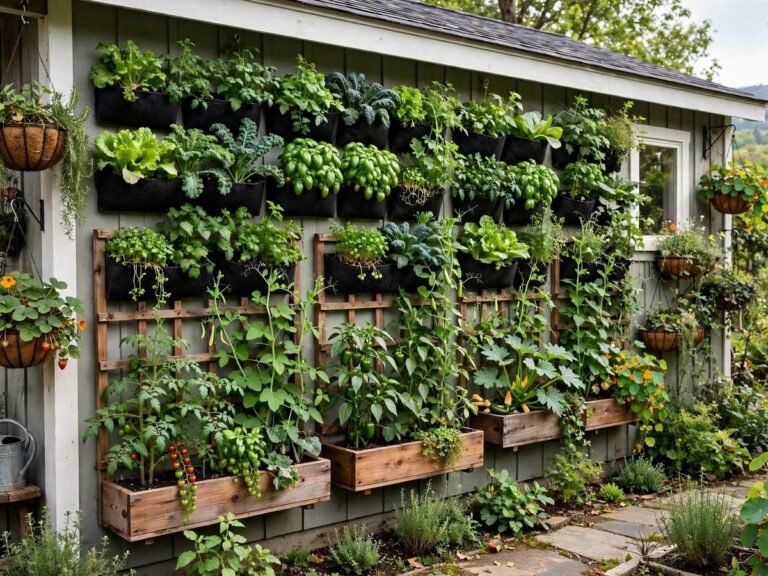
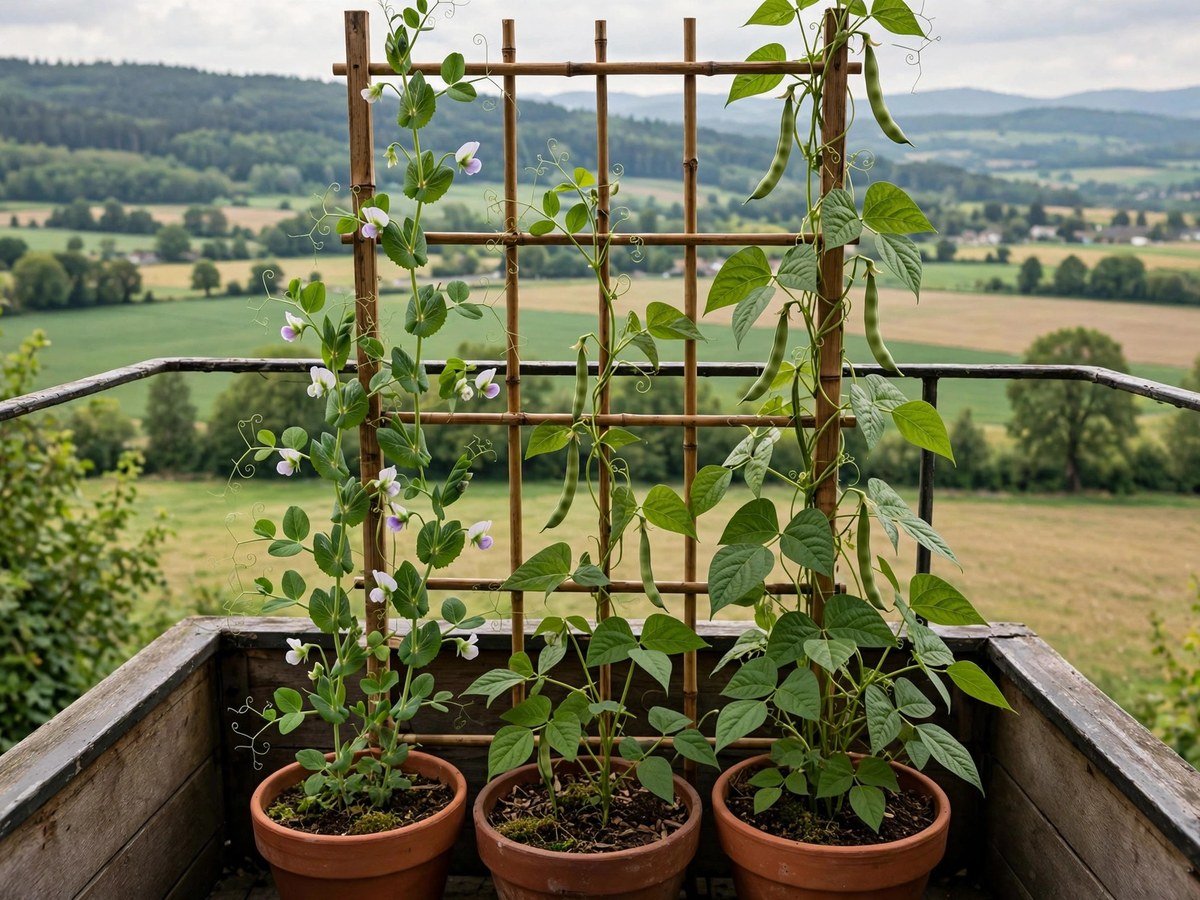
A vertical trellis doubles a balcony’s growing area overnight. Mount a small trellis or string netting on the sunniest wall and train pole beans, peas, or compact cucumbers upward, with pots of basil and lettuce thriving in the shade below. Vining crops produce far more per square foot than bush types, and harvesting at eye level is pure joy. Secure the trellis well — a mature bean vine in a summer storm pulls hard.
6. Self-Watering Pots
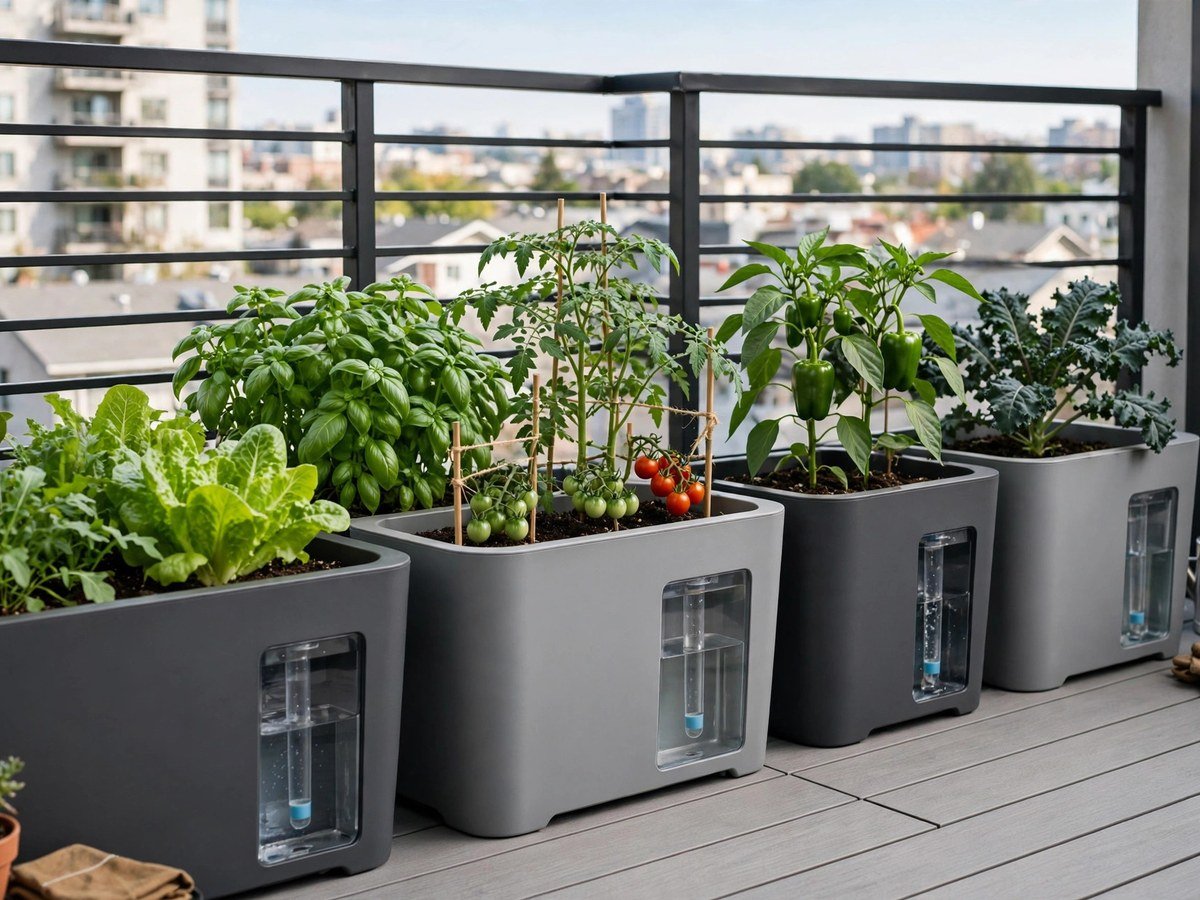
Self-watering pots are insurance against the number-one balcony killer: missed waterings. A built-in reservoir wicks moisture up to the roots for days, keeping soil evenly moist through heat waves and busy weeks. Vegetables like peppers, eggplants, and herbs grow noticeably better with consistent water. Fill the reservoir, top up every few days, and your plants will forgive the occasional forgotten watering can.
Balcony Growing Tips
Check your lease and your balcony’s weight limit before loading up on soil — wet potting mix is heavy, so favor lightweight mixes and set big pots near load-bearing walls. Map the sun: most vegetables need six-plus hours, so observe for a day before placing pots. Wind dries containers fast and can shred leaves, so add a simple windbreak on exposed balconies. Finally, feed container plants regularly; frequent watering flushes nutrients out, and hungry pots produce disappointing harvests.
Frequently Asked Questions
How much sun does a balcony vegetable garden need?
Fruiting vegetables like tomatoes and peppers need at least six hours of direct sun. Leafy greens and herbs will produce well with three to four hours, making them the smart pick for north- or east-facing balconies.
What is the easiest vegetable to grow on a balcony?
Lettuce and salad greens — they sprout fast, tolerate small containers and partial shade, and regrow after cutting. Radishes and green onions are nearly as foolproof for first-time growers.
How often should I water balcony vegetables in summer?
Daily, and sometimes twice daily in heat waves — containers dry out far faster than ground soil. Self-watering pots, mulch on the soil surface, and grouping pots together all stretch the time between waterings.
Can I grow vegetables on a shady balcony?
Yes, if you choose shade-tolerant crops. Lettuce, spinach, arugula, kale, mint, parsley, and cilantro all produce nicely with limited sun. Save the sunny railing spots for anything that fruits.
How do I keep my balcony garden from getting too heavy?
Use lightweight potting mix instead of garden soil, choose fabric pots over ceramic, and spread large containers along load-bearing walls rather than clustering them at the outer edge. When in doubt, ask your building manager about limits.
The Bottom Line
Your balcony is already a garden — it just does not know it yet. Start with one railing planter and a pot of tomatoes this weekend. By midsummer you will be eating salads you grew ten steps from your kitchen, and wondering why you waited so long.