Vertical Gardening Ideas for Small Spaces
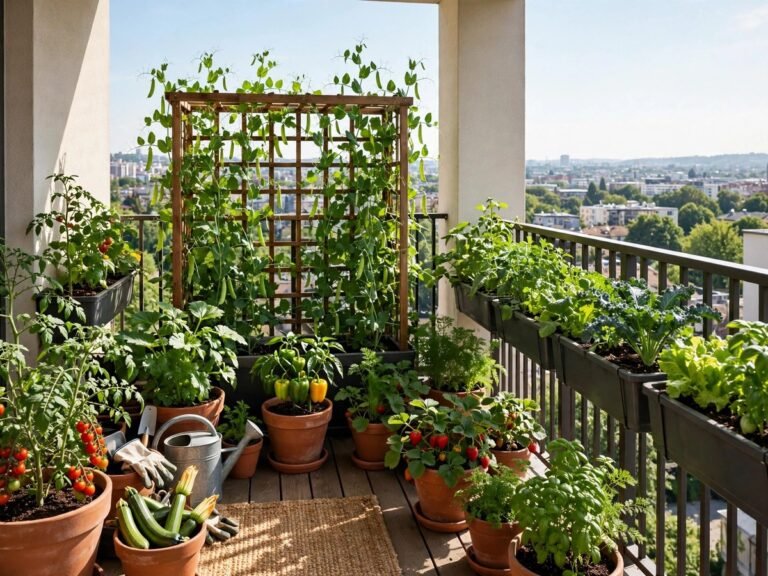
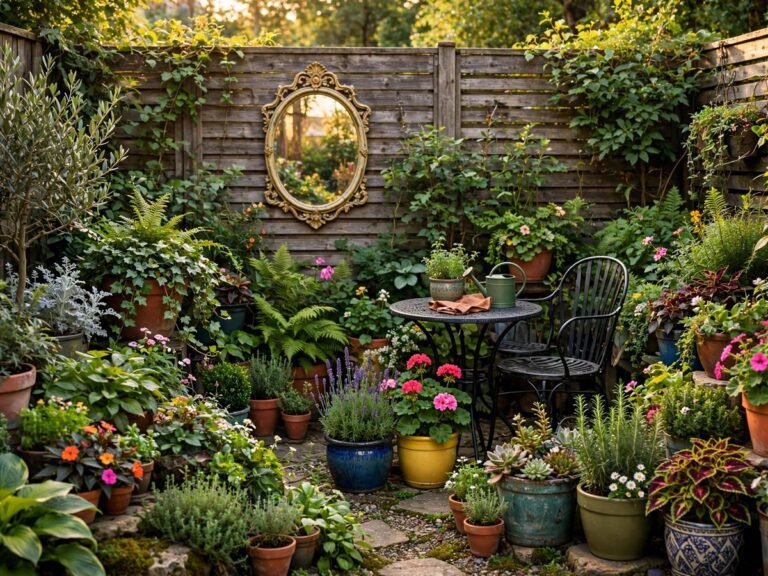
When floor space is precious, the smartest vertical gardening ideas for small spaces turn walls, fences and railings into productive growing areas. Going up instead of out can easily double or triple your planting area without sacrificing a single square metre of patio. Vertical growing also keeps plants off damp ground, improves air circulation and puts harvests at a comfortable height. Whether you rent a tiny balcony or own a pocket courtyard, these six ideas will help you grow more in less space.
Why Growing Up Beats Spreading Out
Every square metre of a small garden is contested territory — seating, storage, paths and planting all compete. Vertical gardening sidesteps the fight entirely by colonising the unused airspace above. Walls and fences that once just enclosed the space become productive surfaces. Plants grown vertically get better light and airflow, which means fewer fungal problems and cleaner harvests. And there is a psychological bonus: green walls make small spaces feel like lush rooms rather than cramped yards.
6 Vertical Gardening Ideas for Small Spaces
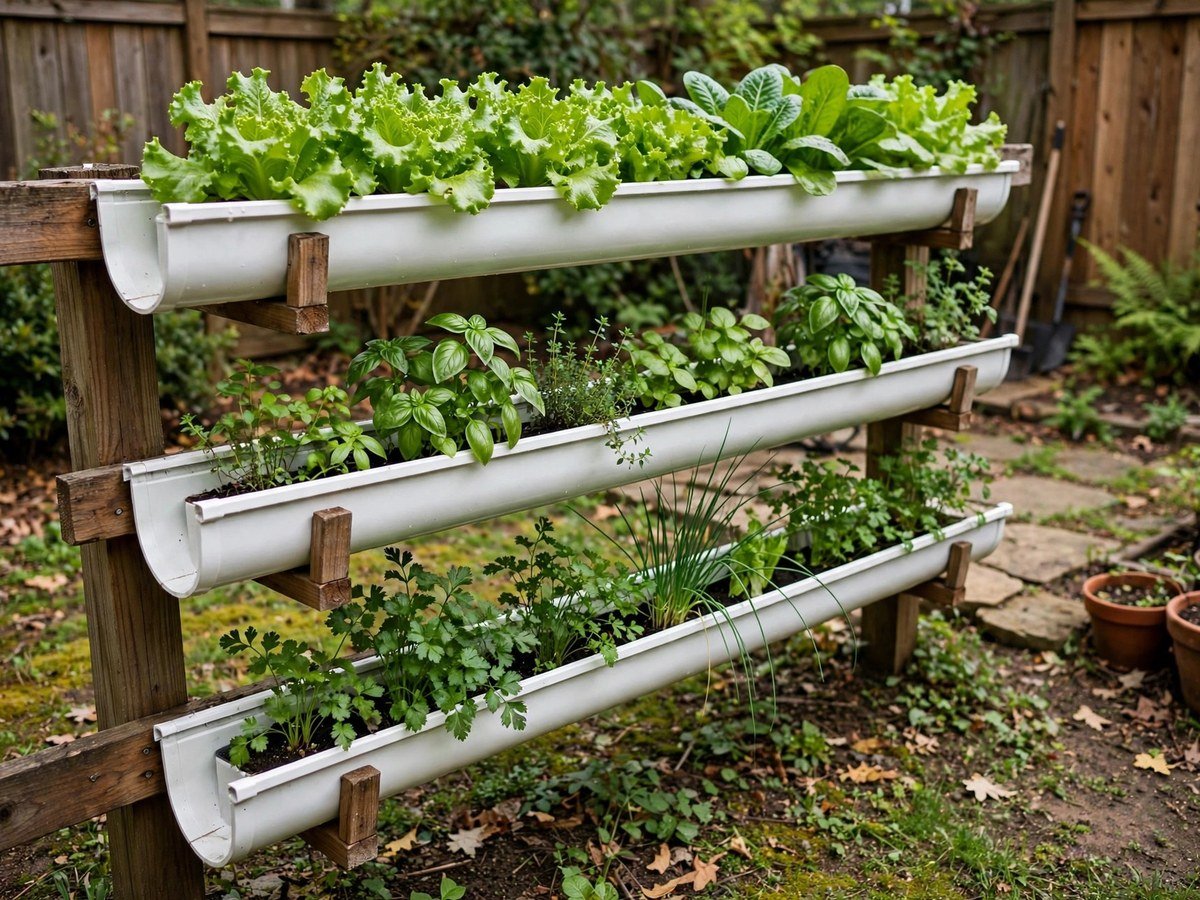
1. Gutter Gardens
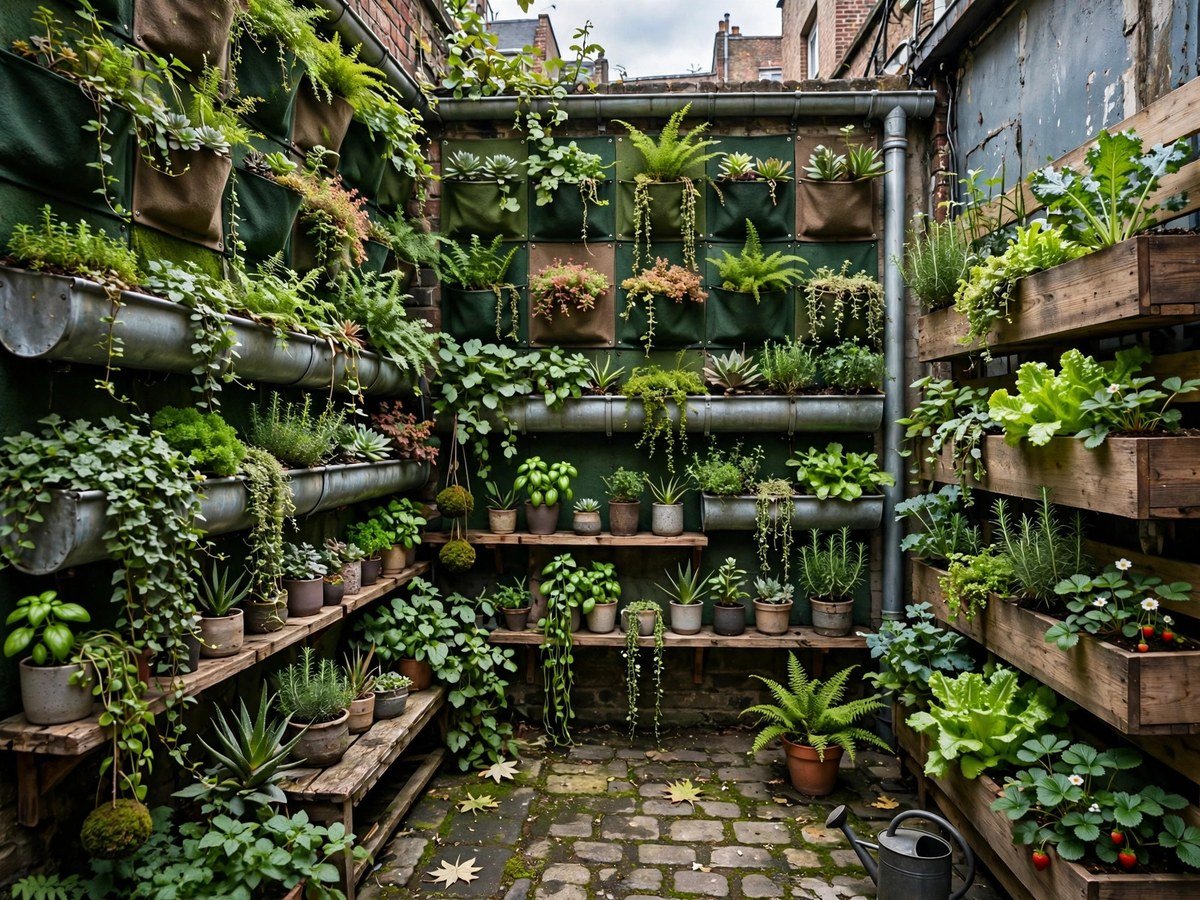
Old or new rain gutters make brilliant shallow planters for salads, strawberries and herbs. Mount two or three lengths on a sunny wall or railing, drill drainage holes, fill with compost and plant densely. Gutters cost little, weigh little and sit perfectly at picking height. In autumn, unhook a section and bring tender crops under cover — try finding a raised bed that portable.
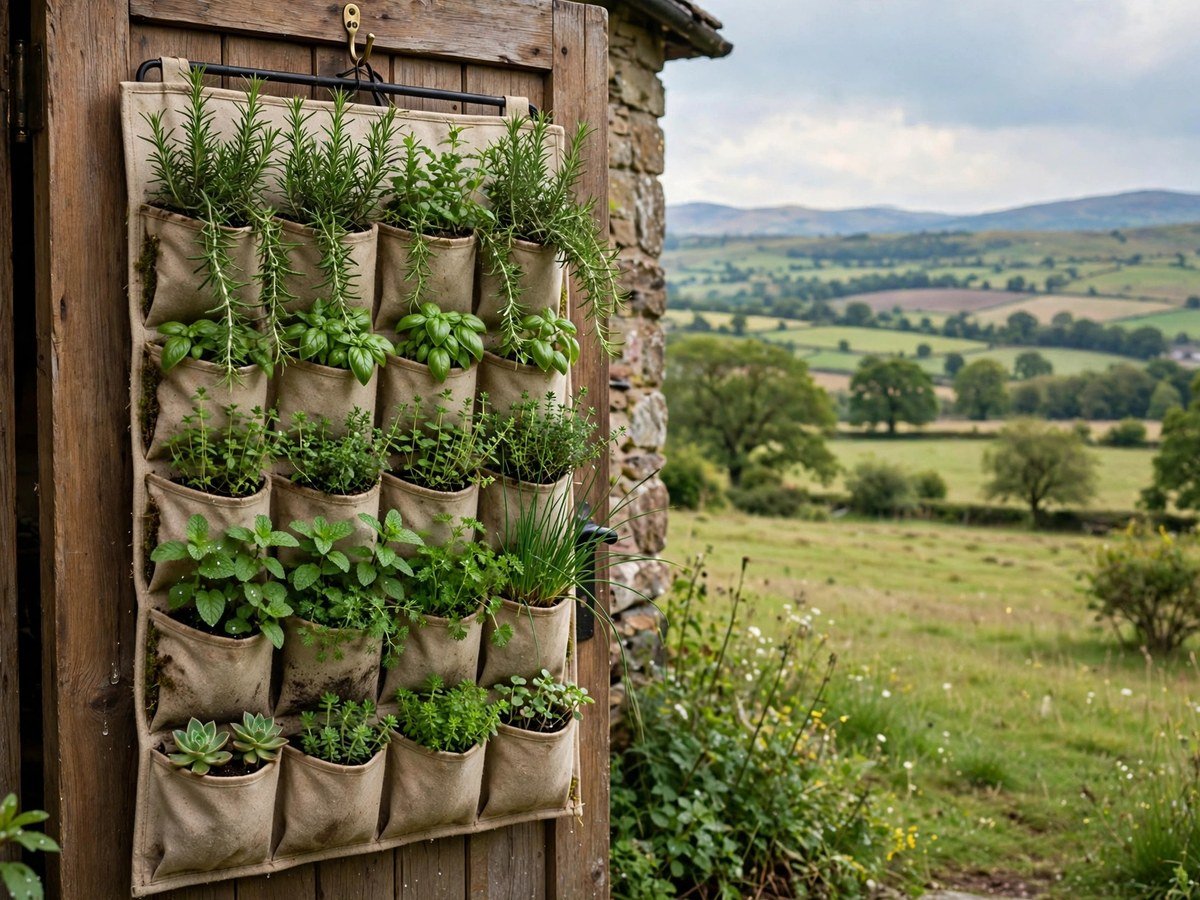
2. Shoe-Organizer Planters
The humble over-door shoe organizer is a vertical garden in disguise. Hang one on a sunny wall or fence, fill each pocket with compost and plant herbs, lettuces or strawberries in every slot. A single organizer holds two dozen plants in the footprint of a doormat. Choose a fabric organizer for drainage, water gently so pockets do not overflow, and you have an instant herb wall for the price of lunch.
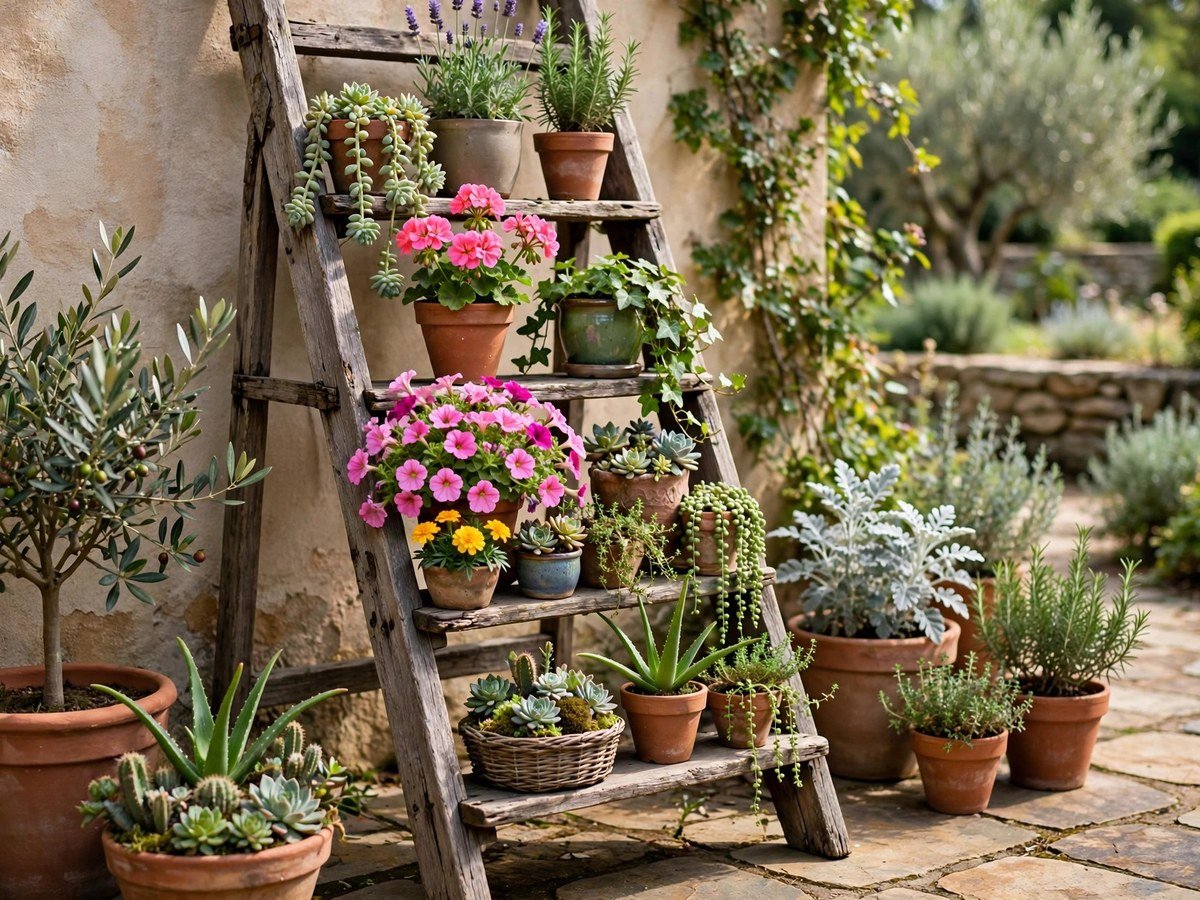
3. Ladder Shelves
A wooden ladder — vintage or new — becomes beautiful tiered plant shelving in minutes. Lean it against a wall, lay boards across the rungs and arrange pots by height: trailers on top to cascade down, sun-lovers on the middle shelves, shade-tolerant plants below. Ladders fit into corners and narrow passages where shelving units cannot go, and they look effortlessly stylish doing it.
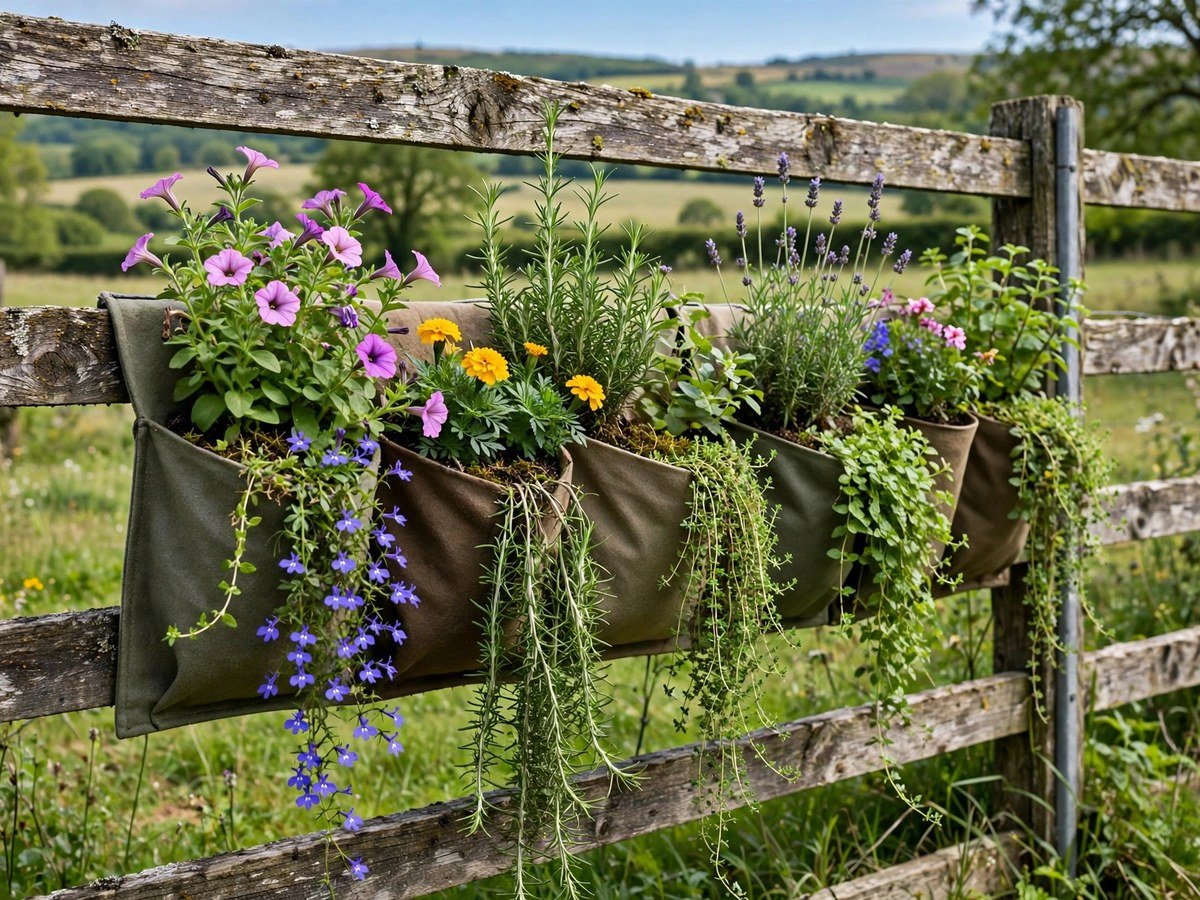
4. Fence Pockets
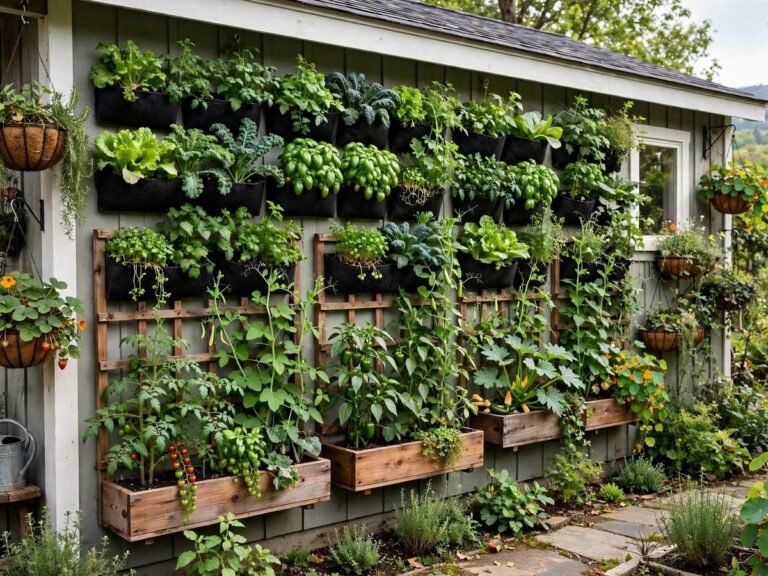
Fabric pocket planters turn a boring fence into a flowering wall. Hang rows of pockets, fill with compost and plant a tapestry of trailing lobelia, herbs and compact flowers. They are renter-friendly — a couple of hooks and no drilling into masonry — and you can rearrange or replace pockets each season. Water slowly so each pocket absorbs moisture, and feed fortnightly for non-stop colour.
5. Tower Planters
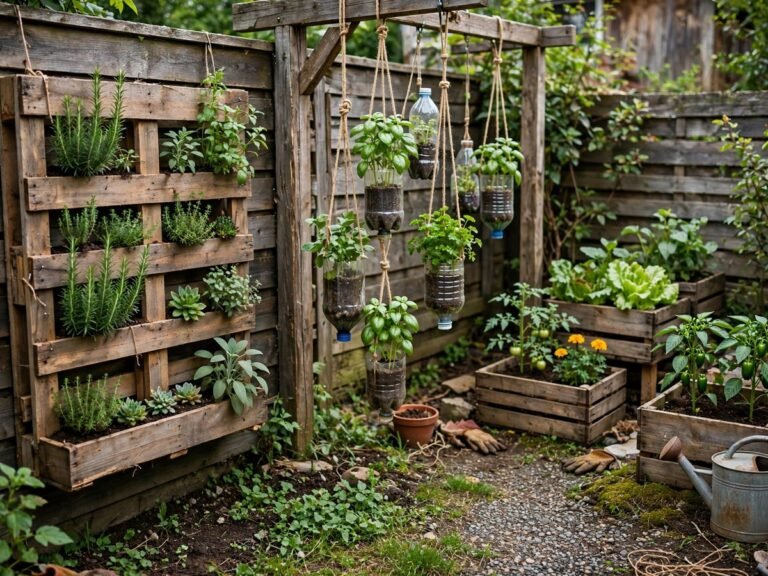
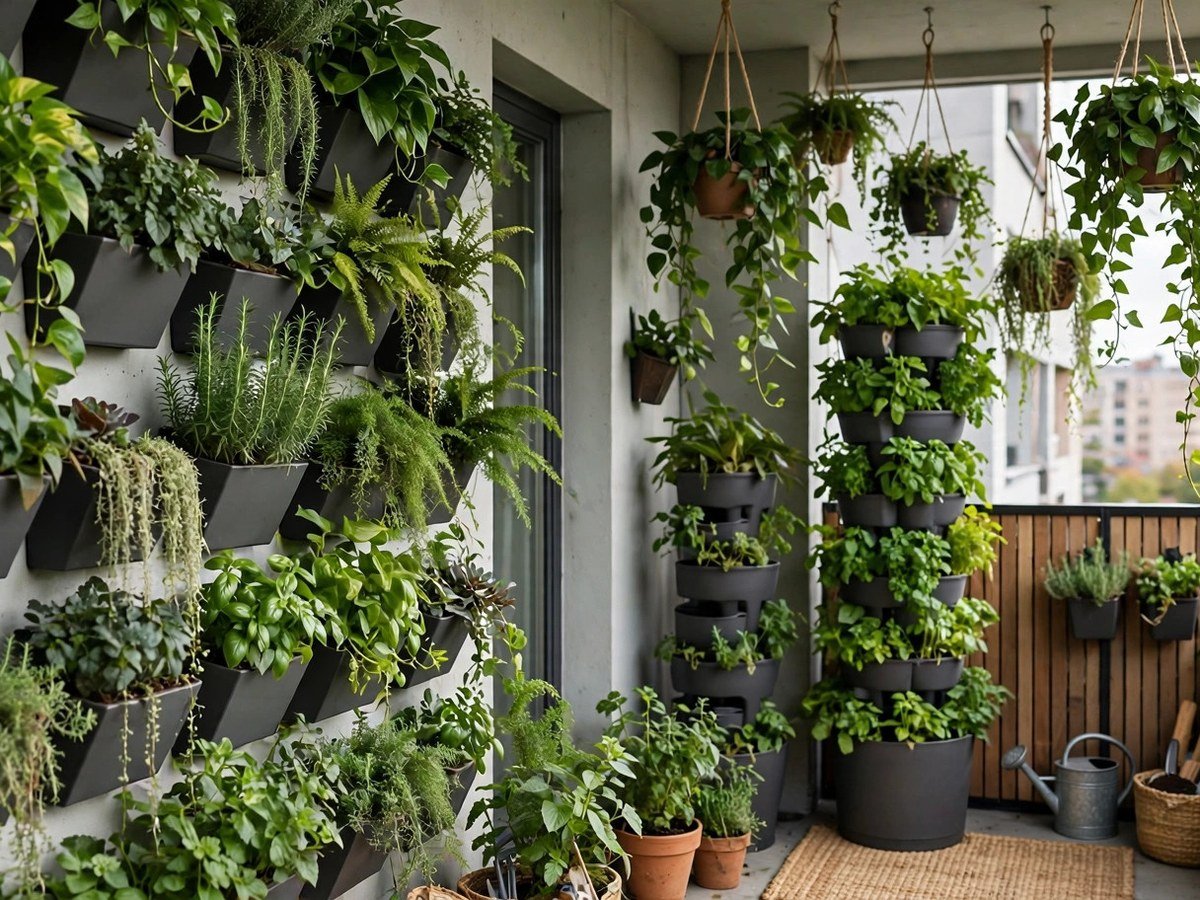
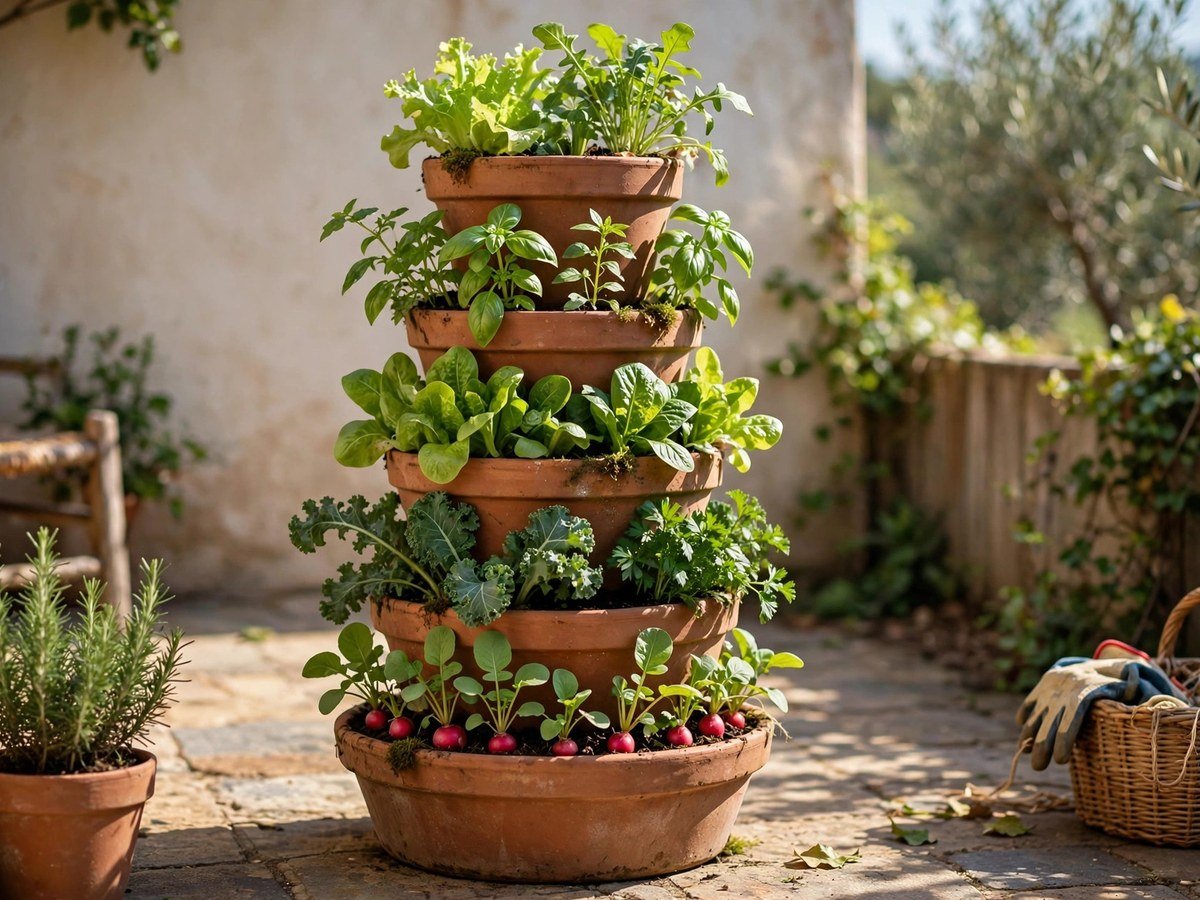
Stacked tower planters grow an astonishing amount in a tiny footprint. Commercial stacking pots or DIY versions made from stacked containers create planting pockets all the way around a central column — perfect for strawberries, salad leaves and herbs. A tower just 40 centimetres wide can hold thirty or more plants. Place it where it gets sun on all sides, rotating occasionally, and harvest from top to bottom.
6. Living Walls
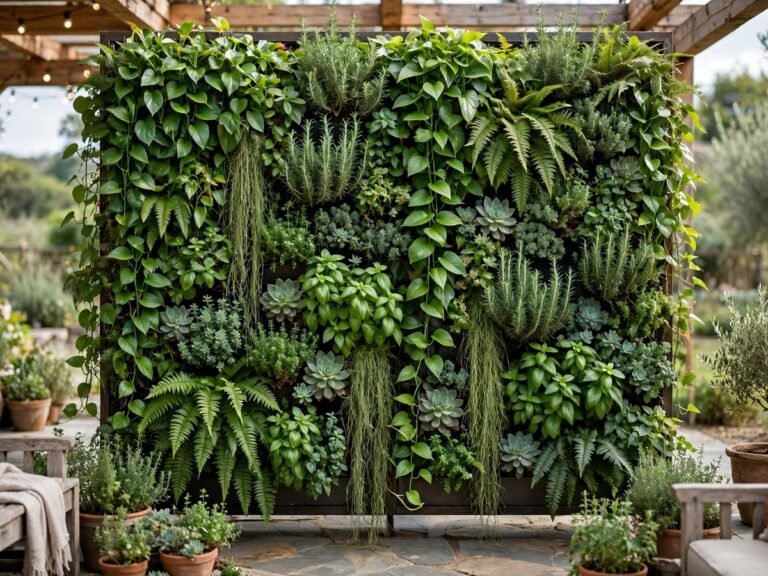
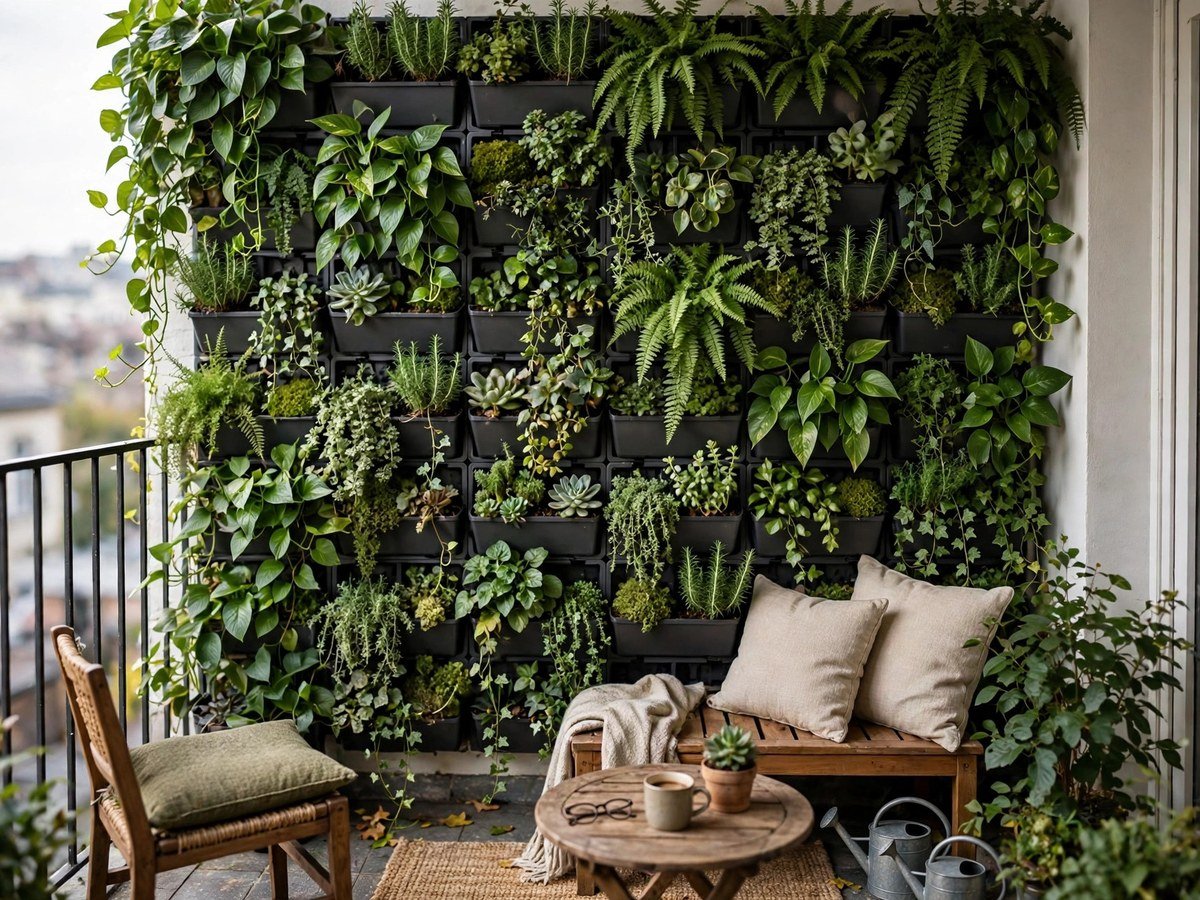
A living wall is the showstopper: a framed panel of pocket planters planted densely so foliage knits into a seamless green tapestry. Modular kits make it achievable on a balcony scale — start with a one-metre panel near seating where you will enjoy it most. Choose shade-tolerant plants for north walls and drip-irrigate from the top. It is the single fastest way to make a tiny space feel like a botanical garden.
Making Vertical Ideas Work in Real Life
Whatever system you choose, three things decide success. First, water: vertical planters dry fast, so install drip irrigation or commit to a daily check in summer. Second, weight: wet compost is heavy, so fix everything to solid structure — masonry, sturdy fence posts or freestanding frames — never flimsy panels. Third, access: you will tend these plants constantly, so keep every pocket within comfortable reach. Get those right and your vertical garden becomes the easiest part of the plot, not the hardest.
Frequently Asked Questions
How much does a vertical garden cost?
Anywhere from almost nothing to several hundred. A shoe organizer or gutter garden costs very little, while modular living-wall kits run higher. Start cheap, learn what works, and upgrade only the ideas you love.
Do I need planning permission for a living wall?
Almost never for a domestic garden or balcony. Freestanding frames and fence-mounted planters are garden features, not structures. If you rent, just check your tenancy agreement about fixing things to walls.
What grows best in vertical planters?
Shallow-rooted, compact or trailing plants: lettuces, strawberries, herbs, pothos, ferns and succulents. Avoid deep-rooted vegetables like carrots and anything that grows into a heavy bush.
How do I water plants on a wall?
Drip irrigation on a timer is ideal — one line along the top of each row. Without it, water slowly from the top and let it percolate down, checking the lowest pockets too, since they can stay soggy while the top dries.
Can renters do vertical gardening?
Yes — it is one of the most renter-friendly styles. Freestanding towers, ladder shelves, over-door organizers and fence hooks need no permanent fixings, and everything moves with you when you leave.
The Takeaway
Small space is not a limitation; it is an invitation to grow creatively. Pick one vertical idea that suits your wall, your light and your lifestyle, and start this weekend. Measure your wall today, sketch a simple plan tonight, and you could be planting by the weekend. By next season you will wonder why you ever let all that vertical real estate go to waste.
Curious about the science of plant-covered walls? Read the overview of green walls.