Low Maintenance Flower Gardens
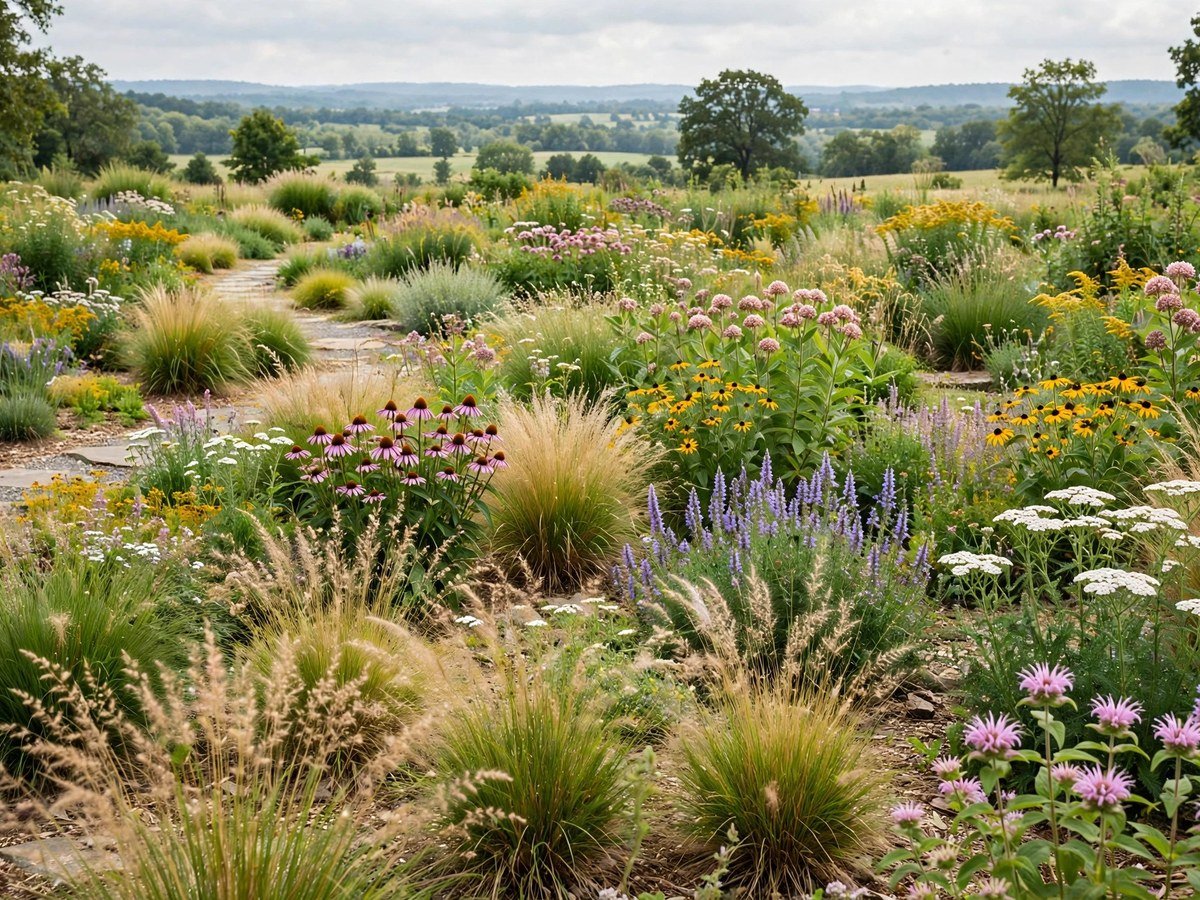
Everyone dreams of a garden bursting with color, but nobody dreams of spending every weekend weeding it. The secret to low maintenance flower gardens is not luck — it is smart plant choices and simple systems that do the work for you. With the right perennials, a thick layer of mulch, and water-wise habits, you can enjoy months of blooms with just minutes of care each week. The six ideas below will help you build a flower garden that practically takes care of itself, leaving you free to simply enjoy it.
What Makes a Garden Truly Low-Maintenance?
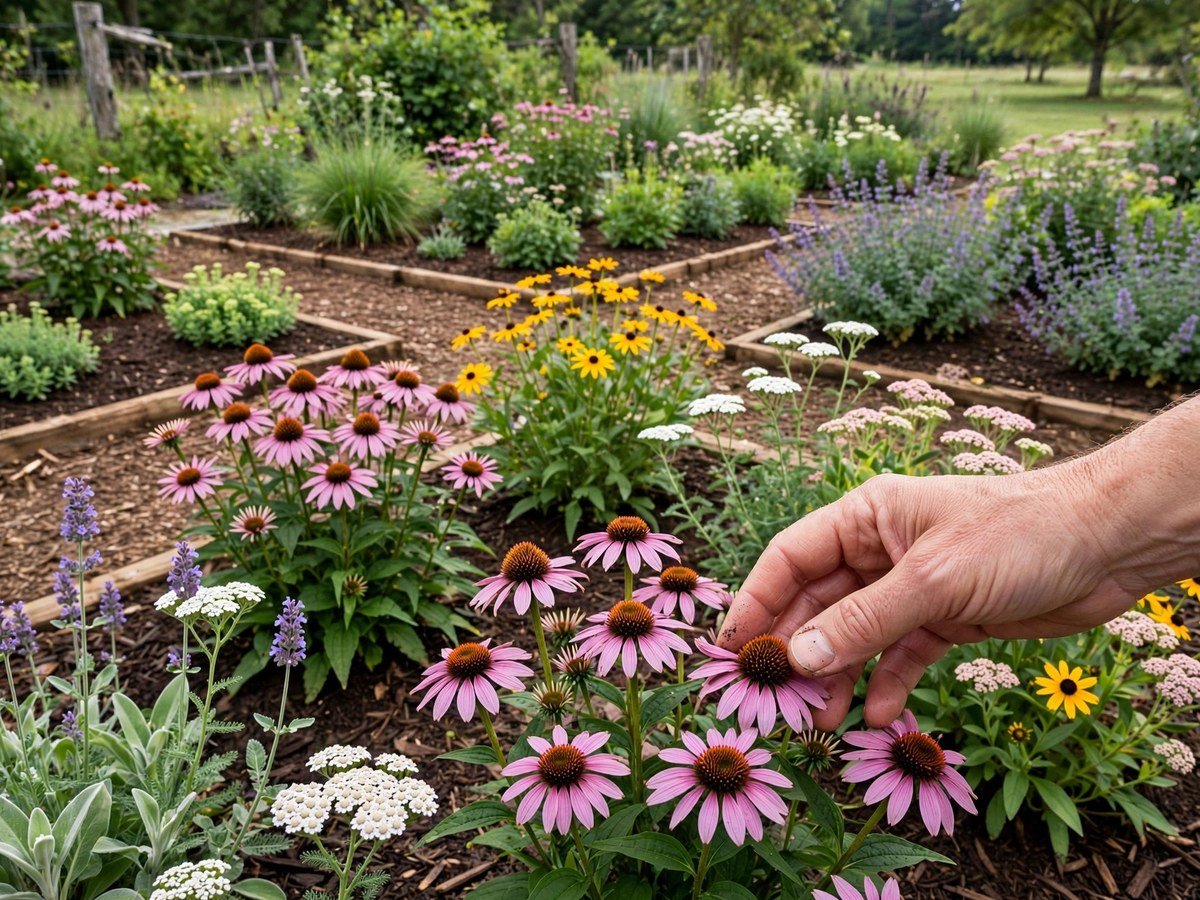
A low-maintenance garden is designed around plants that thrive on neglect rather than constant fussing. That means choosing perennials suited to your climate and soil, so they never need coddling. It means covering every inch of bare soil with mulch or groundcovers to starve weeds of light. And it means grouping plants by water needs and letting efficient irrigation handle the rest. The upfront effort is real — good soil prep and planting take a weekend or two — but once established, a well-planned easy-care garden asks for little more than seasonal tidying and admiring.
6 Low Maintenance Flower Gardens
1. Native Perennials
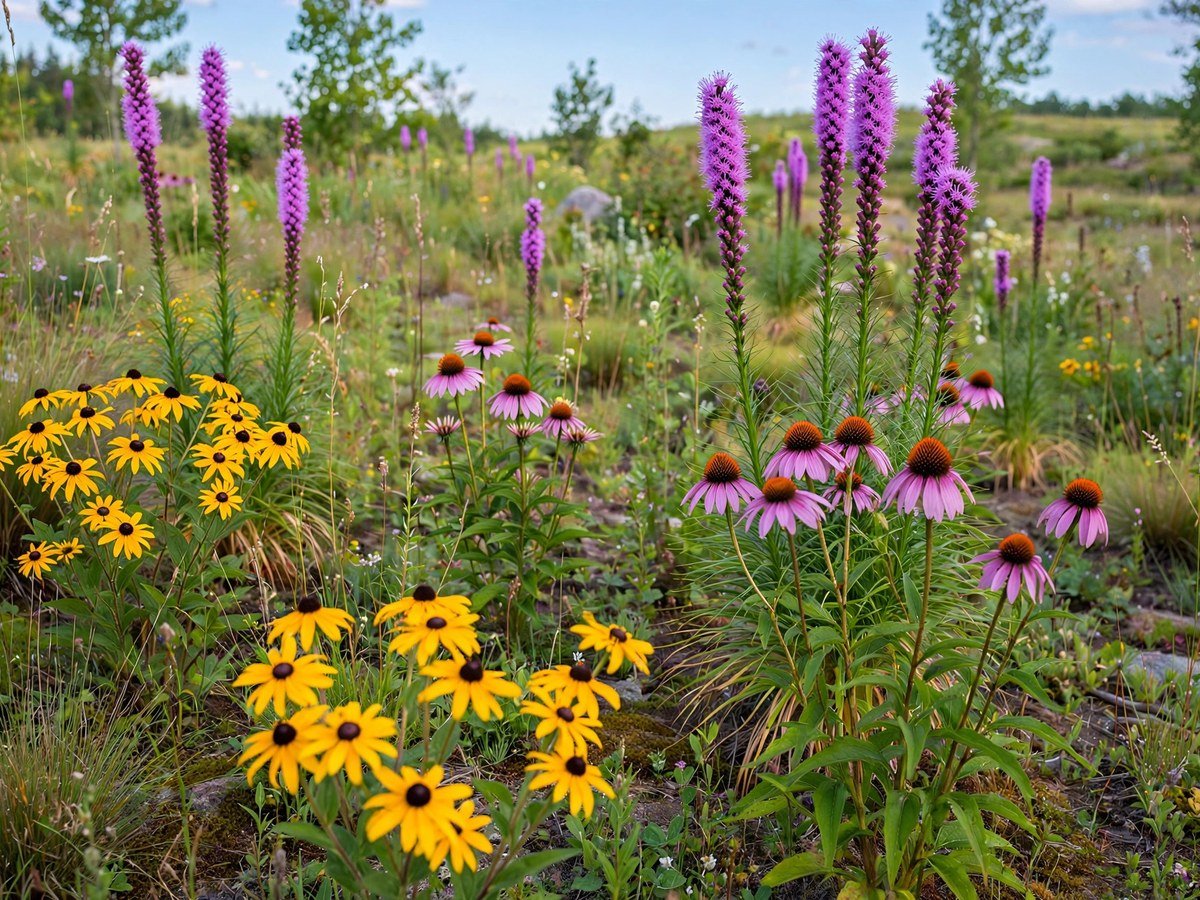
Native perennials are the ultimate lazy-gardener plants because they evolved for your exact climate. Black-eyed Susans, coneflowers, bee balm, and blazing star shrug off local pests, diseases, droughts, and downpours with zero babying. Plant them in drifts in full sun, water for the first season, then step back — they will return bigger and better every year. As a bonus, native flowers feed local pollinators far better than exotic imports ever could.
2. Ornamental Grasses
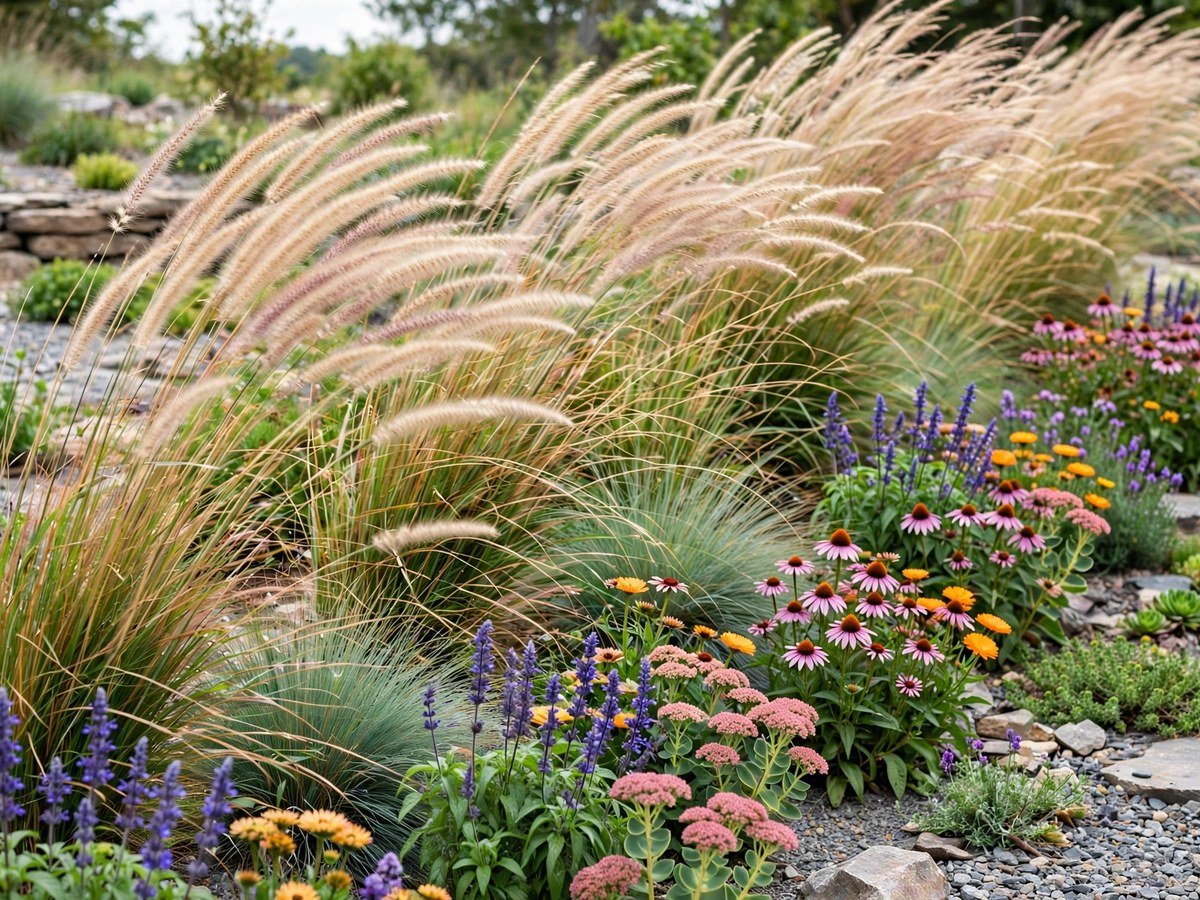
Ornamental grasses deliver four seasons of beauty for almost no effort. Fountain grass, miscanthus, and little bluestem need no deadheading, no staking, and barely any water once established — just one haircut in late winter. Their swaying plumes add movement, texture, and winter interest that flowers alone cannot match. Plant them as backdrops behind perennials or as bold solo specimens, and enjoy a garden that looks intentional even when you ignore it for weeks.
3. Self-Seeding Annuals
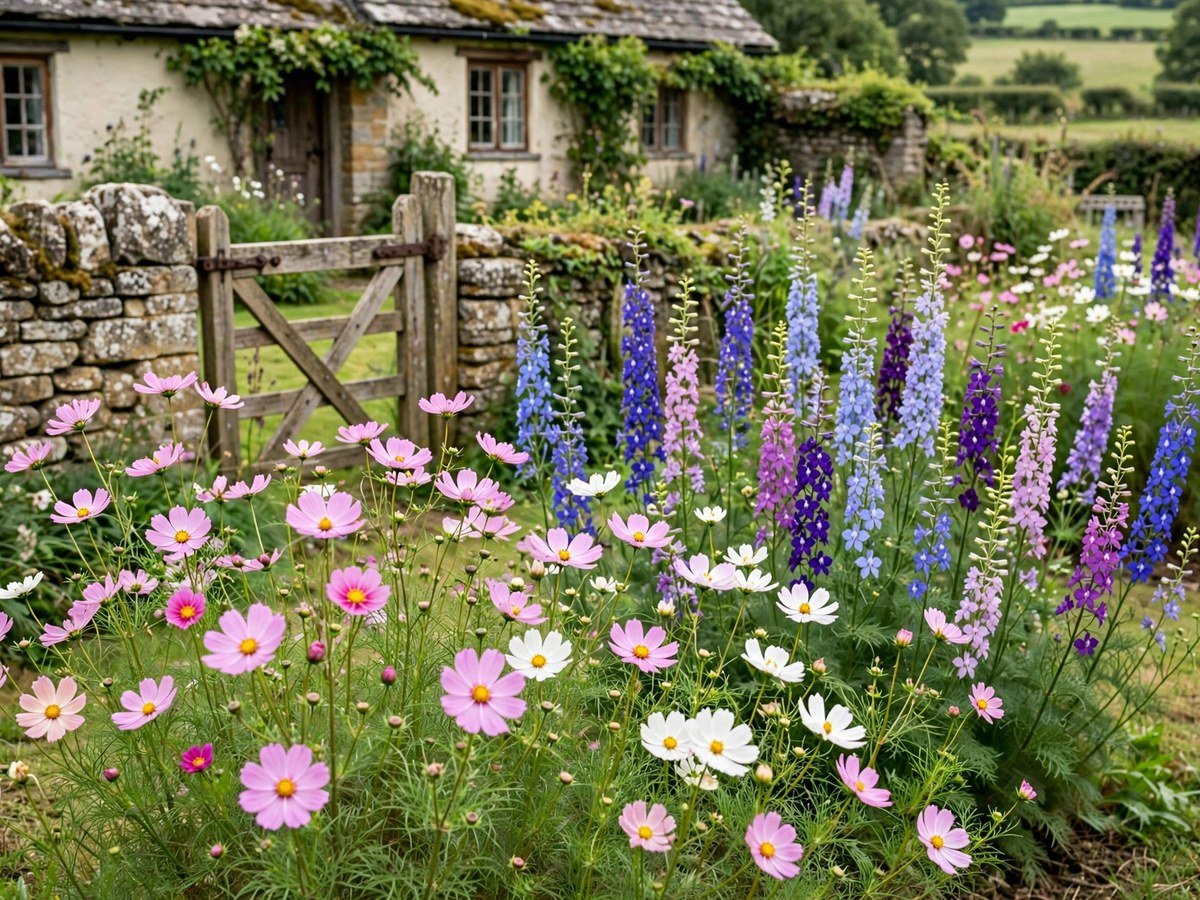
Self-seeding annuals are the gift that keeps on giving: plant once, and they replant themselves forever. Cosmos, larkspur, nigella, and California poppies drop seed each fall and pop up on their own each spring, filling gaps with zero effort from you. Let them wander where they please for a relaxed, natural look — simply pull seedlings from spots you do not want them. One packet of seed can become a permanent, ever-changing feature of your garden.
4. Groundcover Roses
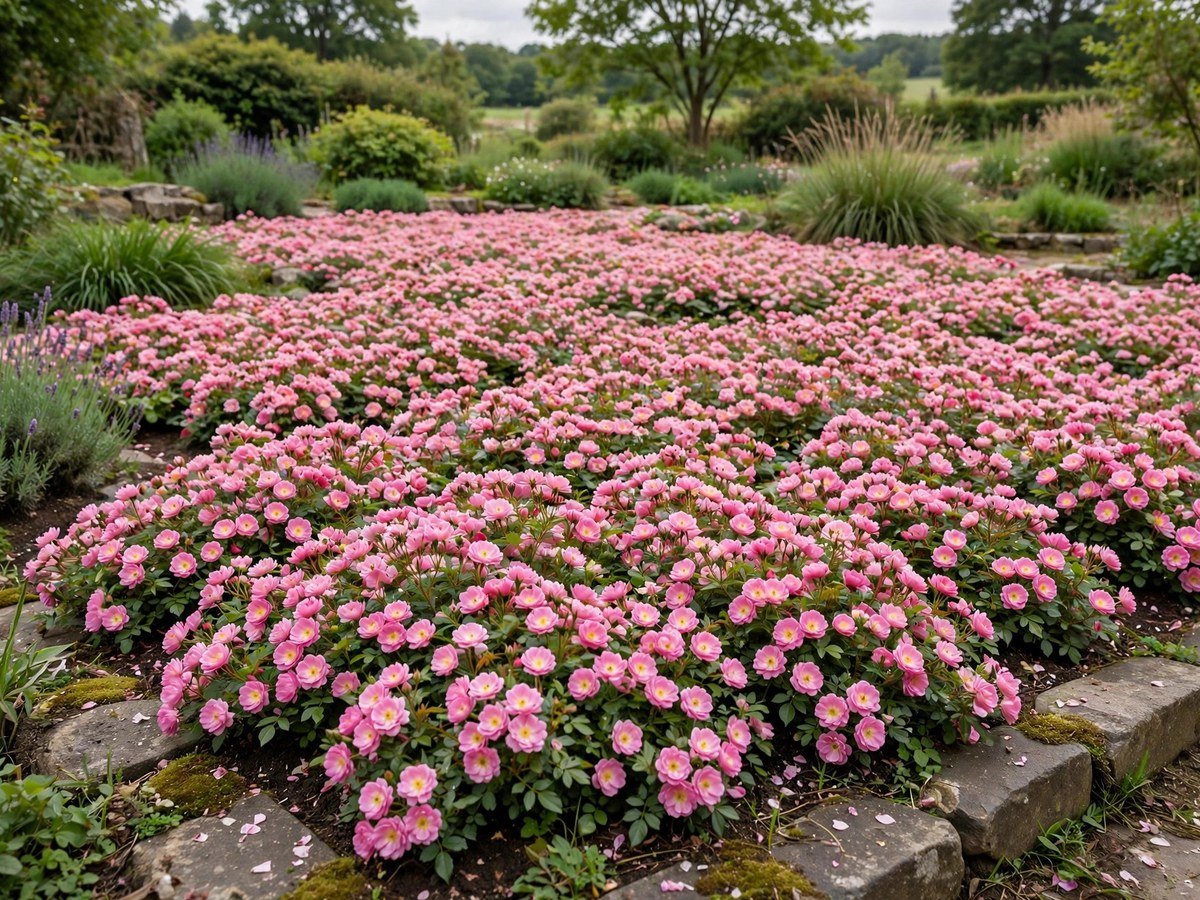
Forget fussy hybrid teas — modern groundcover and shrub roses bloom nonstop with a fraction of the work. Varieties like the Drift and Flower Carpet series shrug off disease, need no deadheading, and carpet banks and bed edges with color from spring to frost. Plant them in full sun with good air circulation, mulch well, and prune once in early spring. You get all the romance of roses with almost none of the prima-donna maintenance.
5. Deep Mulching
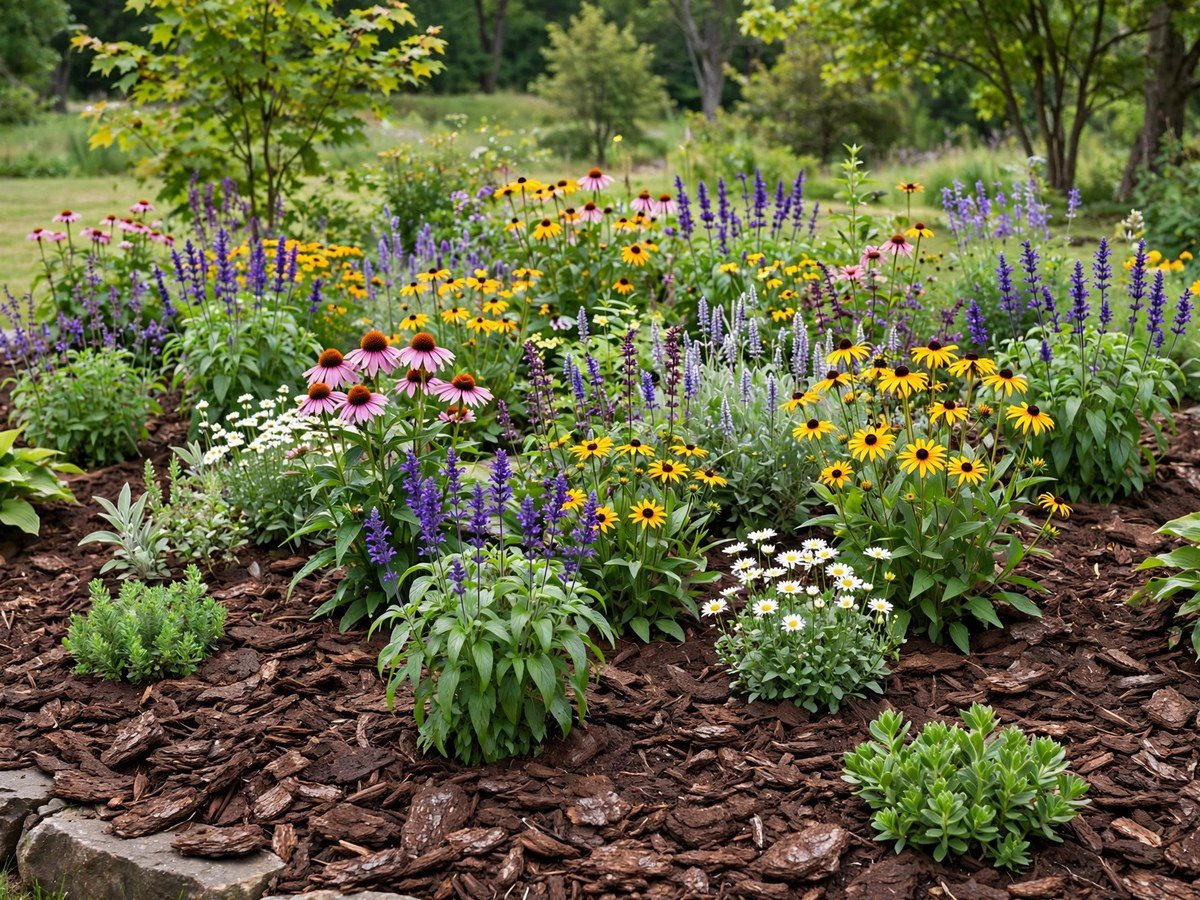
If you do only one thing for an easier garden, make it deep mulching. A three-to-four-inch layer of bark, shredded leaves, or straw smothers weeds, holds soil moisture, and feeds the soil as it breaks down. That single chore eliminates hours of future weeding and halves your watering. Top up the mulch once a year in spring, keep it pulled back slightly from plant stems, and watch your maintenance list shrink dramatically.
6. Drip Irrigation
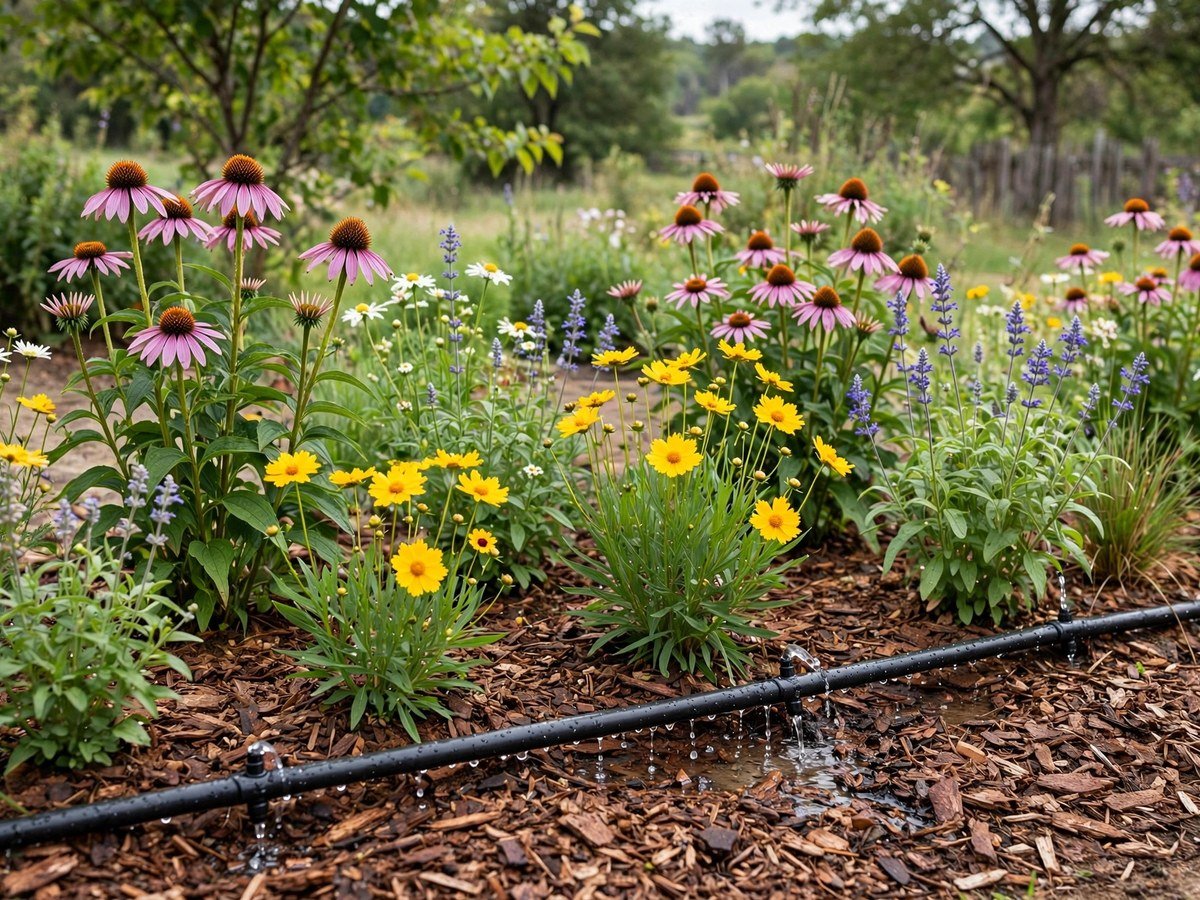
Drip irrigation waters roots directly while you do literally anything else. A simple soaker hose or drip line on a battery timer delivers consistent moisture exactly where plants need it, cutting water waste and leaf diseases caused by overhead sprinklers. Installation takes an afternoon and costs less than most garden gadgets. Set the timer, mulch over the lines to hide them, and your garden waters itself through the hottest weeks of summer.
Set-and-Forget Habits for Easy-Care Gardens
A few simple habits compound your low-maintenance wins. Plant densely so desirable plants outcompete weeds from day one. Choose the right plant for the right spot — sun lovers in sun, shade lovers in shade — because struggling plants create endless work. Leave perennial seed heads standing through winter for wildlife and free self-sowing, then cut everything back in one spring cleanup. Finally, accept a little wildness: a garden with character beats a manicured one that owns your weekends.
Frequently Asked Questions
What are the easiest flowers for a beginner garden?
Start with daylilies, coneflowers, black-eyed Susans, sedum, and zinnias. All tolerate imperfect soil, bounce back from missed waterings, and bloom generously with minimal care.
How do I reduce weeding in my flower garden?
Mulch deeply, plant densely, and never leave soil bare. A three-inch mulch layer plus tight plant spacing eliminates the vast majority of weeds before they start.
Do low-maintenance gardens still need watering?
New plantings need regular water for their first season. After that, established native perennials and grasses thrive on rainfall alone in most climates, with drip irrigation as backup in droughts.
Can a low-maintenance garden still look beautiful?
Absolutely — many designers argue they look better. Naturalistic drifts of grasses and perennials have a relaxed elegance that fussy bedding displays cannot match, and they look good in every season.
How much time does a low-maintenance garden really take?
Expect a few hours of seasonal cleanup in spring and fall, plus occasional deadheading if you choose. Many easy-care gardens need under an hour of attention per month in summer.
Enjoy Your Garden Instead of Working It
A low-maintenance flower garden is not about cutting corners — it is about working with nature instead of against it. Choose tough plants, mulch deeply, water smartly, and your garden will reward you with season after season of color. The best garden tool you own might just be a comfortable chair placed where you can admire it all.