Organic Herb Gardening Tips
These organic herb gardening tips will help you grow healthier, more flavorful herbs without a single synthetic chemical. Going organic is not just better for the planet — herbs grown naturally develop stronger essential oils, which means bolder taste and aroma in your cooking. Whether you are tending pots on a balcony or beds in the backyard, the organic approach works with nature instead of against it. Healthy soil, smart plant partnerships, and gentle pest control create a self-sustaining little ecosystem. Start with one or two of the practices below this season and build from there.
What Makes Herb Gardening Truly Organic?
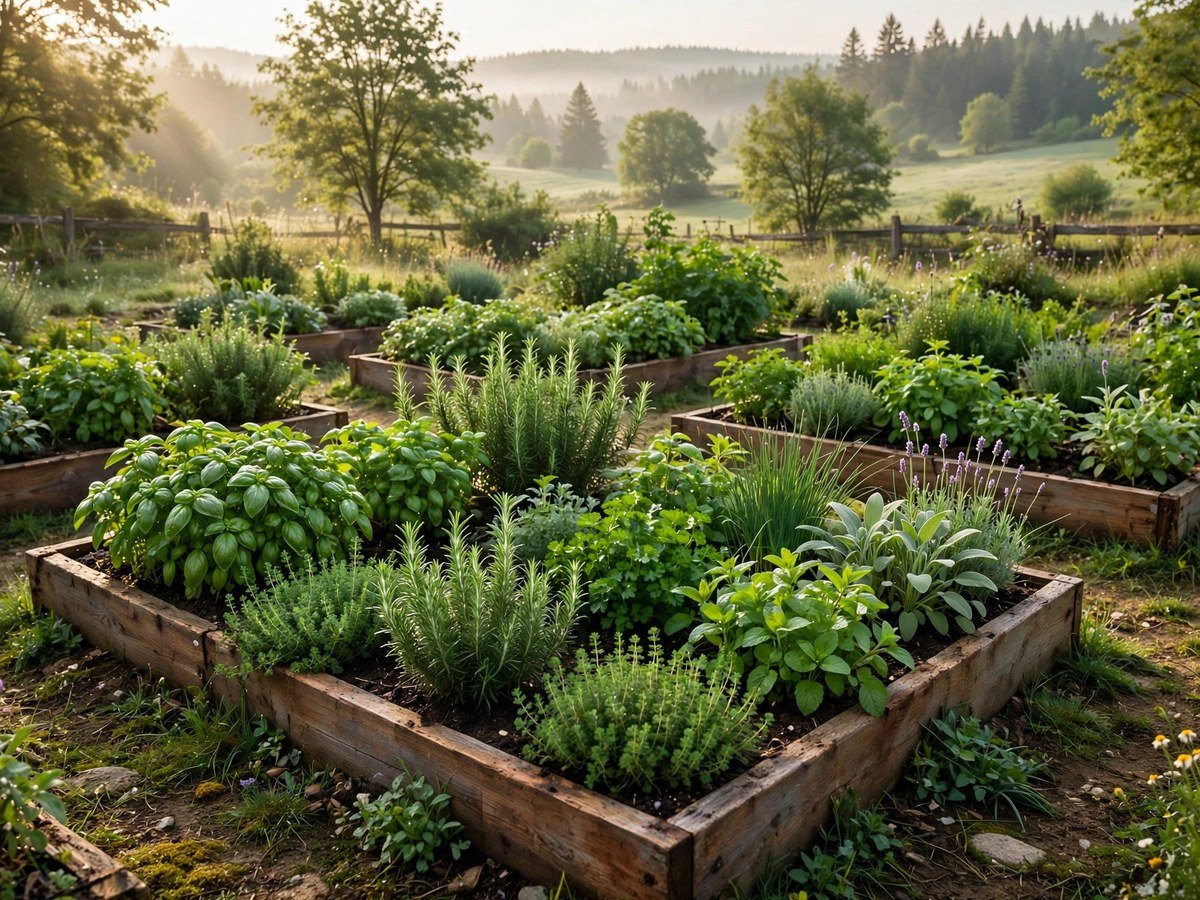
Organic herb gardening means growing without synthetic fertilizers, pesticides, or herbicides — but it is really a philosophy, not just a rule list. Instead of feeding plants directly with chemicals, you feed the soil with compost and organic matter, letting microbes deliver nutrients naturally. Instead of spraying pests, you invite their predators and plant strategic companions. The result is a resilient garden where problems stay small and flavor runs big. Certification aside, any gardener can follow organic principles at home and taste the difference in every leaf.
6 Organic Herb Gardening Tips
Compost Feeding
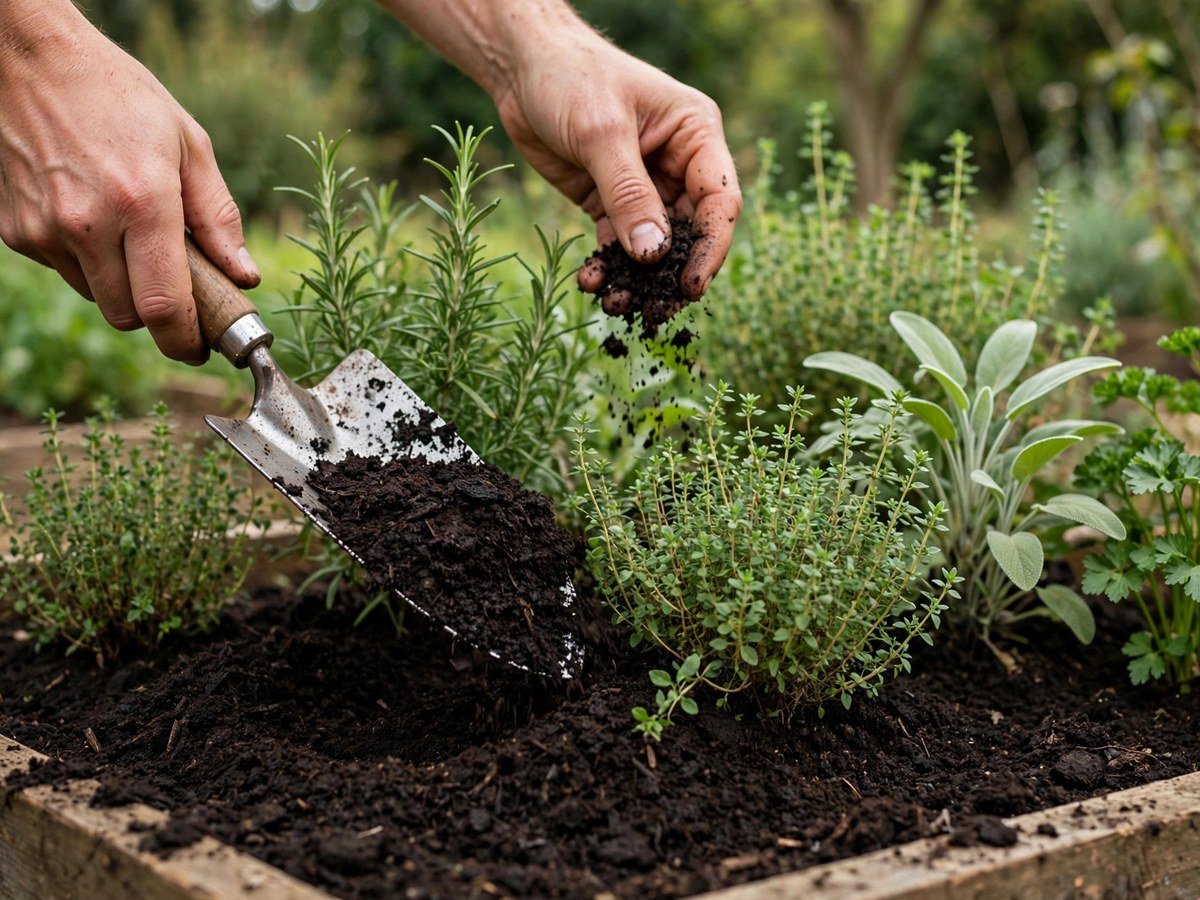
Compost is the cornerstone of organic herb gardening — a slow-release feast of nutrients wrapped in living biology. Work a two-inch layer of finished compost into beds each spring, and side-dress heavy feeders like basil mid-season. Unlike synthetic fertilizers, compost will never burn roots or wash away in one storm. Start a simple bin with kitchen scraps and fallen leaves, and within months you will be making black gold for free. Your herbs will repay you with vigorous, deeply flavored growth.
Companion Planting
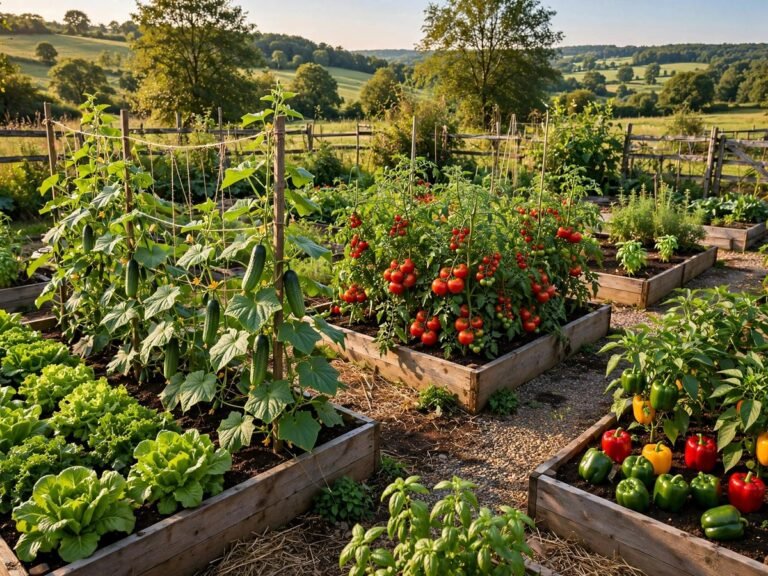
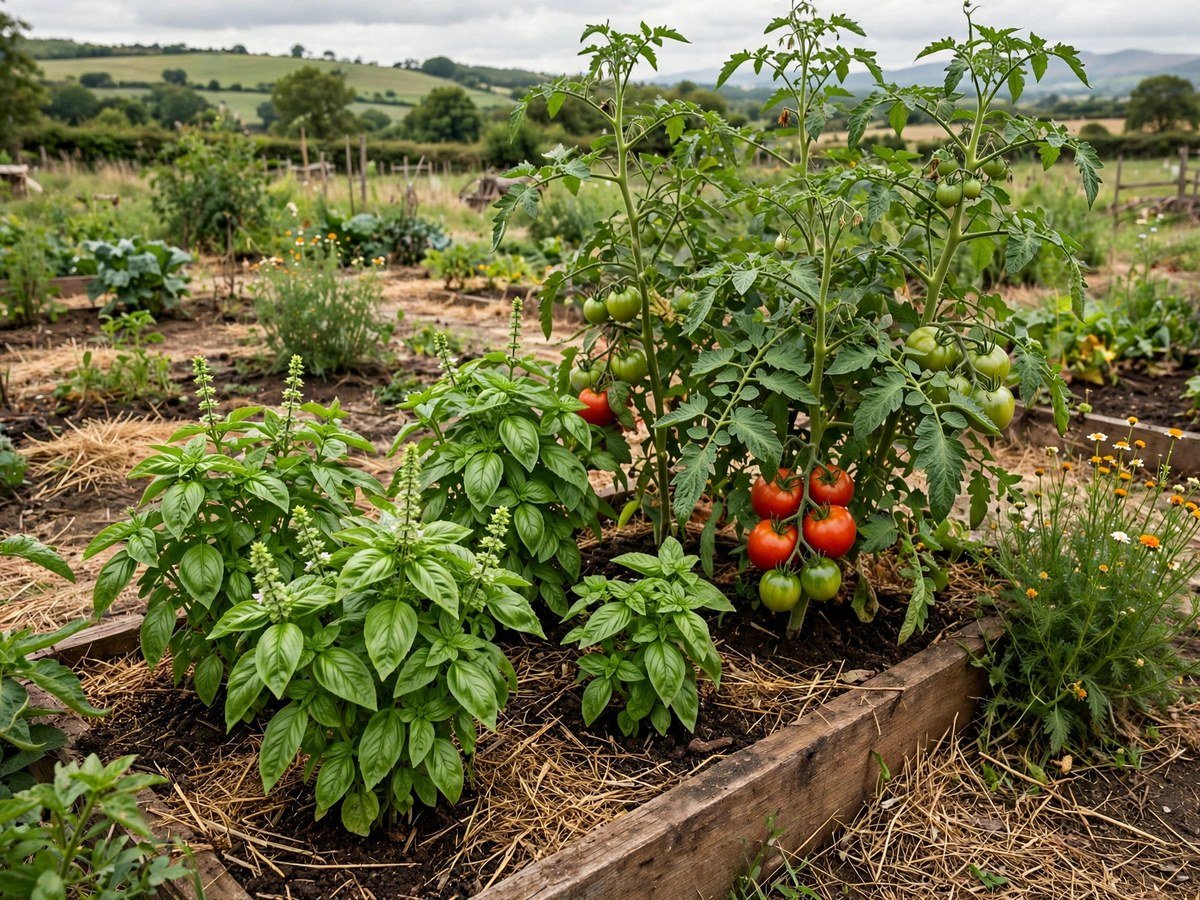
Companion planting pairs herbs and vegetables that help each other thrive. Basil planted beside tomatoes is the classic example — gardeners swear it improves tomato flavor while repelling hornworms and flies. Chives deter aphids from roses and lettuce; dill attracts beneficial wasps that parasitize caterpillars. Plan your beds so companions grow side by side, and you get natural pest protection plus better harvests from the same square footage.
Natural Pest Control
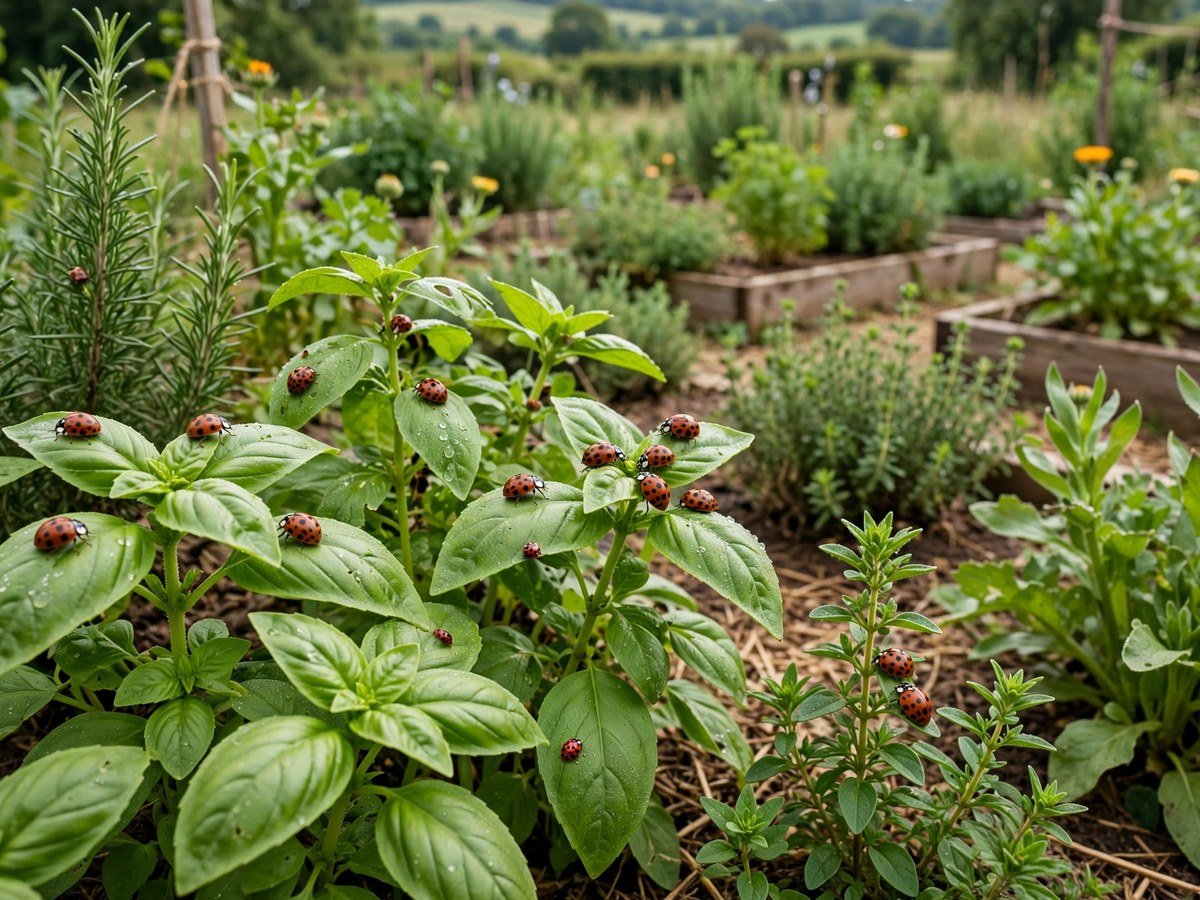
When pests appear, reach for nature’s toolkit before any spray bottle. A strong blast of water dislodges aphids; handpicking handles caterpillars and slugs. Encourage ladybugs, lacewings, and birds by planting flowers like alyssum and leaving a small wild corner. For stubborn outbreaks, insecticidal soap or neem oil — both organic-approved — target soft-bodied insects without harming pollinators when applied in the evening.
Rainwater Harvesting
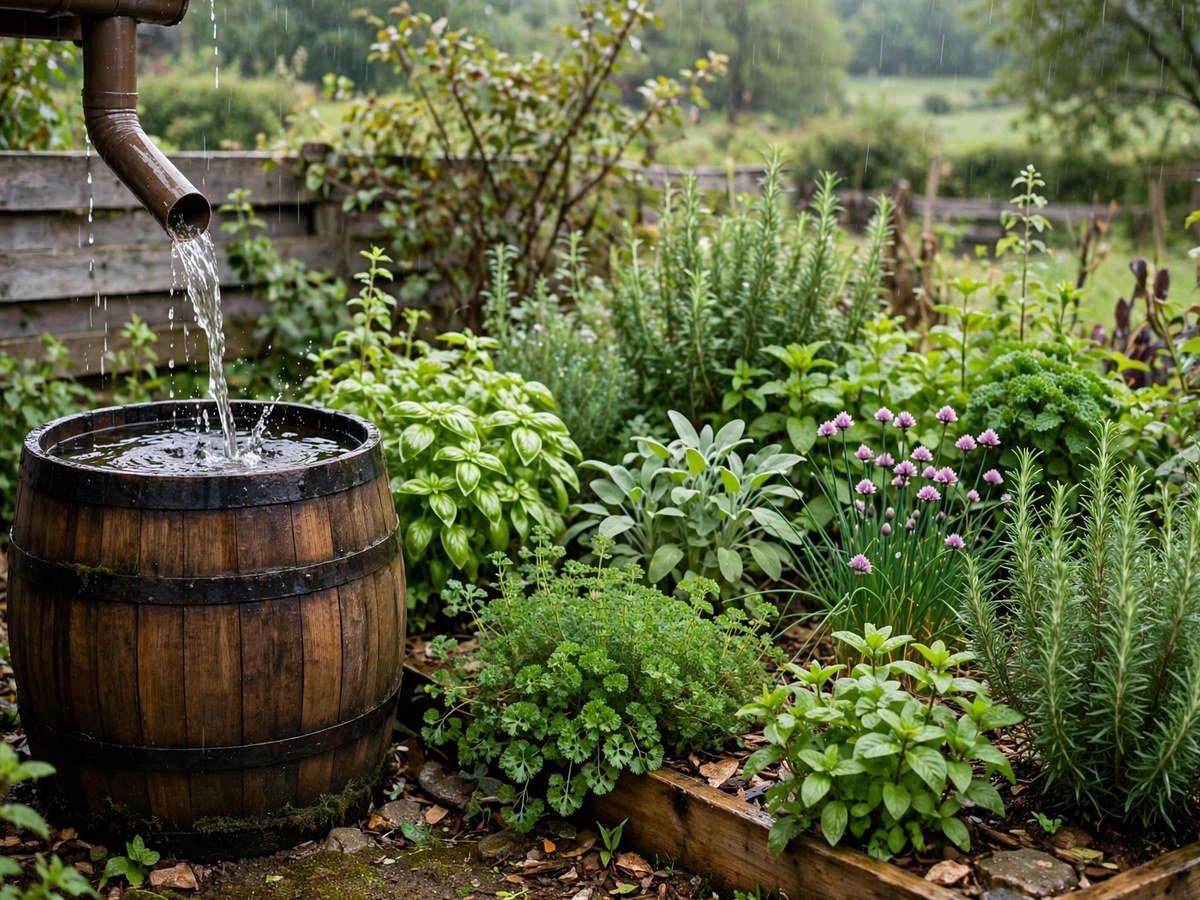
Herbs prefer rainwater over treated tap water — it is naturally soft, slightly acidic, and free of chlorine and fluoride. A simple rain barrel under a downspout captures hundreds of gallons each season, cutting your water bill while giving plants what they evolved to drink. Elevate the barrel for gravity pressure, add a mesh screen to keep out mosquitoes, and use the stored water for containers and beds during dry spells.
Organic Mulch
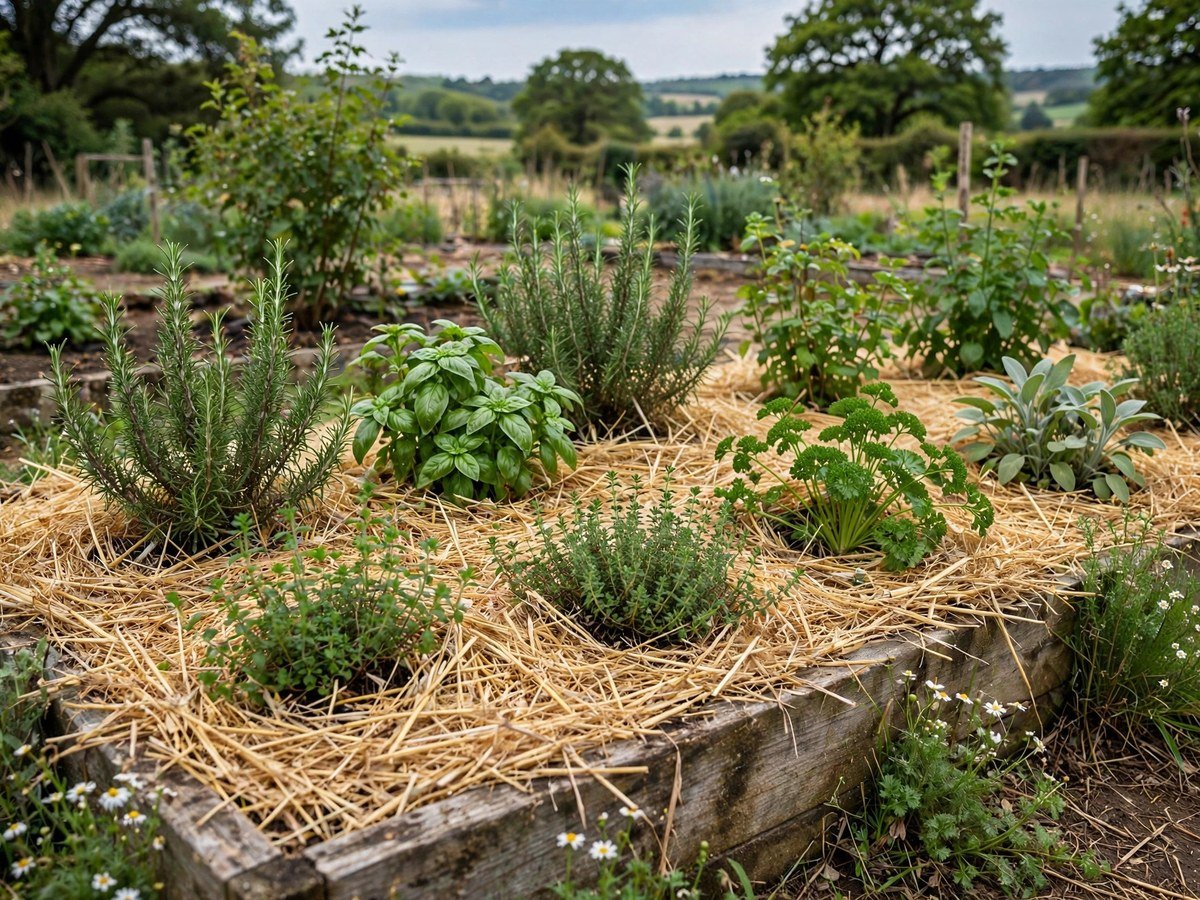
A three-inch blanket of organic mulch — straw, shredded leaves, or wood chips — is one of the easiest organic upgrades you can make. It locks in soil moisture, suppresses weeds without hoeing, moderates temperature swings, and slowly feeds the soil as it decomposes. Keep mulch a finger’s width away from herb stems to prevent rot. Replenish it each spring, and your beds will stay cooler, damper, and far less weedy.
Seed Saving
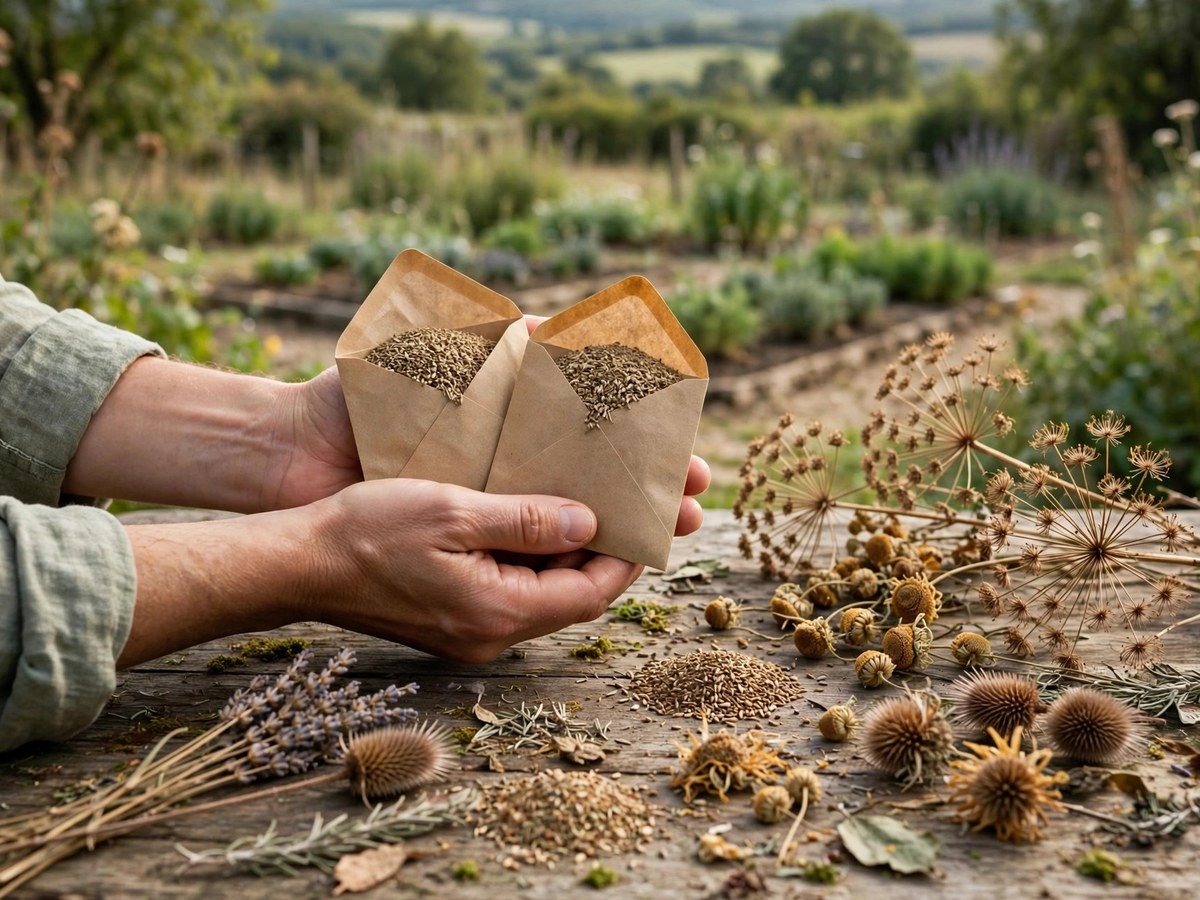
Seed saving closes the organic loop: your best-performing plants become next year’s seed stock, gradually adapting to your exact conditions. Let a few healthy plants flower and set seed, then collect the dried heads on a calm day. Label envelopes with variety and date, and store them cool and dry. Open-pollinated varieties grow true; avoid saving seed from hybrids. Within a few seasons you will have locally adapted herbs no catalog can match.
Everyday Habits for a Healthy Organic Herb Garden
Organic success is built on small daily habits. Walk your garden every morning — early detection turns most pest problems into five-minute fixes. Water deeply but infrequently to drive roots down, and always water the soil, not the leaves. Rotate crops each year so soil-borne diseases cannot build up. Keep a simple garden journal noting what thrived and what struggled; patterns emerge fast. Feed the soil every season and it will feed your herbs for years. Be patient: a balanced organic garden takes a season or two to hit its stride, but the payoff is lasting.
Frequently Asked Questions
Is organic herb gardening more expensive?
Usually it costs less. Compost, mulch, and saved seeds are free, and you skip buying synthetic fertilizers and pesticides entirely.
How do I improve poor soil organically?
Add generous compost, mulch heavily, and grow cover crops like clover in the off-season. Avoid tilling, which destroys soil structure and microbial life.
What is the best organic fertilizer for herbs?
Finished compost is ideal. For containers, supplement with diluted fish emulsion or seaweed extract every few weeks during the growing season.
Can I garden organically in containers?
Absolutely. Use quality organic potting mix, feed with compost tea, and choose compact herb varieties. Containers actually make pest monitoring easier.
How long until my garden is fully organic?
Your practices can go organic immediately. Soil biology typically needs one to two seasons to fully rebuild after years of chemical use.
Grow Clean, Eat Well
Organic herb gardening is simpler than it sounds — feed the soil, welcome beneficial insects, and let nature do the heavy lifting. Start with compost and one companion planting this season. Your herbs will be healthier, your kitchen more flavorful, and your conscience clear. The garden you build today will only get richer with every passing year.