Gothic Garden: Dark Foliage Plants for a Moody Yard
Gothic Garden: Dark Foliage Plants for a Moody Yard
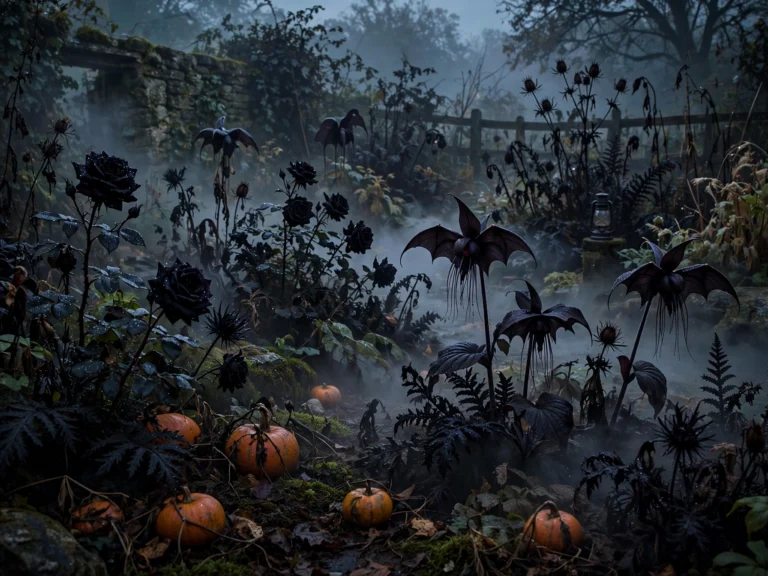
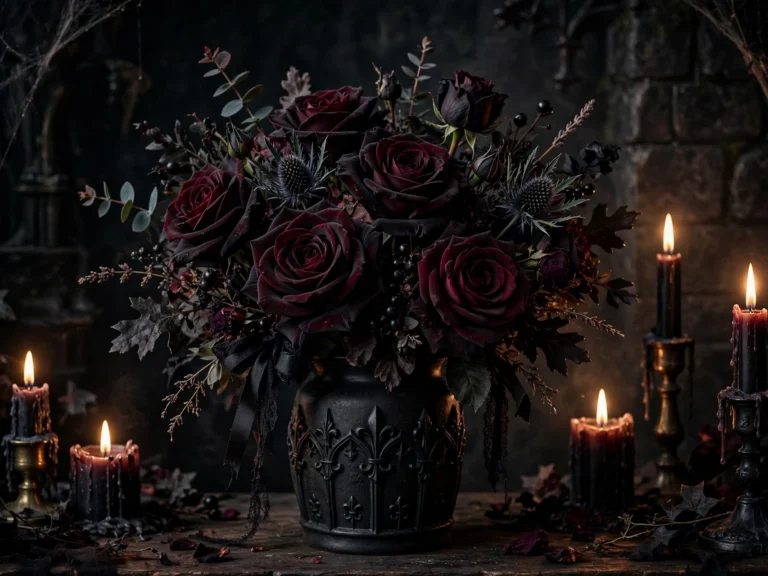
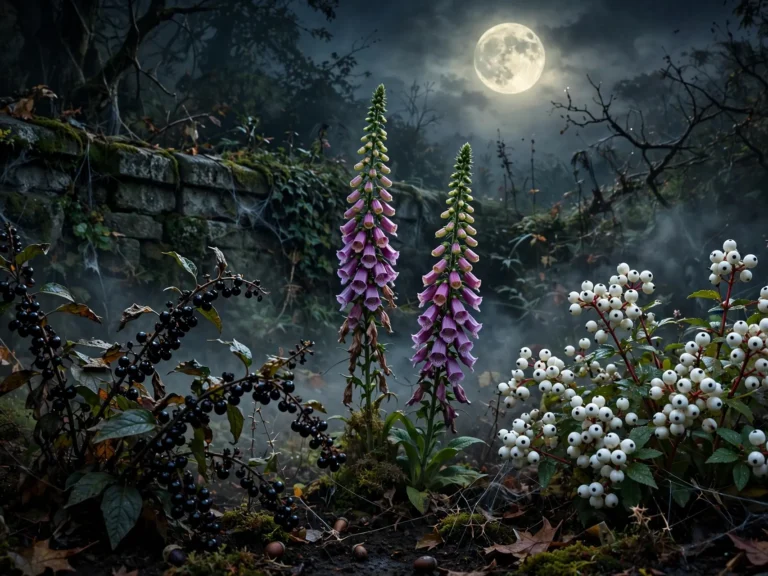
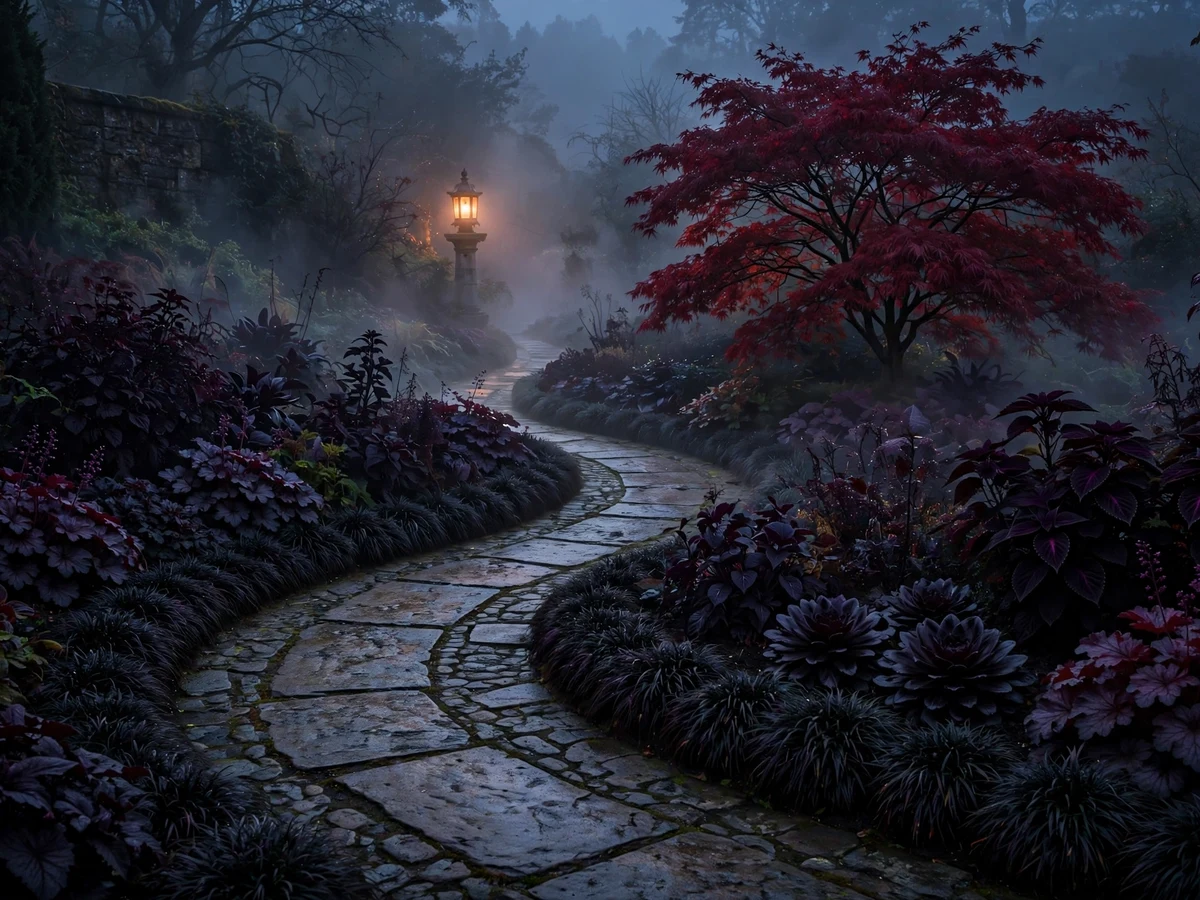
Forget cheerful pastels — a gothic garden trades brightness for drama, wrapping your yard in velvety blacks, deep purples, and wine-reds that look stunning in October moonlight. Dark foliage plants create a moody, sophisticated landscape that feels straight out of a Victorian novel, and they make the perfect Halloween backdrop. Here are ten of the best dark-leaved plants to build your own deliciously gloomy garden.
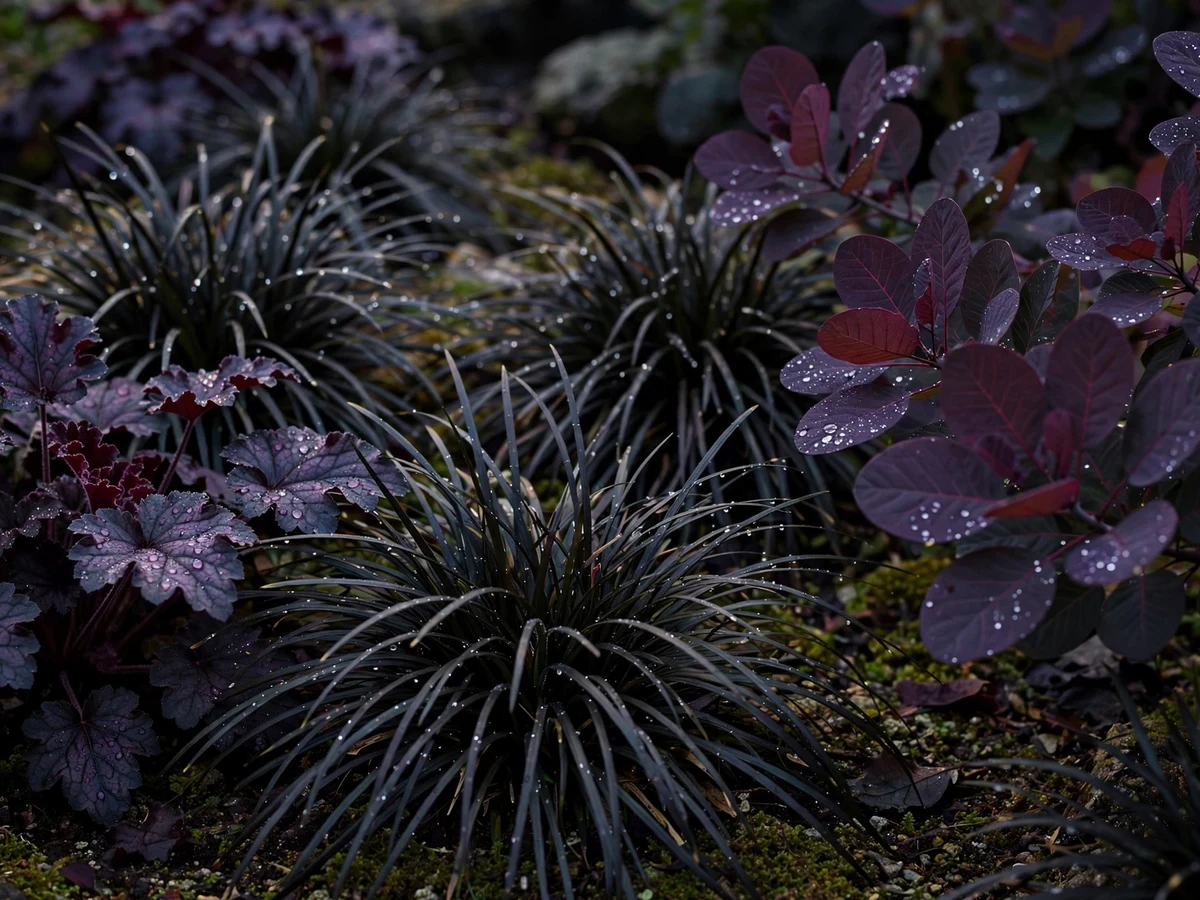
Black Mondo Grass
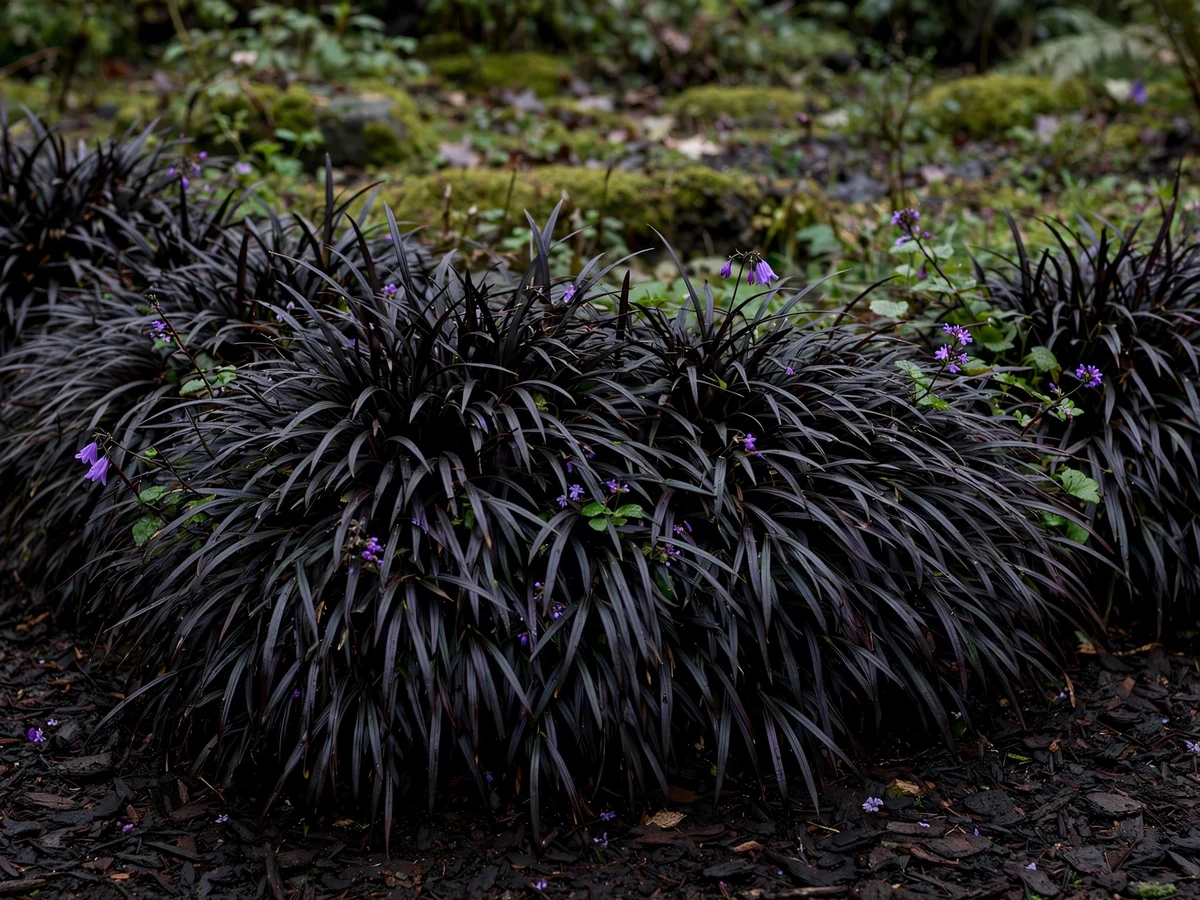
This isn’t true grass, but its straplike, near-black leaves form the ultimate gothic groundcover. Use it to edge borders or paths, where its inky color makes everything beside it pop. It is slow-growing and evergreen in mild climates — plant in partial shade and keep soil consistently moist for the darkest color.
Ninebark ‘Diabolo’
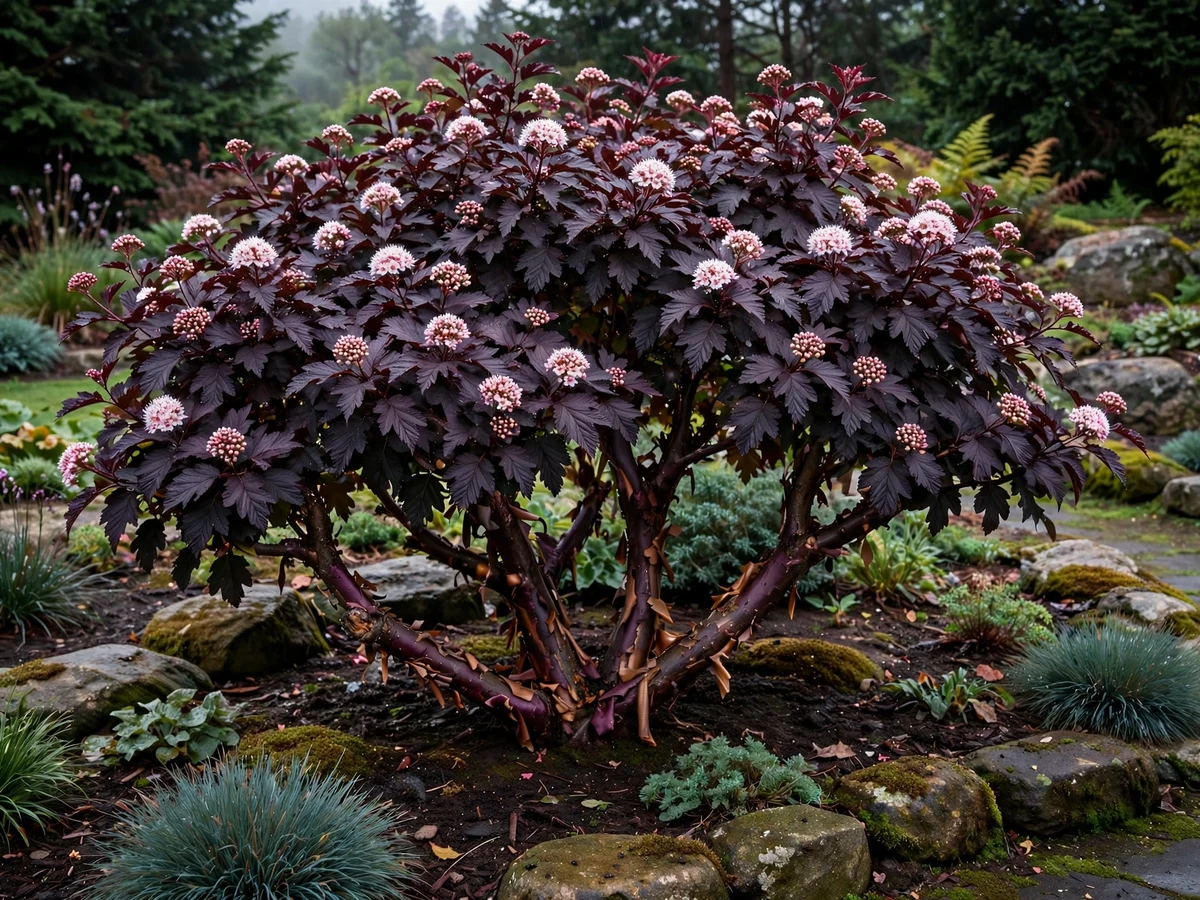
With a name meaning “little devil,” this shrub earns its place with deep burgundy-purple foliage and peeling bark that adds winter interest. It grows fast into a bold 6–8 foot screen. Plant it as a backdrop behind lighter perennials, and prune in late winter to keep its devilish color at its richest.
Black Lace Elderberry
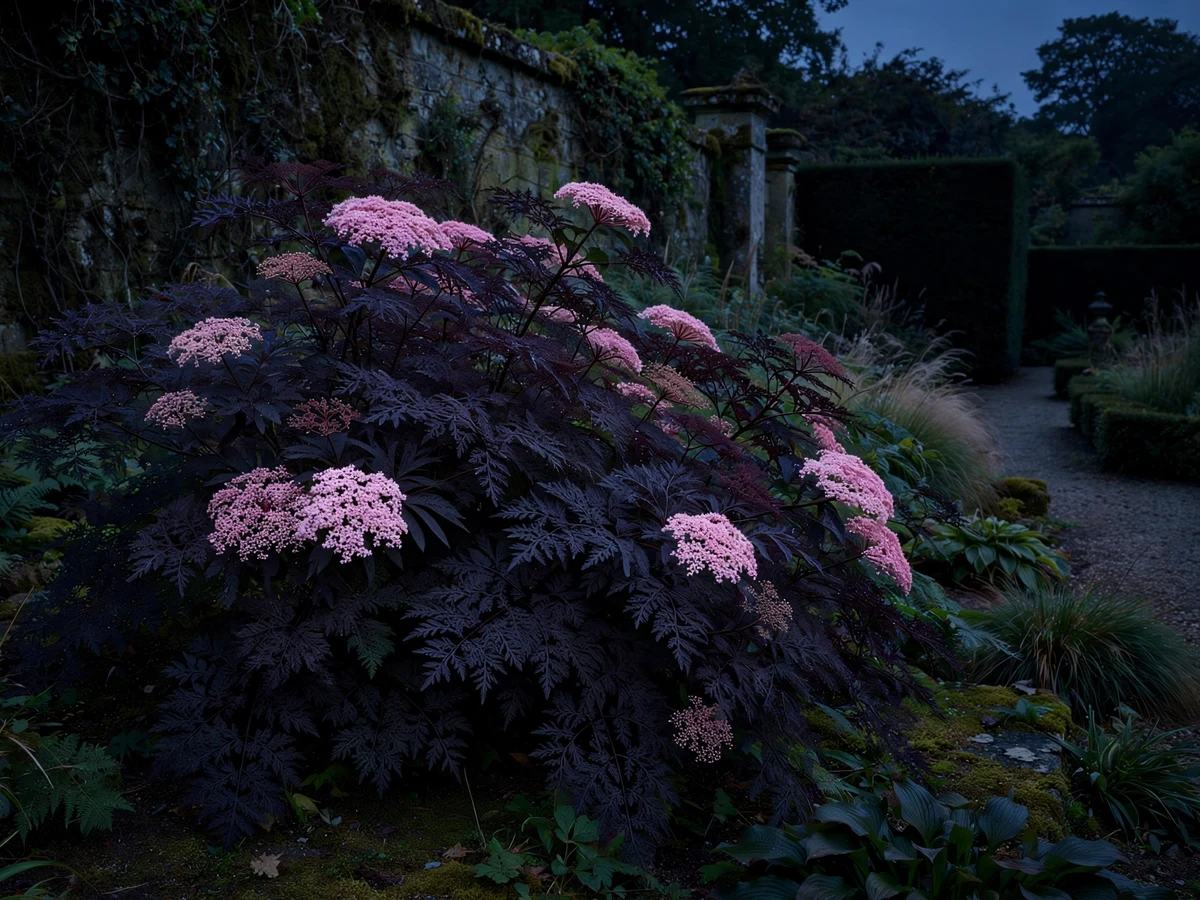
Finely cut, lace-like, near-black leaves topped with soft pink flower clusters — this elderberry looks like it was designed for a haunted manor. It reaches 6–8 feet and loves full sun. Site it where the low evening light can shine through its delicate foliage for maximum drama.
Purple Smokebush
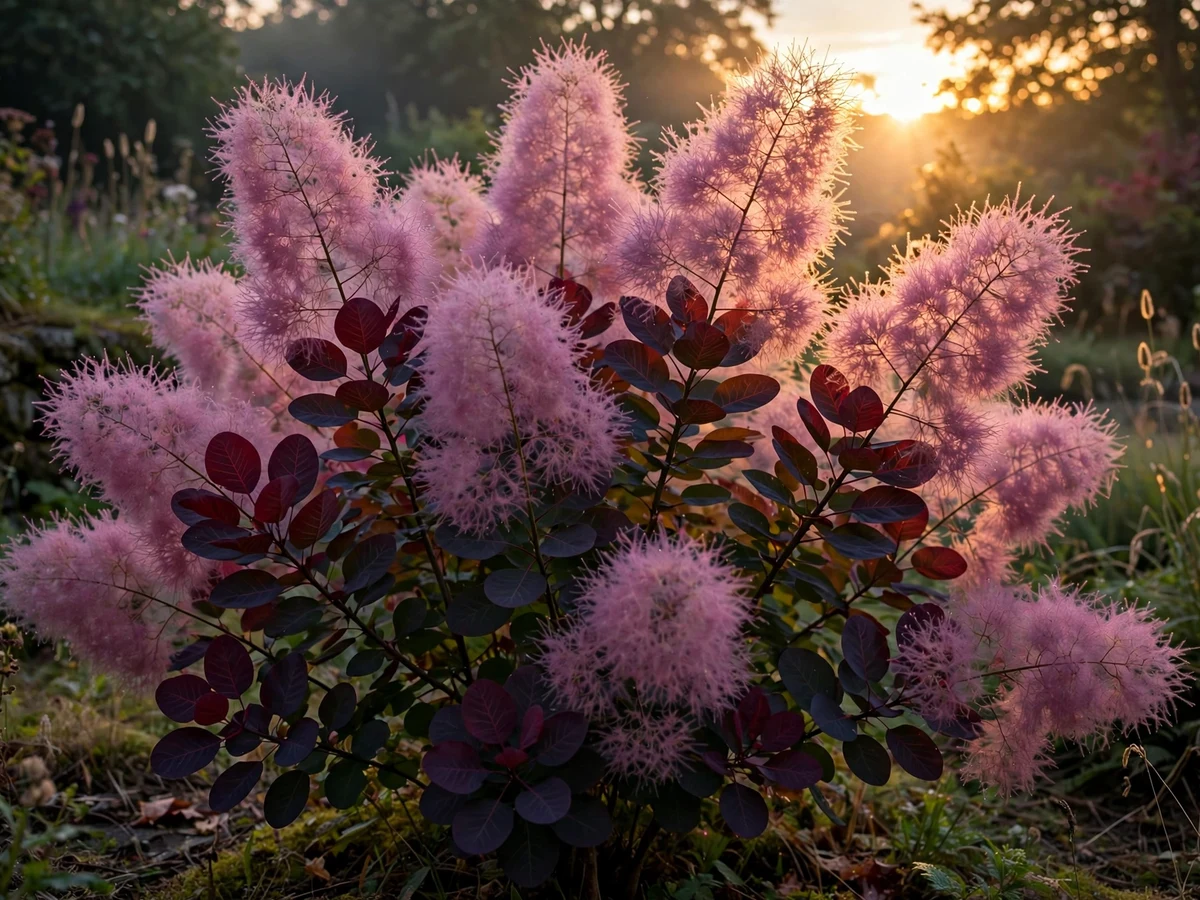
Clouds of smoky pink-purple plumes float above wine-red leaves like something from a dream — or a séance. This large shrub becomes a living fog machine in late summer. Give it full sun and room to spread, and prune hard in spring if you want the biggest, darkest leaves.
Black Coral Bells
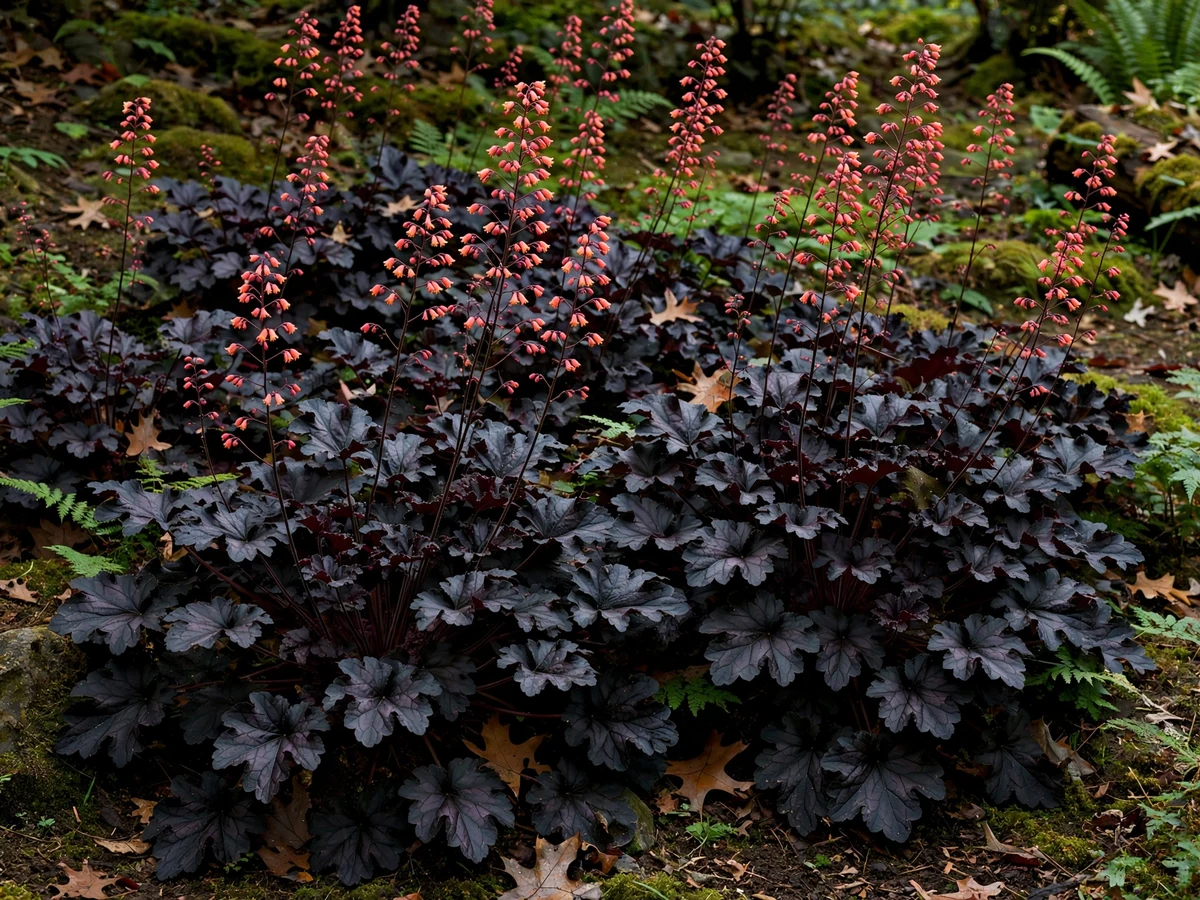
Heuchera’s ruffled, near-black leaves bring gothic glamour to shady spots where little else dares to go dark. They hold their color best with some afternoon shade. Mass them under trees or along a shadowy path, and let their tiny coral flower stems add an unexpected flicker of color.
Dark Japanese Maple
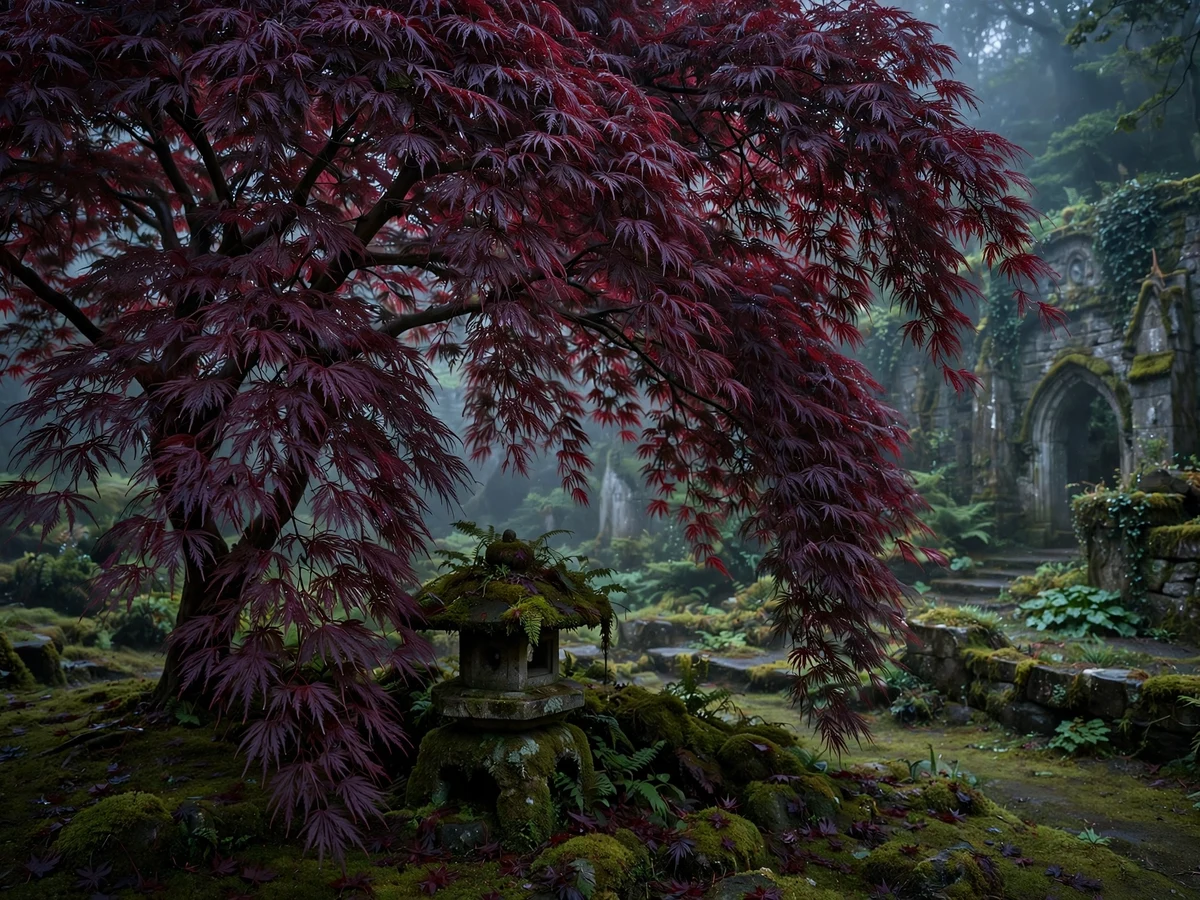
No gothic garden is complete without a burgundy Japanese maple, its cascading lace leaves dripping like dark velvet. It is the undisputed aristocrat of moody trees. Plant in dappled shade with shelter from harsh afternoon sun, mulch well, and let it become the brooding centerpiece of your yard.
Black Taro
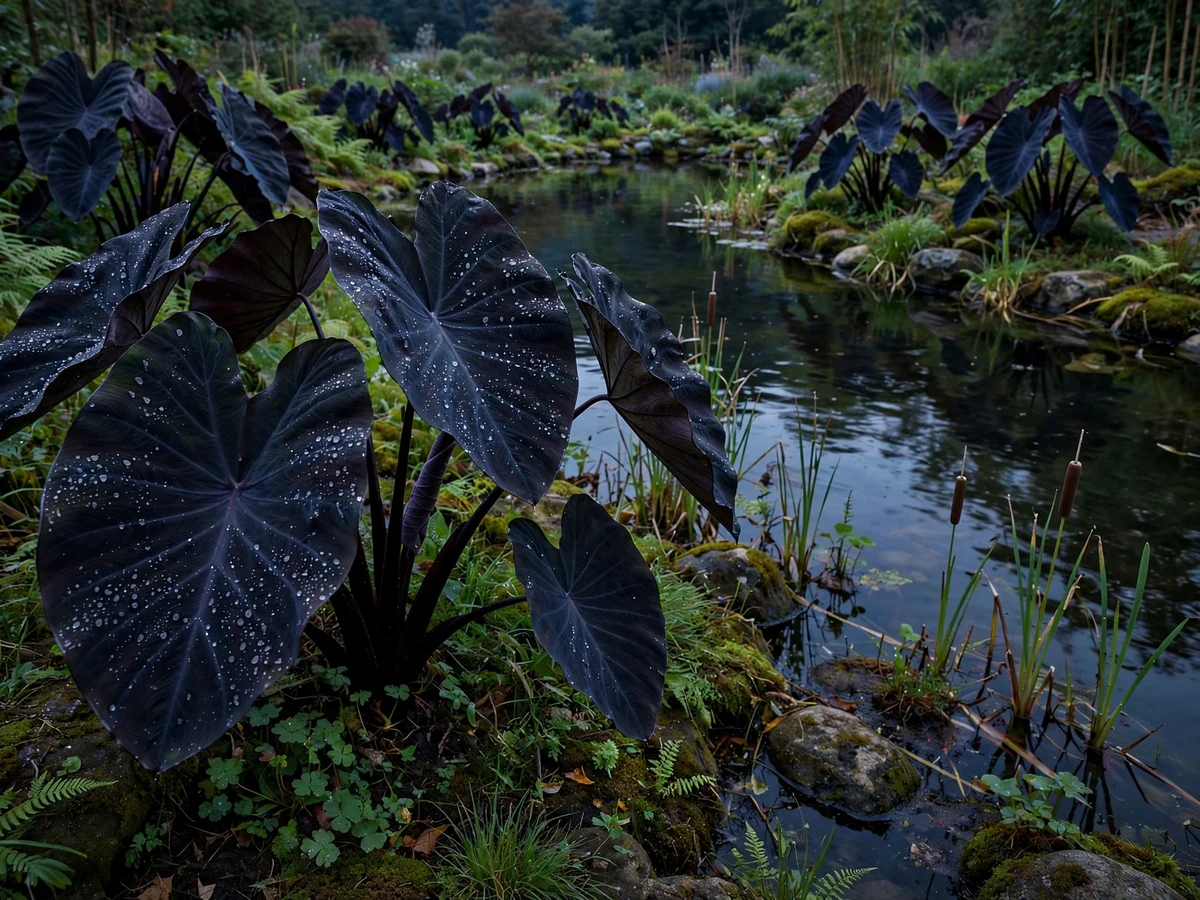
Colocasia’s enormous elephant-ear leaves in near-black are pure botanical theater — like something guarding a temple gate. It loves moisture and even standing water. Grow it in a large pot by the front door for Halloween, then overwinter the bulb indoors in cold climates.
Purple Fountain Grass
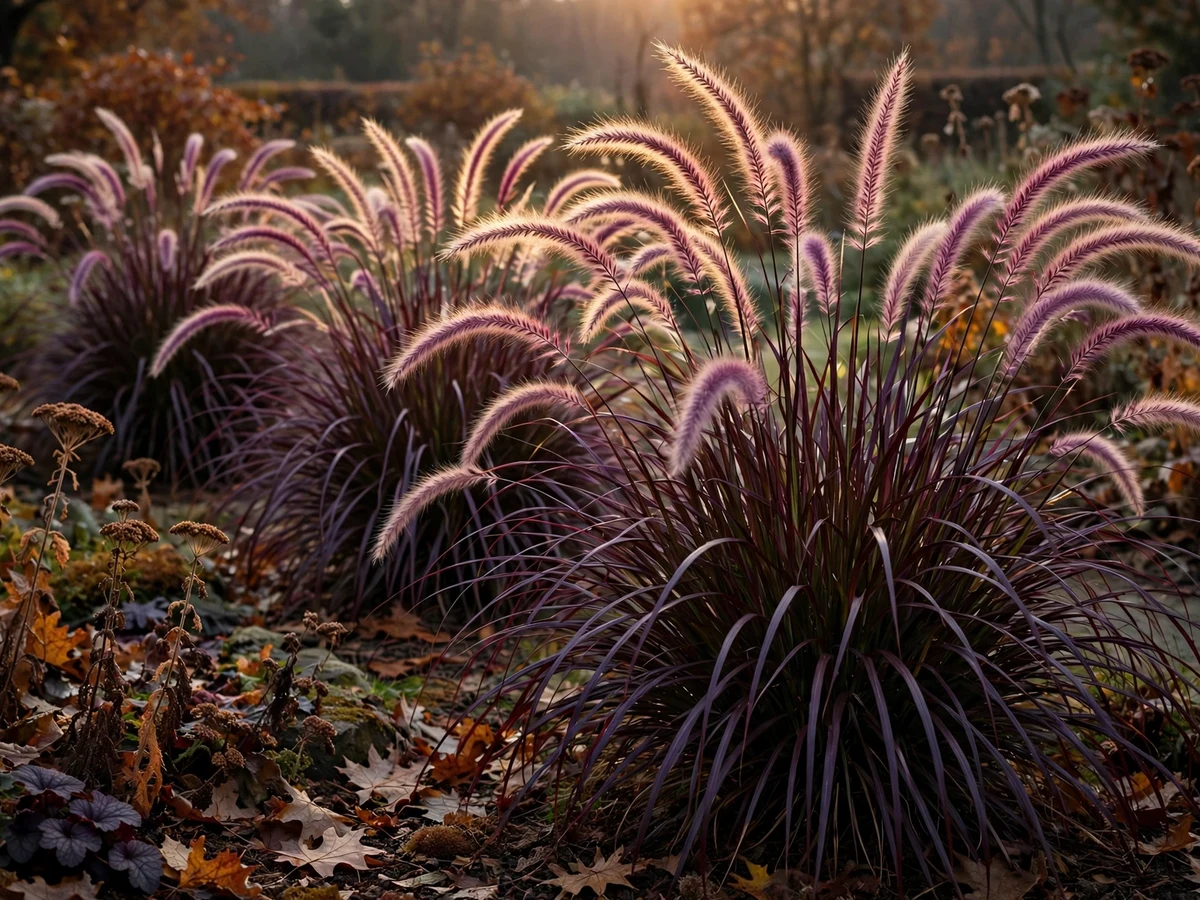
Arching burgundy blades topped with fluffy rose-purple plumes sway like dark flames in the autumn breeze. This annual grass is one of the easiest ways to go gothic — a single pot transforms a porch. Plant in full sun after frost danger, and let it dance through October.
Chocolate Cosmos
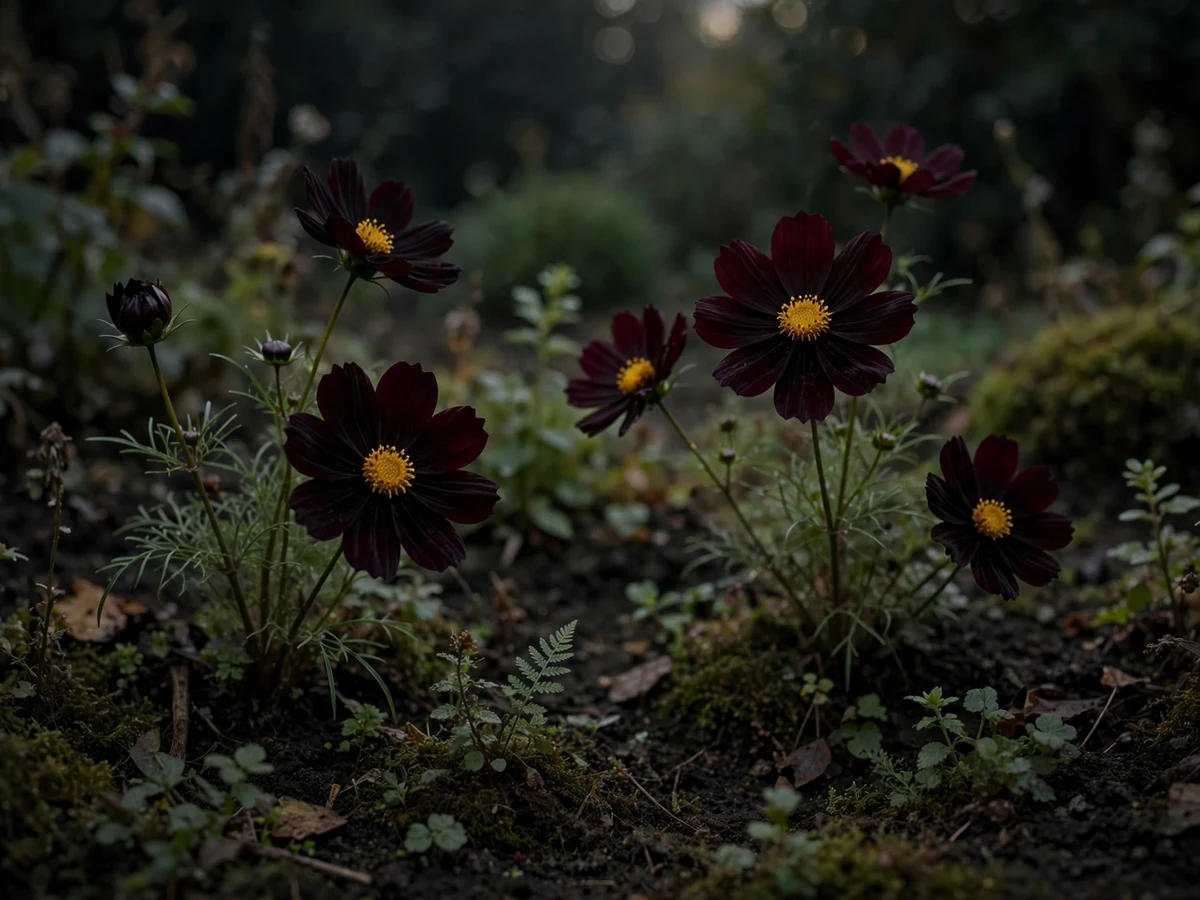
Velvety maroon-black blooms that genuinely smell like chocolate — this is the flower Halloween dreams are made of. It is a tender perennial often grown as an annual. Plant in rich, well-drained soil in full sun, deadhead for continuous blooms, and lean in close for that cocoa scent.
Black Petunia
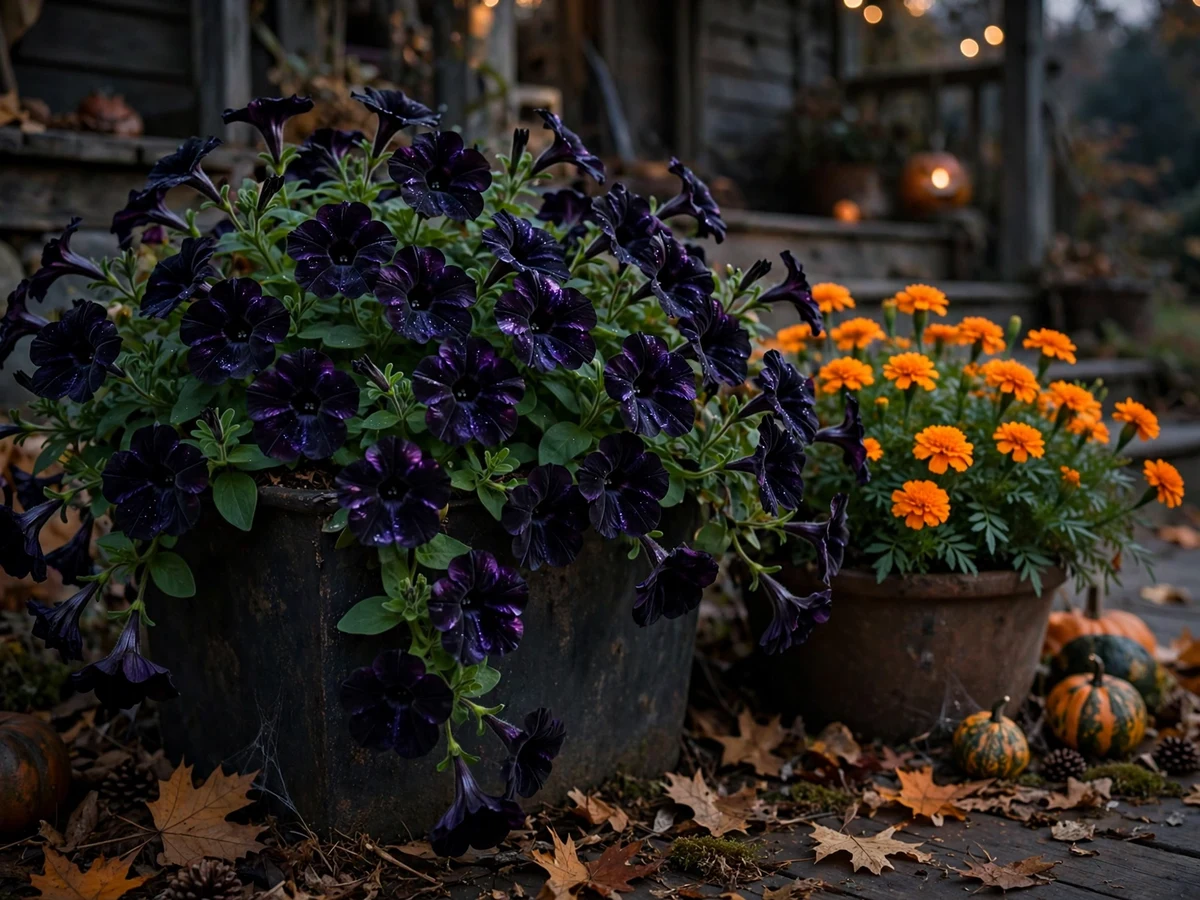
The famous ‘Black Velvet’ petunia delivers the darkest flowers in the gardening world, with a subtle purple sheen. Pair them with orange marigolds for the ultimate Halloween color clash. They bloom best in full sun with regular deadheading — a high-impact, low-effort finale for your moody yard.
Designing with darkness is all about contrast: let deep foliage glow against silver plants, pale stone, or a burst of orange blooms. Dark leaves also make small spaces feel deeper and more mysterious. For more ideas on composing striking plant combinations, explore our flower garden layout ideas and adapt the principles to your gothic palette.
A gothic garden proves that moody can be magnificent. From the inky ribbons of black mondo grass to the smoky plumes of purple smokebush, these dark foliage stars will keep your yard looking dramatic long after the jack-o’-lanterns fade. Plant boldly — the dark side has never looked this good.
Making Dark Foliage Glow After Dark
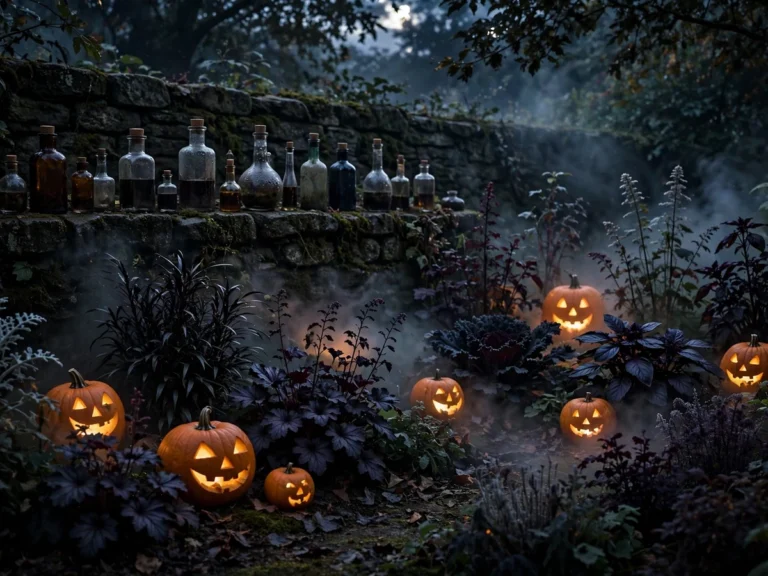
A gothic garden truly comes alive at night, and a little lighting strategy makes all the difference. Aim warm uplights at your Japanese maple and smokebush so their dark canopies glow against the evening sky, and tuck small solar path lights among black mondo grass borders to trace inky ribbons of light along walkways. Silver-leaved companions like dusty miller or artemisia act like moonlight reflectors beside deep purples, doubling the drama. For Halloween night itself, add flickering LED candles in lanterns and a few carved pumpkins — the orange flames against near-black foliage is the single most striking contrast in the fall garden. Keep the palette restrained: with dark plants, fewer colors always look more expensive and more mysterious.
Frequently Asked Questions
Do dark foliage plants need special care?
Mostly no — but many hold their darkest color in full sun, while some (like coral bells) prefer shade. Check each plant’s light needs before siting it.
Will a gothic garden look too gloomy year-round?
Not if you balance it: pair dark foliage with silver plants, pale gravel, or seasonal color so the garden feels dramatic rather than dreary.
Which dark plants are easiest for beginners?
Purple fountain grass, black petunias, and black coral bells are all forgiving and fast — instant gothic impact with minimal fuss.
Can I grow these in containers?
Absolutely. Black taro, fountain grass, petunias, and coral bells all thrive in pots, making them perfect for porches and patios.
Are dark-leaved plants harder to keep alive?
No — leaf color doesn’t mean fragility. Choose varieties hardy in your zone and give them their preferred light and water, just like any plant.