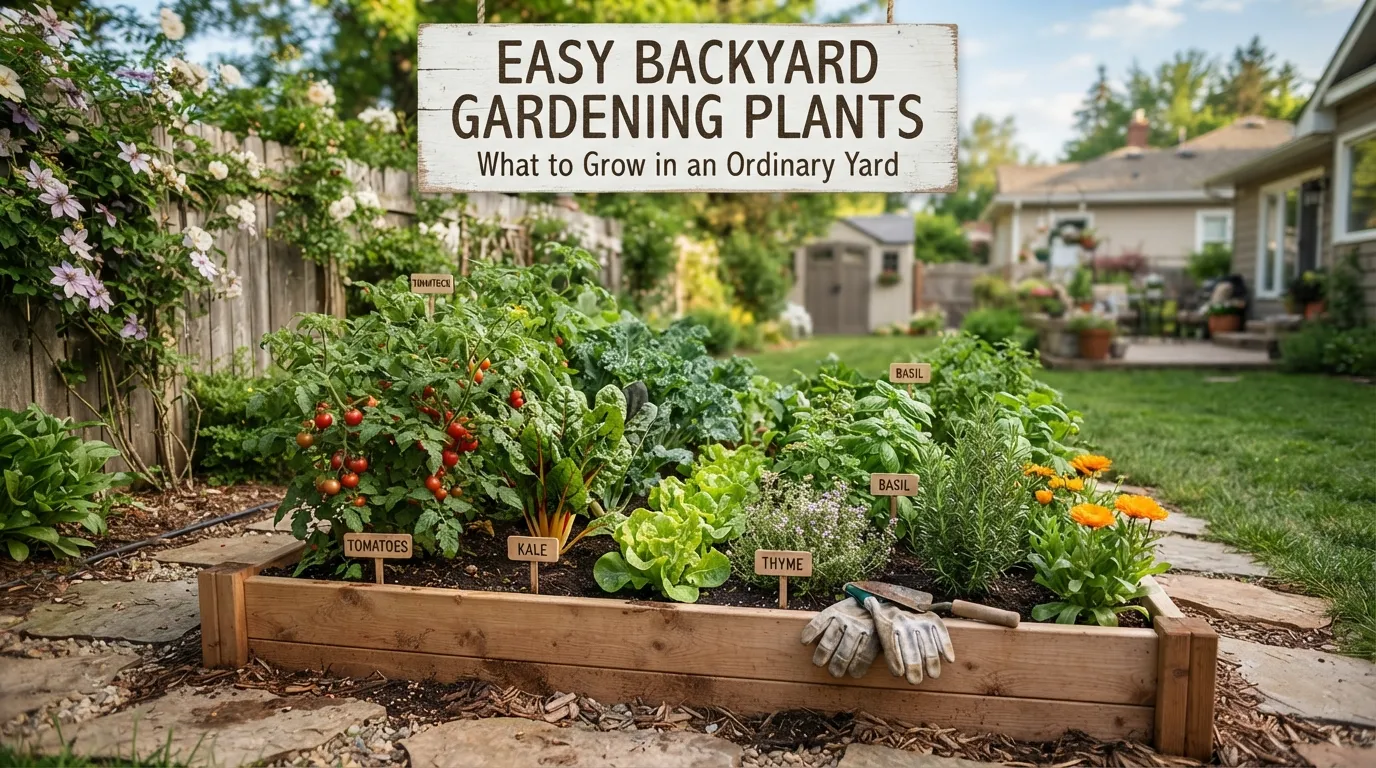
Easy Backyard Gardening Plants What to Grow in an Ordinary Yard
Most backyards are not blank canvases. They’re a strip of grass, a fence, one spot that stays weirdly soggy, and a corner where the sun hits hard from noon onward.
That’s a fine place to garden. Better than fine, actually — real yards with real quirks tend to produce more interesting gardens than perfectly flat ones, because you’re forced to match plants to conditions instead of imposing a plan.
This is what to grow in an ordinary backyard, organized by the spots you probably have.
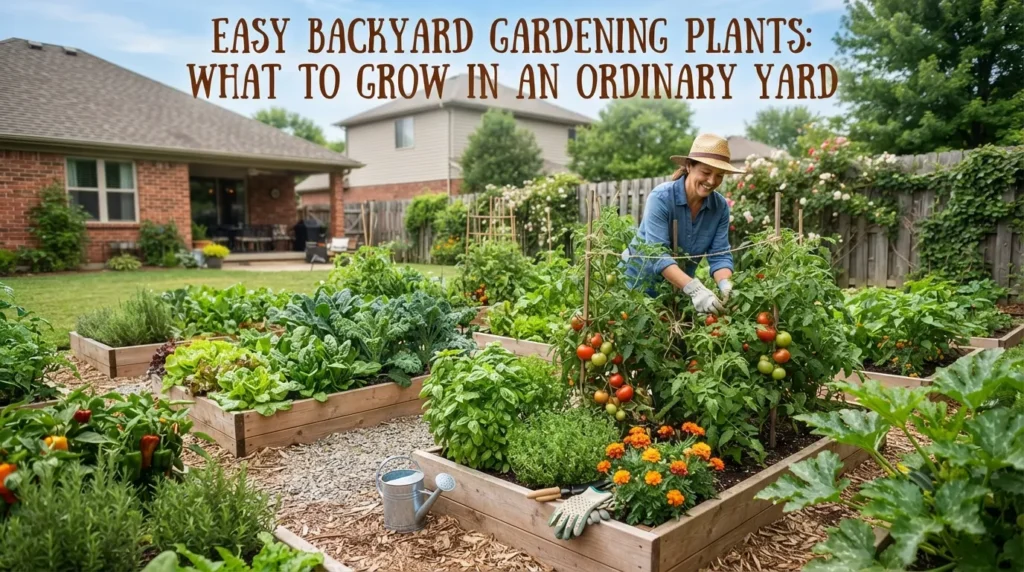
Easy Backyard Gardening Plants What to Grow in an Ordinary Yard
check out Easy Backyard Gardening Plants What to Grow in an Ordinary Yard below:
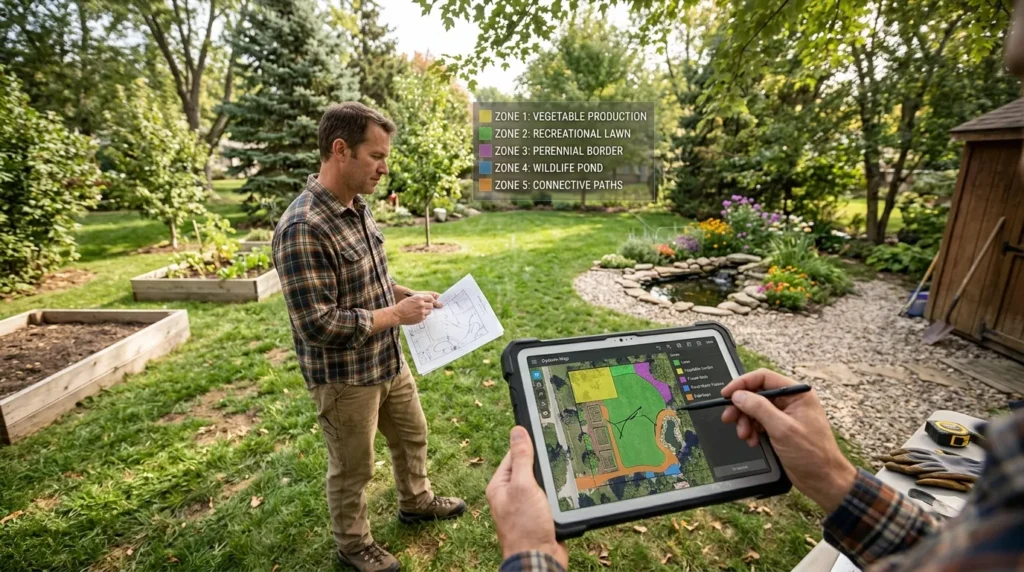
Start by Mapping Your Yard’s Zones
Walk your yard once and label four things for Easy Backyard Gardening Plants
The hot spot — usually the south or west side, near a fence or wall, gets blasted all afternoon.
The soggy spot — where water pools after rain or where the downspout drains.
The shade — under a tree, along the north wall, behind the garage.
The good middle ground — decent sun, decent drainage, nothing extreme.
Almost every backyard has all four. Each wants different plants, and matching them correctly is roughly ninety percent of gardening success.
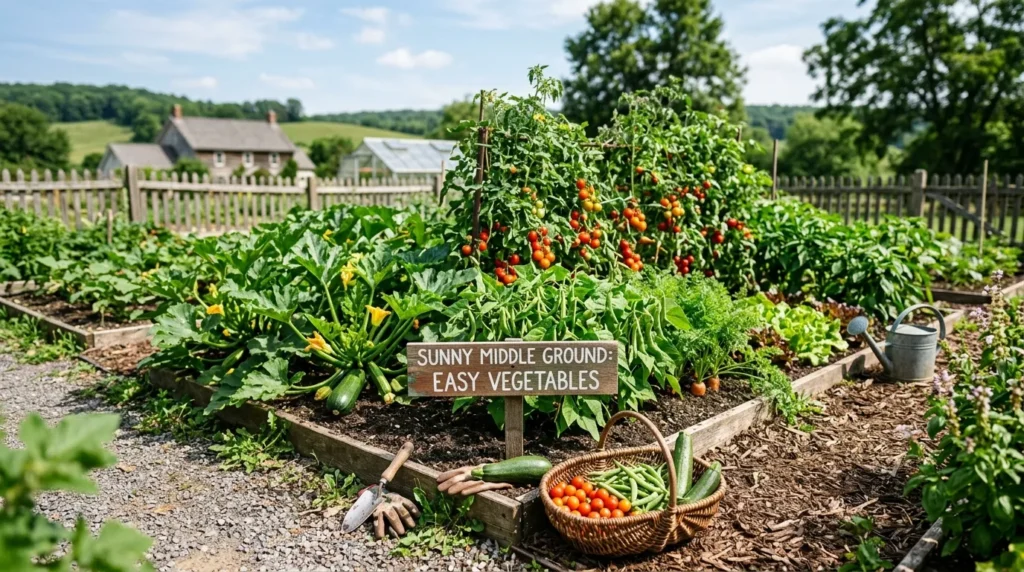
For the Sunny Middle Ground: Easy Vegetables
This is where food grows best. Most vegetables need six-plus hours of sun.
Cherry tomatoes — Far more productive and disease-resistant than large slicing types. One plant, one cage, dozens of harvests.
Bush beans — Direct-sow seeds, no trellis, harvest in under two months. Genuinely foolproof.
Zucchini — Almost comically productive. Plant two, not six. You will be giving them away regardless.
Lettuce and salad greens — Ready in about four weeks. Cut the outer leaves and the plant keeps producing.
Radishes — Twenty-five days from seed to harvest. Perfect for keeping kids interested.
Peppers — Compact, heat-loving, attractive enough to plant in a flower bed.
Cucumbers — Grow them up a trellis to save space and get straighter fruit.
Swiss chard — Beautiful colored stems, harvests for months, tolerates heat and light frost.
also check 6 flower gardening plans.
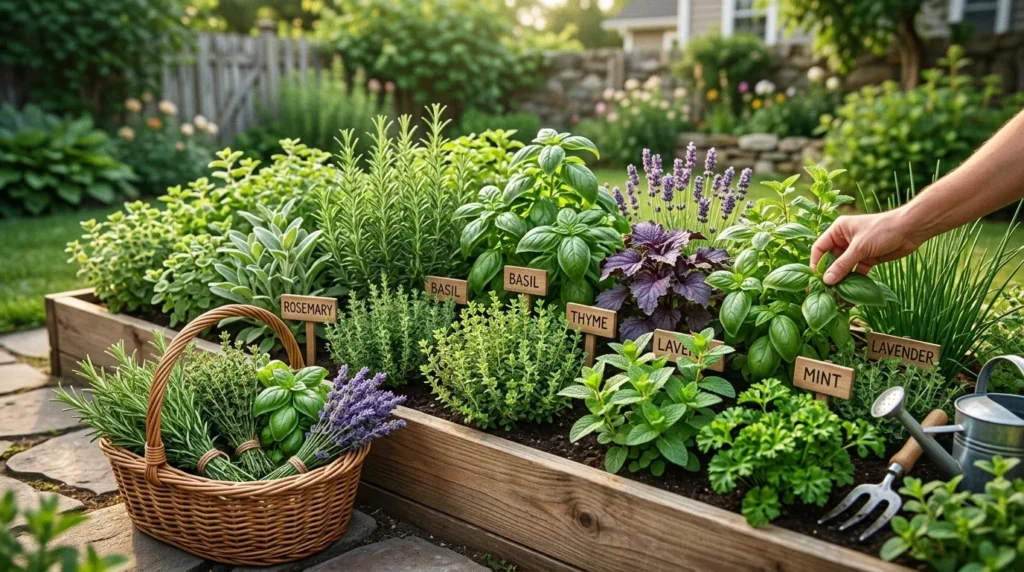
Herbs: The Highest Return in Any Backyard
Herbs cost more at the store than almost anything else per ounce, and they’re the easiest things to grow.
Basil — Sun and steady water. Pinch off flower buds and it keeps producing leaves.
Mint — Grow it in a container, always. In the ground it will claim the entire bed.
Rosemary — Woody, drought tolerant, perennial in mild climates. Perfect for the hot spot.
Thyme — Low, spreading, drought proof. Works as a groundcover along a path.
Chives — Perennial, returns every spring, and produces edible purple flowers.
Parsley — Tolerates part shade, harvests for months.
Oregano — Nearly unkillable, spreads steadily, thrives in poor dry soil.
Plant an herb bed close to your kitchen door. Distance is the main reason people stop harvesting.
Easy Backyard Fruit
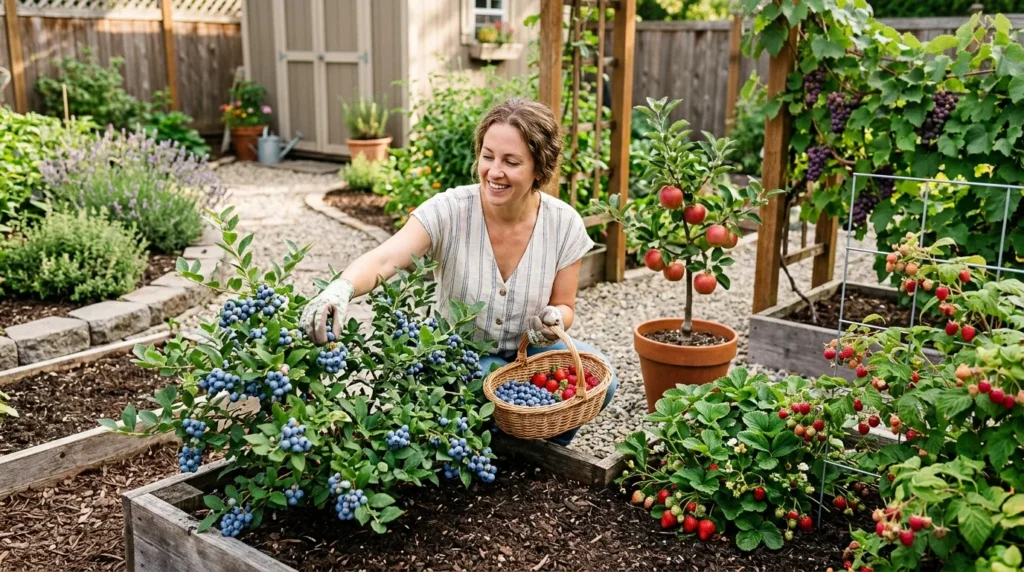
Fruit feels advanced. Some of it isn’t.
Strawberries — Perennial, container-friendly, and they propagate themselves via runners. Everbearing types produce across the season.
Raspberries — Plant along a fence line and they’ll fill in. Cut spent canes each year and that’s the maintenance.
Blueberries — Need acidic soil, so amend with peat or plant in containers. Two varieties fruit better than one.
Rhubarb — Plant once, harvest for decades. Requires essentially nothing.
Figs — Surprisingly easy in warm climates and container-growable in cooler ones.
For the Hot Dry Spot
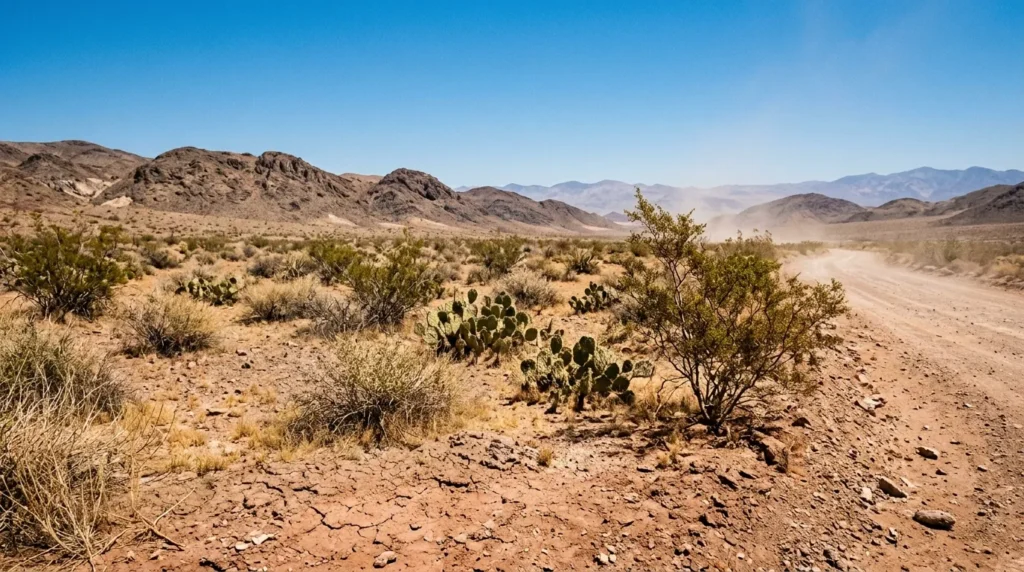
Where nothing seems to survive, plant these.
Lavender, Russian sage, sedum, yarrow, and catmint. All prefer sun-baked, lean, well-drained soil. Improving the soil too much actually makes them worse.
Add portulaca or lantana as annuals for continuous color, and rosemary if you want the spot to be useful as well as pretty.
For the Shade
Hosta for foliage. Ferns for texture. Astilbe for flowers. Impatiens for reliable annual color. Heuchera for year-round leaf interest.
Edible options for part shade: lettuce, spinach, parsley, mint, and kale all tolerate four hours of sun or less.
For the Soggy Spot
Don’t fight it — plant into it.
Red twig dogwood, Joe Pye weed, swamp milkweed, Siberian iris, and ligularia all tolerate or prefer wet feet. This is how a drainage problem becomes a rain garden.

Backbone Shrubs Every Backyard Benefits From
Shrubs are what makes a yard feel established rather than temporary. They’re also the least work per square foot of anything you can plant.
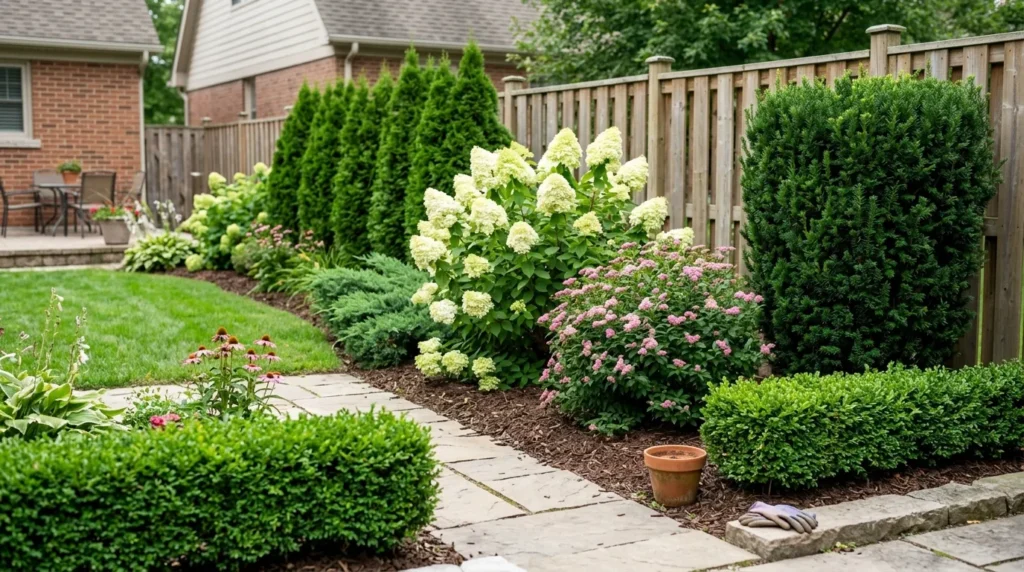
Panicle hydrangea for large summer blooms and real toughness. Ninebark for burgundy or lime foliage and winter bark interest. Spirea for compact reliable flowers. Boxwood for evergreen structure and definition.
Three shrubs will do more for how your yard looks than thirty annuals.
Practical Backyard Setup
Build a raised bed if your soil is bad. A 4 x 8 bed filled with good soil skips years of amendment work. Keep it four feet wide maximum so you can reach the center from both sides.
Put water within reach. A hose that reaches every bed is the difference between watering and intending to water.
Mulch every bed. Three inches. Less watering, fewer weeds, healthier soil.
Leave paths. Never step in growing beds — compacted soil is the enemy of roots.
Plant near the door. Whatever you plant closest to the house gets the most care. Put the herbs and tomatoes there, the low-maintenance shrubs at the far end.
A Complete Easy Backyard Plan
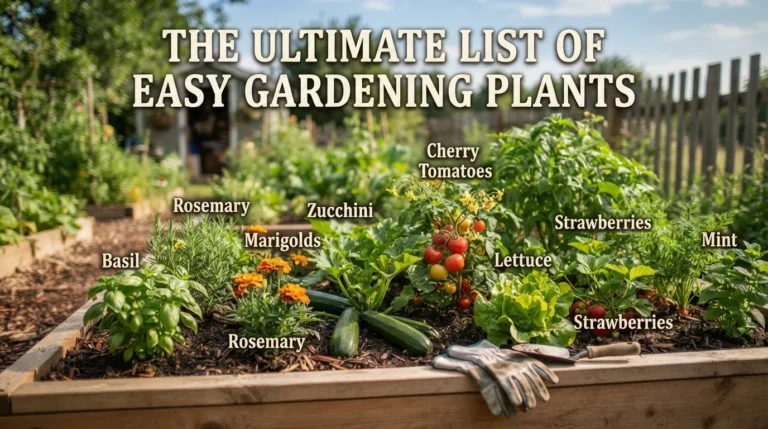
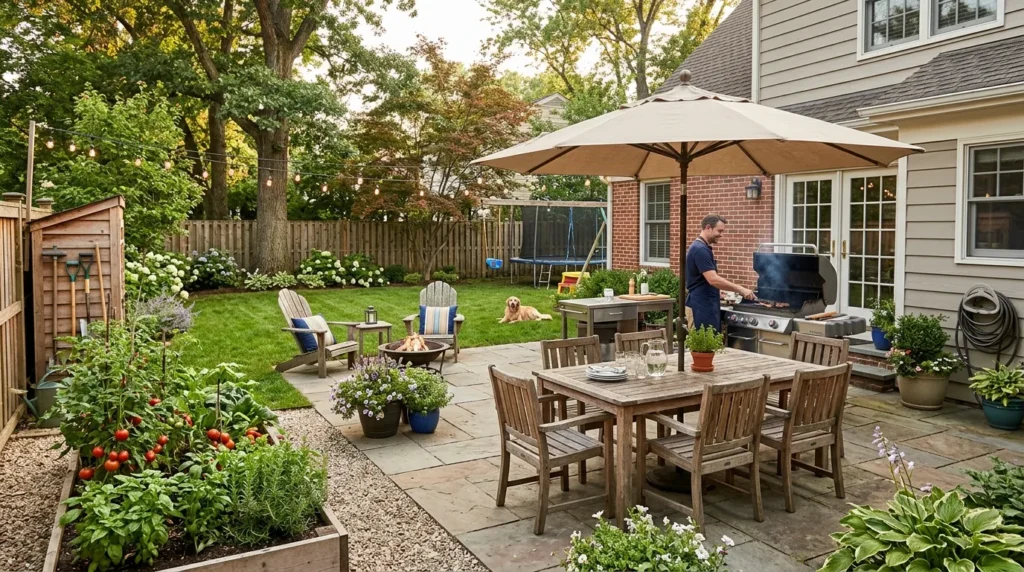
Sunny middle: one raised bed with two cherry tomatoes, six bush bean plants, one zucchini, a row of lettuce, and basil tucked between the tomatoes.
Near the kitchen door: a container cluster with mint, rosemary, thyme, and chives.
Hot fence line: three lavender, three catmint, three sedum, mulched heavily.
Shady corner: three hostas, two ferns, one astilbe.
Soggy patch: one red twig dogwood and a clump of Siberian iris.
Along the back: three panicle hydrangeas for structure.
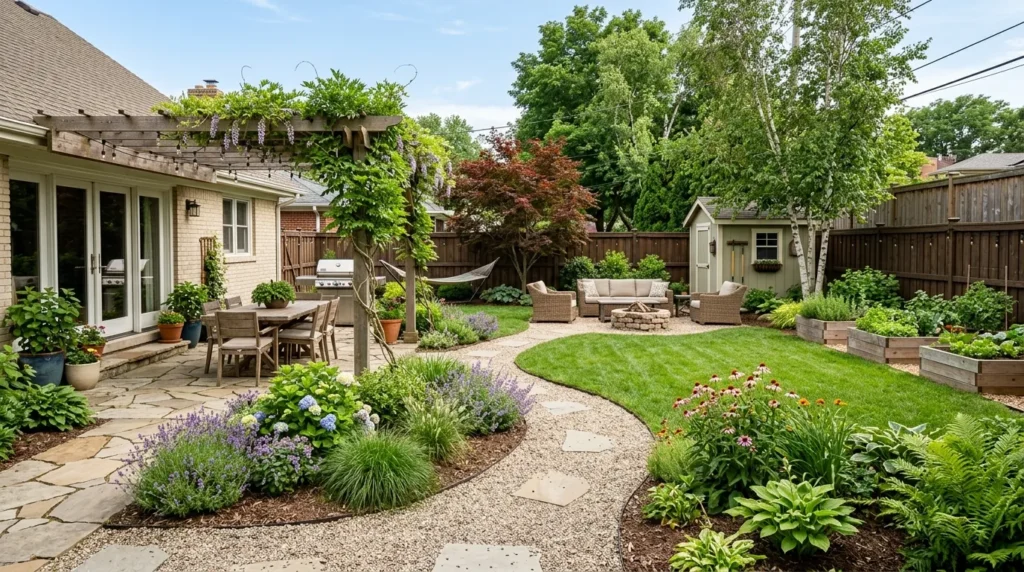
That plan feeds you, blooms from spring to fall, uses every awkward spot in the yard, and needs maybe an hour a week in season.
The Habit That Matters Most
Walk your garden for five minutes a day. Not to work — just to look.
You’ll catch the aphids before they multiply, notice the wilt before it’s terminal, and harvest the zucchini before it becomes a baseball bat. Five minutes of attention prevents most of the problems that turn gardening into work.