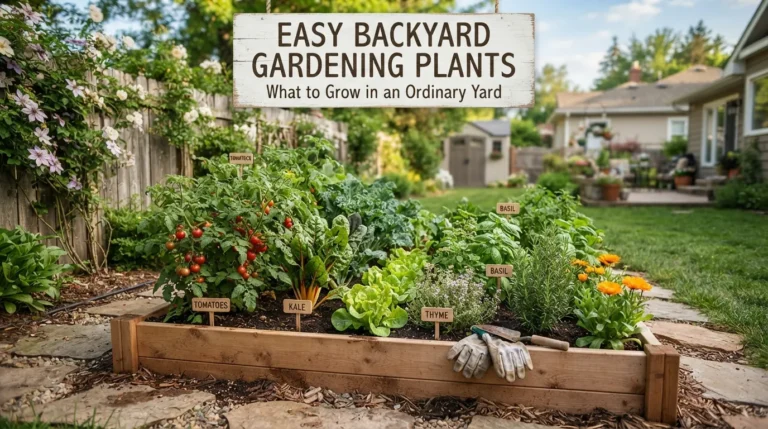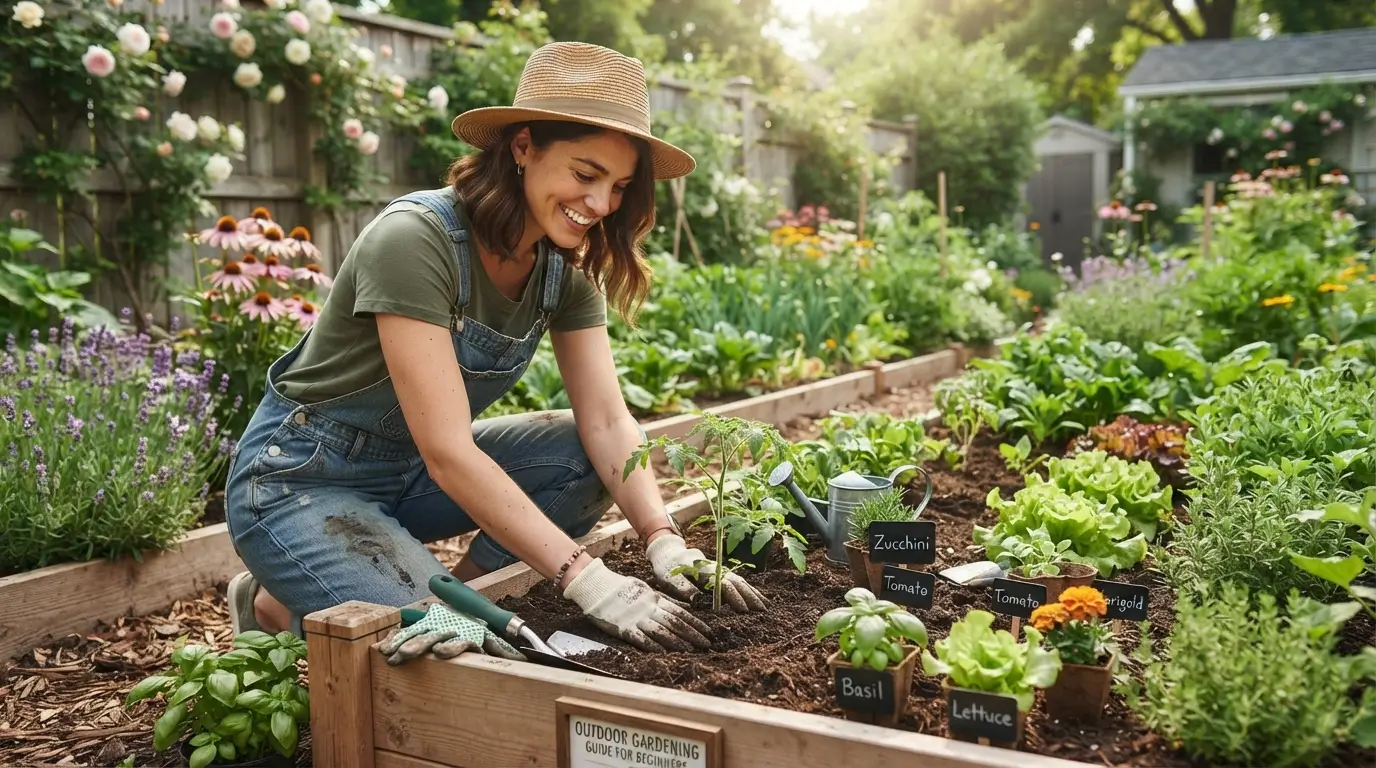
Outdoor Gardening Plants Guide for Beginners
Every gardener you admire — the one with tomatoes spilling over the fence and zinnias in every color — started exactly where you are. Standing in an empty patch of yard, holding a plastic pot, wondering whether they were about to kill a perfectly innocent plant.
Here’s the good news nobody tells beginners: plants want to live. Your job isn’t to keep them alive through sheer force of will. Your job is to put the right plant in the right place and then mostly get out of the way.
This guide walks you through exactly how to do that.
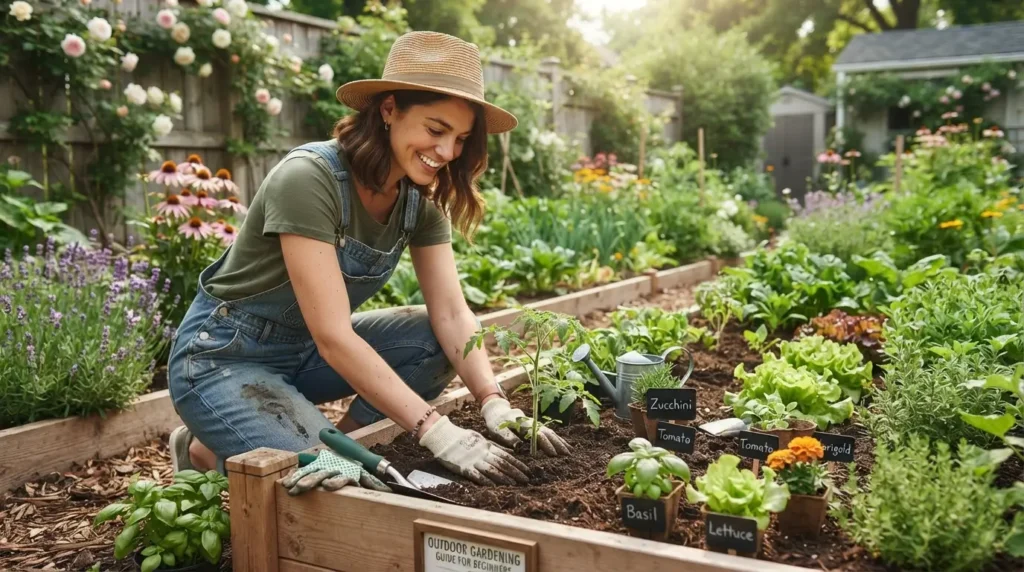
Outdoor Gardening Plants Guide for Beginners
Learn about Outdoor Gardening Plants Guide for Beginners below:
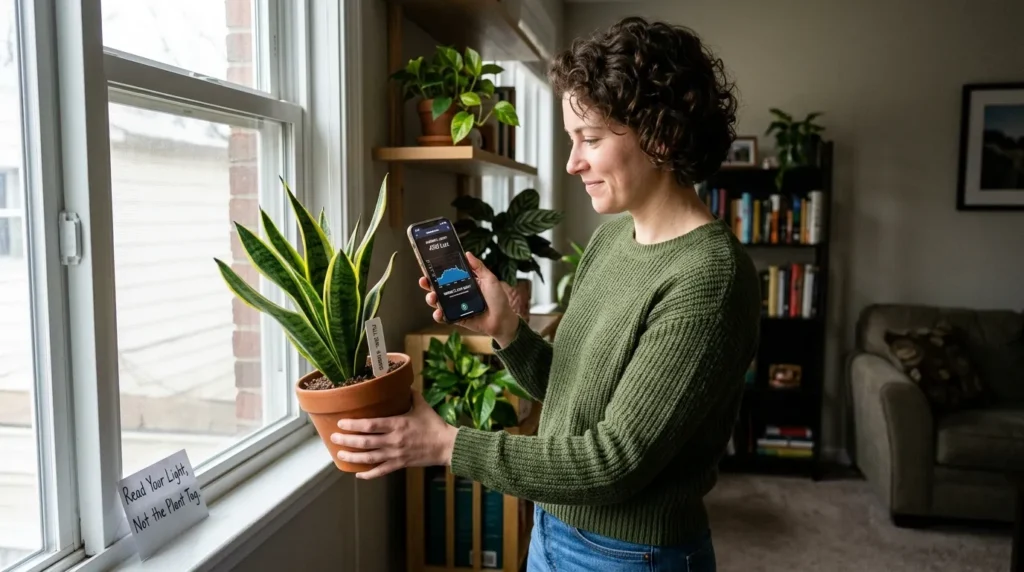
Start by Reading Your Light, Not the Plant Tag
Before you buy a single thing, spend one day paying attention to your yard.
Pick a Saturday. Look outside at 9 a.m., noon, 3 p.m., and 6 p.m. and note which areas are sunny and which are shaded. That’s it. That single afternoon of observation will save you more money than any other gardening habit.
Here’s how to translate what you saw:
- Full sun — six or more hours of direct light, usually the south and west sides of your home
- Part sun / part shade — roughly three to six hours, often morning light with afternoon shade
- Full shade — under three hours of direct sun, typically the north side or beneath mature trees
Plant tags use these exact words. Once you know your numbers, shopping becomes a matching game instead of a guessing game.
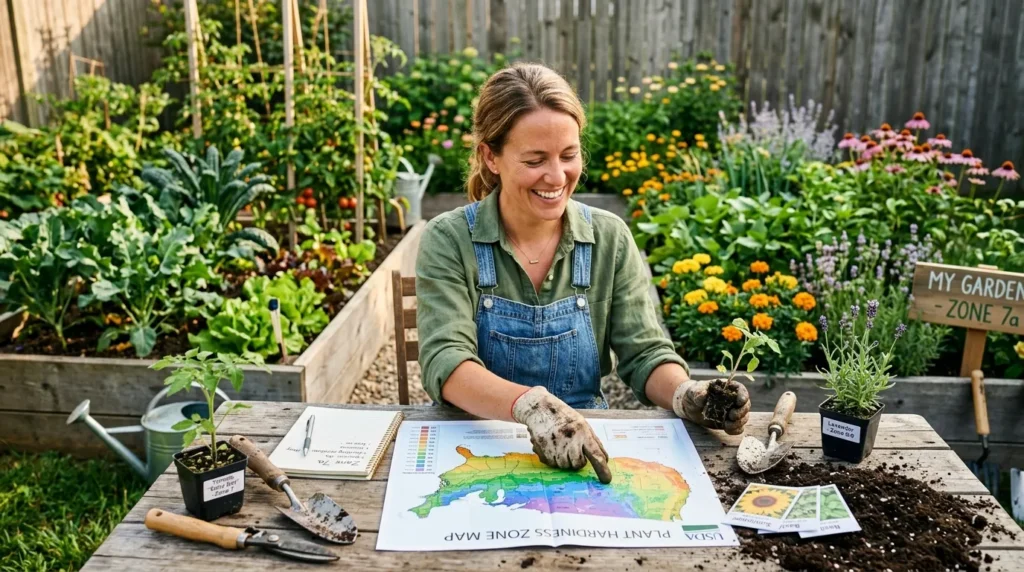
Know Your Growing Zone
Your hardiness zone tells you which perennials will survive your winter. Search “hardiness zone” plus your postal code and write the number on your phone’s notes app.
Zones matter for perennials, shrubs, and trees — plants meant to come back year after year. They matter much less for annuals like marigolds or basil, which live one season regardless.
A quick vocabulary check while we’re here:
- Annuals bloom hard for one season, then finish. Cheap, colorful, instant gratification.
- Perennials return every spring for years. Slower to establish, better long-term value.
- Biennials grow leaves the first year and flower the second — foxglove and hollyhock are the classics.
The smartest beginner strategy is a blend: perennials for structure, annuals for color you can change your mind about.
The Ten Easiest Outdoor Plants for a First Garden
These forgive beginners. That’s the entire selection criteria.
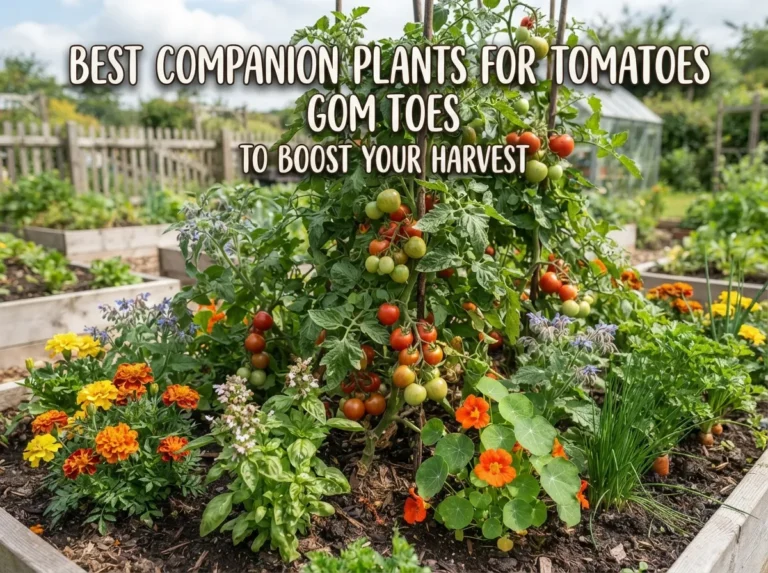
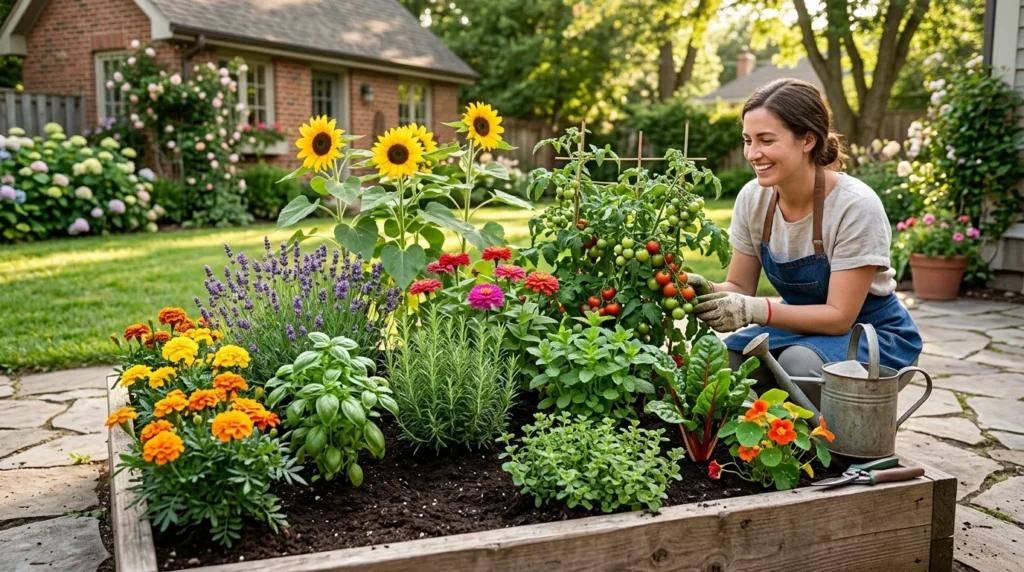
Marigolds germinate fast, bloom relentlessly from spring to frost, and their scent deters some garden pests. Direct-sow the seeds and they’ll come up in under a week.
Zinnias are the flower that makes new gardeners believe in themselves. Full sun, minimal fuss, cut-and-come-again blooms all summer long.
Sunflowers grow visibly. Poke a seed in the ground in May and by July you’re looking up at it. Nothing builds confidence faster. Also read indoor gardening projects.
Lavender wants exactly what beginners tend to give: sun, sandy soil, and neglect. Overwatering is the only real way to lose it.
Sedum stores water in fleshy leaves, so it shrugs off missed watering entirely. Late-summer blooms feed bees when little else is flowering.
Coneflower (Echinacea) is a native perennial that returns bigger each year, tolerates drought, and brings butterflies without any encouragement.
Black-eyed Susan blooms gold from midsummer into fall and spreads politely on its own.
Hosta solves the shade problem. Broad textured leaves, no sun required, lives for decades.
Mint grows so eagerly you should plant it in a container to keep it from colonizing your beds. Free tea forever.
Cherry tomatoes produce far more reliably than beefsteak varieties. One healthy plant in a large pot will hand you a bowl of fruit a week.
Soil: The Part Beginners Skip and Later Regret
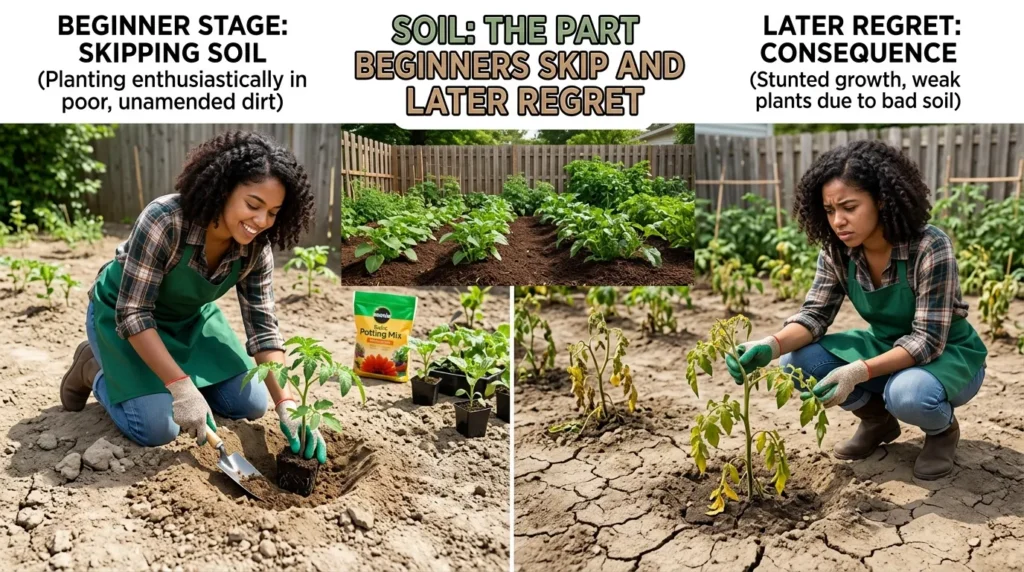
Plants eat through their roots, and roots live in soil. Poor soil is the invisible reason gardens underperform.
Test yours with your hands. Grab a damp fistful and squeeze:
- Falls apart immediately — sandy soil, drains fast, loses nutrients
- Holds a slick tight ribbon — clay soil, holds water, resists roots
- Holds together loosely then crumbles — loam, the ideal
Every soil type improves with the same fix: compost. Spread two to three inches over your bed and work it into the top layer. Compost loosens clay, helps sand retain moisture, and feeds soil life. Do this once a year and your garden compounds in quality.
If your ground is truly hopeless — solid clay, buried construction debris, tree roots everywhere — build a raised bed and fill it with quality soil. You’ll skip years of struggle.
Watering Without Killing Anything
More beginner plants die from too much water than too little. Roots need oxygen as much as moisture, and constantly soggy soil suffocates them.
Three rules cover nearly every situation:
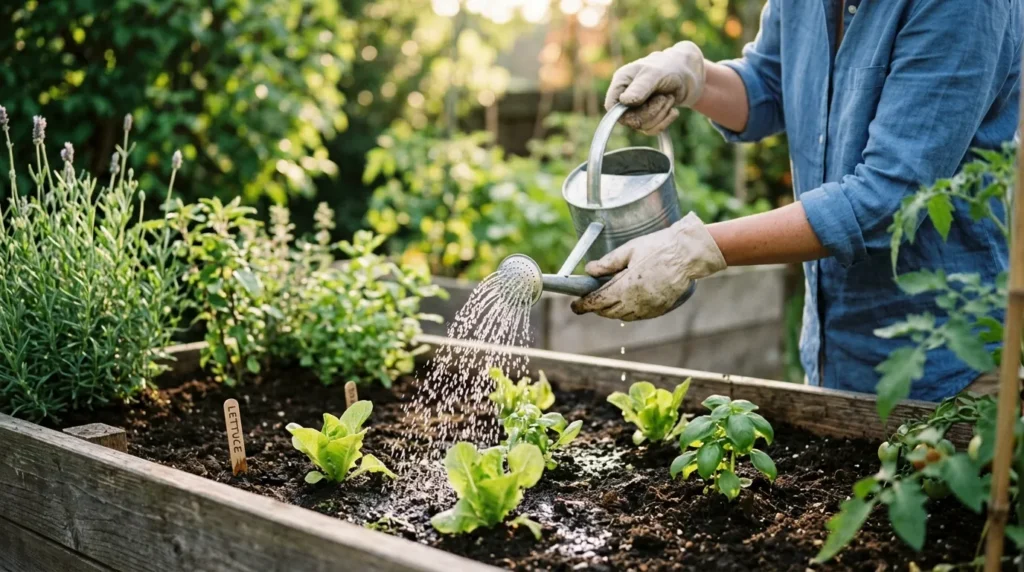
Check before you water. Push a finger two inches into the soil. Dry at that depth means water. Damp means wait.
Water deeply and less often. A long, slow soak once or twice a week trains roots to grow down toward stable moisture. Daily sprinkles keep roots shallow and needy.
Water the soil, not the leaves. Aim at the base of the plant. Wet foliage overnight invites fungal disease. Morning is the best time to water.
Containers are the exception — pots dry out fast and may need daily attention in high summer.
Your First-Year Planting Plan
Early spring: Clear weeds, spread compost, and plan on paper. Plant cool-season crops like lettuce, peas, and spinach.
Late spring: After your last frost date, plant the warm-season stars — tomatoes, peppers, zinnias, marigolds, basil.
Summer: Water deeply, mulch two inches thick to hold moisture and block weeds, and deadhead spent flowers to keep blooms coming.
Fall: Plant spring bulbs like daffodils and tulips. Cut back tired perennials. Add another compost layer.
Winter: Rest. Read seed catalogs. Take notes on what worked.
Beginner Mistakes Worth Avoiding
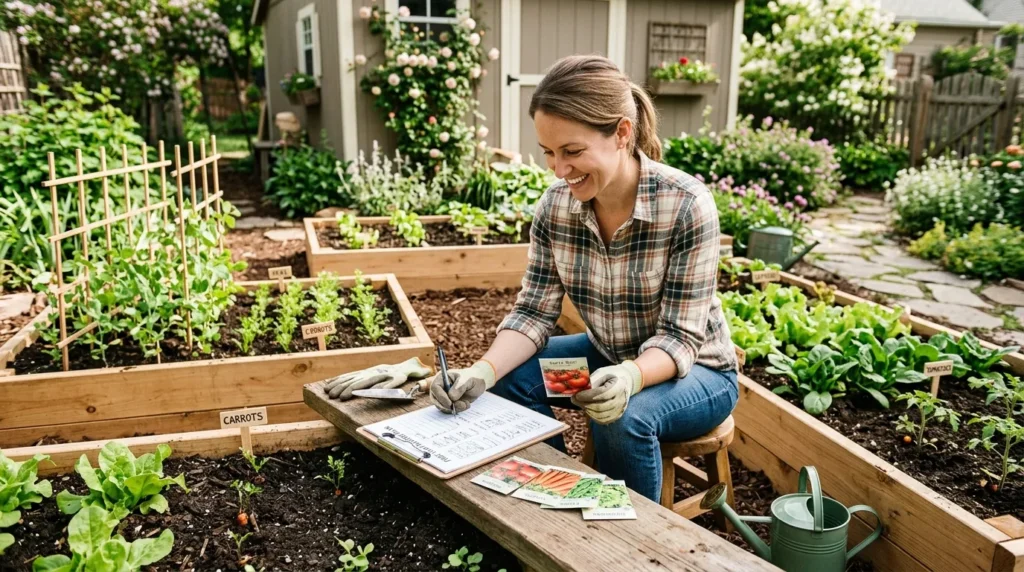
Planting too much at once. A four-by-eight-foot bed managed well beats a quarter acre managed badly. Expand next year.
Ignoring mature size. That cute one-gallon shrub may want six feet of space. Read the tag and give it room now.
Skipping mulch. Mulch cuts watering, smothers weeds, and moderates soil temperature. It’s the highest-return hour of work in the garden.
Fertilizing to fix problems. Most struggling plants have a light, water, or soil issue. Fertilizer won’t repair those and can burn a stressed plant.
Quitting after one loss. Experienced gardeners kill plants constantly. They just also plant more.
Your First Weekend
Choose above Outdoor Gardening Plants Guide for Beginners one sunny spot. Improve it with compost. Plant three zinnias, three marigolds, and one cherry tomato. Mulch. Water deeply.
That’s a real garden. Everything after this is just repetition and appetite.