Indoor Plant Lighting Guide
Indoor Plant Lighting Guide
Getting light right is the single biggest factor in indoor gardening success, and this indoor plant lighting guide will make it simple. Most houseplants don’t die from neglect — they slowly starve in light too dim for photosynthesis. The fix isn’t guesswork: once you understand how to read your rooms, choose the right bulbs, and position lamps correctly, even dark apartments can host thriving plants. Below, we’ll map natural light, decode grow light types, and teach you to read the warning signs your plants send.
Why Light Matters More Than Anything Else
Light is literally plant food. Through photosynthesis, plants convert light energy into the sugars that fuel every leaf, root, and bloom — no light, no growth, no matter how perfectly you water or fertilize. Indoors, light intensity drops shockingly fast: a spot just a few feet from a sunny window can receive a tenth of the light the sill gets. That’s why “bright indirect light” on a plant tag confuses so many people. Understanding what your rooms actually offer, in every season, is the foundation that everything else builds on.
Indoor Lighting Essentials
1. Mapping Natural Light
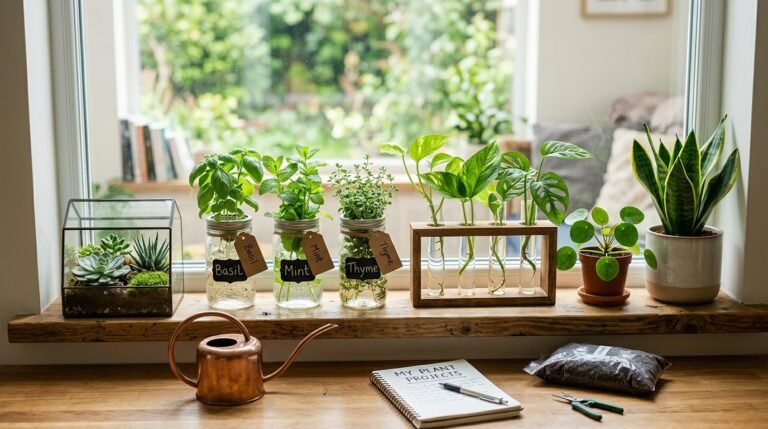
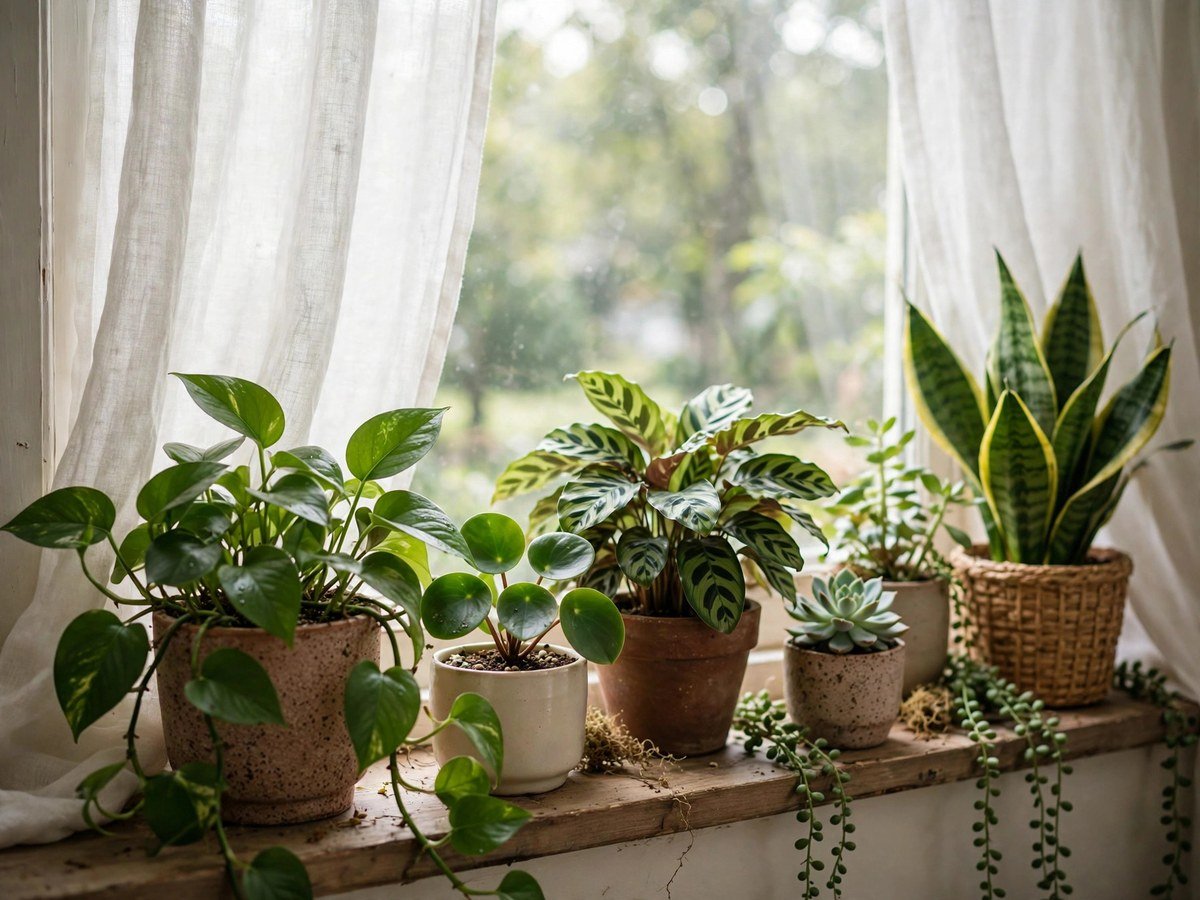
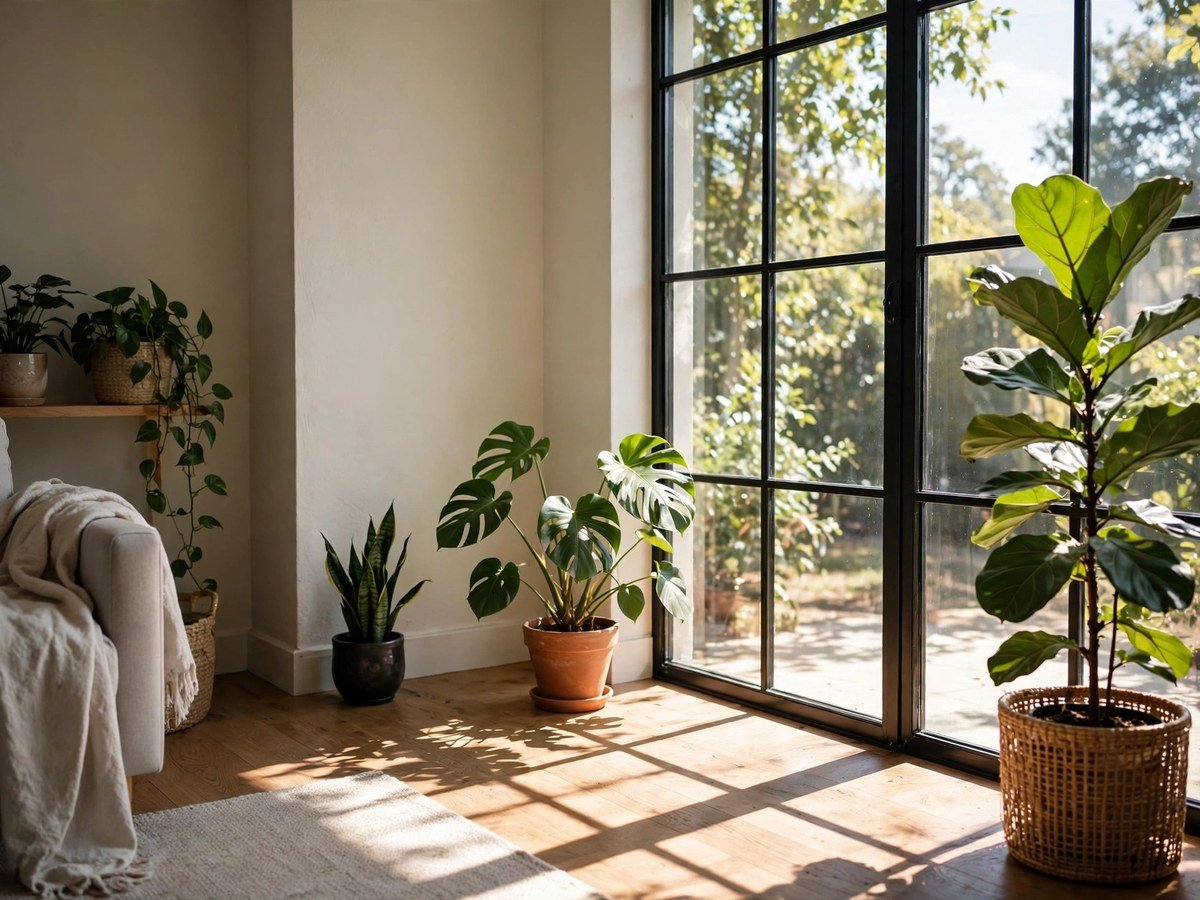
Start by auditing your windows. South-facing windows deliver the strongest, most direct light; east windows give gentle morning sun; west windows bring harsh afternoon rays; north windows offer soft, dim light all day. Watch how light moves across a room through the day and across seasons — winter sun sits lower and weaker. Sketch a simple map, then match plants to zones: succulents and citrus near bright windows, pothos and ferns in the dimmer corners.
2. Grow Bulb Types
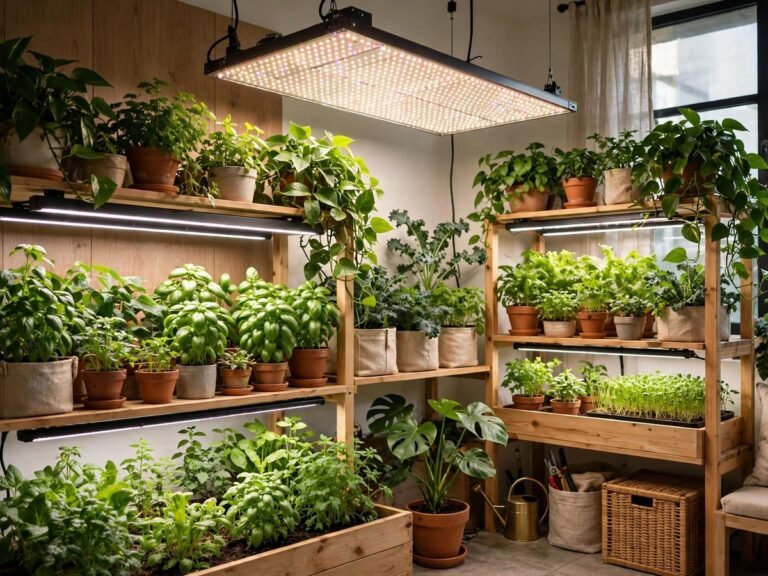
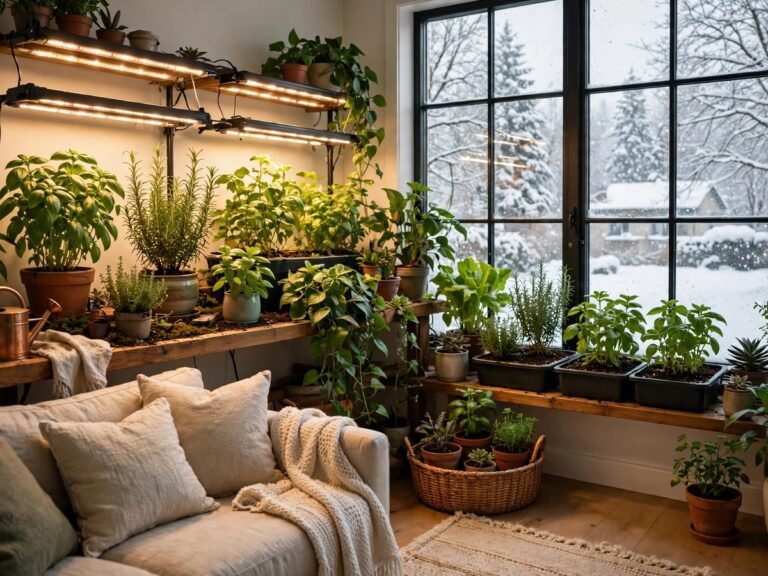
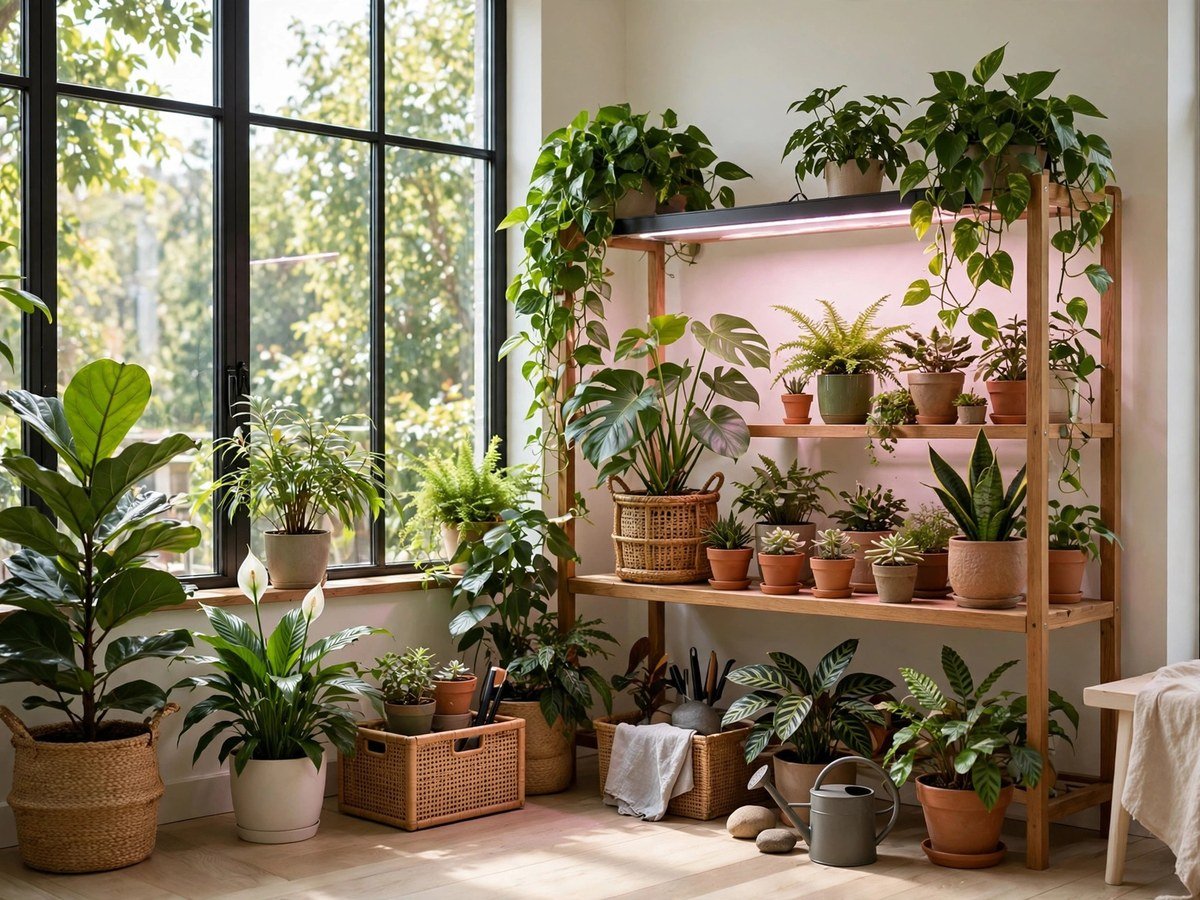
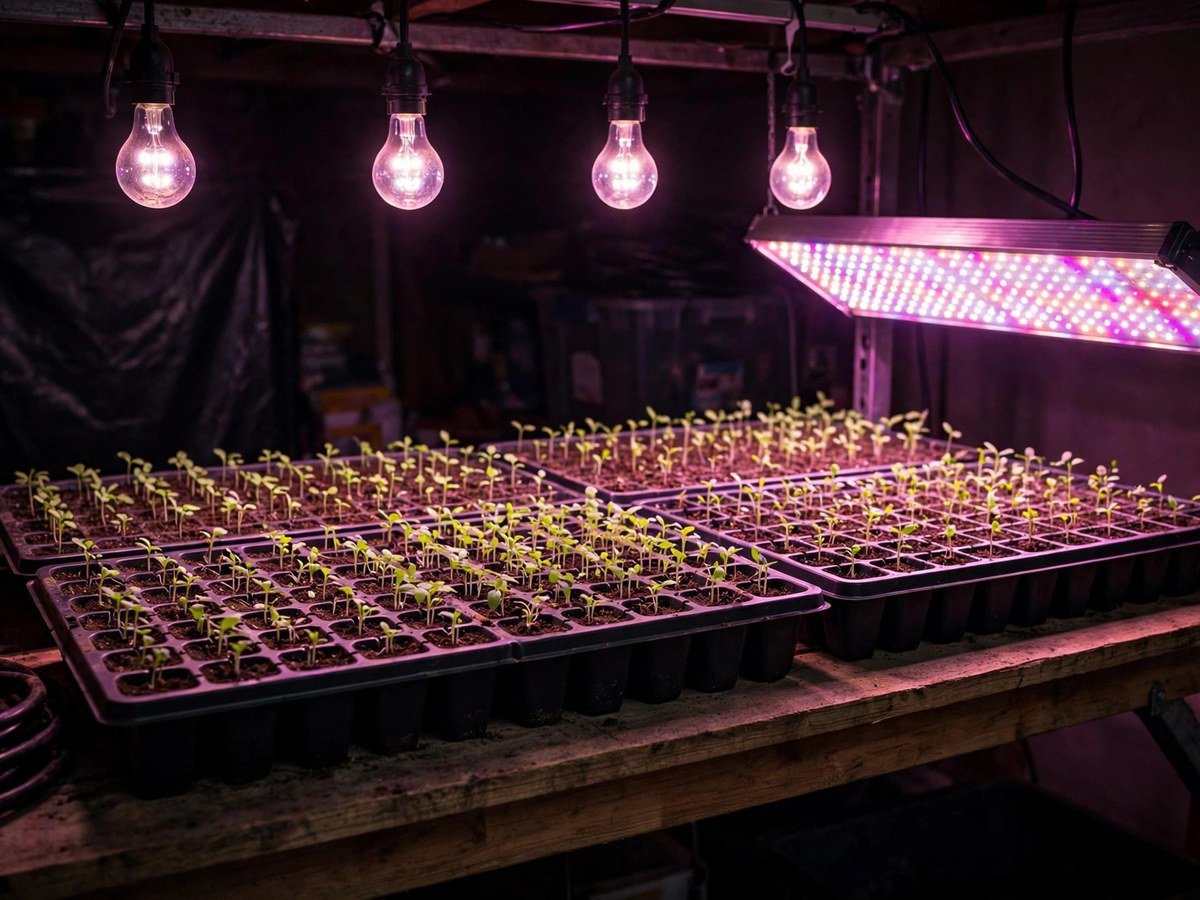
When daylight falls short, grow lights fill the gap. Full-spectrum LED panels are the modern standard — energy-efficient, cool-running, and effective for everything from seedlings to fruiting plants. Fluorescent T5 tubes work well for seedlings and herbs on a budget. Old-school incandescent and halogen bulbs are poor choices: they waste energy as heat and lack the blue and red wavelengths plants crave. Look for lights labeled “full spectrum” or around 5000–6500K for leafy growth.
3. Lamp Distance Rules
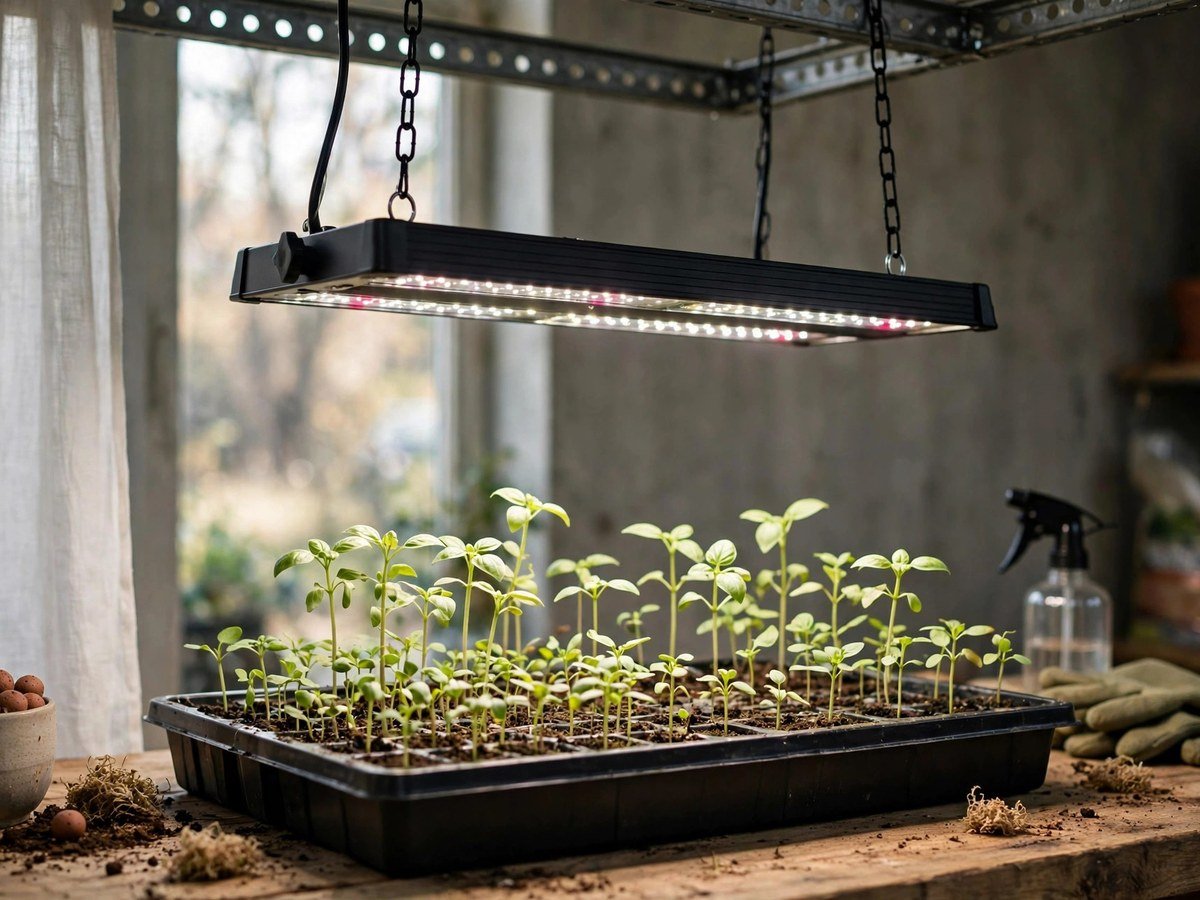
A grow light six inches from a plant delivers many times more energy than the same light at two feet — intensity falls off fast with distance. As a rule of thumb, keep LEDs 12–24 inches above foliage and fluorescents 6–12 inches away, then watch your plants and adjust. Too close scorches leaves; too far starves them. Raise lights as plants grow, and use adjustable hangers or stands so tweaking height takes seconds, not a weekend project.
4. Photoperiod Basics
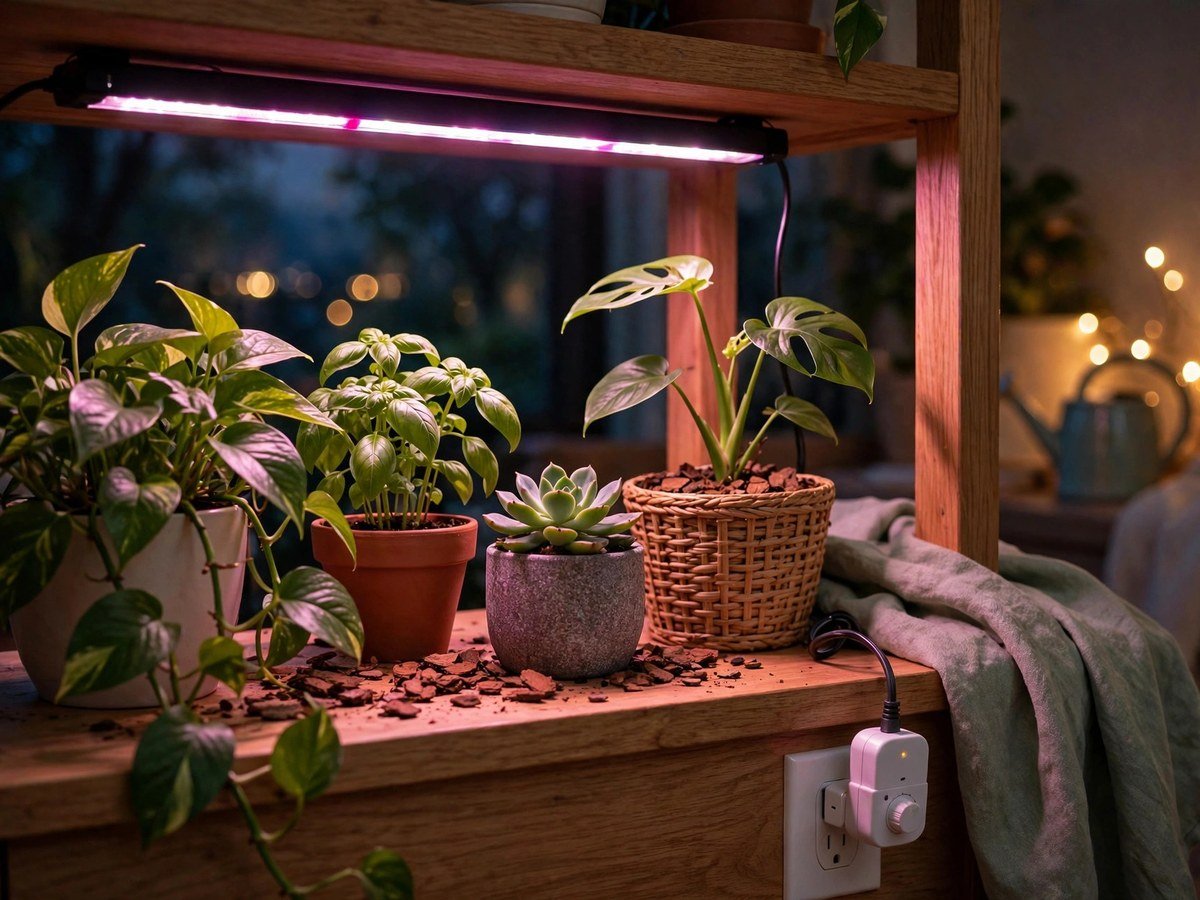
Plants need darkness too. Most houseplants thrive with 12–16 hours of light daily, followed by a genuine dark period for respiration — running lights 24/7 stresses them. Short-day plants like Christmas cactus need long nights to trigger blooms, while long-day plants flower as days lengthen. A simple outlet timer is the easiest upgrade you’ll ever buy: set it, forget it, and give your plants the consistent rhythm they’d get outdoors.
5. Signs of Too Little Light
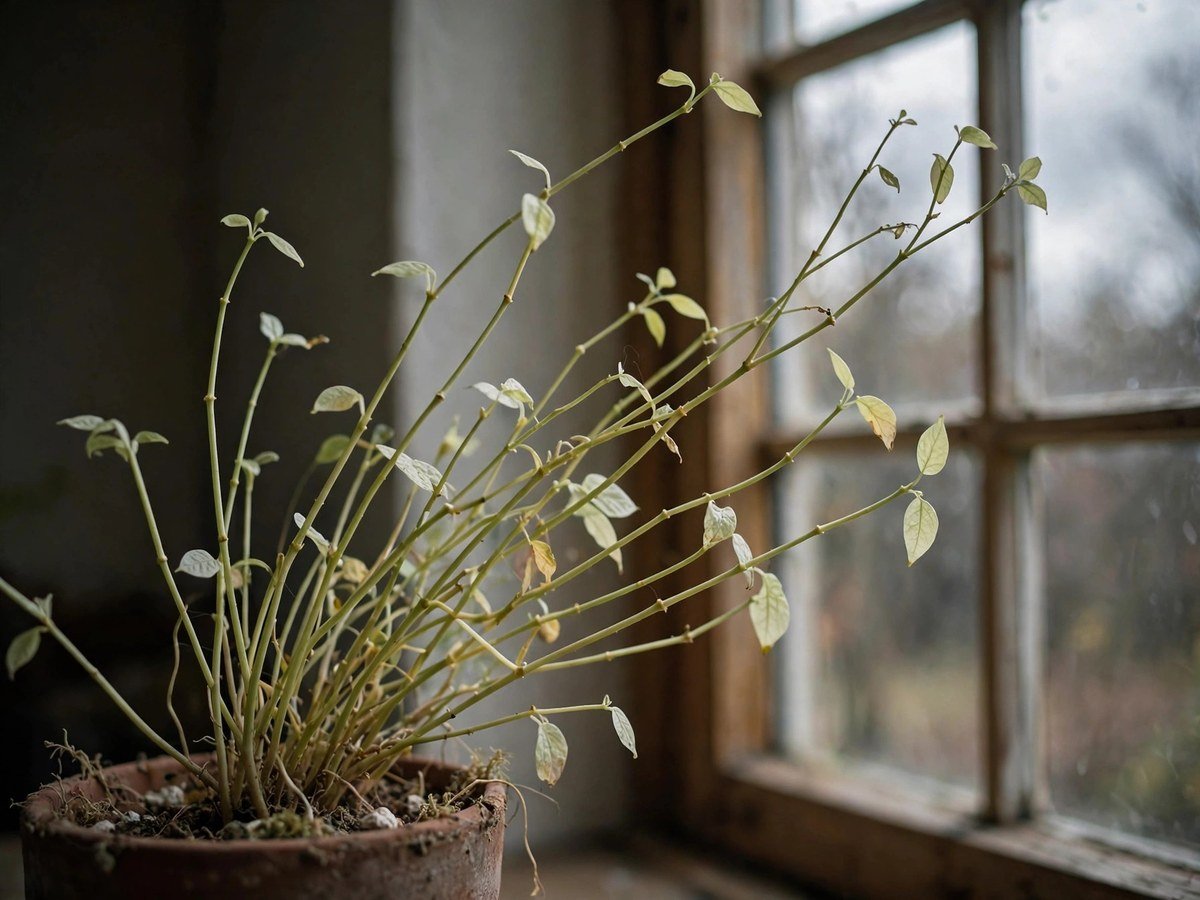
Your plants will tell you when they’re hungry for light. Classic symptoms: leggy, stretched stems with wide gaps between leaves as the plant reaches for brightness; small, pale new leaves; and slowed or stalled growth. Flowering plants may refuse to bloom, and variegated varieties can revert to plain green. If you spot these signs, move the plant closer to a window or add a grow light — recovery is usually quick once light improves.
6. Signs of Too Much Light
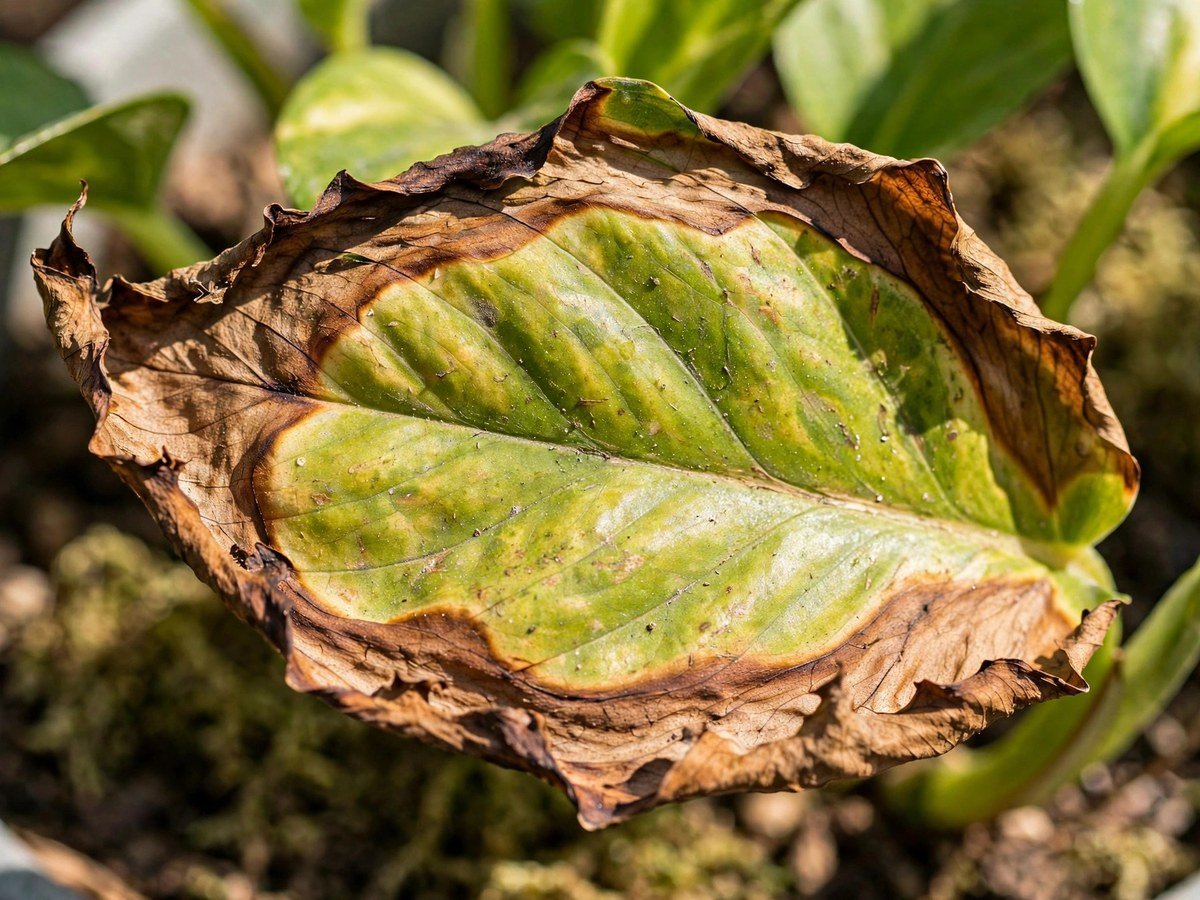
Yes, you can overdo it. Scorched brown or bleached white patches on leaves, crispy edges, and foliage that fades or curls away from the window all signal light stress. This usually strikes shade-adapted plants — ferns, calatheas, and their kin — placed in harsh direct sun. The fix is simple: sheer curtains diffuse brutal rays, or move the plant a few feet back from the glass. Most plants forgive quickly once the stress stops.
Putting It All Together
Start with a light meter app on your phone — they’re surprisingly useful for comparing spots around your home. Group plants with similar needs together under one grow light to save energy and simplify your timer schedule. Rotate pots a quarter turn weekly so growth stays even on all sides. Remember that winter demands adjustments: days shorten and the sun weakens, so move plants closer to windows or extend grow-light hours. And clean your bulbs and windows twice a year — dust and grime can steal a surprising amount of light.
Frequently Asked Questions
How many hours of grow light do houseplants need?
Most need 12–16 hours daily; succulents appreciate up to 16, while low-light plants do fine with 10–12.
Can regular LED bulbs work as grow lights?
Standard LEDs help a little but lack the full spectrum plants need. Dedicated full-spectrum grow LEDs work far better.
How close should a grow light be to plants?
Keep LEDs 12–24 inches above foliage and fluorescents 6–12 inches away, adjusting based on how plants respond.
Do plants need darkness at night?
Yes — most houseplants need at least 8 hours of darkness for healthy respiration and natural growth cycles.
Why is my plant leggy even next to a window?
Glass, distance, and season all reduce intensity dramatically. Supplement with a grow light for stocky, healthy growth.
The Bottom Line
Light doesn’t have to be mysterious. Map your rooms, match plants to their preferred brightness, supplement with the right grow lights at the right distance, and keep a consistent day-night rhythm. Learn to read the signs — stretching means more light, scorching means less — and you’ll hold the core skill every successful indoor gardener shares.