22 Low Maintenance Outdoor Plants That Thrive on Neglect
22 Low Maintenance Outdoor Plants that you must want to spend time gardening. Plenty of people don’t. They want a yard that looks good, feeds a few bees, and doesn’t guilt them on a Sunday afternoon. That’s not laziness — it’s a legitimate design goal, and it’s completely achievable.
The trick is choosing plants that are adapted to your conditions rather than dependent on your intervention.
What Makes a Plant Low-Maintenance
Four traits, and the more a plant has, the less it needs you.
Drought tolerance. Deep roots or water-storing tissue means it survives missed watering.
Disease resistance. Some plants get fungal problems every August no matter what. Skip those.
No deadheading requirement. Plants that drop spent blooms cleanly look good without weekly grooming.
Appropriate mature size. A plant that naturally reaches the size of its space never needs pruning. Constant shearing means the wrong plant is in the wrong spot.
Notice what’s absent from that list: pretty. Plenty of beautiful plants are also tough. You’re not trading looks for ease.
22 Low Maintenance Outdoor Plants
read 22 Low Maintenance Outdoor Plants below:
Low-Maintenance Perennials
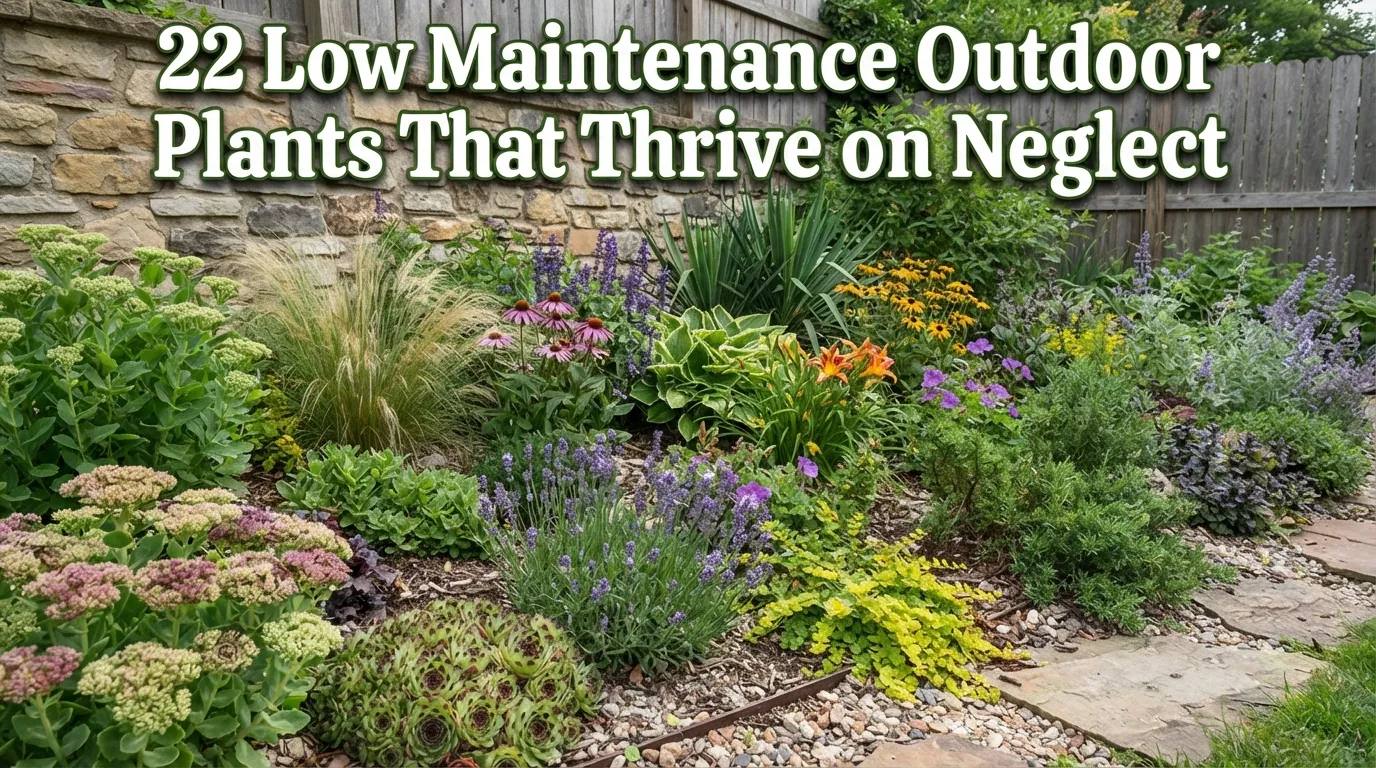
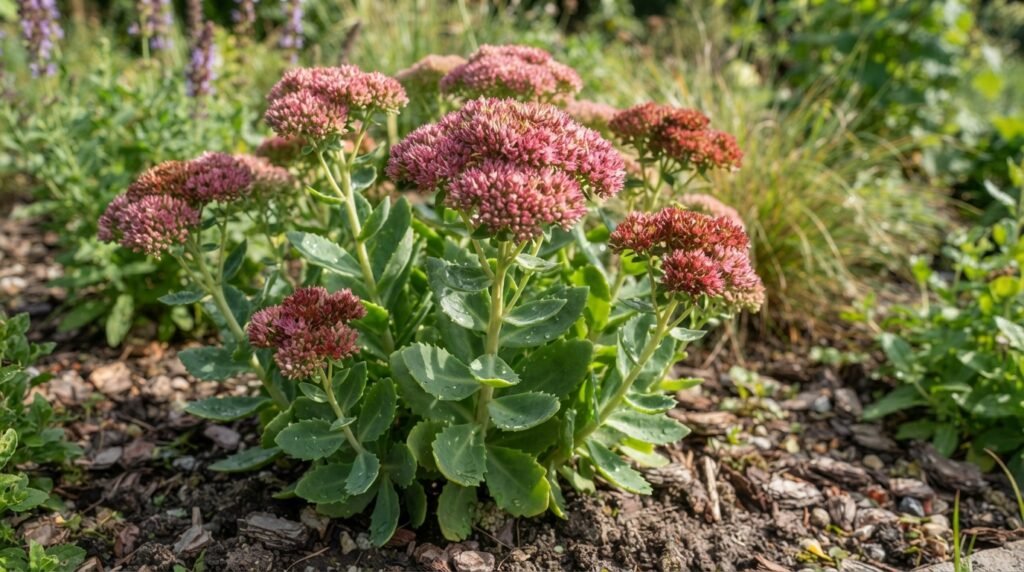
Sedum — Succulent foliage stores water. Genuinely thrives on neglect and blooms in late summer when bees need it.
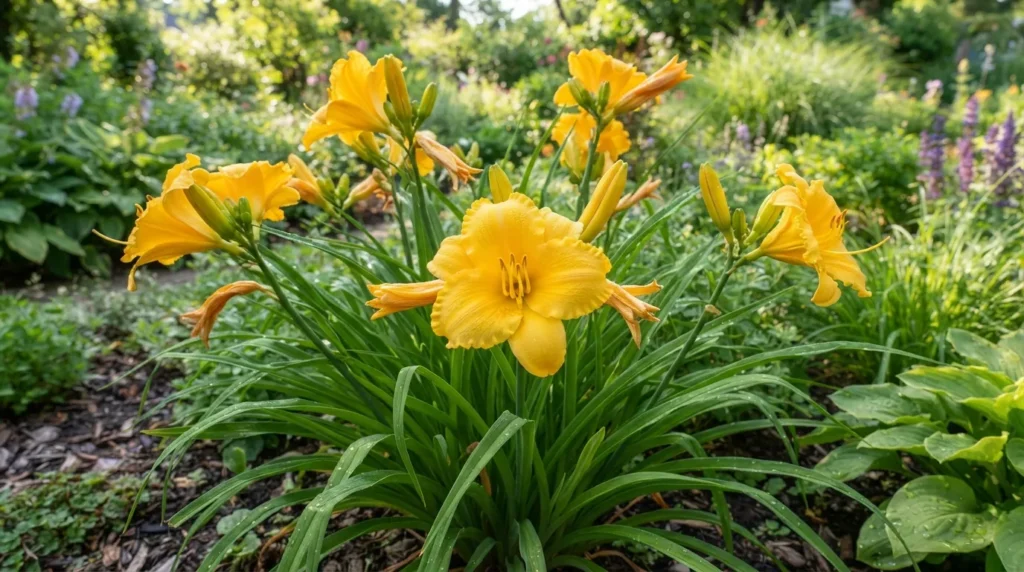
Daylily — Tolerates drought, clay, heat, and total indifference. Divide every few years if you feel ambitious. Or don’t.
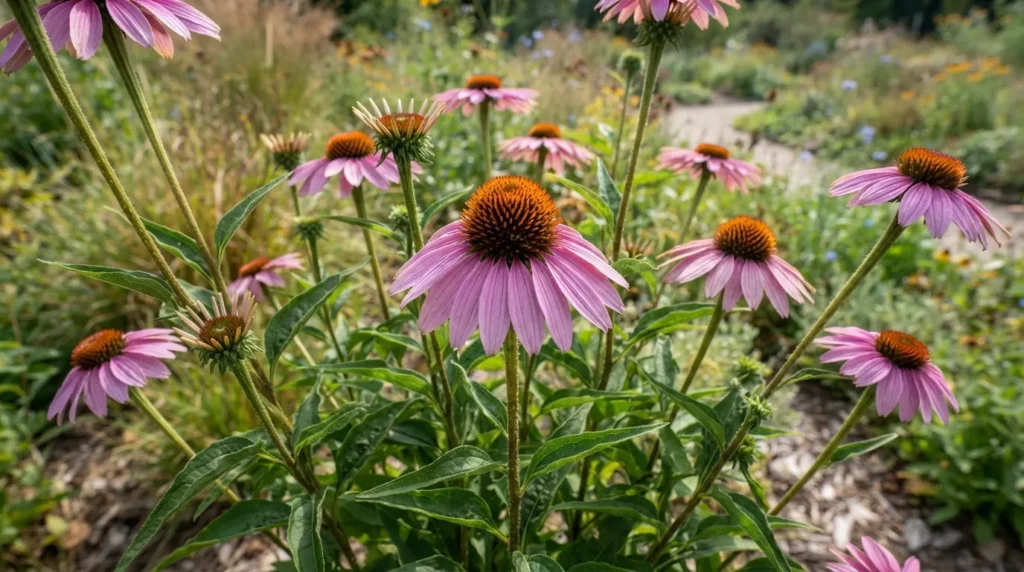
Coneflower — Native, drought tolerant, self-sufficient, and it prefers poor soil to rich.
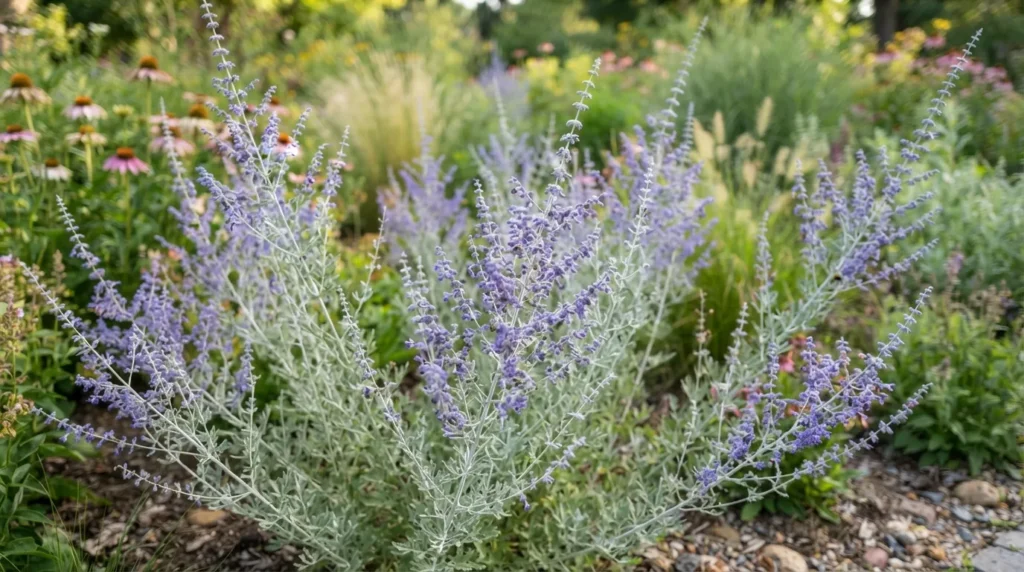
Russian Sage — Cut it back once in early spring. That’s the entire annual maintenance schedule.
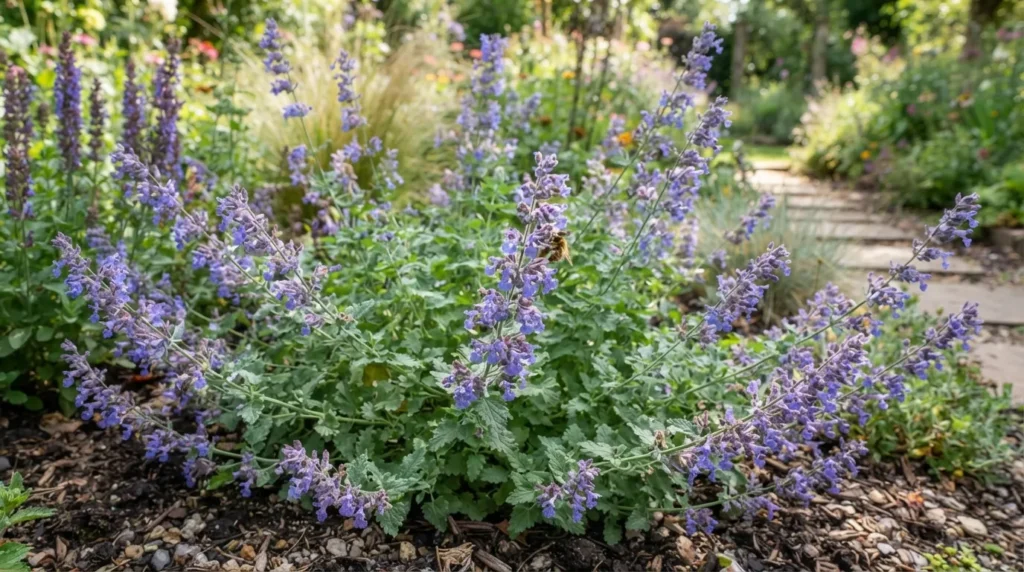
Catmint — One optional midsummer shearing for a second bloom. Otherwise fully independent.
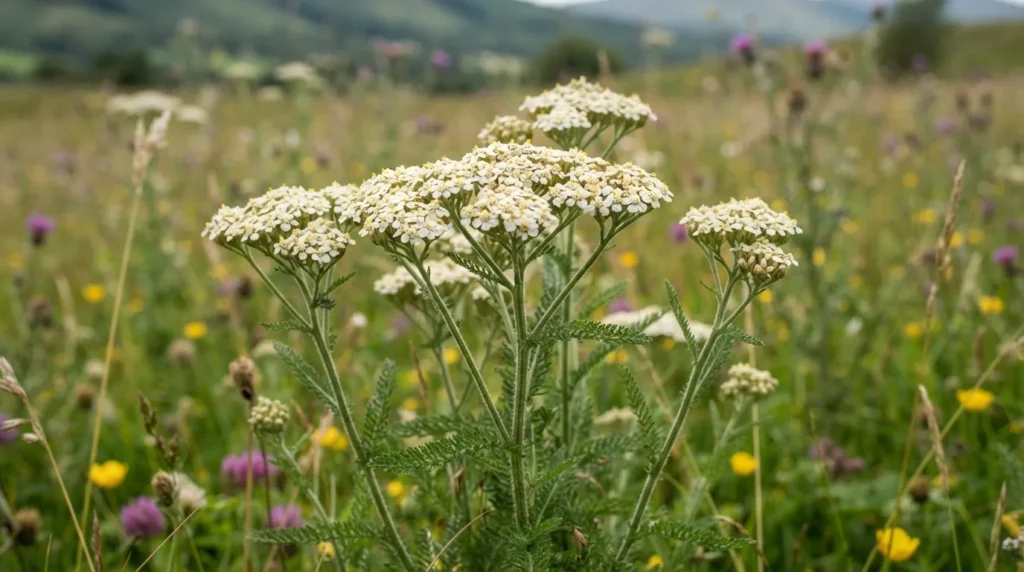
Yarrow — Thrives in poor dry soil. Rich soil and extra water actually make it worse.
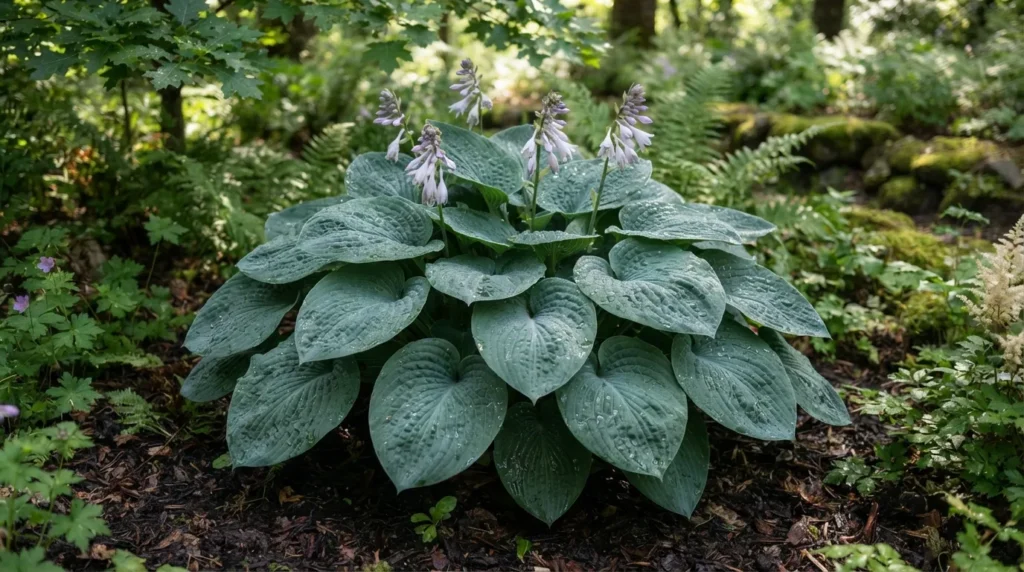
Hosta — For shade. Plant once, enjoy for decades. Watch for slugs and otherwise forget it exists.
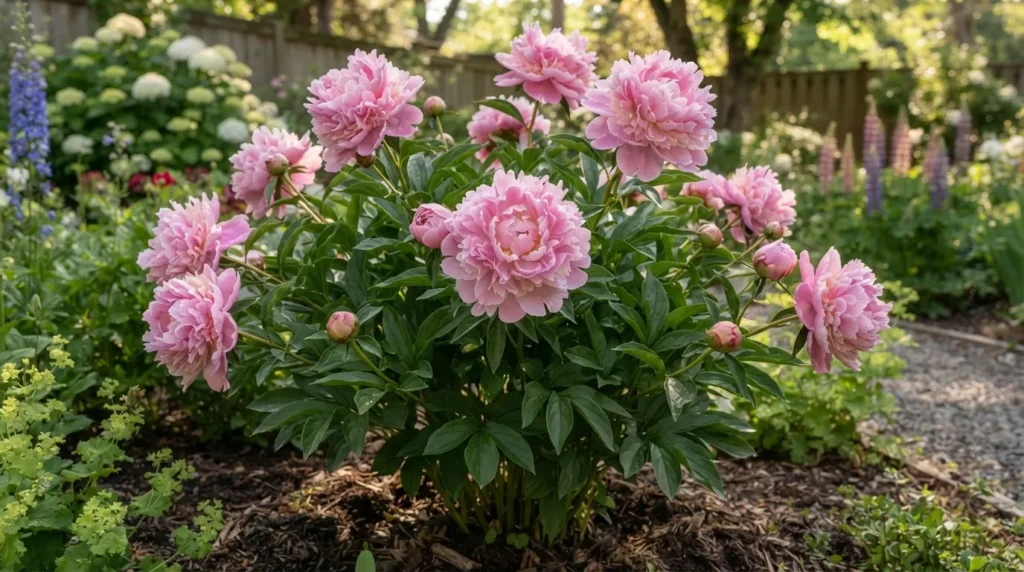
Peony — Lives fifty years or more. Established plants need essentially nothing and bloom spectacularly every spring.
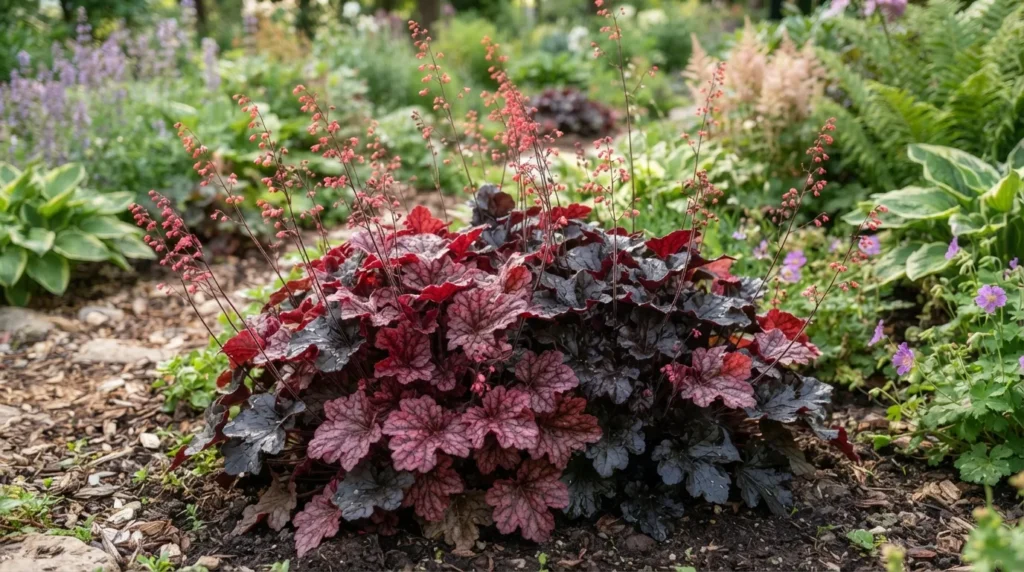
Coral Bells (Heuchera) — Evergreen foliage color through most of the year with no upkeep.
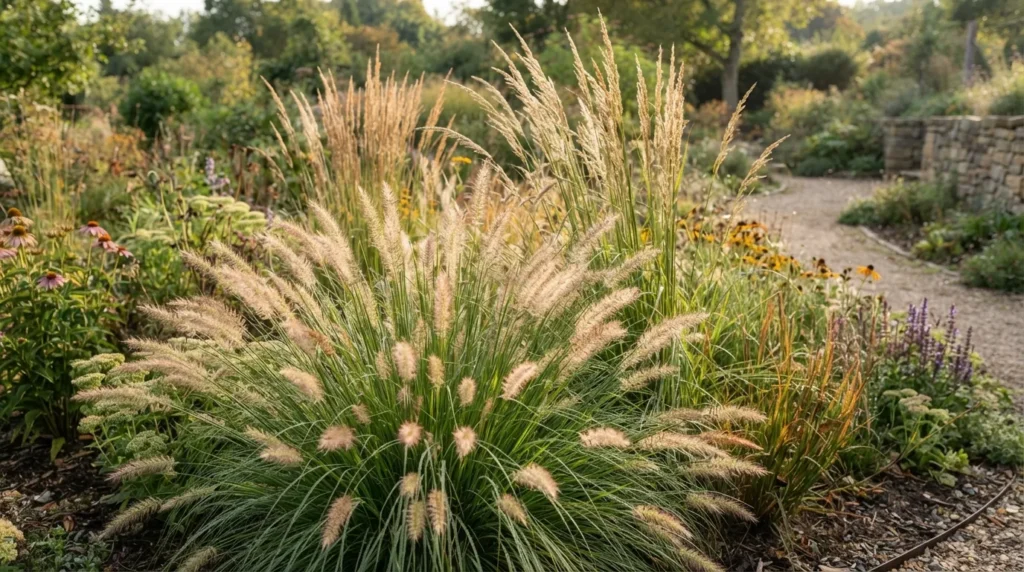
Ornamental Grasses — Switchgrass, little bluestem, fountain grass. One cut in early spring, nothing else, four seasons of interest.
Low-Maintenance Shrubs
Shrubs are the real secret to easy gardens. They fill space permanently.
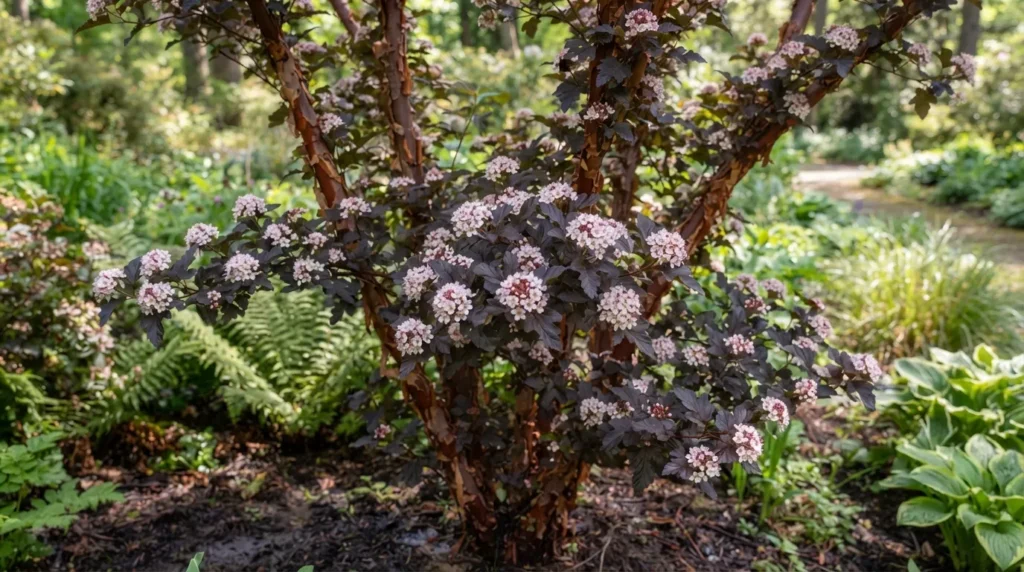
Ninebark — Colorful foliage, peeling winter bark, no pests, no pruning needed.
Potentilla — Blooms all summer on a tidy compact frame with no attention at all.
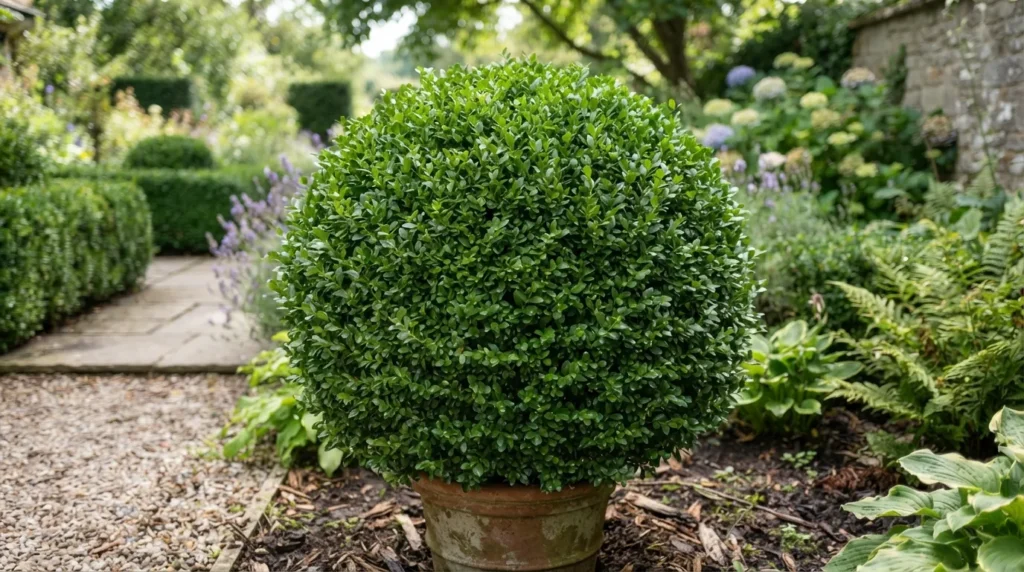
Boxwood — Evergreen structure. Only needs shaping if you want formal edges.
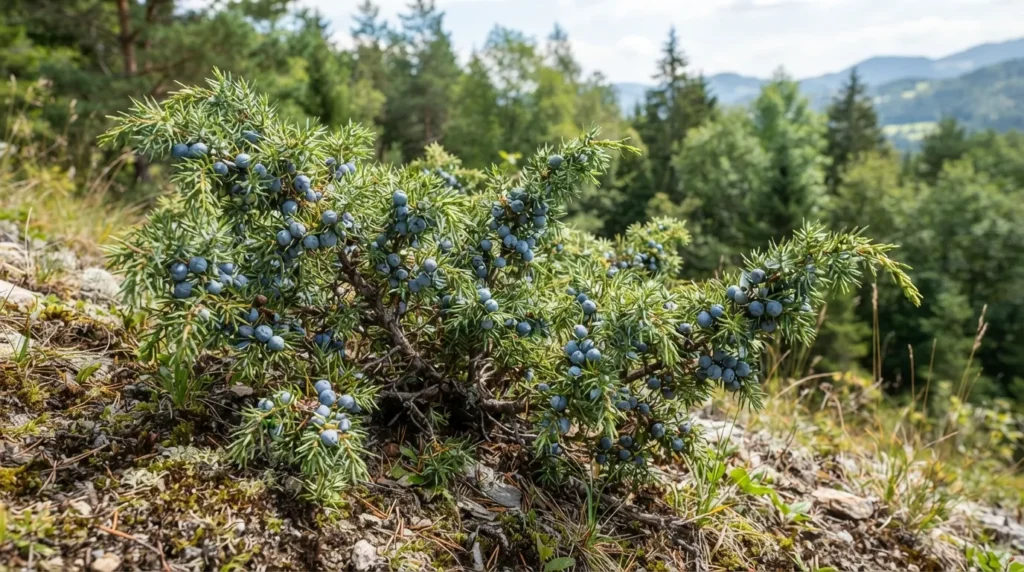
Juniper — Extremely drought tolerant, evergreen, and useful for slopes and hard dry spots.
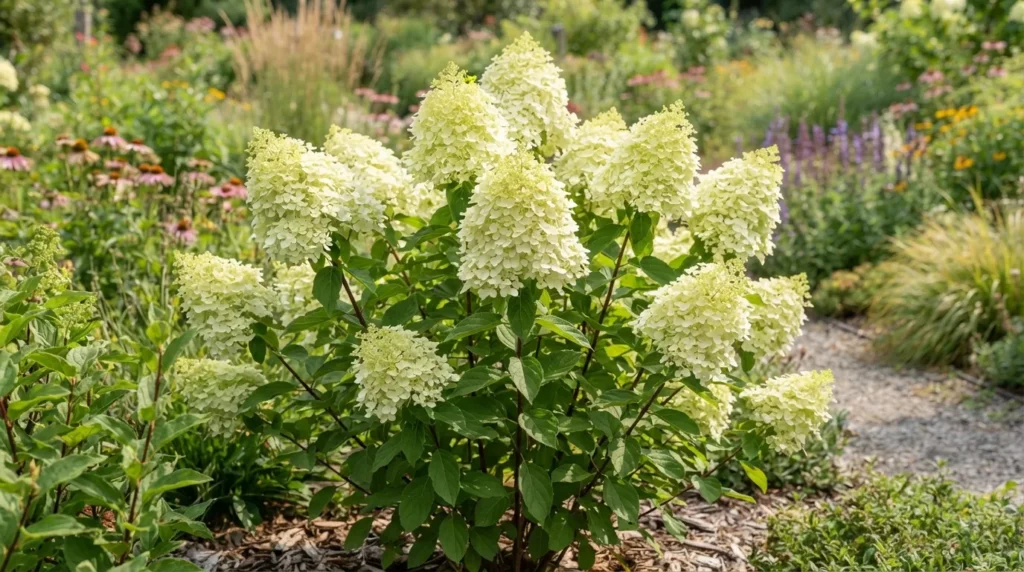
Panicle Hydrangea — Far tougher than bigleaf types, more sun tolerant, and reliable blooms without fussing over soil pH.
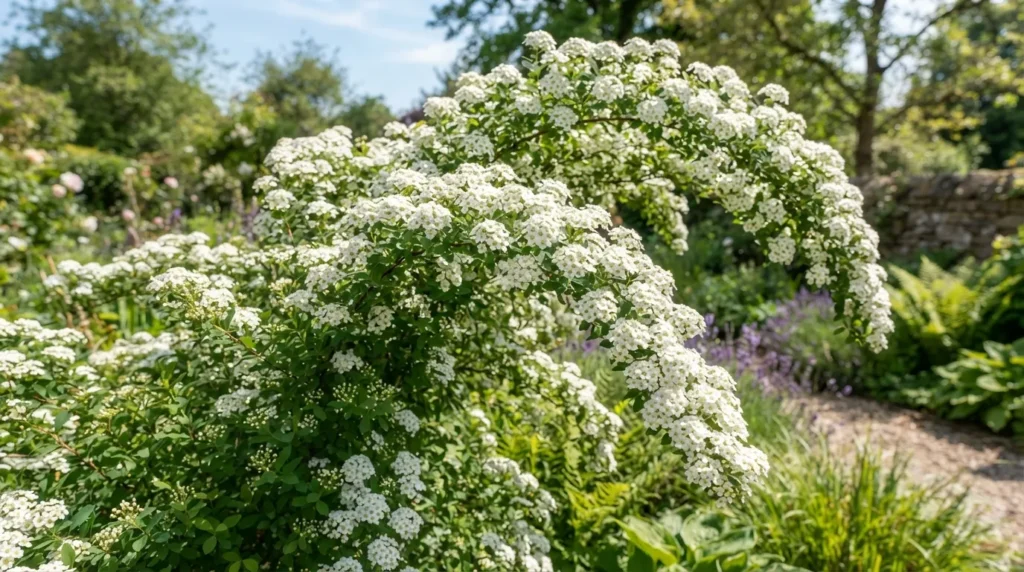
Spirea — Spring or summer flowers, compact habit, essentially maintenance free.
Low-Maintenance Groundcovers
Groundcovers replace lawn and smother weeds, which is maintenance eliminated rather than reduced.
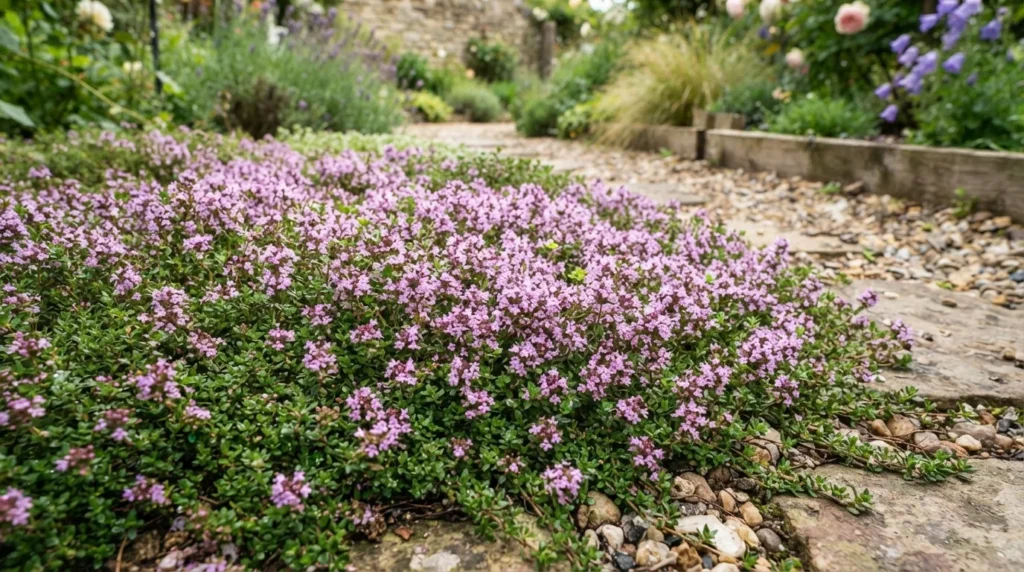
Creeping Thyme — Walkable, fragrant, drought proof, and it flowers.
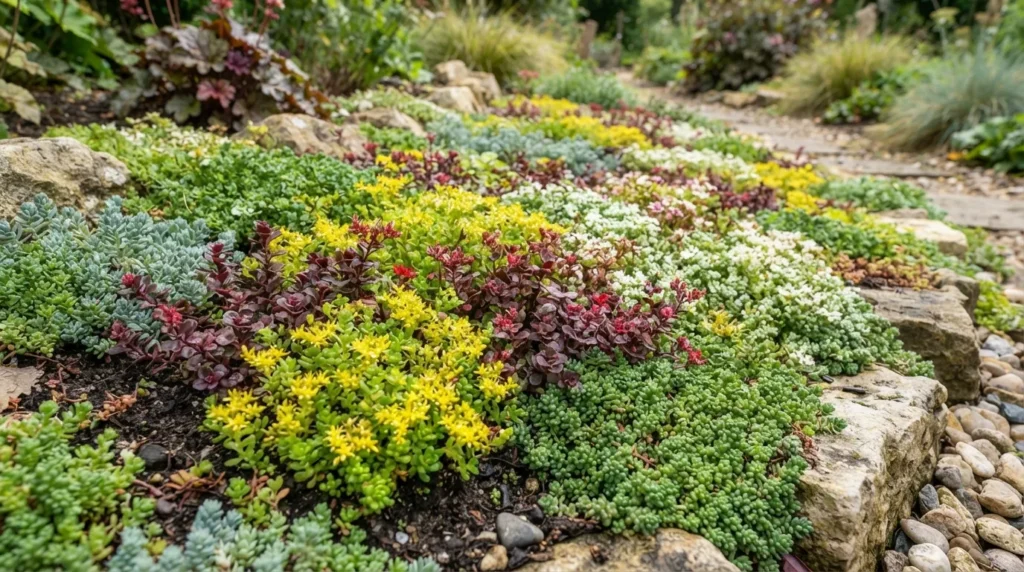
Sedum groundcovers — Spread over dry difficult ground where nothing else establishes.
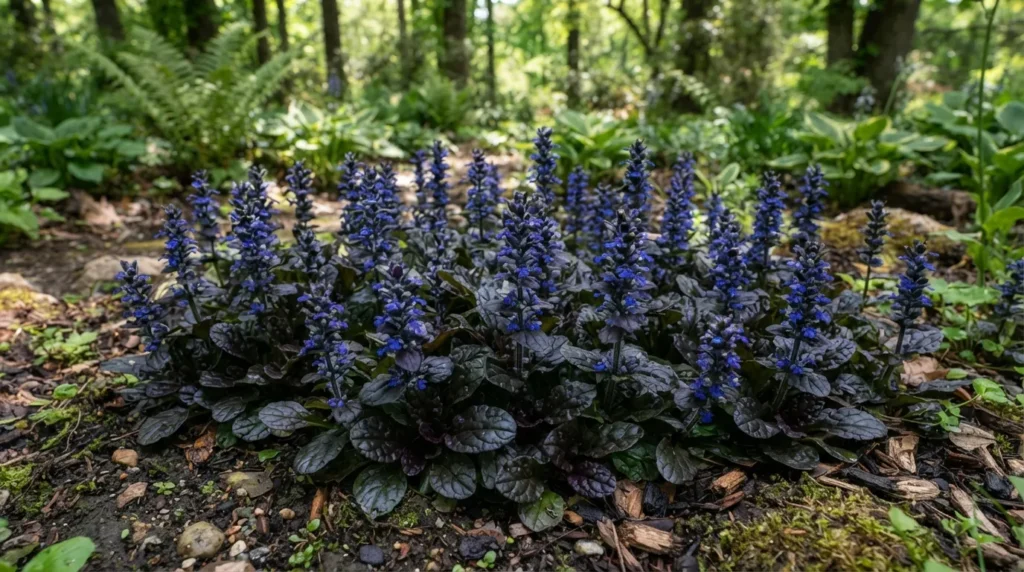
Ajuga — Handles shade, spreads quickly, and puts up blue flower spikes in spring.
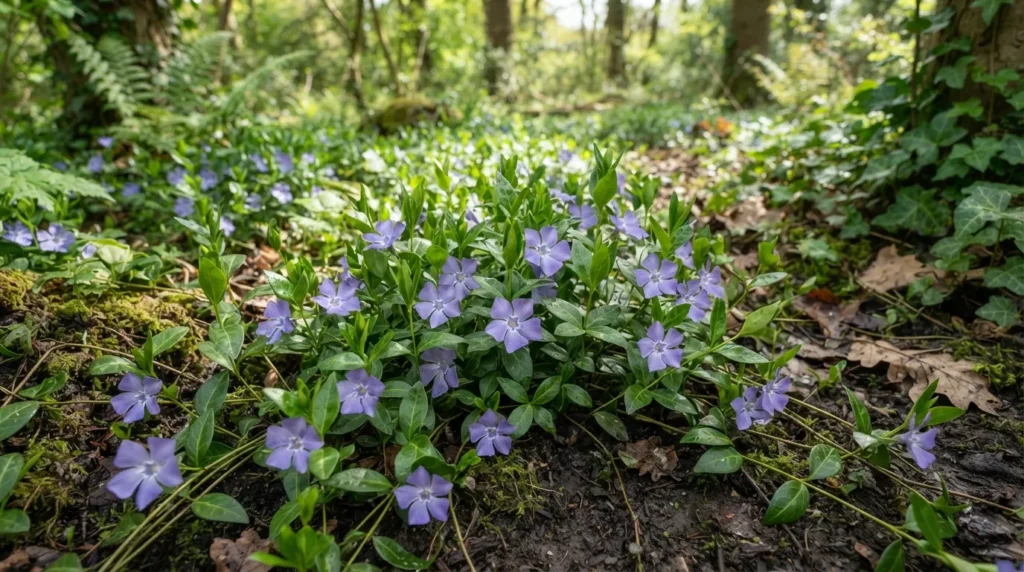
Vinca minor — Evergreen shade cover with periwinkle flowers. Vigorous, so give it a defined area.
Low-Maintenance Container Plants
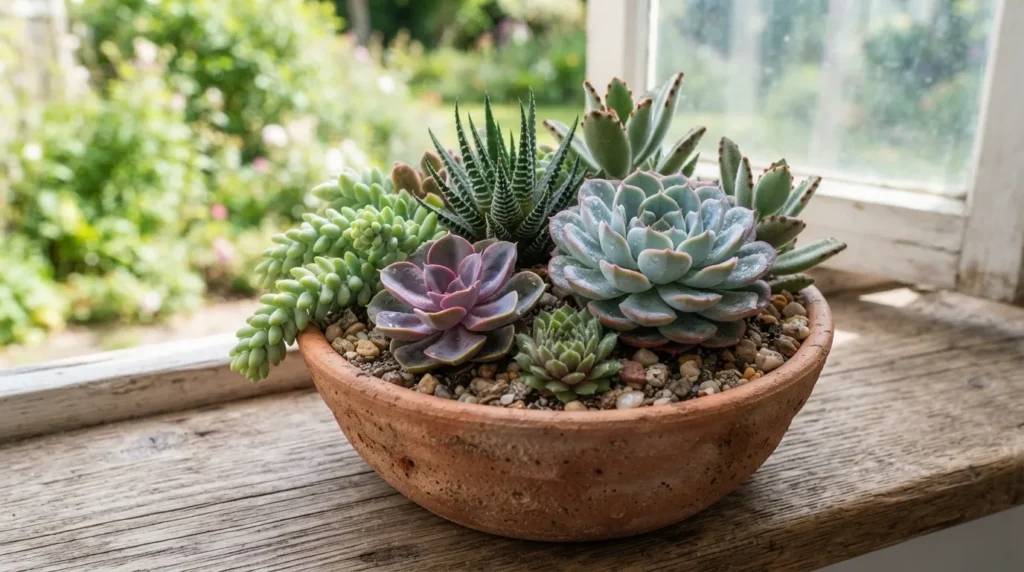
Succulents — Almost the definition of low effort, as long as the pot drains freely.
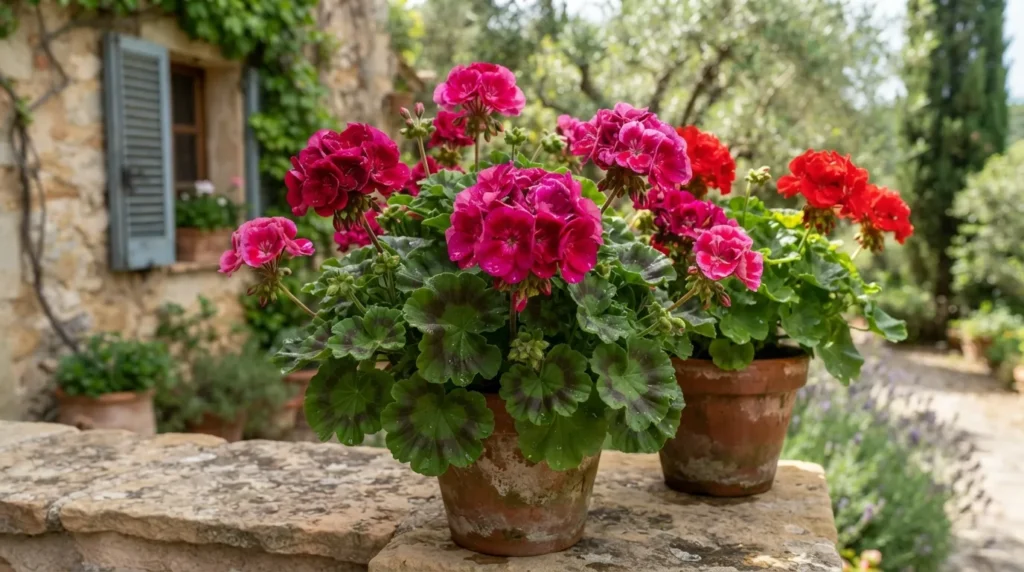
Geraniums — Prefer drying out between waterings. Overcare kills them faster than neglect.
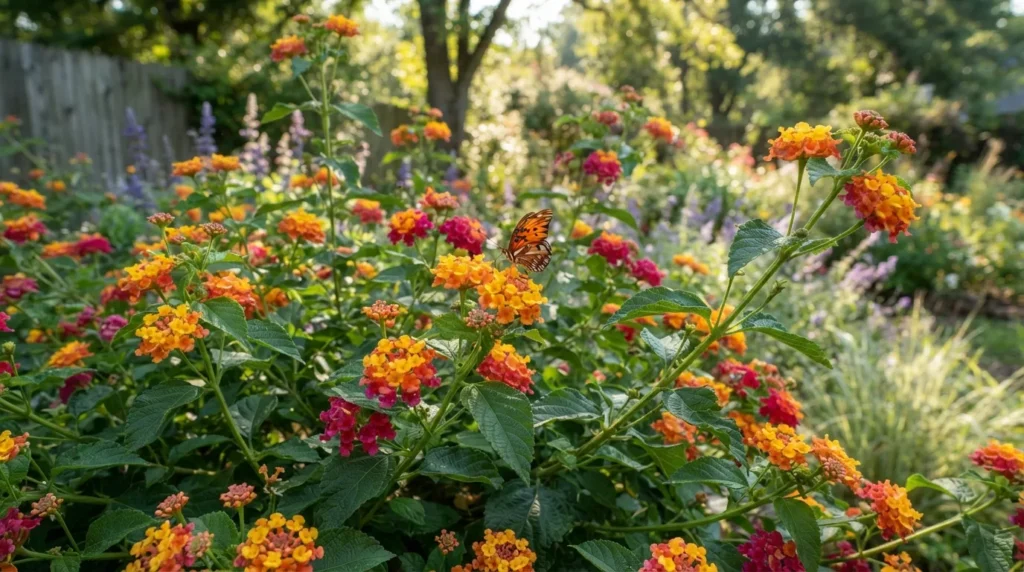
Lantana — Blooms nonstop in heat with minimal water.
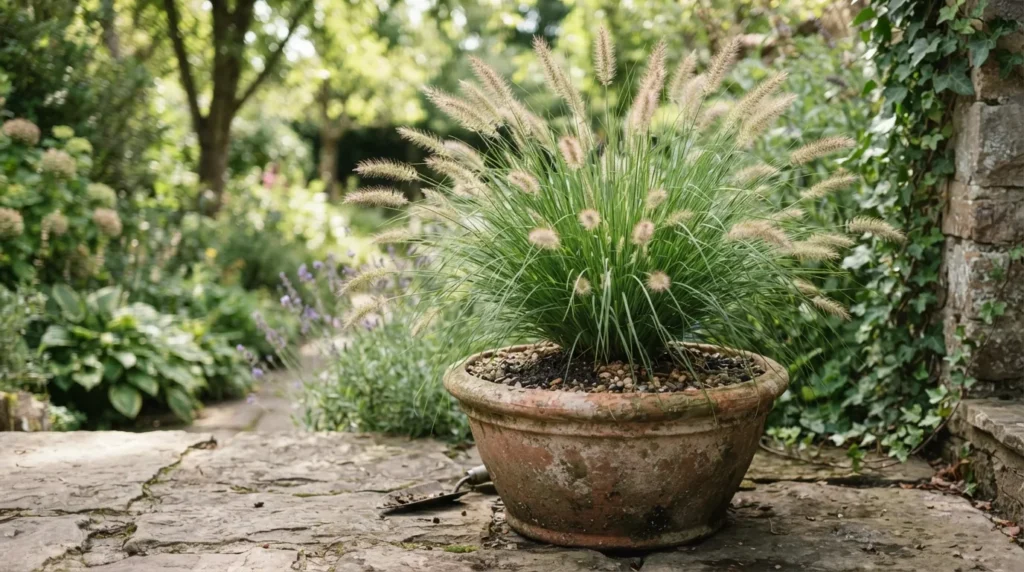
Ornamental grass in a pot — Fills a large container beautifully with nearly no input.
Design Choices That Cut Work in Half
Plant selection is only half the equation. These structural decisions matter just as much.
Mulch everything, three inches deep. Mulch is the highest-leverage move in low-maintenance gardening. It suppresses weeds, retains moisture so you water less, moderates soil temperature, and breaks down into compost. Refresh it annually and it pays for itself in hours saved.
Shrink your lawn. Grass is the highest-maintenance plant most people own — mowing, edging, watering, feeding. Replace sections with mulched shrub beds or groundcover and the work disappears permanently.
Install drip irrigation or soaker hoses. A weekend project and an inexpensive timer eliminates hand watering for good. It also waters more effectively than you do.
Plant densely. Bare soil grows weeds. Closely planted beds shade the ground and crowd weeds out on their own. also check 15 outdoor garden plants.
Choose fewer species, repeated. Eight plants used many times is less mental and physical work than forty plants each with different needs — and it looks better.
Define your edges. A clean edge — steel, stone, or a cut trench — stops grass from creeping into beds. One installation, years of benefit.
Right-size everything. Read mature dimensions and plant accordingly. Most pruning in most gardens exists only to correct a plant that was too big for its spot.
Plants Worth Avoiding If You Want Easy
22 Low Maintenance Outdoor Plants Being honest saves you time later.
Hybrid tea roses — Beautiful, but they want spraying, feeding, and precise pruning.
Bigleaf hydrangeas in cold zones — Buds die in winter and you get leaves without flowers.
Delphinium — Gorgeous, needs staking, short-lived, prone to problems.
Bee balm without mildew resistance — Reliably powdery by August. Choose resistant cultivars.
Anything labeled “needs consistently moist soil” — That’s a phrase meaning “this plant will need you.”
A Genuinely Low-Effort Garden Plan
Here’s a complete design requiring roughly two hours of work per year.
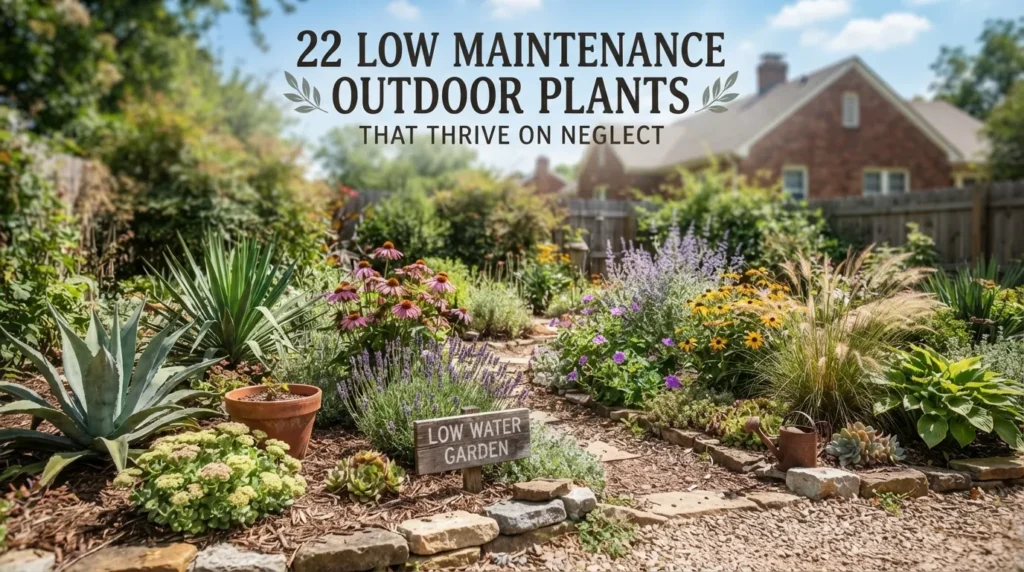
Three panicle hydrangeas as backbone. Five coneflowers and five catmint in front of them. Three ornamental grasses for height and winter structure. Creeping thyme along the front edge. Three inches of mulch across the whole thing. A soaker hose on a timer beneath the mulch.
Annual maintenance: cut the grasses and Russian sage back in March, top up mulch, prune hydrangeas lightly. Done.
It blooms from June to October, holds structure through winter, feeds pollinators, and asks almost nothing.
The Real Point
22 Low Maintenance Outdoor Plants That Thrive on Neglect isn’t a compromise. It’s a garden built to match the conditions and the time you actually have — which is exactly what good design has always meant.