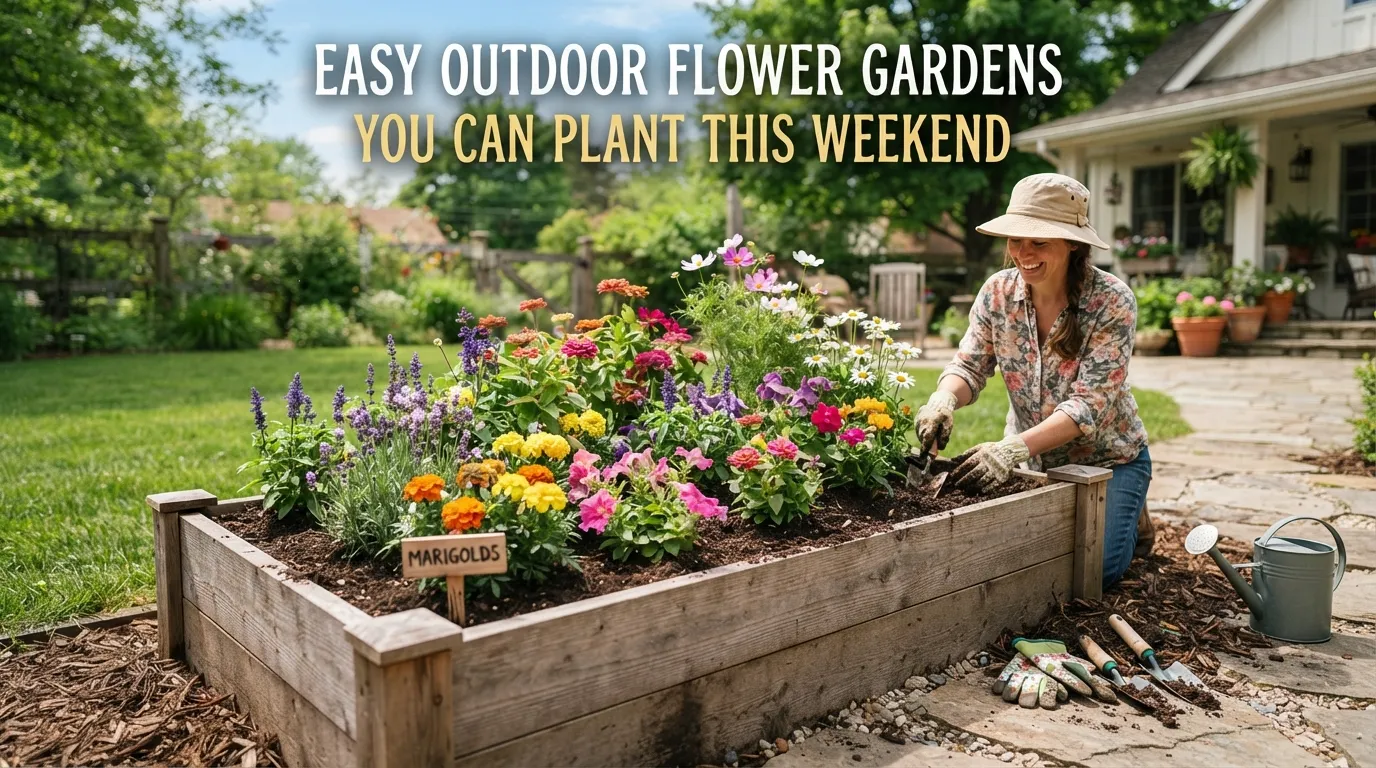
6 Easy Outdoor Flower Gardens plans You Can Plant This Weekend
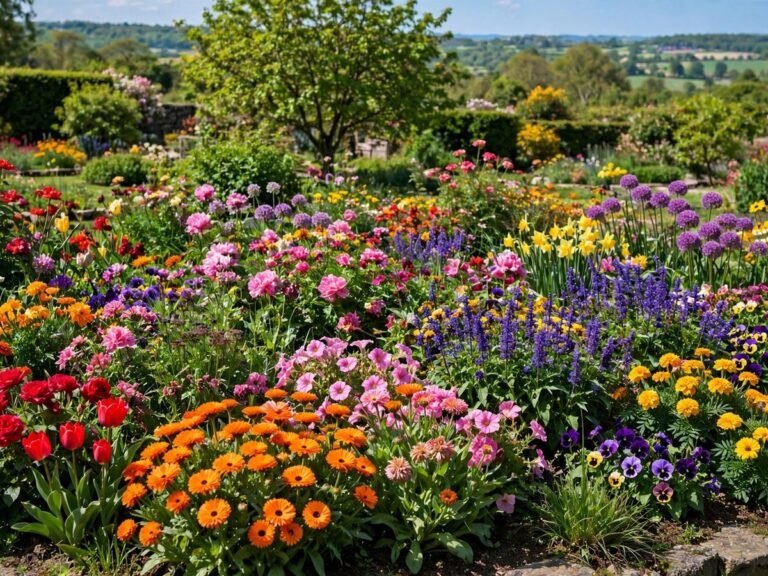
6 Easy Outdoor Flower Gardens plans you can plant this weekend The reason it feels intimidating is that most flower garden advice starts with soil chemistry and ends somewhere around graph paper. You don’t need any of that to get a bed full of blooms by midsummer.
What you need is a plant list, a shovel, and about six hours. Below are six complete plans — pick one and go.
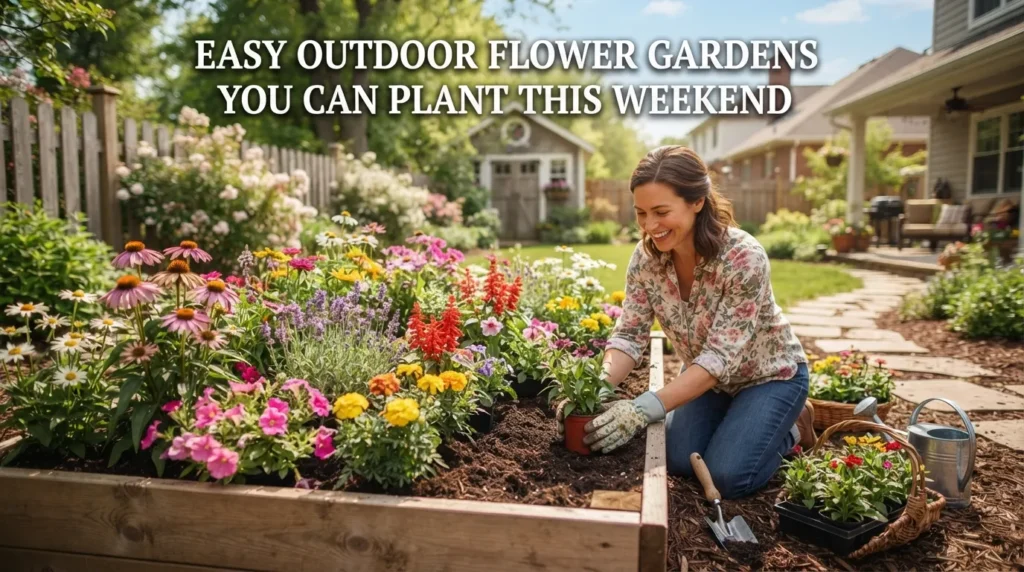
6 Easy Outdoor Flower Gardens Plans You Can Plant This Weekend
Read about 6 Easy Outdoor Flower Gardens You Can Plant This Weekend below:
The Easiest Flowers to Grow, Period
If you remember nothing else, remember these seven. They germinate readily, bloom generously, and tolerate beginner mistakes.
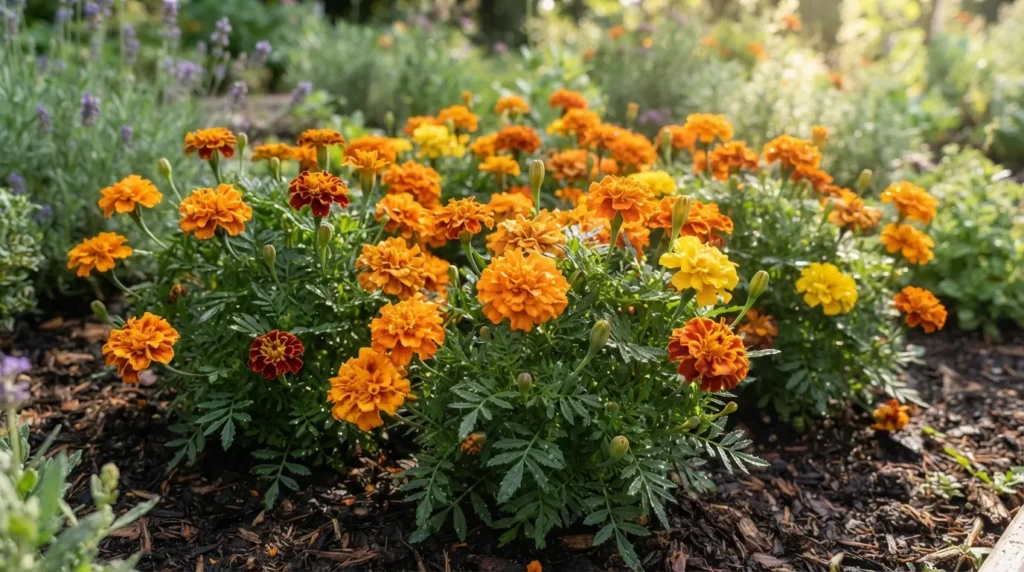
Zinnias — Direct-sow the seeds, bloom in about eight weeks, and cutting them produces more flowers. The single best beginner flower.
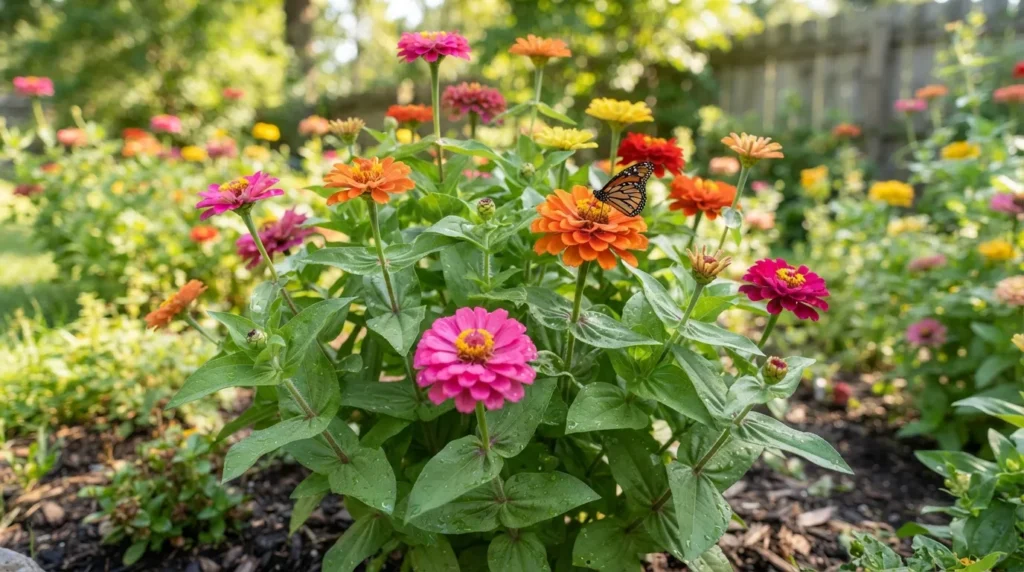
Marigolds — Fast, cheap, and they bloom from spring until frost without pause.
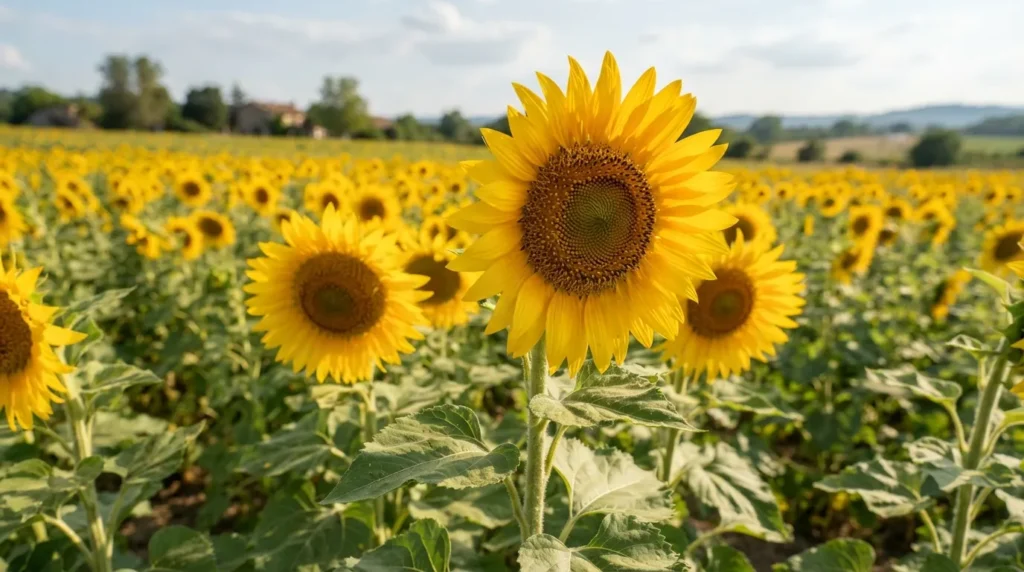
Sunflowers — Visible growth week to week. Endlessly satisfying.
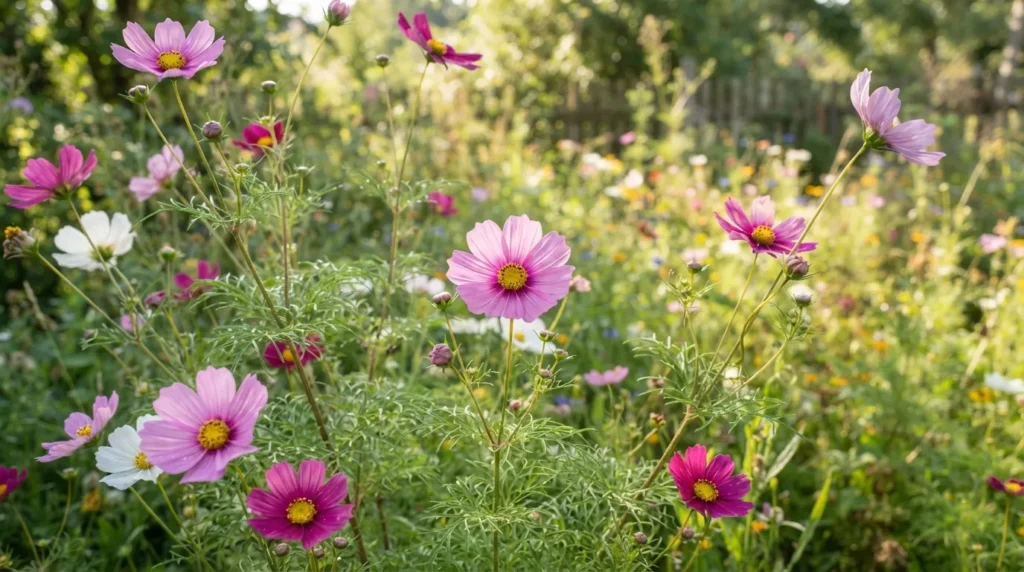
Cosmos — Feathery foliage and pink or white daisies. Actually prefers poor soil, so don’t improve it much.
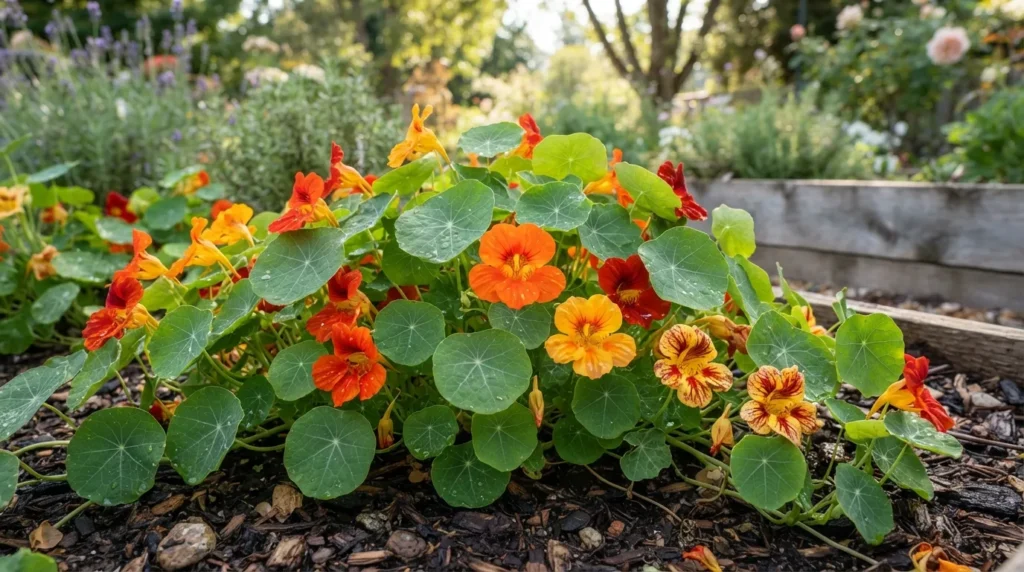
Nasturtiums — Edible flowers with peppery leaves. Thrives when ignored.
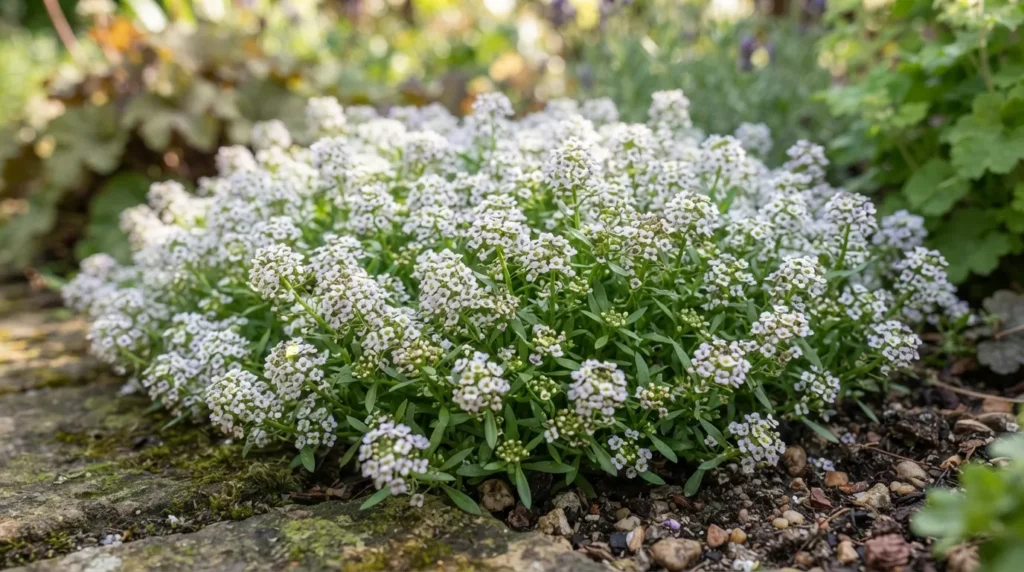
Sweet Alyssum — A low fragrant carpet of white or purple that self-seeds and returns.
Coneflower — The easiest perennial. Plant once, bloom for years.
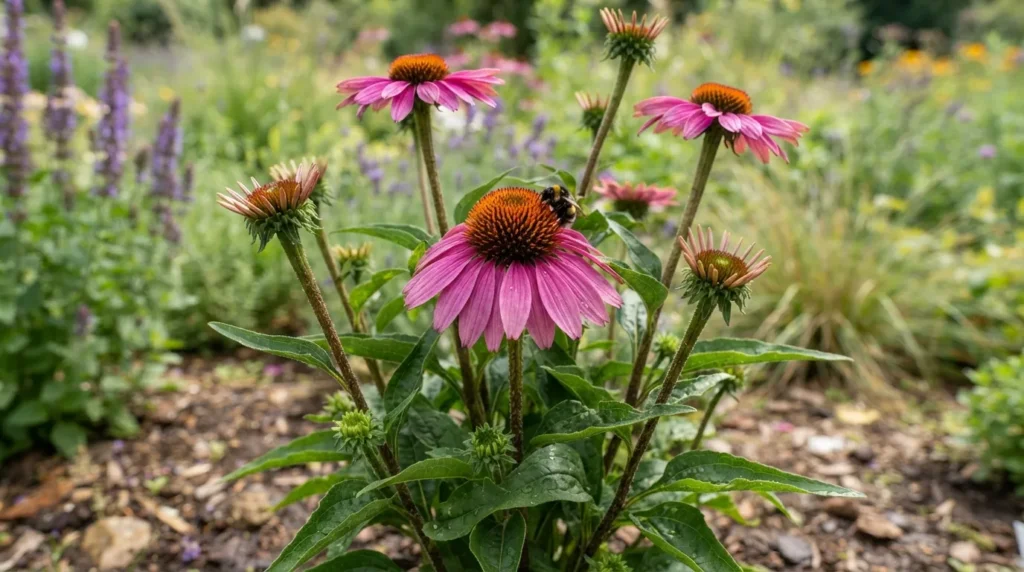
Plan 1: The Six-Hour Beginner Flower Bed
Size: 4 x 8 feet, full sun
Plant list: 3 coneflowers, 3 black-eyed Susans, 1 packet zinnia seeds, 1 packet marigold seeds, 1 bag mulch. check out 22 low mentainace outdoor plants.
Steps:
- Mark the shape with a hose or rope.
- Remove grass by cutting under the sod with a spade, or smother it under cardboard for a few weeks if you have time.
- Spread two inches of compost and mix into the top six inches of soil.
- Plant coneflowers and black-eyed Susans about 18 inches apart in the back two-thirds.
- Direct-sow zinnia and marigold seeds across the front third.
- Water thoroughly, then mulch two inches deep, keeping mulch off seed rows until the seedlings emerge.
Result: Marigolds bloom in six weeks, zinnias in eight, and the perennials establish for a bigger show next year.
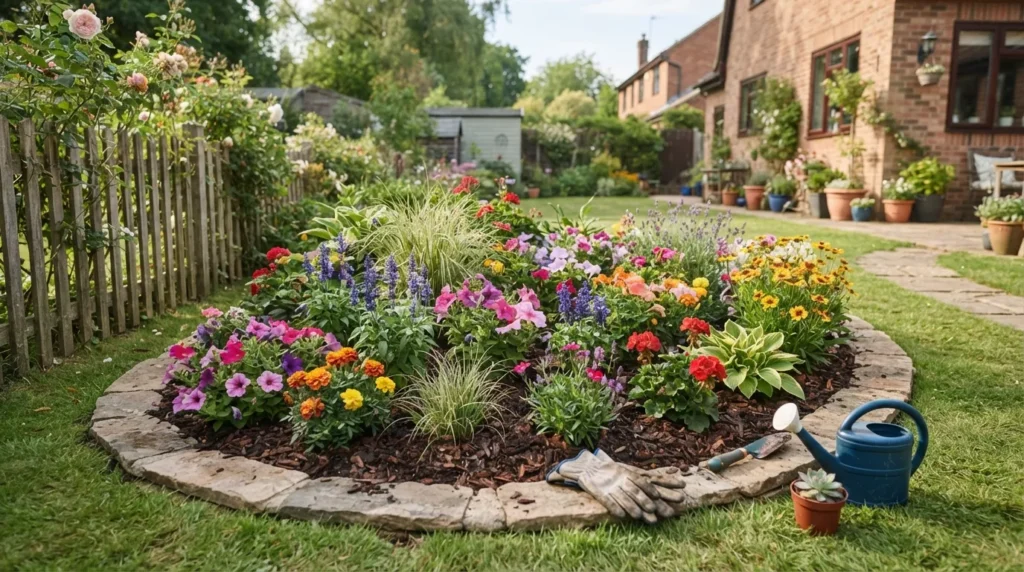
Plan 2: The Cutting Garden
For flowers you bring inside all summer.
Plant list: Zinnias, cosmos, sunflowers, snapdragons, dahlias
Plant in rows rather than clumps — it’s less decorative but far easier to harvest and maintain. Sow zinnias and cosmos every two weeks from late spring through early summer for continuous supply.
Key habit: Cut aggressively and cut often. These are all cut-and-come-again flowers. Harvesting is the maintenance.
Cut in the early morning, put stems straight into water, and strip the lower leaves.
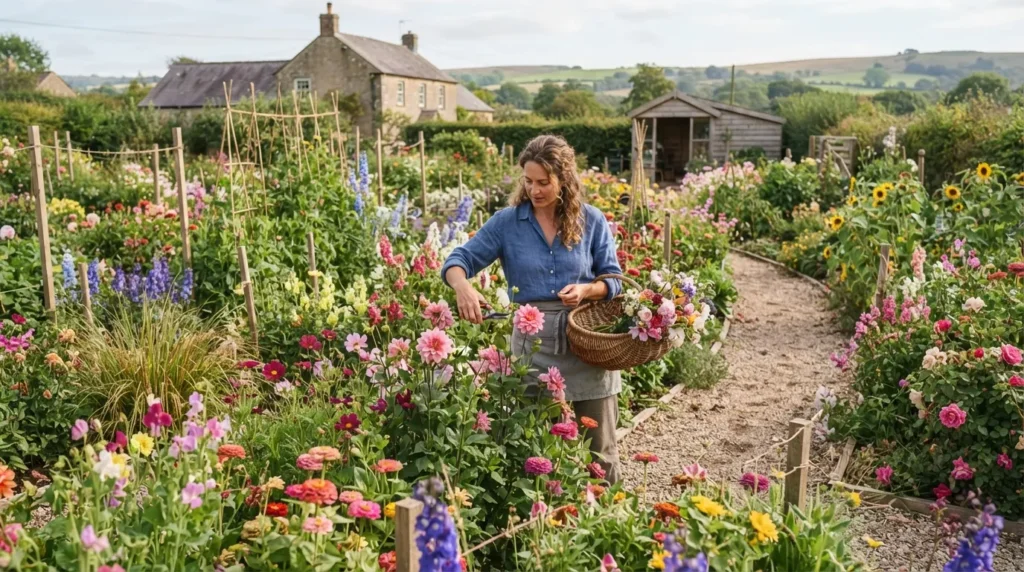
Plan 3: The Pollinator Flower Garden
Plant list: Bee balm, milkweed, coneflower, aster, catmint, yarrow
Plant each species in a group of at least three — pollinators find clusters more efficiently than scattered singles.
Include something blooming in each season: catmint for spring into summer, bee balm and coneflower for midsummer, aster for fall nectar when little else is available.
Skip pesticides entirely, and leave the stems standing through winter. Many native bees overwinter in hollow plant stems.
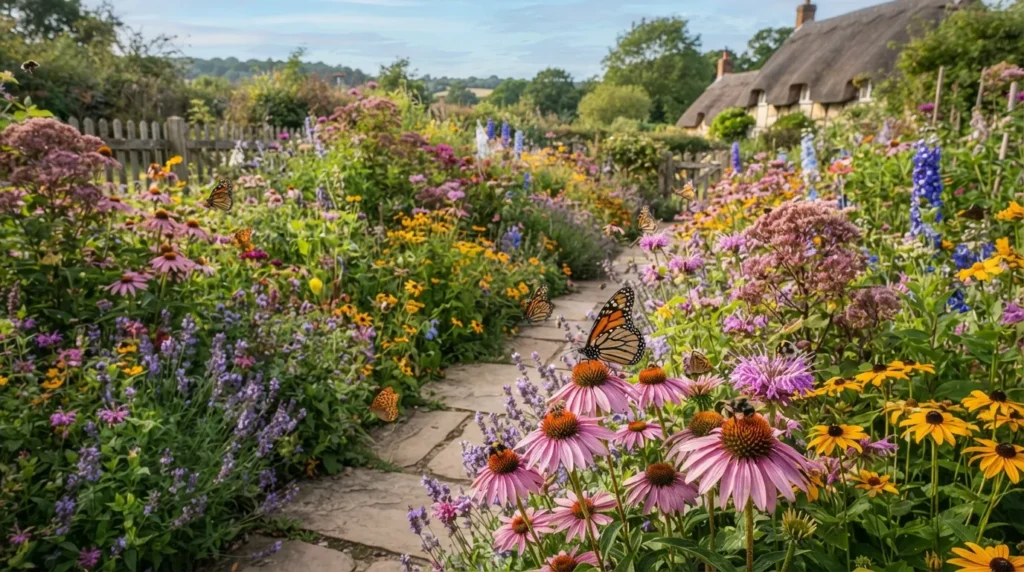
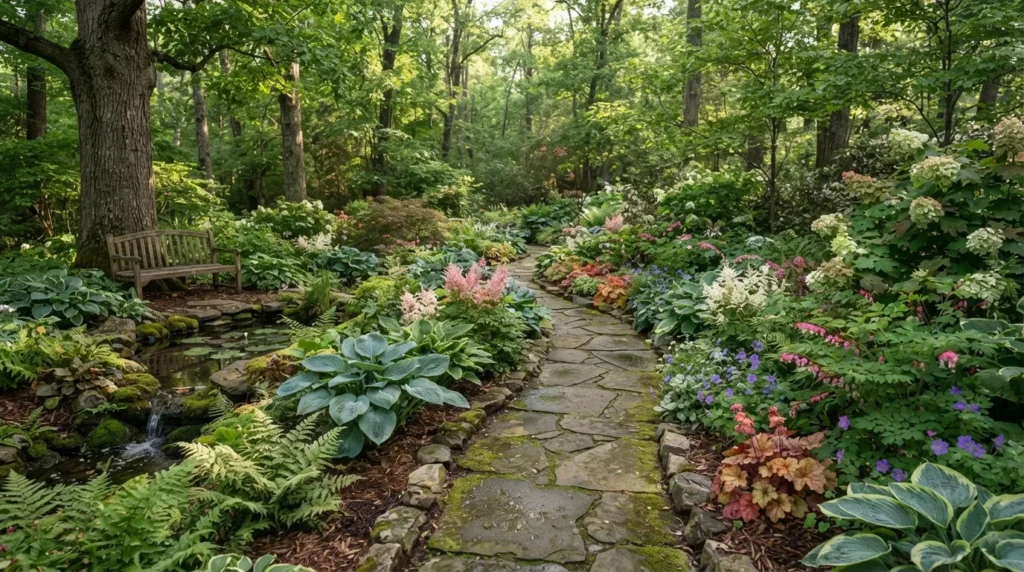
Plan 4: The Shade Flower Garden
Shade beds are often written off as flowerless. Not true.
Plant list: Astilbe, bleeding heart, impatiens, hellebore, foamflower
Bleeding heart and hellebore carry early spring. Astilbe brings feathery plumes in early summer. Impatiens fill in reliable color for the rest of the season.
Shade beds usually mean dry root competition from trees, so water more attentively in the first year and mulch generously.
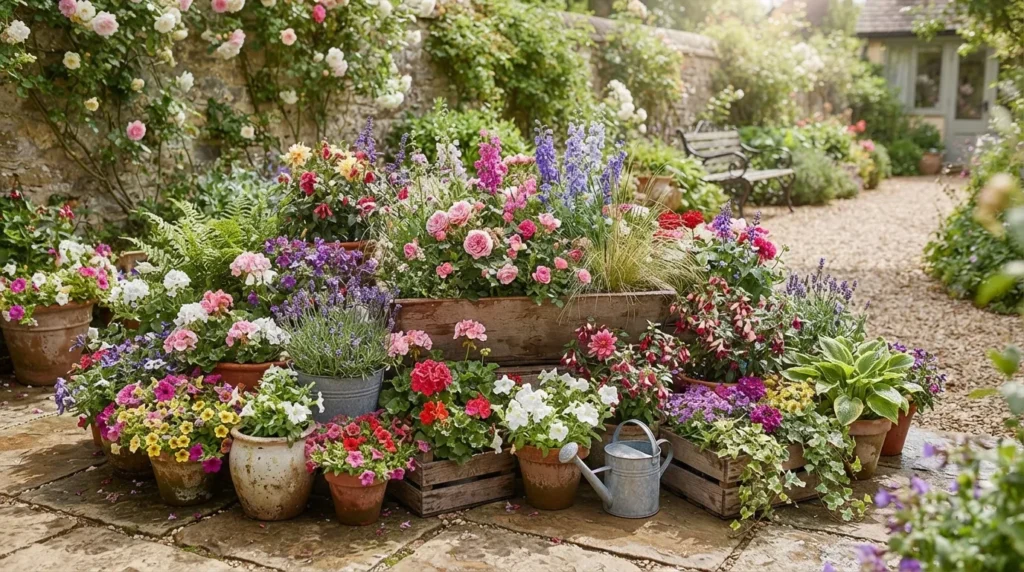
Plan 5: The Container Flower Garden
No yard required.
Plant list per large pot: 1 geranium or purple fountain grass as a center, 3 petunias, 2 sweet potato vines or trailing lobelia at the edges
Use a pot at least 14 inches wide — small containers dry out too fast and limit growth. Ensure drainage holes exist. Use potting mix, never garden soil, which compacts in containers.
Feed every two weeks with liquid fertilizer. Containers have finite nutrients and this is the one place regular feeding genuinely matters.
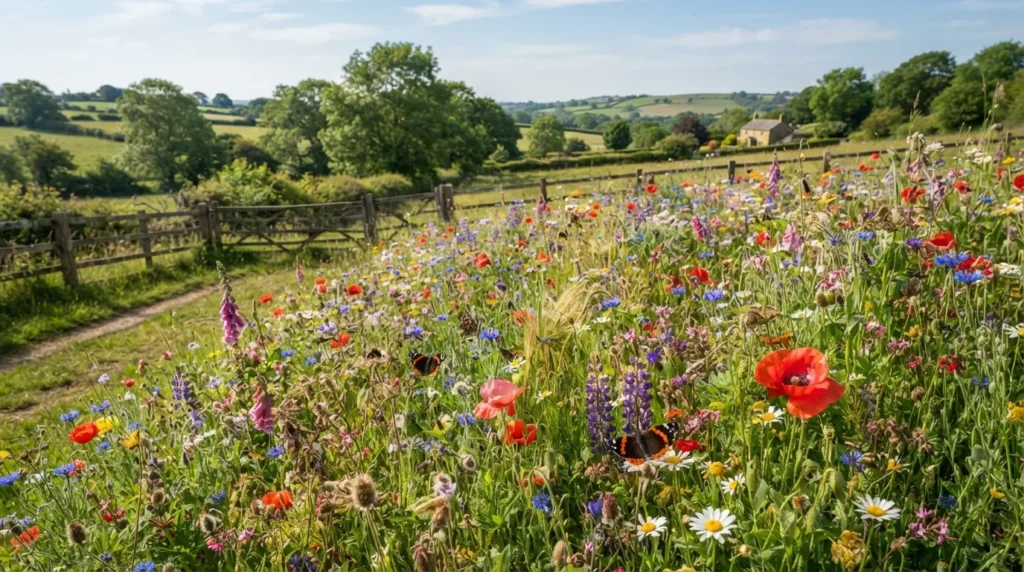
Plan 6: The Scatter-and-Wait Wildflower Patch
The absolute lowest-effort option.
Clear a sunny patch of existing vegetation down to bare soil. Rake lightly. Broadcast a regional wildflower seed mix. Rake again very lightly to press seed into contact with soil. Water until germination.
Then stop. That’s the whole method.
Choose a mix labeled for your region rather than a generic blend. Expect a modest first year and a much better second year as perennials in the mix mature.
Five Habits That Keep Flowers Blooming
Deadhead regularly. Removing spent blooms stops the plant from making seed and pushes it to flower again. Ten minutes weekly noticeably extends bloom time on zinnias, marigolds, cosmos, and salvia.
Water deeply, not daily. One good soak per week grows deep roots. Frequent shallow watering produces needy, shallow-rooted plants.
Mulch two inches. Fewer weeds, less watering, cooler soil.
Feed sparingly. Too much nitrogen produces lush foliage and few flowers. Most flower beds need one feeding in spring at most.
Cut back midsummer. Shear catmint, salvia, and coreopsis by a third in July. They’ll look bare for two weeks and then rebloom.
Common Flower Garden Mistakes
Planting only spring bloomers. Everything peaks in May and the bed is green by June. Choose across seasons.
Spacing too far apart. Sparse beds grow weeds and look unfinished. Plant slightly tighter than the tag says.
Overwatering. More flowers die from soggy roots than dry ones. Check the soil first.
Starting too large. A well-tended 4 x 8 bed beats a neglected 20-foot border. Expand when the first one feels easy.
Buying only what’s blooming at the nursery. In-bloom plants in May are spring bloomers. You’ll end up with a one-season garden. Buy for bloom timing, not for shelf appeal.
Your Weekend
Saturday morning: pick your spot and count the sunlight hours. Saturday afternoon: buy plants and seeds from one of the plans above. Sunday morning: clear, compost, plant, water, mulch.
By Sunday evening you have a flower garden. By August you’ll have more zinnias than vases.