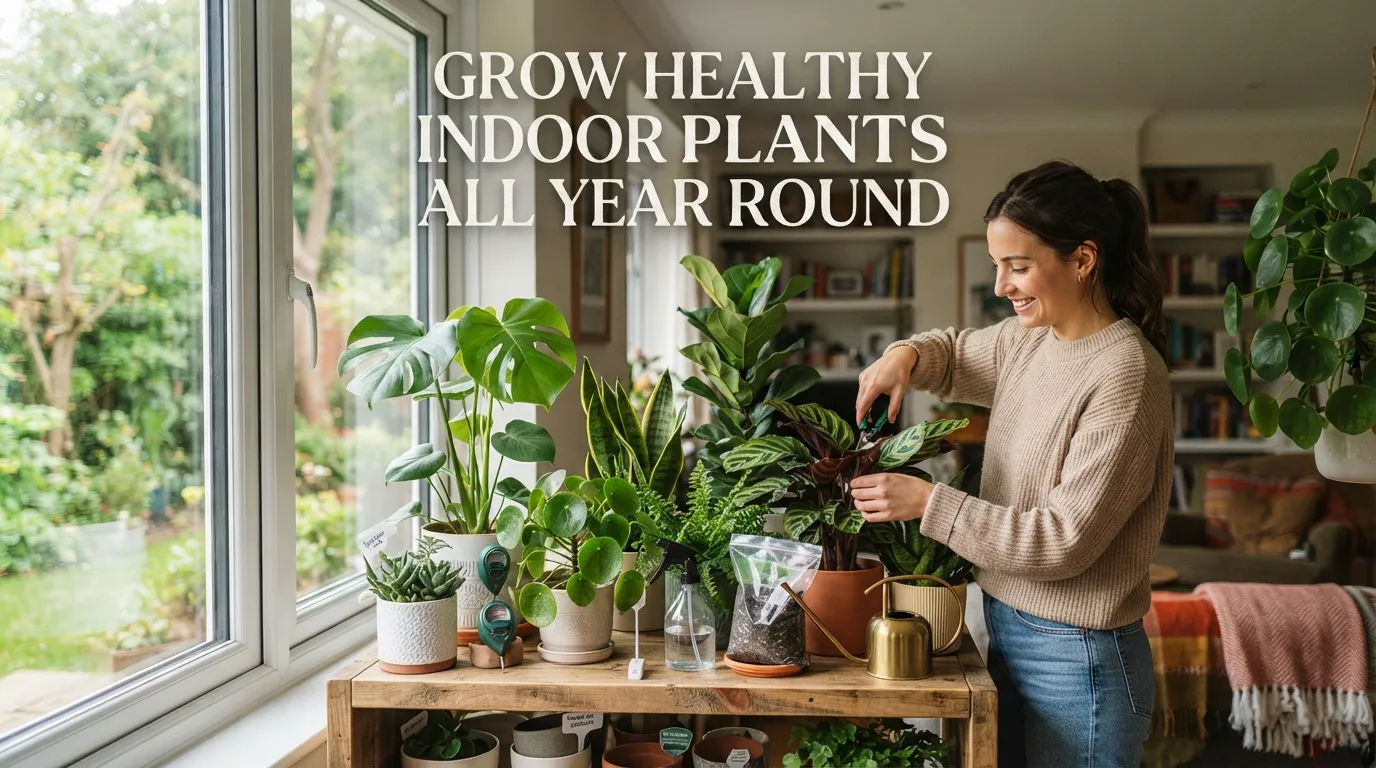
Grow Healthy Indoor Plants All Year Round
It’s a great feeling to have Grow Healthy Indoor Plants All Year Rounds. They make your home look nice. They also make the air cleaner. But sometimes, plants can be tricky. You want them to look good all year. This article will help you do just that. We’ll talk about keeping your indoor plants happy, no matter the season.
Choosing the Right Plants
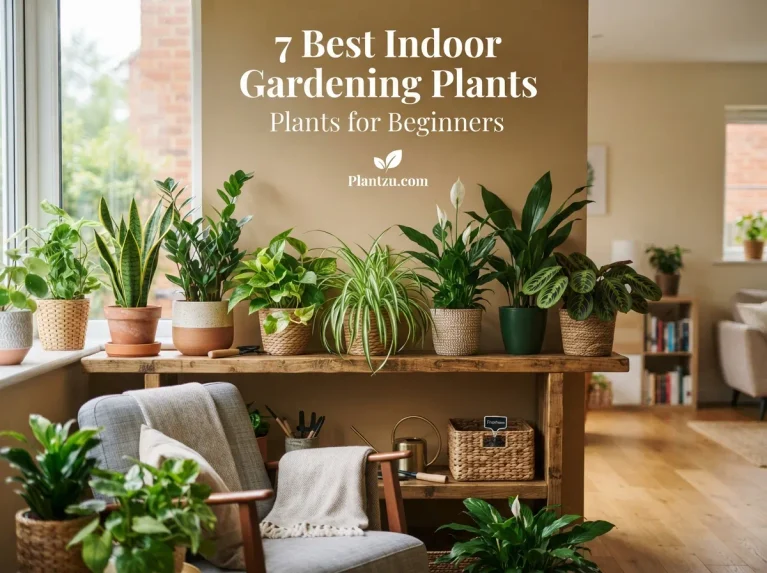
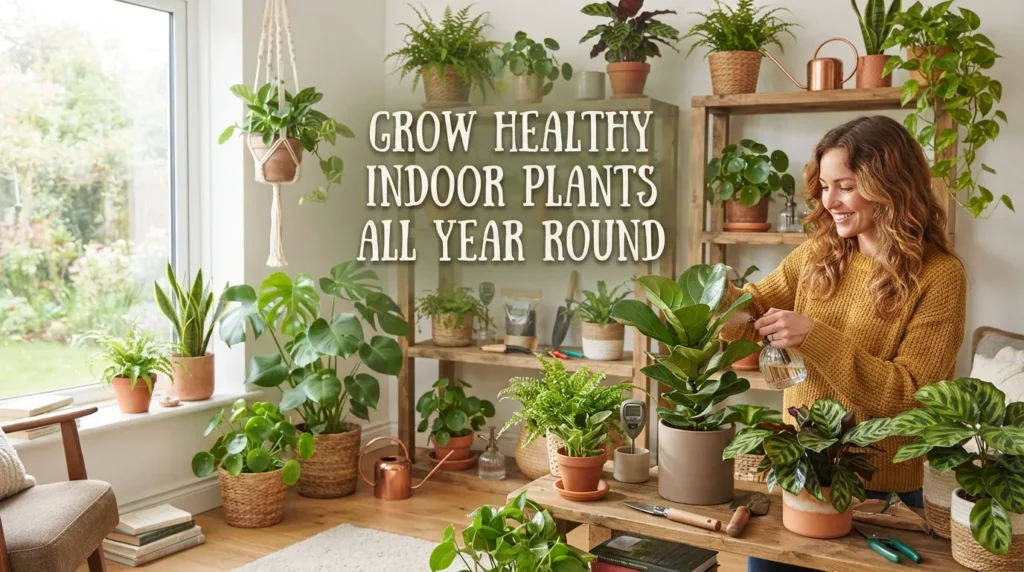
Not all plants are the same. Some plants love a lot of sun. Others like shady spots. For year-round growth, pick plants that do well indoors. Think about plants like Snake Plants, ZZ Plants, and Pothos. These are tough plants. They can handle different light levels. They also don’t need too much water.
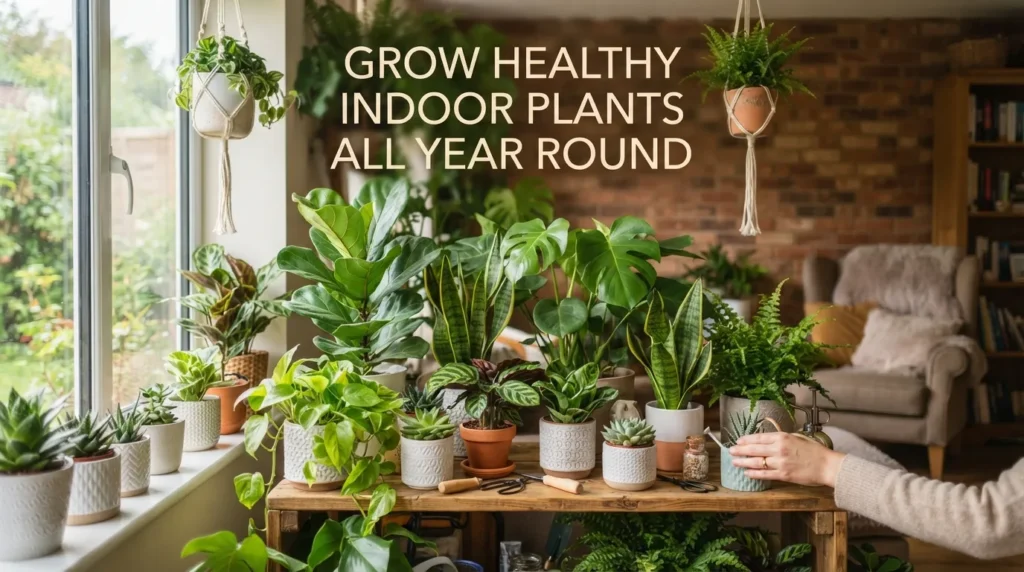
Grow Healthy Indoor Plants All Year Round
check what you need to do to Grow Healthy Indoor Plants All Year Round.
Understanding Light Needs
Light is super important for plants. Most indoor plants need bright, indirect light. This means light that isn’t direct sunlight. Direct sun can burn their leaves. If your home doesn’t get much natural light, don’t worry. You can use grow lights. LED grow lights are a good option. They save energy. They also come in different colors to help plants grow. Make sure to place your plants where they can get enough light. This might mean putting them near a window. Or it might mean using a grow light.
Watering Wisely
Overwatering is a common mistake. It’s better to underwater a little than to overwater a lot. Most plants like their soil to dry out a bit between waterings. Stick your finger into the soil. If the top inch or two feels dry, it’s time to water. If it feels moist, wait a few more days. The type of pot matters too. Pots with drainage holes are best. They let extra water escape. This stops roots from rotting. You can find more indoor gardening hacks that save time and water to help with this.
The Importance of Soil
Good soil is the foundation for healthy plants. You need soil that drains well. This lets air reach the roots. Most potting mixes work well for indoor plants. You can also add things like perlite or vermiculite. These help improve drainage. If you notice your plant isn’t growing well, bad soil could be the reason. Repotting every year or two can help. Use fresh potting mix when you do.
Temperature and Humidity
Most indoor plants like the same temperatures we do. They like it between 65 and 75 degrees Fahrenheit (18-24 Celsius). Avoid placing plants near drafty windows or heating vents. These can cause big temperature swings. Humidity can also be a problem, especially in winter. Dry air can make plant leaves turn brown. You can increase humidity by misting your plants. You can also place them on a pebble tray filled with water. Grouping plants together also helps create a more humid microclimate.
Feeding Your Plants
Plants need food to grow. This food comes from fertilizer. During the growing season, which is usually spring and summer, you can fertilize. Use a balanced liquid fertilizer. Follow the instructions on the package. Don’t overfertilize. Too much fertilizer can harm your plants. In the fall and winter, plants grow slower. You can reduce or stop fertilizing during these months.
Pruning for Health and Shape
Pruning is like giving your plants a haircut. It helps them stay healthy and look good. Trim off any yellow or dead leaves. This stops the plant from wasting energy on them. Pruning also encourages new growth. You can shape your plants by trimming them. This keeps them from getting too big or leggy. Use clean, sharp scissors or pruning shears.
Dealing with Pests
Pests can be a problem for indoor plants. Common pests include spider mites, mealybugs, and aphids. Check your plants regularly for any signs of pests. Look under the leaves. Look at the stems. If you find pests, act fast. You can often wipe them off with a damp cloth. For bigger problems, use insecticidal soap or neem oil. These are natural options. Make sure to isolate any infested plants. This stops pests from spreading to other plants.
Repotting Your Plants
As plants grow, they get too big for their pots. This is when they need repotting. You’ll know it’s time when you see roots coming out of the drainage holes. Or if the plant dries out very quickly. Choose a pot that is only 1-2 inches larger than the current one. Gently remove the plant from its old pot. Loosen the roots a little. Place it in the new pot with fresh soil. Water it well.
Common Problems and Solutions
Yellow leaves:
This can mean overwatering, underwatering, or not enough light. Check your watering habits and light source.
Brown crispy leaves:
This often means the air is too dry. Try increasing humidity. It can also be from too much direct sun.
Wilting:
This can be underwatering or overwatering. Check the soil moisture.
No new growth:
The plant might need more light, fertilizer, or a bigger pot.
Enjoying Your Indoor Oasis
Growing healthy indoor plants all year round is rewarding. It takes a little attention. But the beauty and fresh air they bring are worth it. Don’t be afraid to experiment. Observe your plants. Learn what they need. Soon, you’ll have a thriving indoor garden. Remember that Plantzu has lots of resources to help you on your plant journey.
Frequently Asked Questions
How often should I water my indoor plants?
Most indoor plants like their soil to dry out a bit between waterings. Stick your finger into the soil. If the top inch or two feels dry, it’s time to water.
What kind of light do most indoor plants need?
Most indoor plants prefer bright, indirect light. Avoid direct sunlight, which can burn their leaves.
How do I know if my plant needs repotting?
You’ll know it’s time to repot when you see roots growing out of the drainage holes or if the plant dries out very quickly.
What can I do about dry, brown leaf tips?
Dry, brown leaf tips often mean the air is too dry. Try increasing humidity by misting your plants or placing them on a pebble tray.