Bat Flower Care: The Spookiest Plant for Halloween
Bat Flower Care: The Spookiest Plant for Halloween
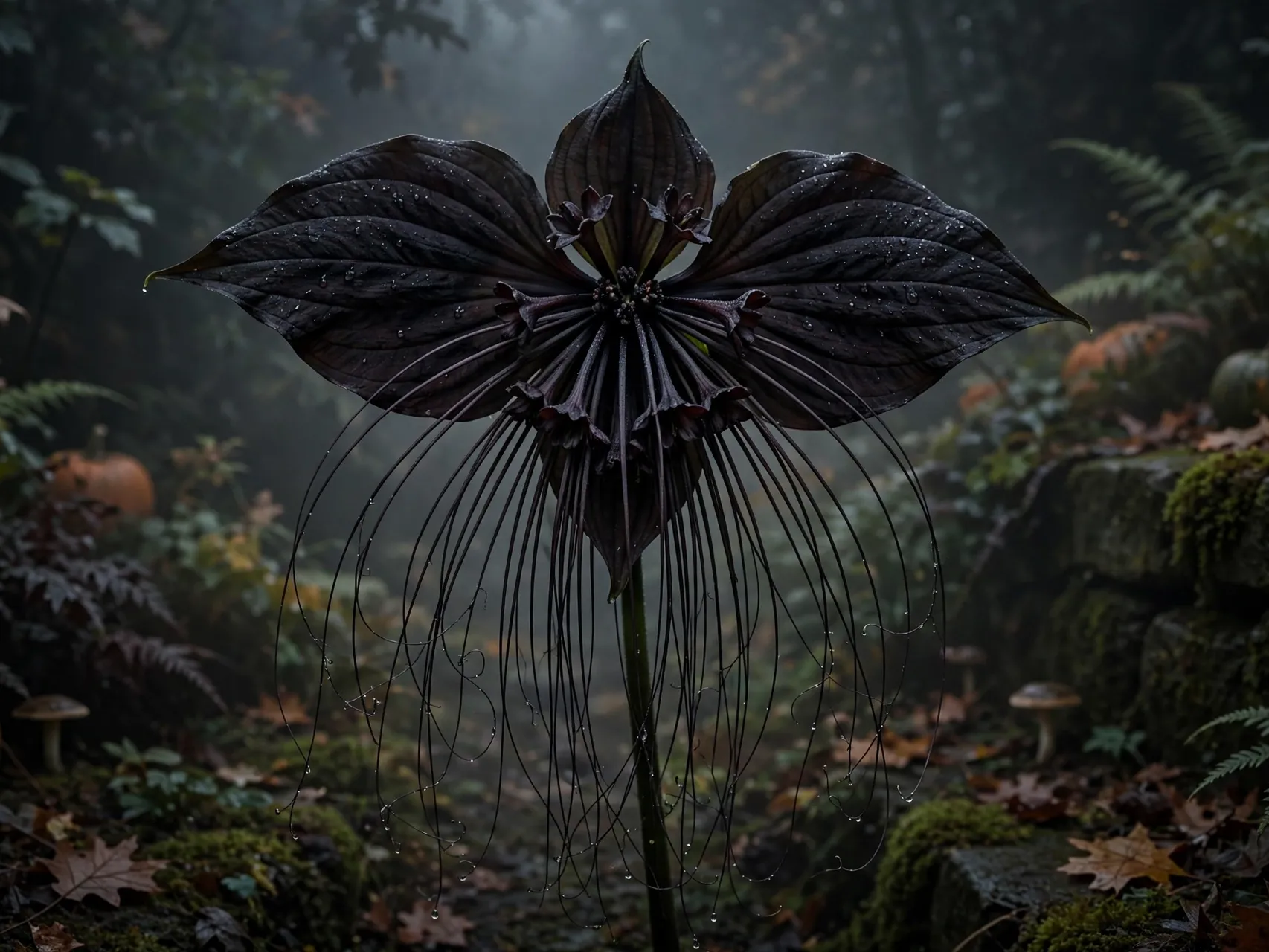
When it comes to bat flower care, one look at this plant tells you everything: it was practically designed for Halloween. With velvety near-black blooms shaped like bats in flight and whisker-like bracts that dangle a foot long, Tacca chantrieri is the most theatrically spooky houseplant you can grow. It looks like it flew straight out of a haunted greenhouse — and yet, with the right routine, it is a surprisingly willing indoor companion. This guide walks you through everything the bat flower needs to thrive, from light and water to propagation, so your spookiest plant stays spectacular well beyond October.
Introduction
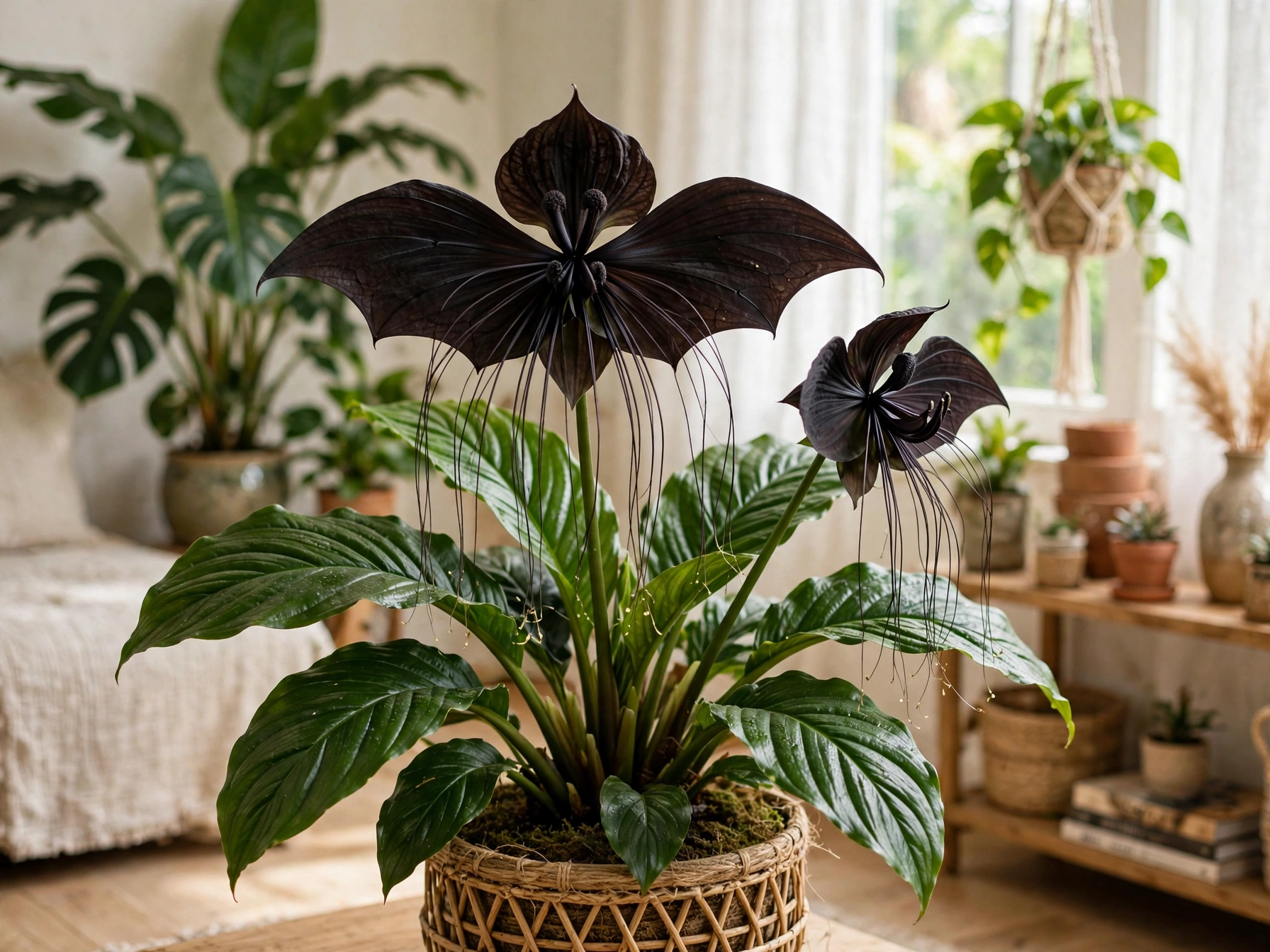
Native to the tropical understories of Southeast Asia, the bat flower grows wild in warm, humid shade — and that origin story explains nearly all of its care needs. It wants dappled light, constant gentle moisture, and air so humid you can almost feel it. Give it those three things and it will reward you with otherworldly blooms from late summer into fall, right on cue for spooky season. Miss on any of them and the plant sulks fast. The good news? None of this is complicated. Think “tropical forest floor in a pot,” and you are already most of the way there.
Meet the Bat Flower
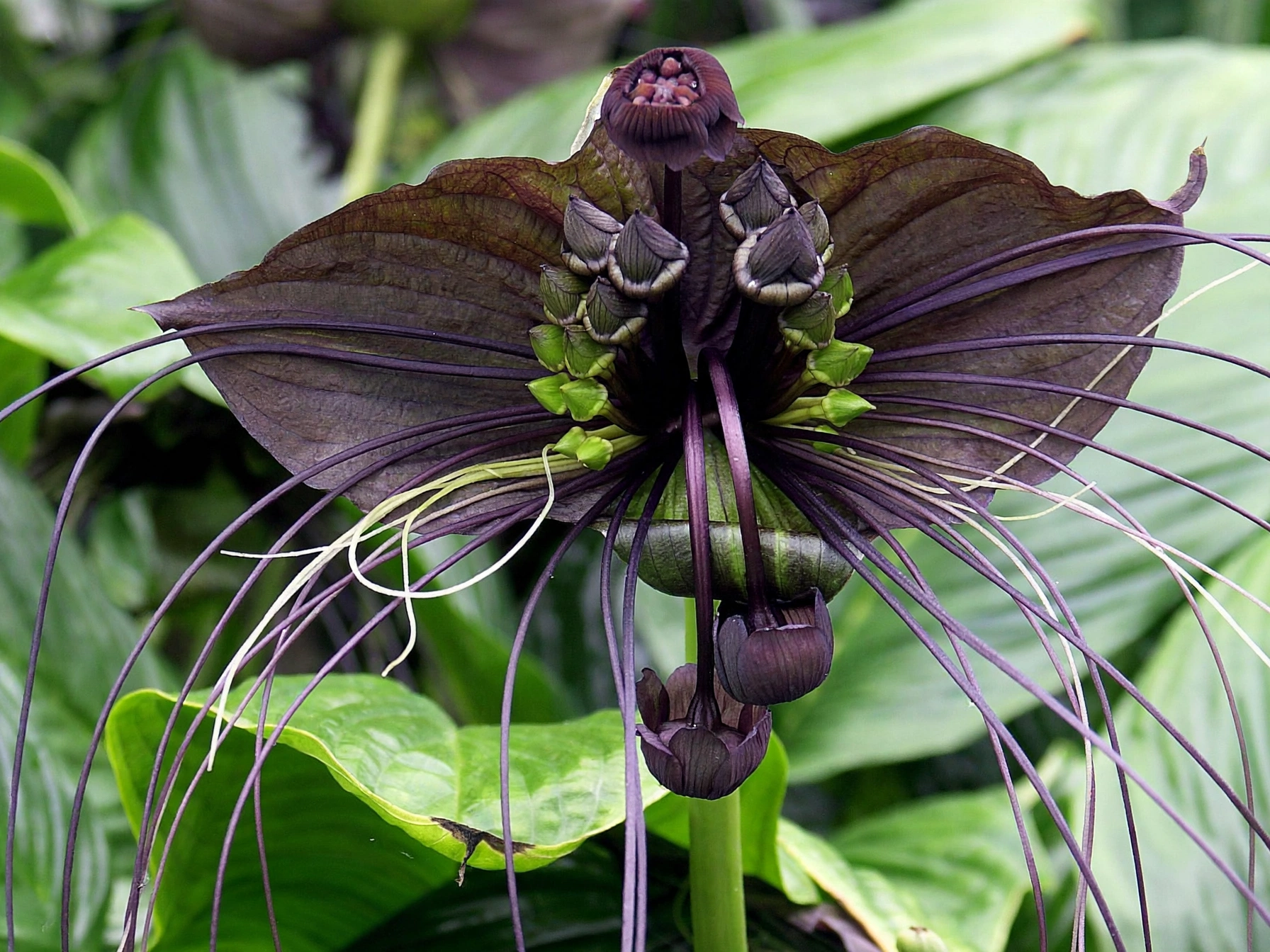
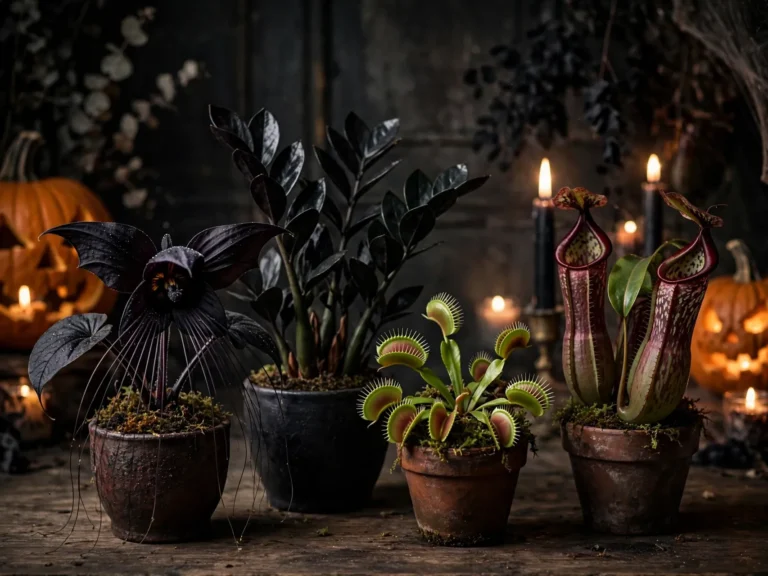
The bat flower (Tacca chantrieri) earns its name twice over: its deep purple-black bracts spread like bat wings, and from the bloom hang dozens of thread-like filaments — “whiskers” — that can reach 12 inches long. Mature plants reach two to three feet tall and wide, with big glossy paddle-shaped leaves that look lush even when the plant is not blooming. Flowers typically appear on established plants in late summer and fall. It is a slow grower and can be pricey, so treat your first specimen like the treasure it is: quarantine new arrivals for a week, inspect for pests, and settle it into its permanent spot before fussing with it further.
Light Needs
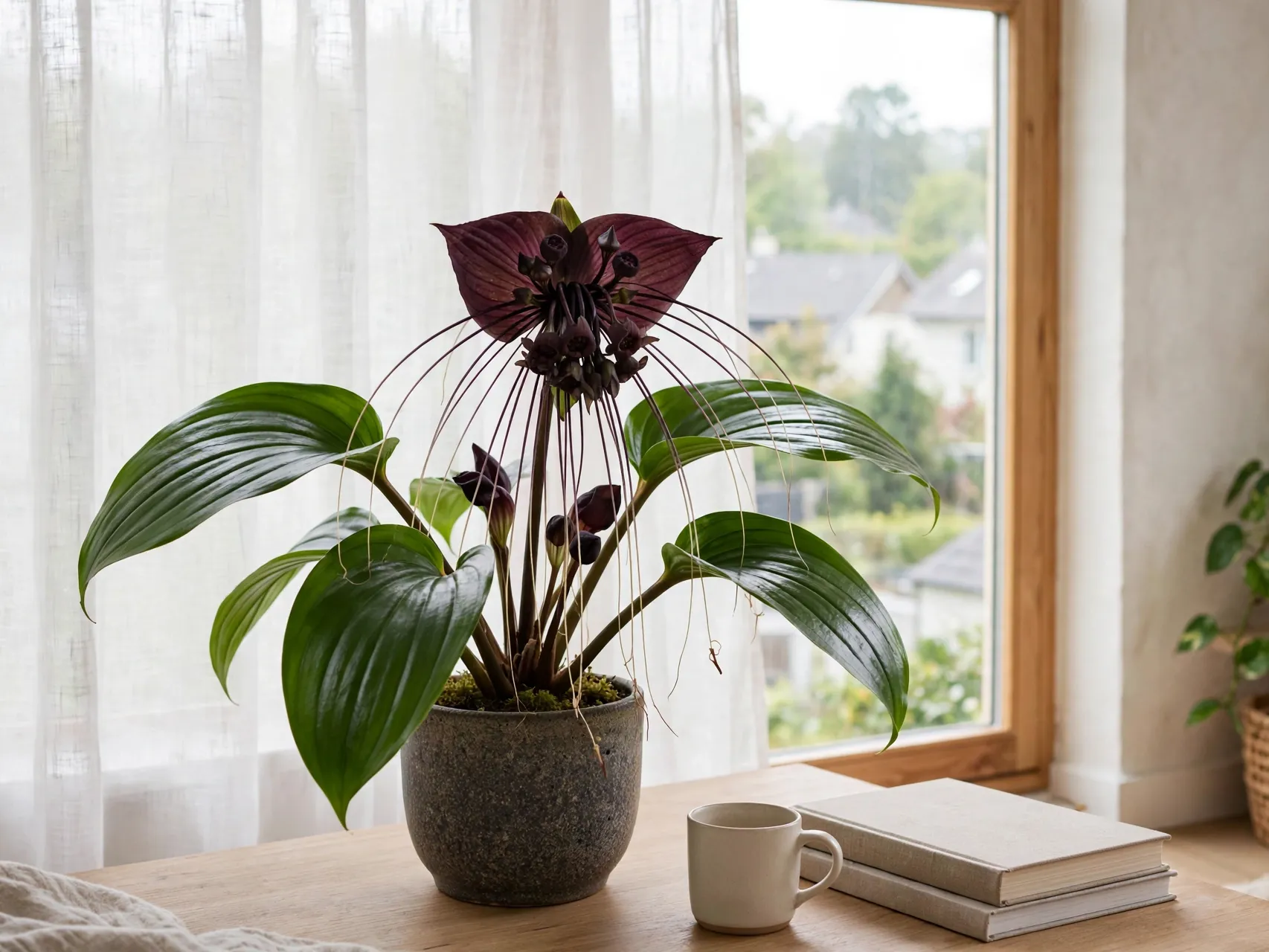
Bat flowers crave bright, indirect light — imagine the dappled glow beneath a jungle canopy. An east-facing window or a spot a few feet back from a bright south or west window is ideal. Direct midday sun scorches those dramatic leaves, leaving bleached patches that never heal, while too little light means leggy growth and zero blooms. If your home runs dark in winter, a simple full-spectrum grow light on a 12-hour timer works beautifully; our indoor plant lighting guide breaks down exactly how to set one up. Watch the leaves: deep green and upright means the light is right.
Watering
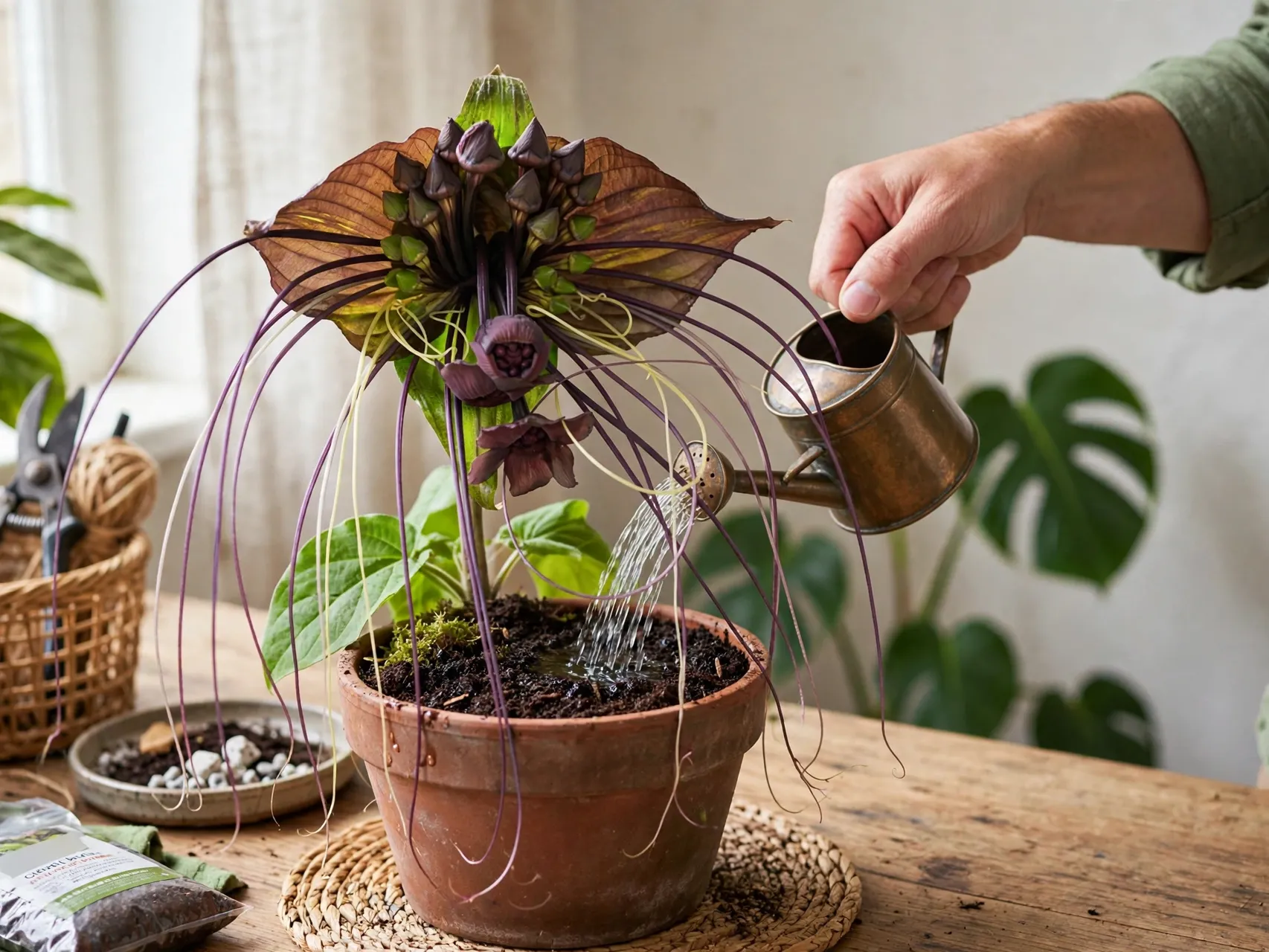
Consistency is the whole game with watering. Keep the soil evenly moist but never waterlogged — think wrung-out sponge. Water thoroughly when the top inch of soil feels dry, and always empty the saucer so the roots never sit in standing water. These plants are sensitive to chemicals, so room-temperature rainwater, distilled water, or tap water left out overnight works best. In winter, when growth slows, ease off slightly but never let the root ball dry out completely. Drooping leaves usually mean thirst; yellowing lower leaves usually mean too much love from the watering can.
Soil & Potting
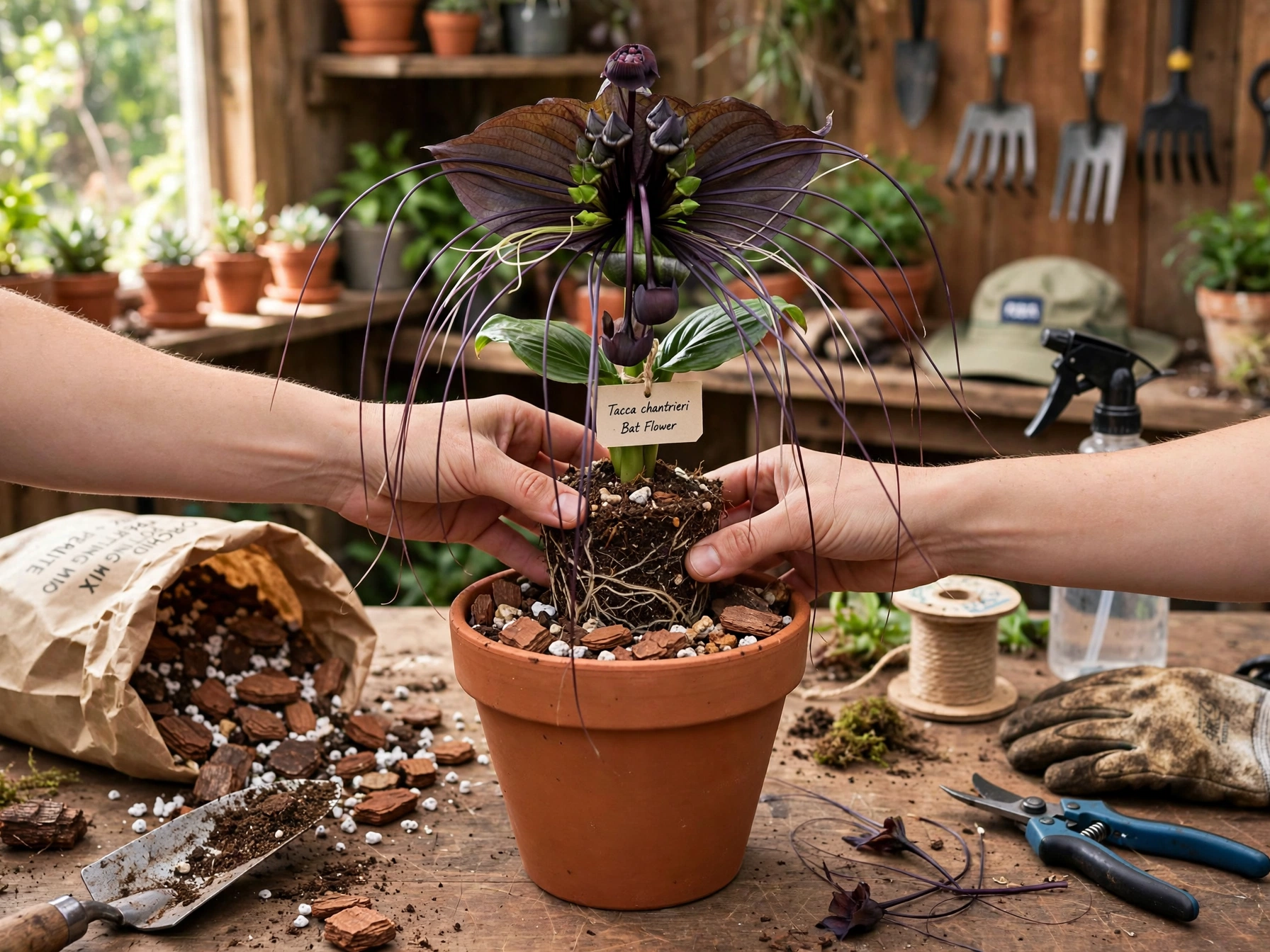
In the wild, bat flowers root into loose, humus-rich forest floor — so give them an airy, fast-draining mix that still holds moisture. A blend of quality potting soil with orchid bark, perlite, and a handful of coco coir hits the sweet spot. Choose a pot with generous drainage holes; these roots rot quickly in soggy soil. Repot only when truly root-bound, ideally in spring, moving up just one pot size — bat flowers bloom best when slightly snug. A top-dressing of fresh mix each spring beats a full repot for mature, happy plants.
Temperature & Humidity
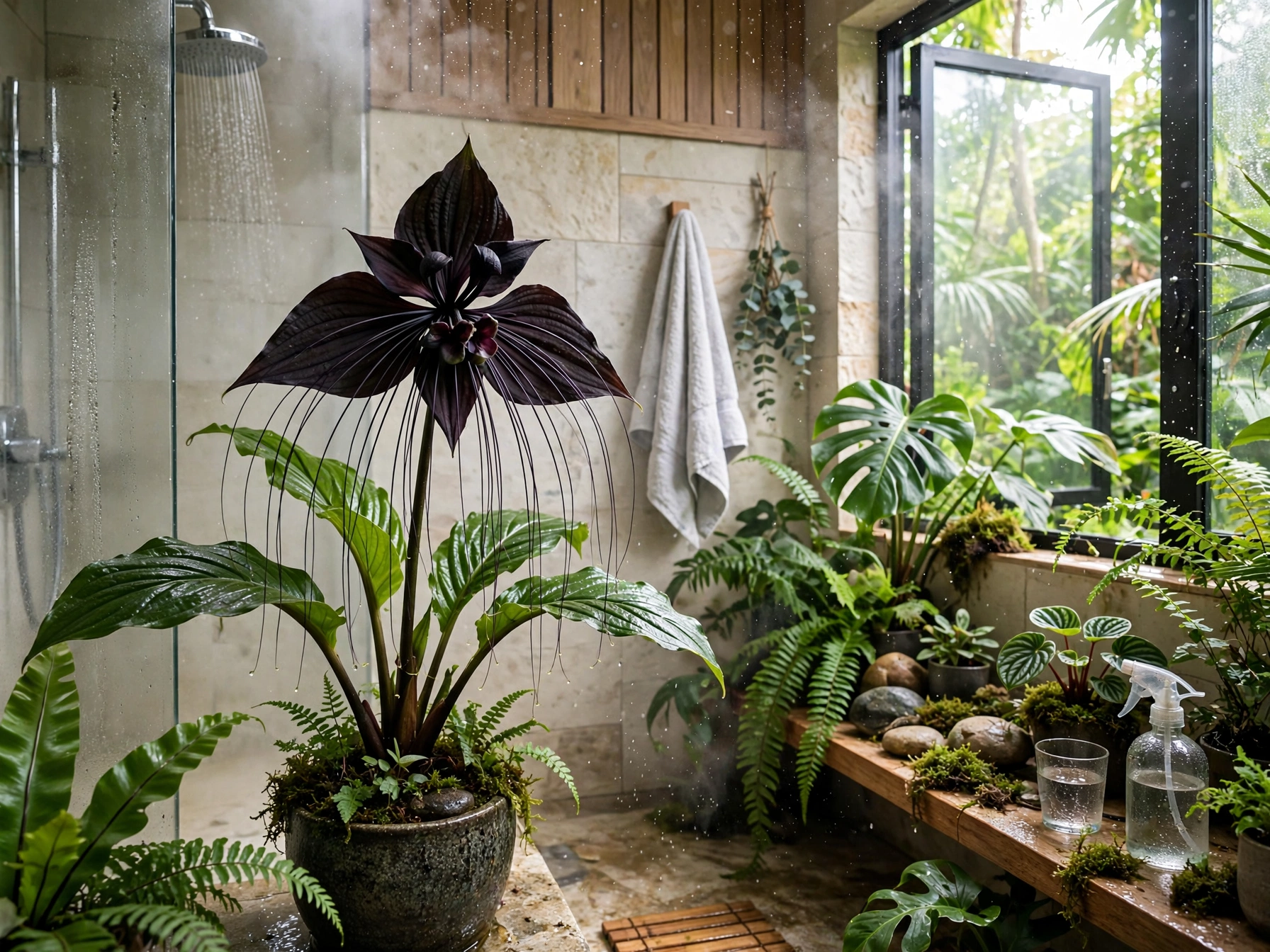
This is a true tropical: it thrives between 60–85°F (15–29°C) and sulks below 55°F, so keep it away from drafty windows and air-conditioning blasts. Humidity is the real make-or-break — aim for 60% or higher. A humidifier nearby is the easiest win, but a pebble tray with water under the pot or grouping it with other humidity lovers also helps. Brown, crispy leaf edges are the classic low-humidity SOS. Bathrooms with a bright window are surprisingly perfect bat flower real estate, provided the light is adequate.
Propagation
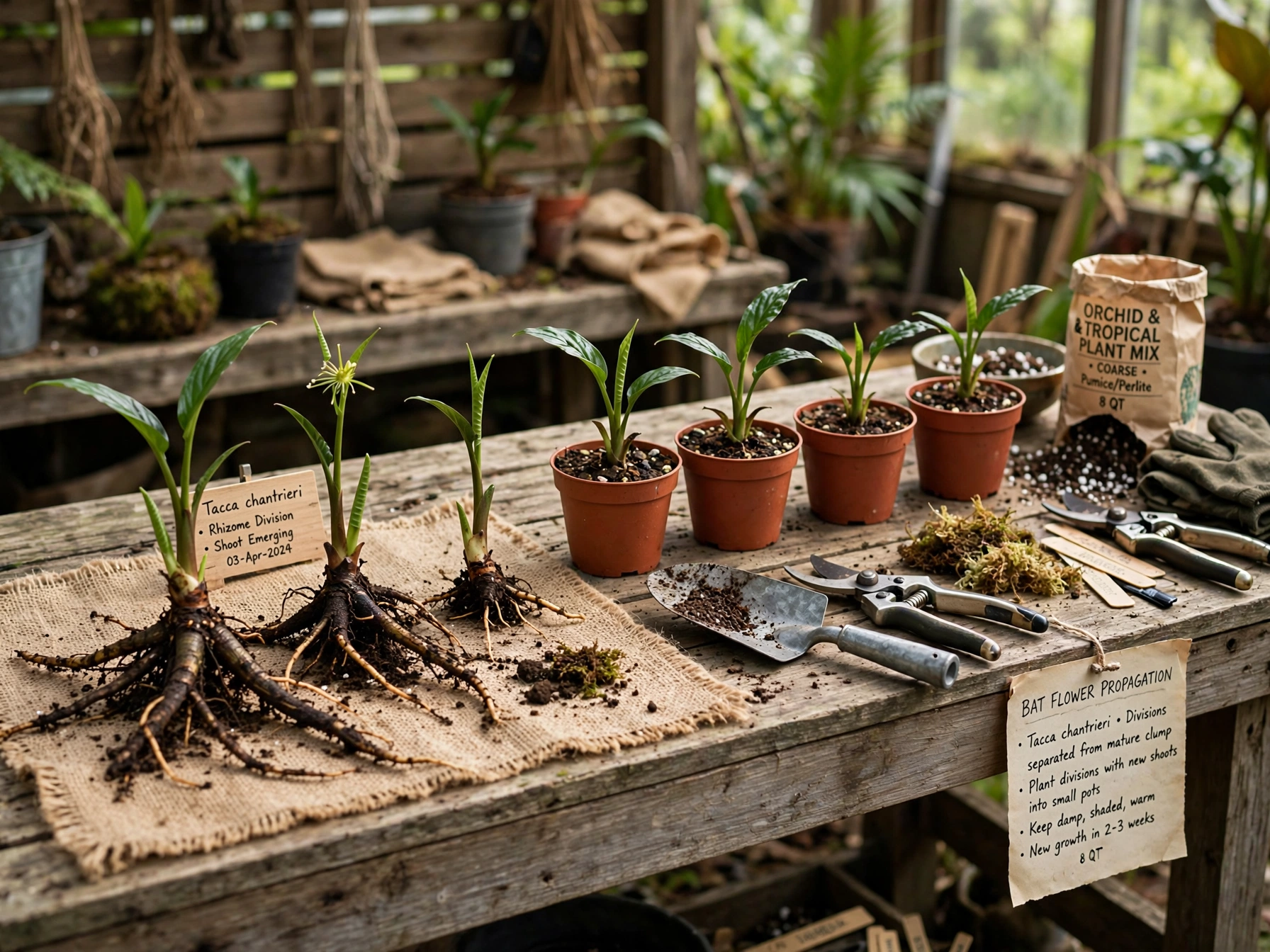
The reliable way to multiply your bat flower is division: in spring, gently unpot a mature plant and tease apart sections that each have roots and at least one growth point, then pot them into the same airy mix and keep them warm and humid while they settle. Growing from seed is possible but a patience test — seeds can take months to germinate and years to bloom. Division gives you a head start of literally years, so unless you love a long project, divide. Share the extras with fellow plant lovers; a bat flower division is an unforgettable Halloween gift.
Troubleshooting
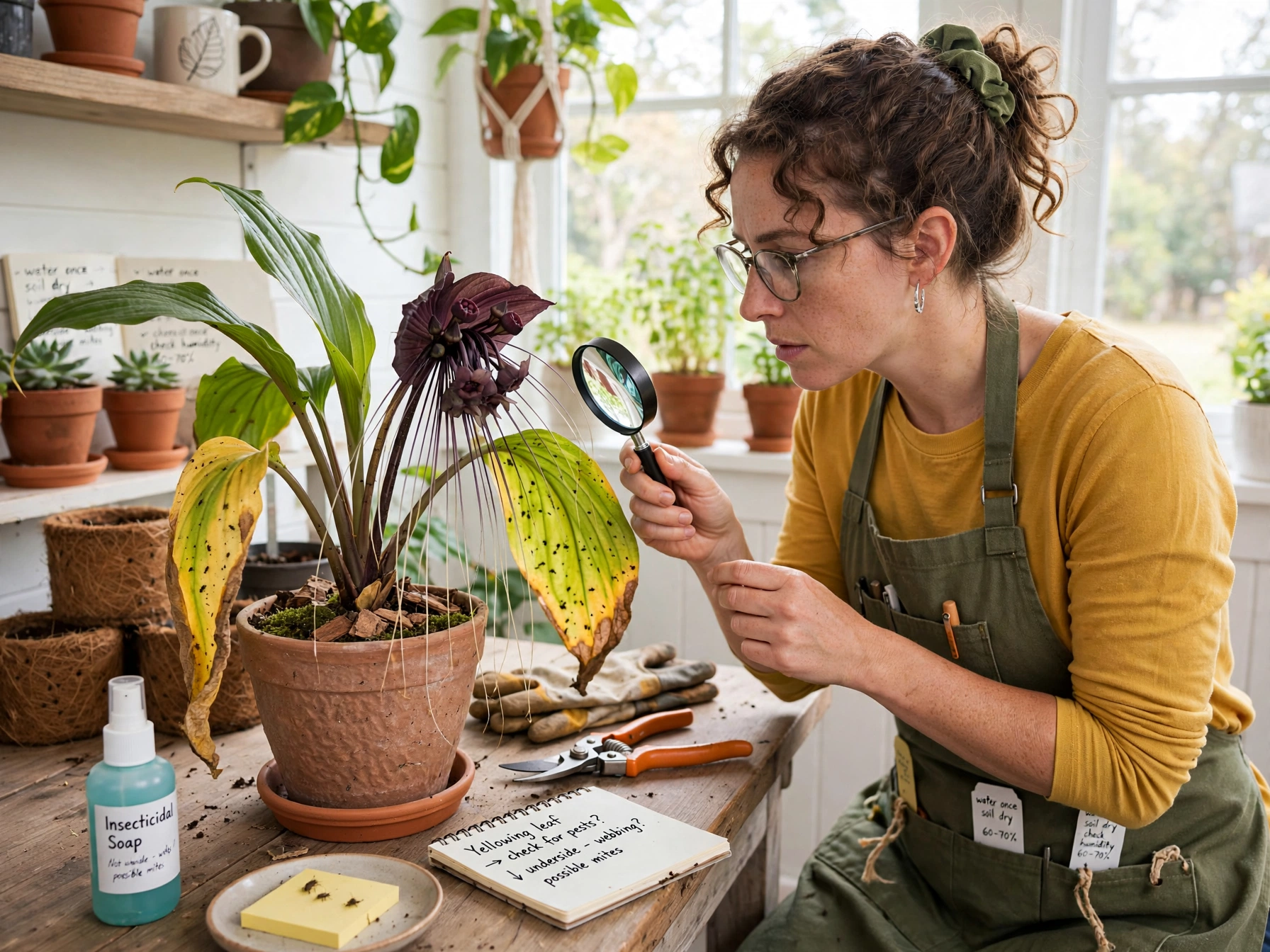
No blooms? The plant is likely too young (they need maturity), short on light, or overdue for feeding — try a balanced liquid fertilizer at half strength monthly in spring and summer. Yellow leaves point to overwatering or poor drainage; check the roots and refresh the mix if it smells sour. Brown leaf tips mean low humidity or chemical-heavy water. Watch for spider mites and mealybugs, which love dry indoor air — a strong humidity routine plus regular leaf inspections keeps them at bay. Most bat flower problems trace back to the big three: light, water, humidity. Fix those and the plant forgives the rest.
Frequently Asked Questions
Is the bat flower hard to care for?
It has a dramatic reputation but straightforward needs: bright indirect light, consistently moist airy soil, warmth, and high humidity. If you can keep a calathea happy, you can handle a bat flower.
How often does the bat flower bloom?
Mature, well-cared-for plants typically bloom from late summer into fall, with each otherworldly flower lasting several weeks. Young plants may take a few years to flower for the first time.
Is the bat flower toxic to pets?
Yes — Tacca species are considered toxic if ingested, so keep the plant out of reach of curious cats, dogs, and small children, and wash your hands after handling.
Why are my bat flower’s whiskers turning brown?
Usually low humidity or underwatering. Boost humidity around the plant and check that the soil is staying evenly moist, and trim only fully dead filaments with clean scissors.
Can the bat flower grow outdoors?
In USDA zones 10–11 it can live outdoors year-round in deep shade; everywhere else, grow it as a houseplant and move it to a shaded patio only for the warmest summer months.
With its bat-wing blooms and trailing whiskers, Tacca chantrieri earns its title as Halloween’s spookiest plant — and now you know exactly how to keep it thriving. Give it jungle-like light, moisture, and humidity, and it will haunt your home beautifully for years.