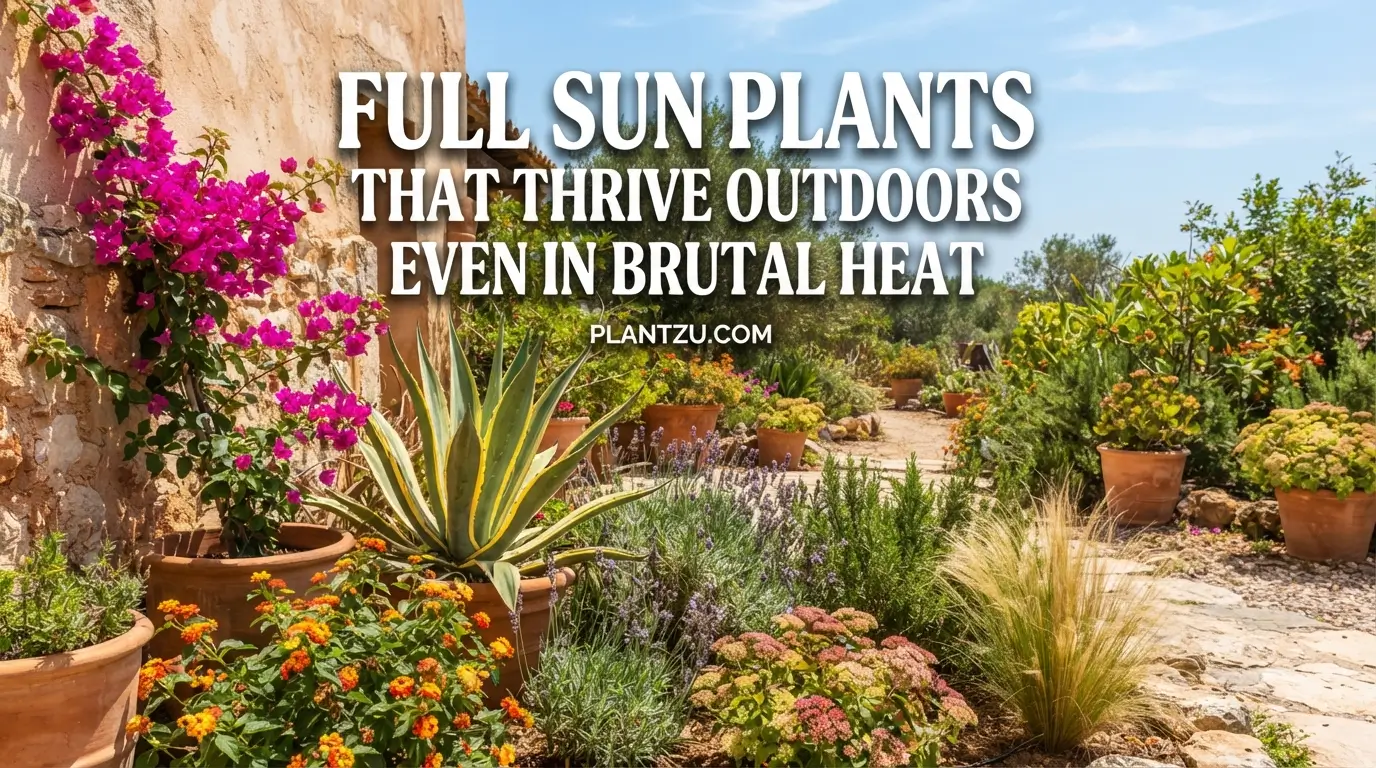
Full Sun Plants That Thrive Outdoors Even in Brutal Heat
There’s a particular kind of Full Sun Plants That Thrive Outdoors Even in Brutal Heat, sunny yards. You plant something beautiful, it looks perfect for nine days, and then July arrives and turns it into a crisp.
The problem usually isn’t the sun. It’s that “full sun tolerant” and “thrives in relentless afternoon heat” are two very different claims, and plant tags don’t always distinguish between them.
Here are the plants that genuinely thrive — not merely survive — in blazing conditions.
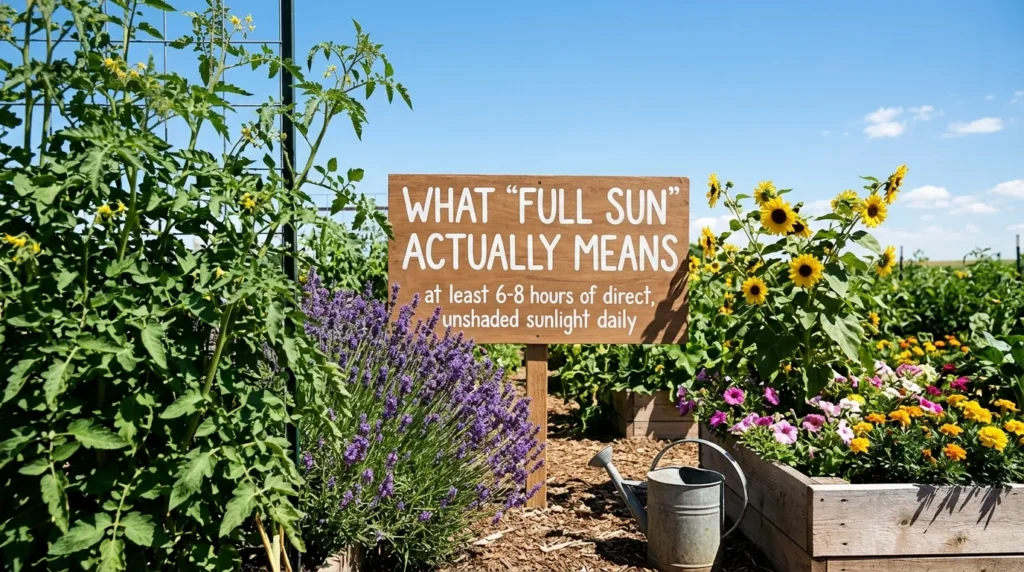
What Full Sun Actually Means
Full sun means six or more hours of direct, unfiltered sunlight per day.
But intensity matters as much as duration. Six hours of gentle morning light is a completely different environment from six hours of west-facing afternoon sun bouncing off pavement. That second scenario — hot exposure — is what breaks most plants.
If your problem spot is a south or west wall, a driveway strip, or an area near reflective concrete, prioritize the plants marked as heat-proof below. also check out 25 outdoor gardening plants.
Full Sun Plants That Thrive Outdoors Even in Brutal Heat
Read about Full Sun Plants That Thrive Outdoors Even in Brutal Heat below:
Perennials That Thrive in Full Sun
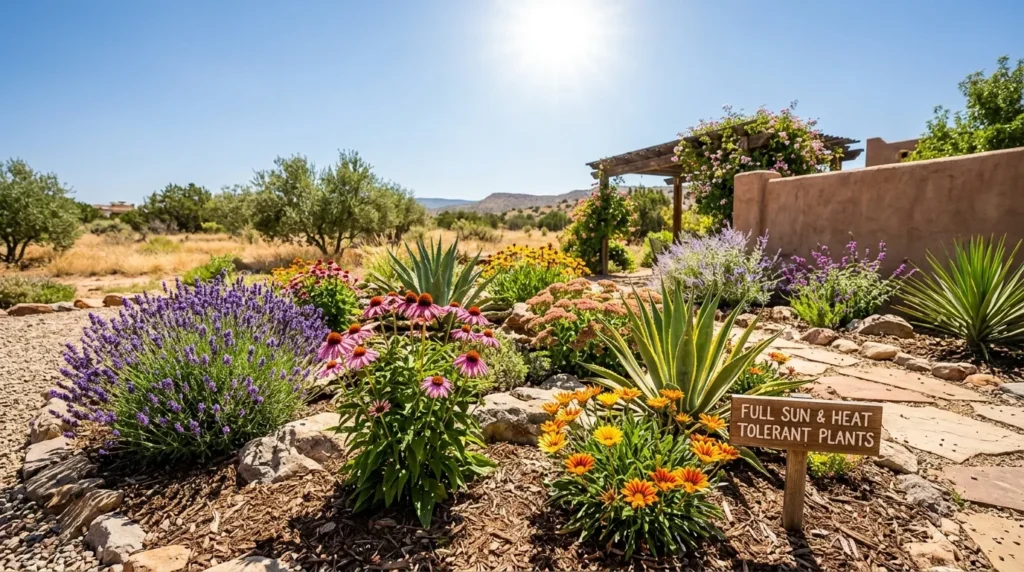
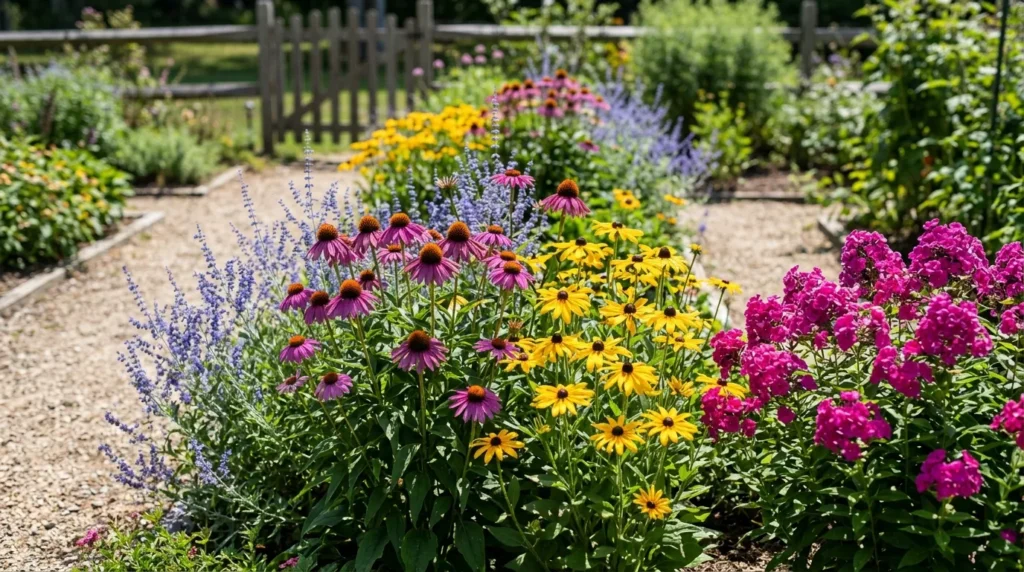
Coneflower (Echinacea) — Blooms July to frost, stands upright without staking, and prefers soil that isn’t rich. Native, drought tolerant, and it feeds birds all winter if you leave the seed heads.
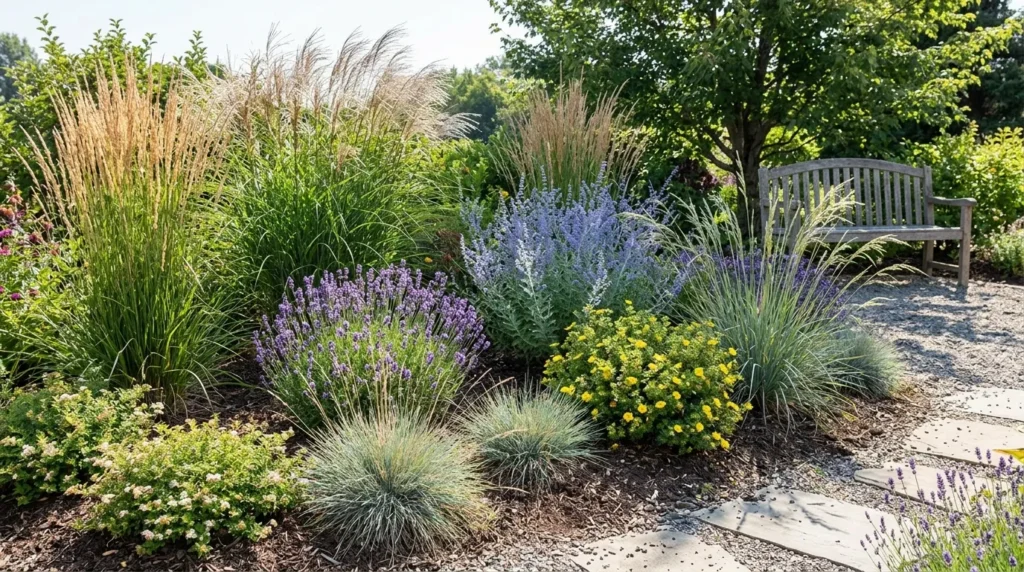
Russian Sage — Airy lavender-blue clouds on silvery stems reaching four feet. One of the most heat-proof perennials available, and deer ignore it.
Yarrow (Achillea) — Flat-topped flower clusters in yellow, coral, or white. Thrives in poor dry soil and rots in rich moist soil, which makes it perfect for the hardest spots.
Catmint (Nepeta) — Soft mounds of lavender-blue blooming for months. Shear it back halfway midsummer for a full second round.
Sedum ‘Autumn Joy’ — Succulent leaves store water, so it handles drought without flinching. Blooms shift from pale pink to deep rust in fall.
Daylily — Nearly impossible to kill. Tolerates heat, drought, clay, and neglect. Reblooming varieties like ‘Stella de Oro’ flower repeatedly.
Lavender — Requires full sun and sharp drainage. Get those two things right and it lasts years, scenting the whole area.
Blanket Flower (Gaillardia) — Red-and-gold pinwheel blooms in the hottest, driest, sandiest conditions imaginable.
Salvia — Vertical purple, blue, or red spikes. Hummingbird magnet, heat indifferent.
Coreopsis — Fine-textured foliage under a haze of yellow daisies from early summer onward.
Annuals for Hot Full Sun
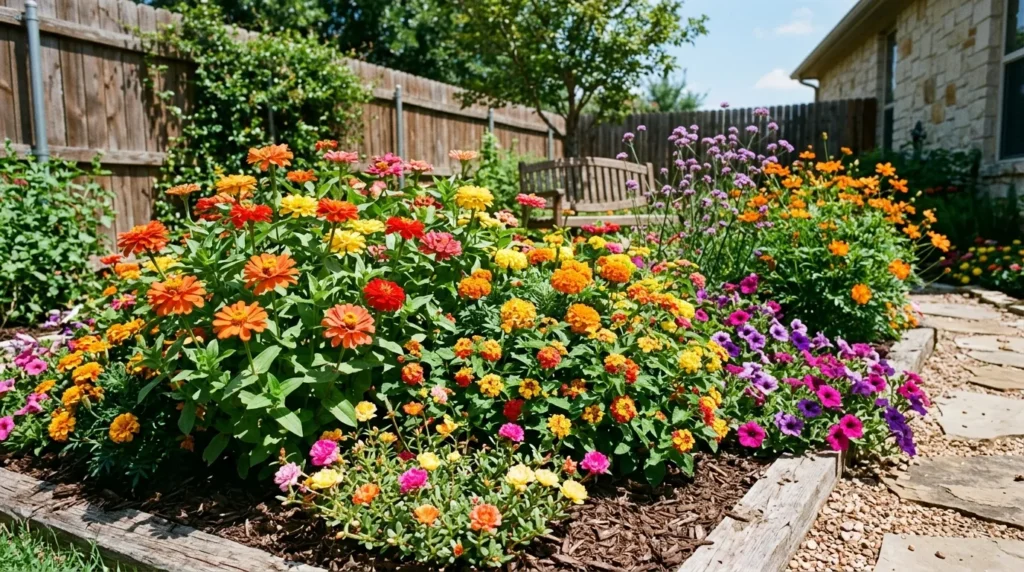
Zinnias — The champion heat annual. Direct-sow, cut constantly, bloom until frost.
Portulaca (Moss Rose) — Succulent groundcover with jewel-toned flowers. Genuinely thrives on pavement edges where soil is thin and blistering.
Lantana — Clusters of multicolored flowers that never stop in heat. Butterflies swarm it.
Vinca (Catharanthus) — Glossy leaves and clean pink or white blooms. It actively prefers hot dry conditions where petunias fade.
Sunflowers — Fast, dramatic, and unbothered by heat. Plant seeds every two weeks for continuous blooms.
Marigolds — Cheap, prolific, and they hold color through the worst weeks of summer.
Shrubs and Grasses for Sun
Butterfly Bush (Buddleia) — Long arching flower spikes covered in butterflies. Choose sterile modern cultivars to avoid invasiveness concerns.
Ninebark — Burgundy or lime foliage, peeling bark for winter interest, and it needs almost nothing from you.
Panicum (Switchgrass) — Upright native grass that turns gold in fall and stands through winter snow.
Little Bluestem — Blue-green summer color shifting to copper-orange in autumn. Thrives in dry poor soil.
Edibles That Love Full Sun
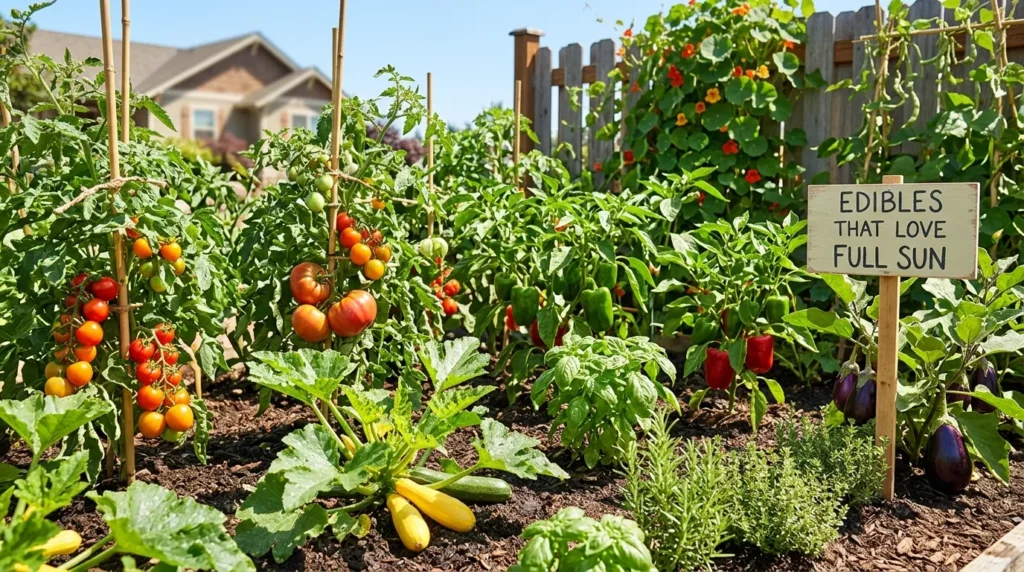
Most vegetables need full sun, but these specifically welcome heat:
Peppers — Both sweet and hot types set fruit best in high temperatures.
Okra — Genuinely happier the hotter it gets, with hibiscus-like flowers as a bonus.
Eggplant — Requires sustained warmth and full sun to produce well.
Rosemary and Thyme — Mediterranean herbs built for sun-baked, dry soil.
Basil — Loves heat and sun, but wants steady moisture. Pinch flower buds to keep leaves coming.
Six Habits That Prevent Scorch
Plant choice matters most, but technique closes the gap.
Mulch two to three inches deep. Bare soil in full sun can exceed 130°F at the surface. Mulch drops that dramatically, holds moisture, and protects shallow roots. This is the single highest-impact thing you can do.
Water deeply, early, and infrequently. A long soak twice a week beats a daily sprinkle. Deep watering drives roots downward toward cooler, stable moisture. Water before 9 a.m. so plants are hydrated before peak heat.
Plant in spring or fall, not July. New transplants have no established root system. Give them a mild season to settle in before facing extremes.
Improve soil with compost. Compost increases water-holding capacity, which matters more in sun than anywhere else.
Group plants closely. Foliage shading the soil keeps roots cooler and reduces evaporation. Tight planting is a feature in hot gardens, not a mistake.
Skip midday fertilizing. Feeding a heat-stressed plant can burn roots. Fertilize in the cool of morning, and less often than you think.
Reading Heat Stress Correctly
Wilting at 2 p.m. but recovered by evening — Normal. The plant is conserving water. Don’t add more.
Wilting in the morning — Genuine drought stress. Water deeply now.
Brown crispy leaf edges — Scorch, usually from underwatering combined with reflected heat.
Pale, bleached-looking leaves — Sun bleaching, common when a shade-adapted plant is placed in full sun. Relocate it.
Yellow lower leaves and soggy soil — Overwatering, which looks confusingly similar to drought. Check soil before reaching for the hose.

A Reliable Full Sun Combination
If you want one planting that works almost anywhere hot, use this:
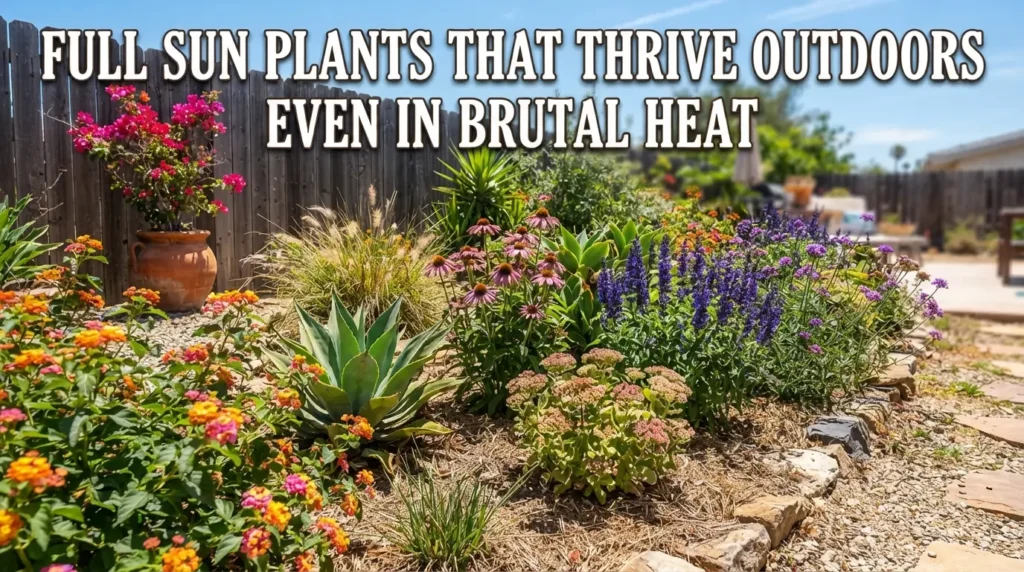
Back row of Russian sage. Middle layer of coneflower and salvia. Front edge of catmint and sedum. Fill any gaps with zinnias in the first year while the perennials establish.
Every plant in that list is drought tolerant, heat proof, deer resistant, and pollinator friendly. It blooms from June through October, needs no staking, and looks structural even in winter.
Hot sunny yards aren’t a gardening disadvantage. They’re just a different plant list — and it happens to be a list full of tough, generous, low-effort performers.