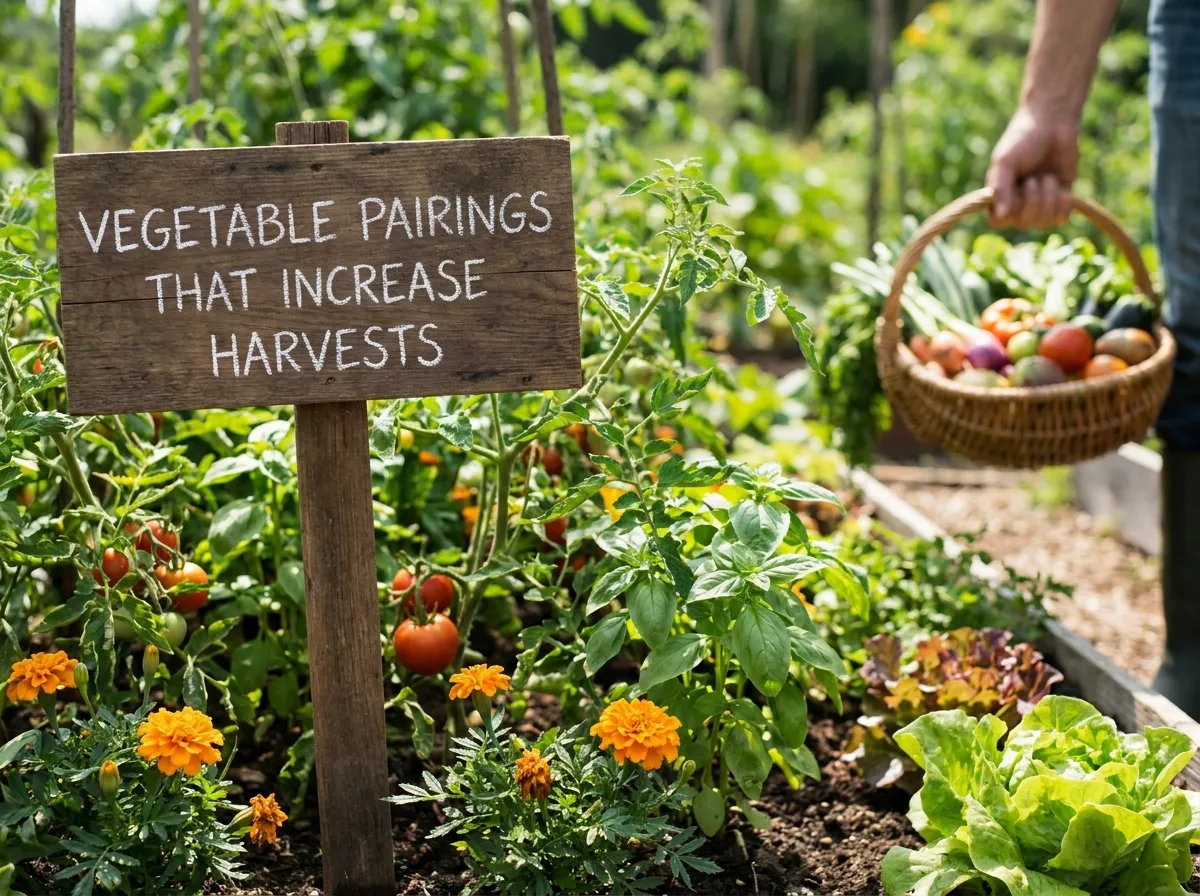
Vegetable Pairings That Increase Harvests
Gardening is often about trial and error. You plant seeds, water them, and hope for the best. But what if I told you that you could get more food from the same amount of space? The secret lies in Vegetable Pairings That Increase Harvests. This is just a fancy way of saying some plants are better friends than others.
When you put the right plants next to each other, they help each other grow. Some plants keep bugs away. Others put nutrients back into the soil. At Plantzu, we love finding ways to make the garden work smarter, not harder. If you are new to this, it is much easier than you might think.
Why Pairing Vegetables Matters
Plants have different needs and personalities. Some have deep roots, while others stay near the surface. Some grow tall and provide shade, while others stay low to the ground. When you mix these types together, you create a healthy environment for your garden.
Think of it like a team. Everyone has a job to do. One plant might attract good bugs that eat the bad bugs. Another plant might grow fast and act as a living mulch to keep the soil cool. This prevents weeds from taking over your garden beds. You end up with less work and a bigger harvest.
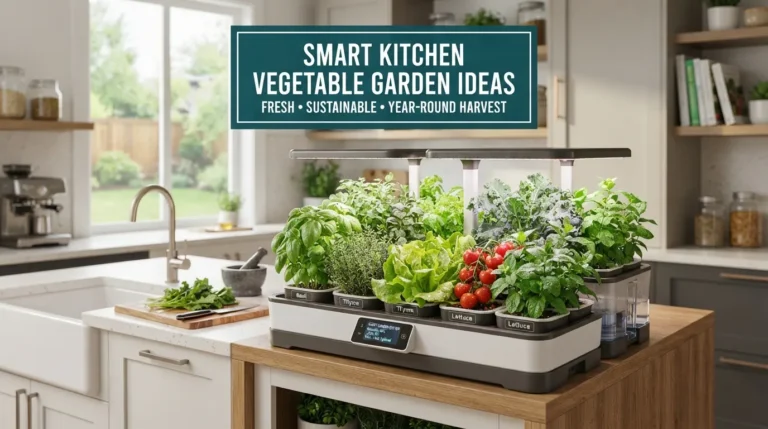
If you have limited space, you might also be interested in kitchen gardening plants you can grow indoors. Those principles of space saving apply right outside your back door, too. Let us look at the best pairs to try this season.
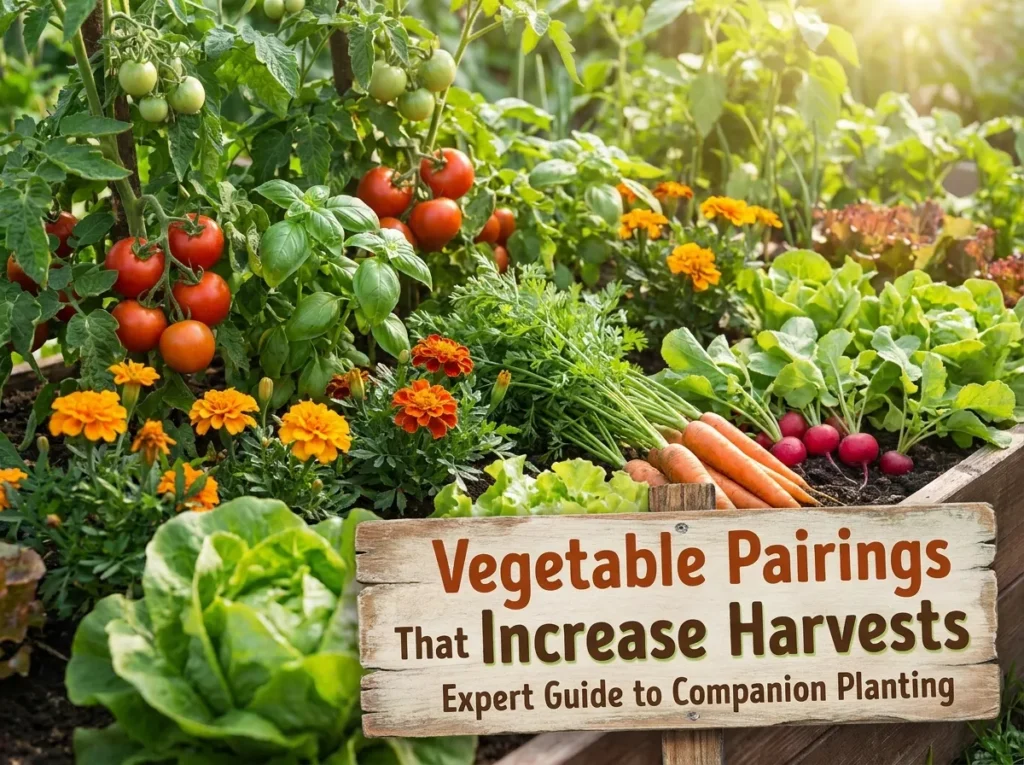
Vegetable Pairings That Increase Harvests
You do not need to be a scientist to master these pairings. Just grab some seeds and see what happens. Here are some classic combinations that work well together.
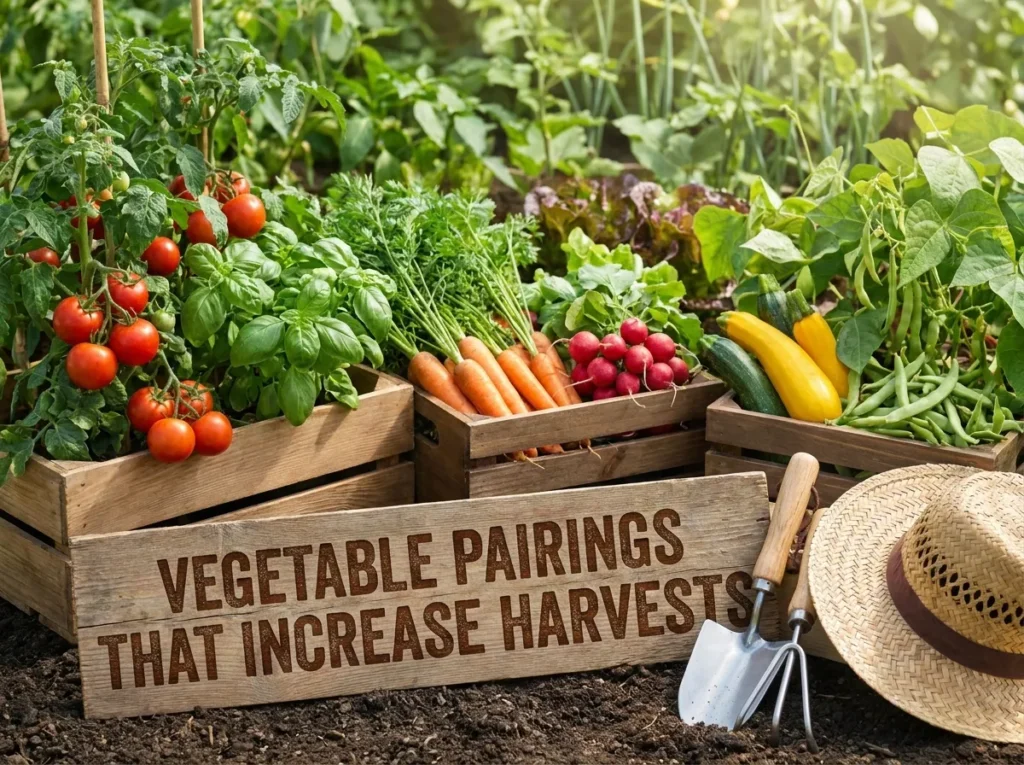
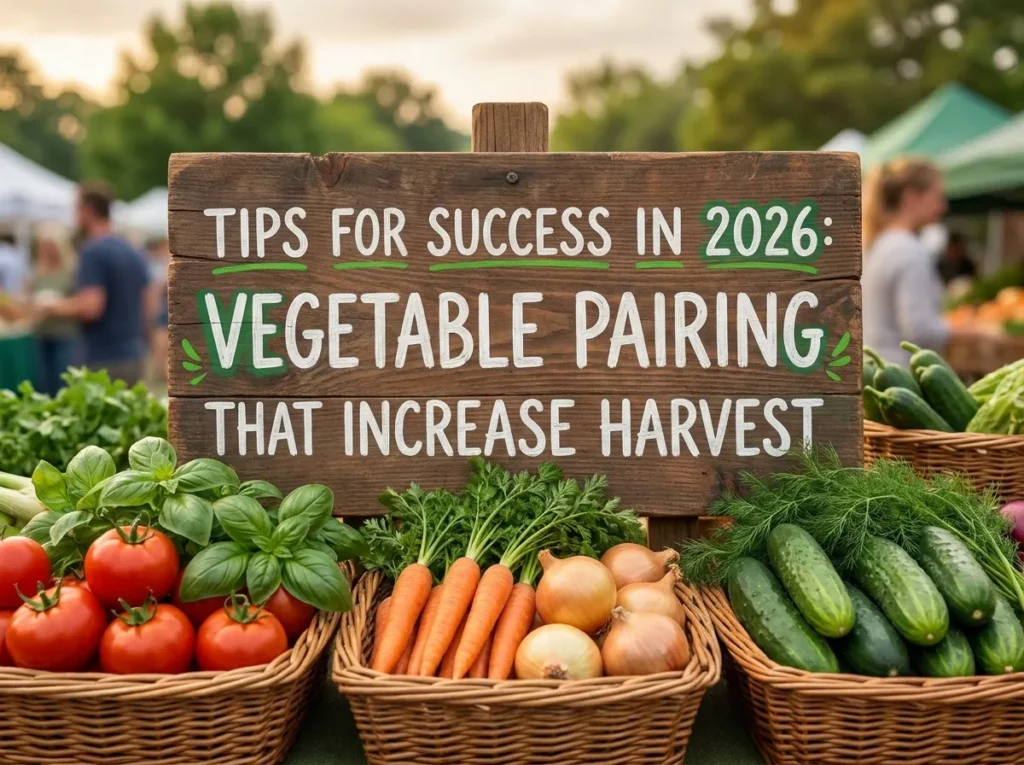
Tomatoes and Basil
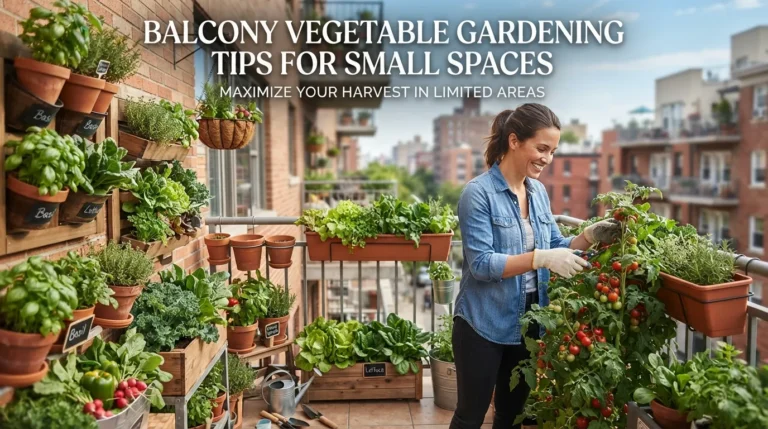
This is probably the most famous garden friendship. Basil is known to improve the flavor of tomatoes. Even better, the strong scent of basil helps keep pests away from your tomato plants.
Tomatoes can get quite tall. Planting basil at their feet acts as a ground cover. This keeps the soil moist so you do not have to water as often. It is a win for both plants.
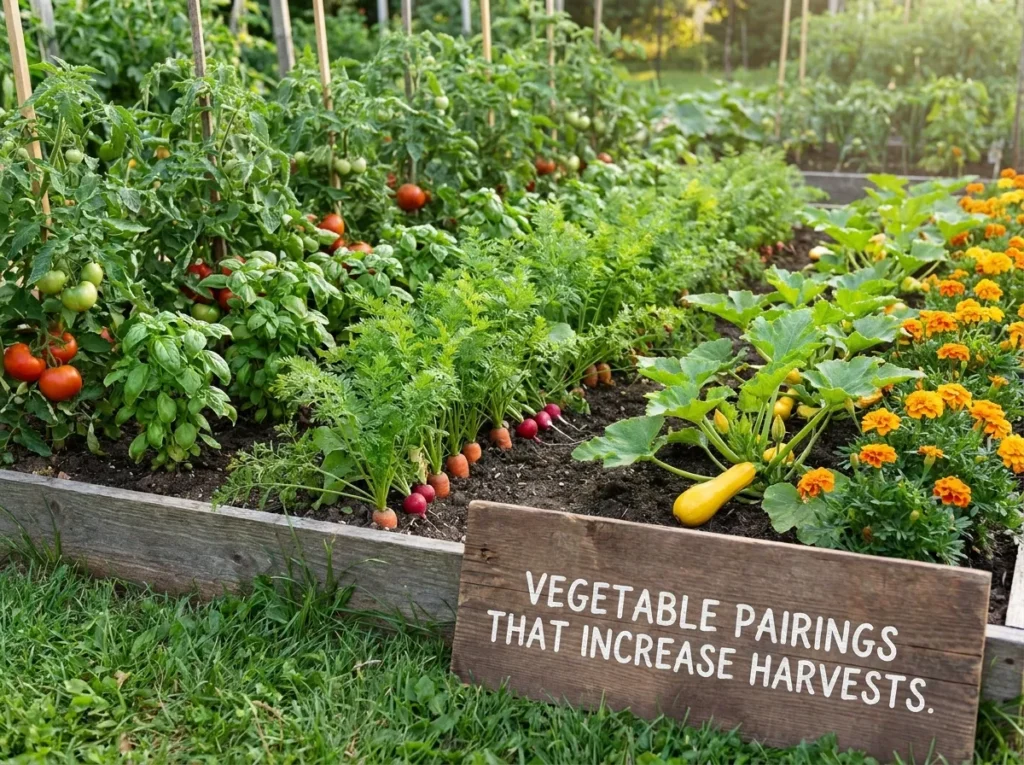
Carrots and Onions
Carrots and onions are a perfect match. The biggest enemy of the carrot is the carrot rust fly. Onions have a very strong smell that confuses this pest. They will fly right past your carrots and head somewhere else.
Carrots have deep roots that go straight down. Onions have shallow roots that spread out. They do not fight for the same space in the soil. This makes them great neighbors for a small garden bed.
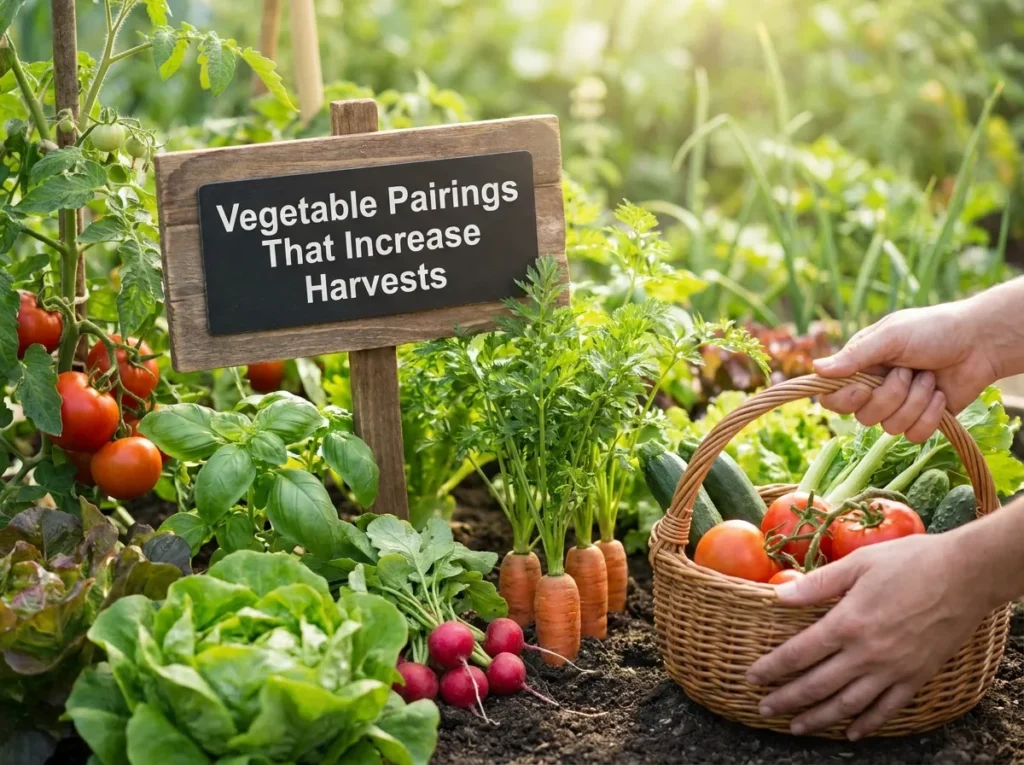
Beans and Corn
This is part of the traditional Three Sisters method used for a long time. Corn grows tall and strong. Beans are climbers. They use the corn stalks as a ladder to reach for the sun.
Beans also have a special talent. They take nitrogen from the air and put it into the soil through their roots. Corn needs a lot of nitrogen to grow big. The beans act like a natural fertilizer for the corn.
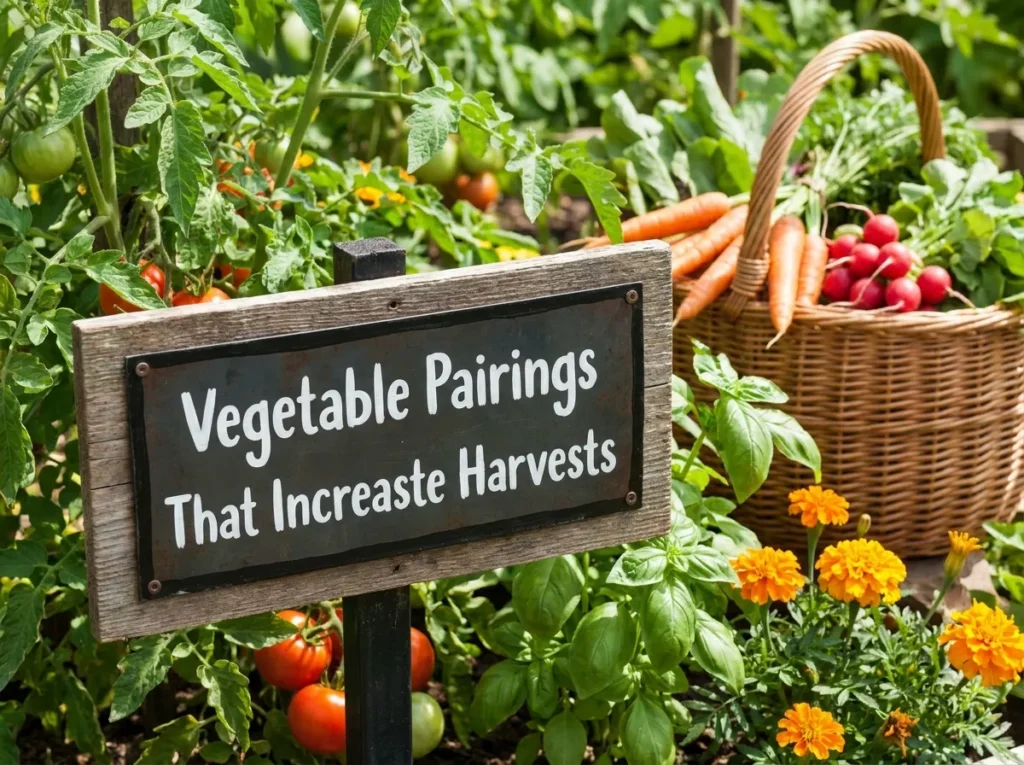
Cucumbers and Radishes
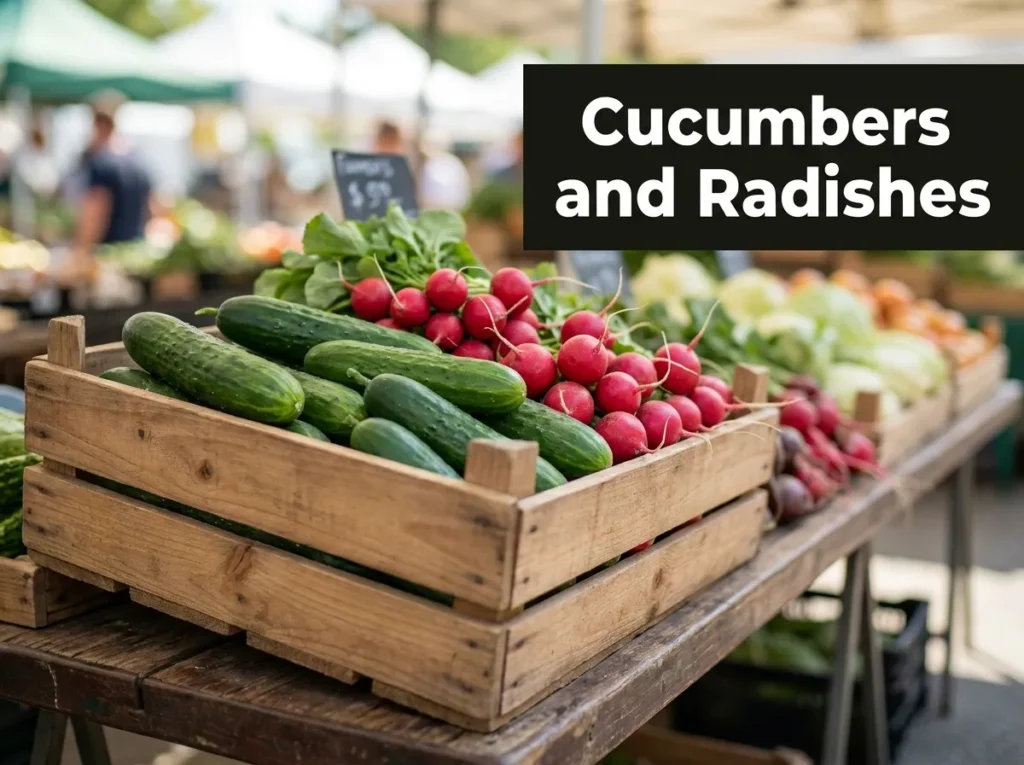
Cucumbers need space to run. Sometimes, beetles can be a problem for them. Radishes can help deter these pests. They also grow very quickly.
You can harvest your radishes before the cucumbers even get big. By the time the cucumber vines take over the space, the radishes are already on your dinner plate. It is a great way to double up on your crops.
Tips for Success in 2026
As we move through the 2026 growing season, remember that your soil needs care. Even with good pairings, your plants will not grow well if the soil is dead. Add compost every year to keep things moving.
Do not be afraid to move things around. If one spot in your garden did not do well last year, try a different pair there this year. Gardening is a living experiment. Keep notes in a small book so you remember what worked for you.
Also, make sure your plants get enough sun. Most vegetables need at least six to eight hours of direct light. Check your garden throughout the day to see where the shadows fall. Even the best friends will struggle if they are stuck in the dark.
Frequently Asked Questions
Does companion planting really increase my harvest?
Yes, it does. By reducing pests and improving soil health, your plants spend more energy growing vegetables instead of fighting for survival. It makes your garden much more efficient.
Are there any plants that should never be near each other?
Yes. Some plants release chemicals into the soil that can hurt their neighbors. For example, keep peppers away from fennel. Most gardeners keep a simple list or chart to avoid these bad combinations.
How do I start if I only have a small space?
Focus on one or two pairs. Try a pot with a tomato plant and some basil. That is an easy way to see the benefits without needing a big garden plot. You can add more pairings as you gain confidence.
Should I worry about the spacing between different types of plants?
Always. Even if plants are good friends, they still need their own room to grow. Use the spacing guide on your seed packets as your main rule for how far apart to plant them.